Imagine a global infrastructure system that purifies our water, stabilizes our climate, creates fertile soil, and protects us from disease—all for free. This system exists, but it is fragile. Achieving biodiversity for a sustainable world is not merely an aspirational slogan for environmentalists; it is the fundamental requirement for a functioning global economy and a healthy human society.
For decades, we have operated under the misconception that we must choose between economic progress and nature conservation. Today, the data tells a different story. Nature is not a luxury we protect after we get rich; it is the capital that makes prosperity possible. From the microscopic fungi that nourish our crops to the vast coral reefs shielding our coastlines, the variety of life on Earth is the engine of sustainable development.
This article explores how biodiversity serves as the “living infrastructure” of our planet, the economic risks of ignoring it, and the practical nature-based solutions that can secure our future.
What Is Biodiversity and Why Does It Matter?
Biodiversity is the full range of life forms and the relationships between them.
It includes:
-
Genetic diversity—differences within species (for example, different varieties of rice or wheat).
-
Species diversity—the number of different species in an area, from microbes to mammals.
-
Ecosystem diversity—forests, grasslands, rivers, mangroves, coral reefs, and all the combinations in between.
This diversity is not a random decoration. It creates ecosystem resilience—the ability of nature to absorb shocks like droughts, storms, or pest outbreaks and still function. A diverse forest recovers more easily after a fire. A diverse farm is less likely to lose everything to a single disease. A diverse wetland network can manage floods more gently and store more carbon.
When we talk about biodiversity for a sustainable world, we are really talking about protecting this natural resilience so people and nature can thrive together over the long term.
The “Nature as Capital” Shift: Redefining Value
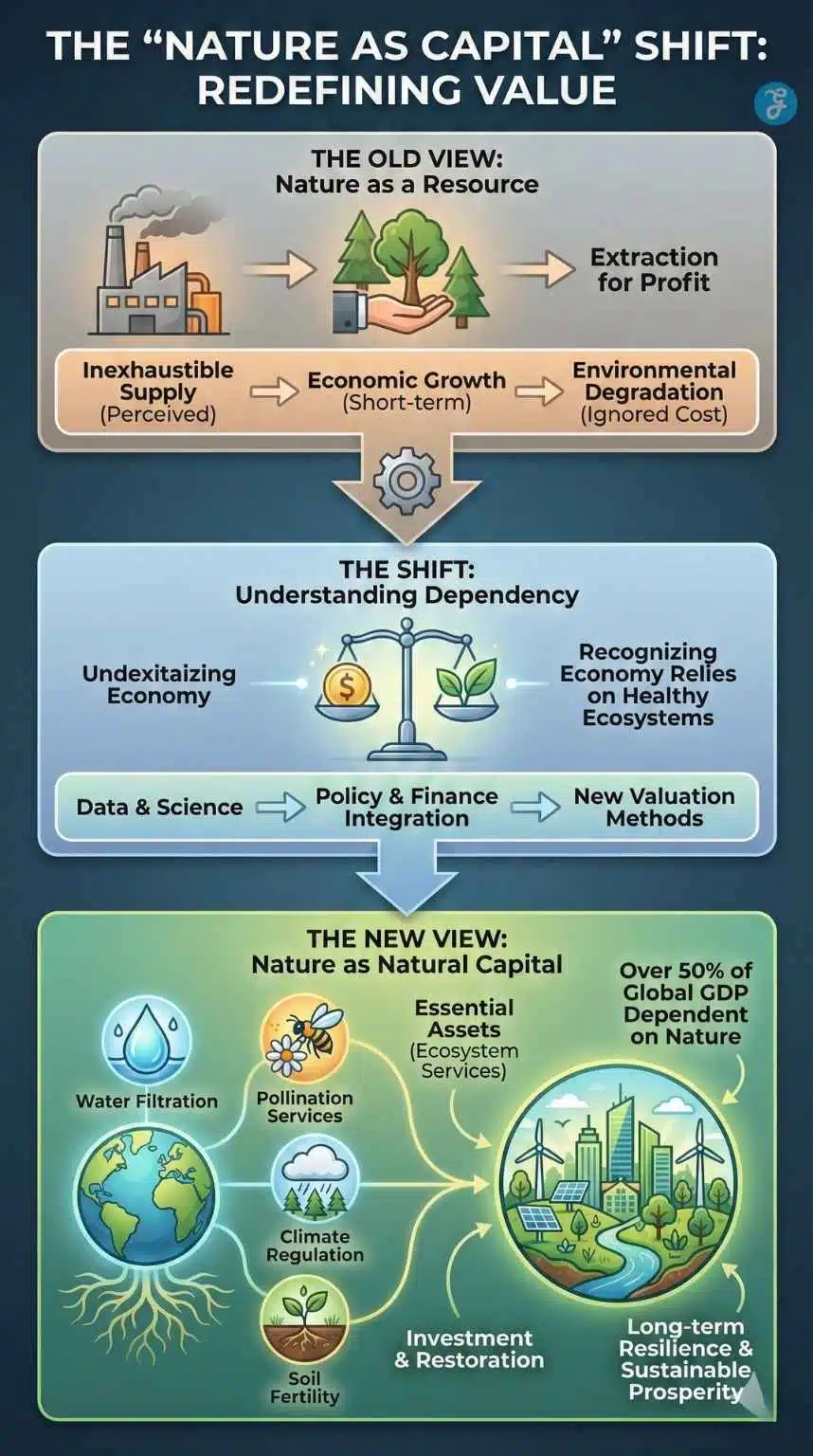
To understand the role of biodiversity for a sustainable world, we must first change how we view nature. Traditionally, trees, water, and minerals were seen as infinite resources to be extracted. Now, a paradigm shift is occurring where these assets are viewed as “Natural Capital.”
Just as a business cannot function without financial capital or human capital, our global civilization cannot function without natural capital.
The Economic Reality
Recent assessments indicate that more than half of the world’s total GDP is moderately or highly dependent on nature. This means that if biodiversity collapses, so do the industries that rely on it—agriculture, forestry, fisheries, tourism, and pharmaceuticals.
When we lose biodiversity, we are essentially burning our capital to heat our homes. It provides short-term warmth but leaves us bankrupt in the long run. The loss of ecosystem services—such as pollination, water filtration, and flood control—costs the global economy trillions of dollars annually.
| Economic Sector | Dependency on Biodiversity | Risk from Nature Loss |
| Agriculture | High: Relies on pollinators, soil microbes, and water cycles. | Crop failure, soil degradation, food insecurity. |
| Construction | Moderate: Relies on timber, water, and sand. | Supply chain disruption, raw material scarcity. |
| Pharmaceuticals | High: ~50% of drugs are derived from natural compounds. | Loss of potential cures for cancer, antibiotics, etc. |
| Tourism | High: Ecotourism relies on pristine landscapes/wildlife. | Loss of revenue, decline in visitor numbers. |
Biodiversity as a Climate Shield
The conversation around climate change often focuses heavily on renewable energy and carbon emissions. While crucial, this overlooks a vital partner: nature. A strategy focused on biodiversity for a sustainable world recognizes that ecosystems are our most powerful defense against a warming planet.
Beyond Carbon Storage
We know forests store carbon. However, biodiverse forests store it better and more securely than monocultures (plantations of a single species). A forest with many different tree species is more resilient to pests, diseases, and wildfires. If a beetle kills one type of tree in a diverse forest, the others survive, keeping the carbon locked away. In a monoculture, the entire forest—and its stored carbon—could be lost in a single season.
The Power of “Blue Carbon” and Peatlands
Terrestrial forests get the glory, but other ecosystems are the unsung heroes of climate mitigation:
-
Peatlands: These wetland ecosystems cover only a small percentage of the Earth’s land surface but store more carbon than all the world’s forests combined.
-
Mangroves & Seagrasses: Coastal ecosystems sequester carbon at a rate up to four times faster than tropical rainforests.
Protecting these biodiversity hotspots is not just conservation; it is essential climate action.
Ecosystem Services: Nature’s Hidden Infrastructure
Think of nature as a giant, self-maintaining infrastructure system. It delivers services that would cost unimaginable amounts of money to replace artificially. These are known as ecosystem services.
How biodiversity supports key services:
| Ecosystem Service | Role of Biodiversity | Why It Matters for Sustainability |
|---|---|---|
| Pollination | Diverse insects, birds, and bats support many crop species | Stable food production and food security |
| Soil formation & fertility | Microbes, earthworms, and plant roots create and enrich soil | Higher yields, less need for chemical fertilizers |
| Water purification | Wetlands, forests, and riverine plants filter pollutants | Clean drinking water, reduced treatment costs |
| Climate regulation | Forests, peatlands, and oceans store carbon and cool the local climate | Mitigates climate change and extreme heat |
| Pest & disease control | Predators and parasites keep pests in check | Fewer pesticides, healthier ecosystems, and farmers |
| Disaster risk reduction | Mangroves, reefs, dunes, and forests buffer storms and floods | Protection for coastal communities and infrastructure |
Each row in this table shows how biodiversity for a sustainable world is not a theory but a very concrete reality. When we keep ecosystems rich and intact, they keep working for us, silently and continuously.
Nature-Based Solutions: The Resilience Factor
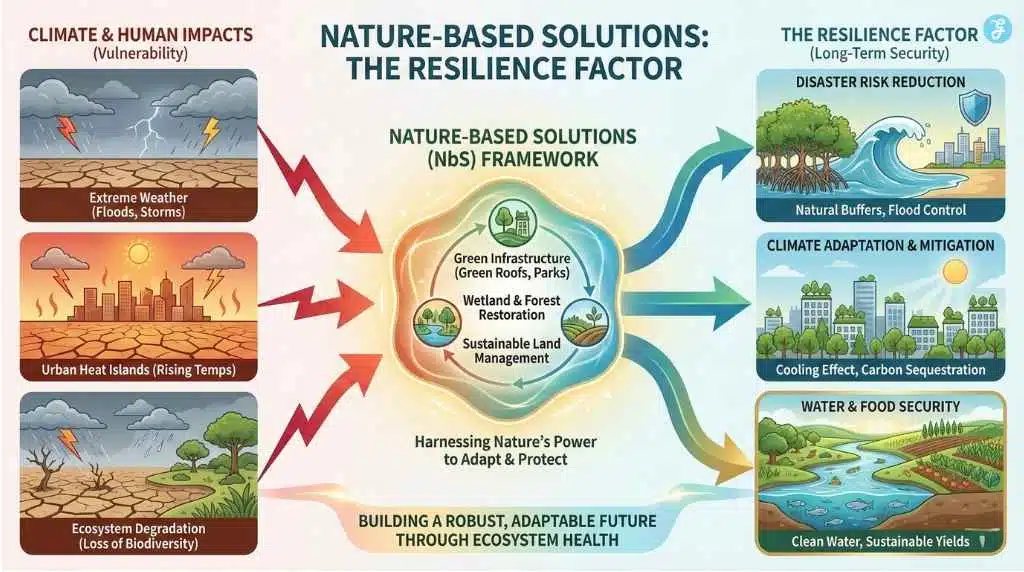
As climate impacts intensify, we face more storms, floods, and heatwaves. We have two choices: build concrete walls (grey infrastructure) or restore nature (green infrastructure). The latter is often cheaper, more effective, and self-repairing.
Coastal Defense
Consider the role of coral reefs and mangrove forests. These living barriers break the power of waves during storms, protecting coastal communities and infrastructure. Unlike a concrete sea wall, which degrades over time and requires expensive repairs, a healthy mangrove forest grows stronger as it matures and can even adapt to rising sea levels by trapping sediment.
Urban Cooling
Cities are realizing that biodiversity for a sustainable world applies to concrete jungles, too. The “Urban Heat Island” effect makes cities significantly hotter than surrounding rural areas. By integrating biodiversity—through green roofs, urban parks, and vertical gardens—cities can lower ambient temperatures, reduce the load on air conditioning grids, and improve air quality.
Key Insight: Nature-based solutions (NbS) can provide up to 30% of the climate mitigation needed to meet global goals, while simultaneously providing habitats for wildlife.
Food Security: It’s More Than Just Honeybees
When we talk about food, we often think of the farmer and the crop. We rarely think about the millions of organisms working behind the scenes to make that harvest possible. Modern industrial agriculture has often worked against nature, but sustainable food security depends on working with it.
The Pollination Economy
Approximately 75% of the world’s food crops depend at least partially on animal pollination. This includes our most nutrient-dense foods: fruits, vegetables, nuts, and seeds. Without the diverse army of wild bees, butterflies, birds, and bats, our diets would be reduced to wind-pollinated staples like wheat and corn, leading to massive global malnutrition.
Soil: The Invisible Ecosystem
Beneath our feet lies the most biodiverse habitat on Earth. A single teaspoon of healthy soil contains more living organisms than there are people on the planet. This “soil food web”—comprising bacteria, fungi, nematodes, and earthworms—is responsible for recycling nutrients, filtering water, and giving soil its structure.
Regenerative agriculture focuses on rebuilding this soil biodiversity. By doing so, farmers can produce high yields with fewer chemical inputs, making the food system more resilient to droughts and price shocks.
Agrobiodiversity and Sustainable Food Systems
Food is where biodiversity for a sustainable world becomes very personal. The food on our plates depends on agrobiodiversity: the variety of crops, livestock breeds, soil organisms, pollinators, and even wild species around farms.
Why agrobiodiversity matters
-
Food security: A wider range of crops and varieties means a greater chance that at least some will thrive when conditions change.
-
Nutrition: Diverse diets often come from diverse farms — with legumes, vegetables, fruits, and grains providing a fuller range of nutrients.
-
Pest and disease control: Diverse cropping reduces the risk of pests sweeping through uniform fields.
-
Soil health: Mixed cropping, cover crops, and agroforestry improve soil fertility and water regulation.
Let’s compare two approaches to agriculture:
| Aspect | Conventional Monoculture | Biodiversity-Rich Agroecology |
|---|---|---|
| Crop diversity | Usually, one main crop | Multiple crops and varieties |
| Pest management | Heavy chemical pesticide use | Natural pest enemies, crop rotation, and habitat for predators |
| Soil fertility | Synthetic fertilizers | Compost, legumes, cover crops, diverse root systems |
| Resilience to climate shocks | Low – one stress can wipe out the harvest | High – different crops respond differently to stress |
| Impact on ecosystems | Often, habitat loss and pollution | Supports habitat conservation and ecosystem services |
A key pillar of biodiversity for a sustainable world is transforming agriculture toward sustainable agriculture and agroecology. This approach treats farms as living ecosystems, not factories. It maintains agrobiodiversity, reduces dependence on synthetic inputs, and supports both farmers’ livelihoods and the surrounding environment.
Human Health and the “One Health” Approach
The link between biodiversity for a sustainable world and human health has never been clearer. We are part of the web of life, not separate from it.
The Medicine Cabinet of the Earth
Nature is the world’s largest pharmaceutical laboratory. Indigenous communities have known this for millennia, and modern science confirms it. From the rosy periwinkle (used to treat leukemia) to the microbes that gave us penicillin, biodiversity holds the chemical codes for future medical breakthroughs. Every time a species goes extinct, we potentially lose a cure for a disease we haven’t even discovered yet.
The Dilution Effect and Disease Control
Biodiversity also protects us from existing diseases. In a phenomenon known as the “dilution effect,” high biodiversity can reduce the transmission of infectious diseases.
-
How it works: Many viruses thrive in “generalist” species like rats or certain mosquitoes that multiply rapidly in damaged environments. In a rich, diverse ecosystem, these hosts are “diluted” by many other species that are poor hosts for the virus. This creates a buffer that makes it difficult for a pathogen to build up enough load to jump to humans.
-
The risk: When we destroy habitats and reduce biodiversity, we remove this buffer, increasing the risk of zoonotic spillover (diseases jumping from animals to humans).
The Role of Indigenous Peoples and Local Communities
Many of the world’s most biodiverse areas overlap with lands managed by indigenous peoples and local communities. These communities often hold deep knowledge about local ecosystems, seasonality, and sustainable resource use.
Recognizing their rights and leadership is essential for biodiversity for a sustainable world because:
-
Traditional practices often align with habitat conservation and ecosystem resilience.
-
Excluding these communities from conservation projects can lead to conflict and injustice.
-
Co-management and equitable benefit-sharing create stronger, longer-lasting conservation outcomes.
When local communities are full partners, conservation becomes not just a technical project but a social contract built on respect and shared benefit.
The Roadmap: From Agreement to Action
Understanding the importance of biodiversity for a sustainable world is the first step. The second is taking action. Governments and corporations are now aligning under global frameworks that set ambitious targets, such as protecting 30% of the planet’s land and oceans.
Corporate Responsibility
Businesses are beginning to report on “Nature Risk” alongside financial risk. They are analyzing their supply chains to ensure they aren’t driving deforestation or pollution. The goal is a “Nature Positive” economy—one that halts and reverses nature loss.
What Can Individuals Do?
While systemic change is vital, individual choices drive demand.
-
Dietary Shifts: Diverse diets encourage diverse farming. Eating a wider variety of plant-based foods reduces pressure on monoculture systems.
-
Support Sustainable Brands: Look for certifications like Rainforest Alliance or Fair Trade that prioritize biodiversity.
-
Local Rewilding: planting native wildflowers in gardens or supporting local parks creates “wildlife corridors” that help species migrate and survive.
Challenges and Trade-Offs
Building biodiversity for a sustainable world is not simple. There are real trade-offs:
-
Land competition: We need land for food, housing, energy, and nature. Finding balanced solutions is complex.
-
Equity issues: Conservation must not push communities off their land or undermine their livelihoods.
-
Short-term vs long-term: Intensive exploitation may bring quick profits but weakens ecosystem resilience over time.
-
Financing: Effective conservation and restoration need stable funding and strong institutions.
Acknowledging these challenges honestly is the first step toward solving them. The good news is that many win-win solutions already exist — from nature-based solutions to sustainable agriculture and nature-positive business models. The question is how quickly we scale them up.
Bottom Line: Biodiversity as the Foundation of a Sustainable World
The pursuit of biodiversity for a sustainable world is not a charity project for nature; it is an investment in our own survival. We are currently standing at a crossroads. One path continues the degradation of our life-support systems, leading to economic instability and climate chaos. The other path recognizes that nature is our strongest ally.
By protecting and restoring biodiversity, we do more than save rare species. We secure our food supply, clean our air, boost our economy, and build a shield against climate change. The sustainable world we strive for is a green, vibrant, and biodiverse one. The blueprint is already written in the DNA of the life around us; we just need to preserve it.
Frequently Asked Questions (FAQ)
What is the main difference between biodiversity and sustainability?
Biodiversity refers to the variety of life on Earth (genes, species, and ecosystems). Sustainability is the ability to meet our needs without compromising future generations. Biodiversity is a pillar of sustainability; without diverse ecosystems, long-term sustainability is impossible because the resources we rely on would collapse.
How does biodiversity loss affect the average person?
It affects you in three main ways: Cost of living (food prices rise when crops fail due to lack of pollination or poor soil), Health (increased risk of new diseases and loss of potential medicines), and Safety (increased vulnerability to natural disasters like floods).
Can technology replace the services biodiversity provides?
Generally, no. While we can build water treatment plants or seawalls, they are often far more expensive and less efficient than natural wetlands or coral reefs. Technology cannot replicate the pollination of billions of crops or the complex nutrient cycling of soil at a global scale.
What are “Nature-based Solutions” (NbS)?
NbS are actions to protect, sustainably manage, and restore natural ecosystems that address societal challenges effectively. Examples include restoring mangroves to prevent coastal flooding or planting trees in cities to reduce heat stress.
Why is “biodiversity for a sustainable world” important for businesses?
Businesses rely on stable supply chains. If nature collapses, raw materials (wood, water, fibers, food ingredients) become scarce and expensive. Investing in biodiversity ensures long-term business continuity and manages risk.