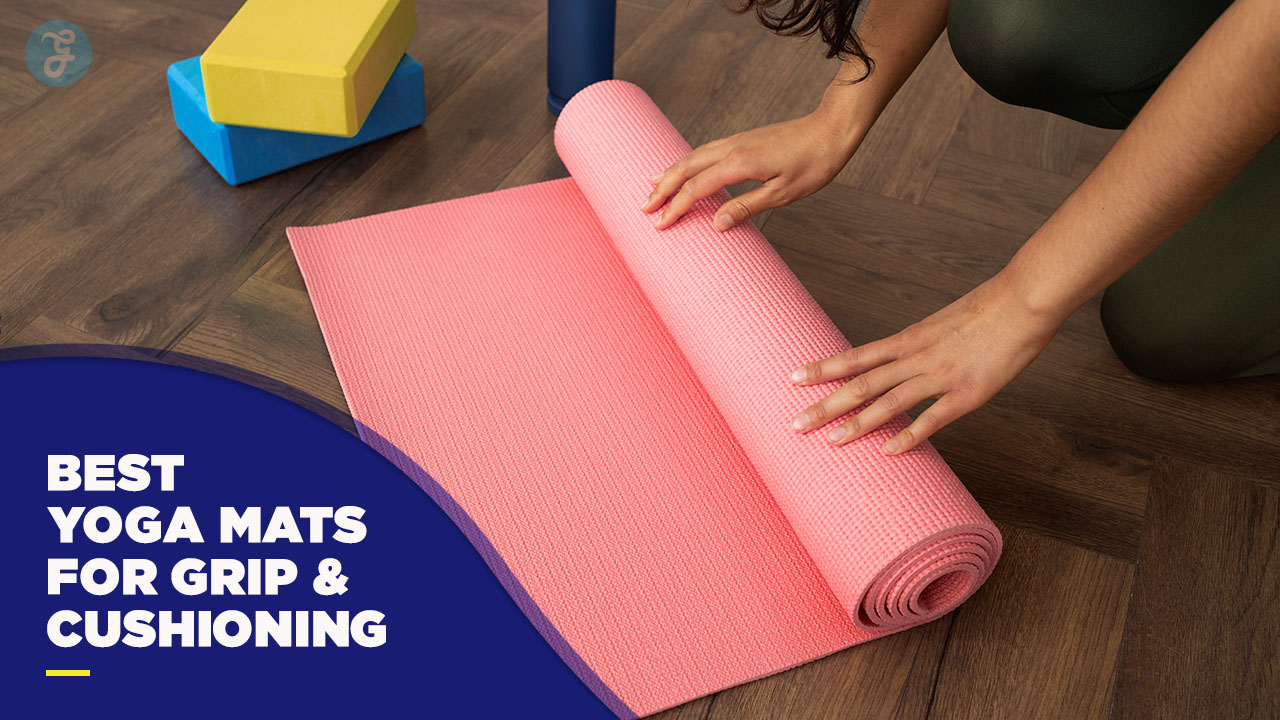
A yoga mat can make or break your practice. If you slide in Downward Dog, you hold back. If your knees ache in Low Lunge, you cut sessions short. The right mat fixes both problems by pairing reliable traction with the right kind of support for your joints.
The tricky part is that “grip” is not one thing. Some mats feel sticky when dry, others get better when you sweat, and a few are built to absorb moisture so your hands stay planted in hot classes.
How We Picked the 12 Best Yoga Mats for Grip and Cushioning?
To keep this list practical, the focus is on real performance: traction in common poses, comfort in kneeling work, and how well the mat holds up with regular use. Here are our filtering criteria:
-
Grip: Dry grip and sweaty grip performance, plus how consistent it feels during transitions
-
Cushioning: Comfort for wrists and knees without feeling unstable in standing poses
-
Materials: Rubber, PU, cork, PVC, and hybrid surfaces that impact feel and maintenance
-
Durability: How well the surface resists peeling, stretching, and “slicking out” over time
-
Portability: Weight and whether it makes sense for studio commutes or travel
Comparison Table
This snapshot helps you shortlist quickly based on how you actually practice.
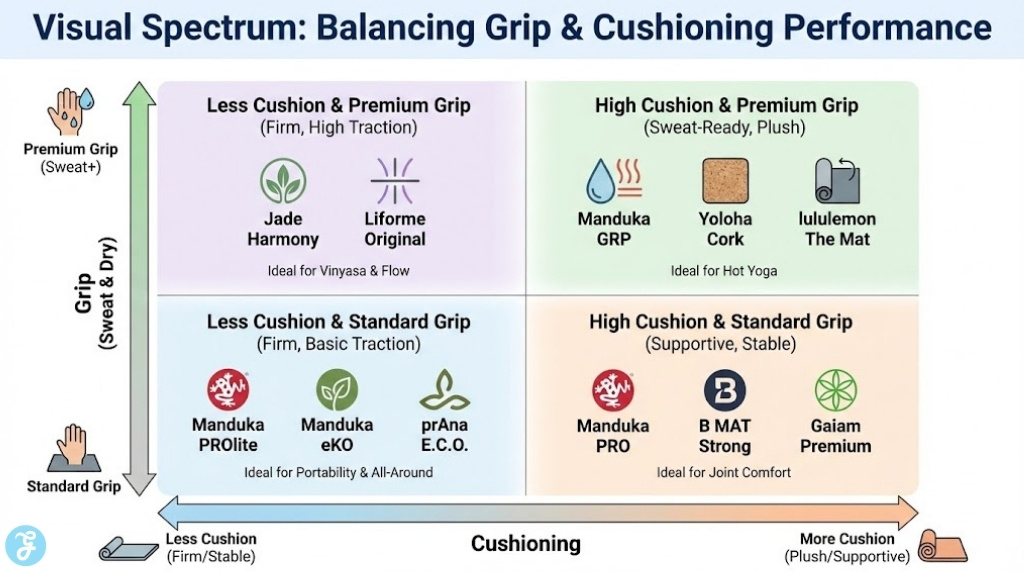
| Yoga Mat | Thickness | Grip Style | Cushion Feel | Best Use |
|---|---|---|---|---|
| Manduka PRO | 6mm | Break-in, then stable | Dense | Home + joint support |
| Manduka PROlite | 4.7mm | Break-in, then stable | Firm-medium | Studio regulars |
| lululemon The Mat | 5mm | Great in sweat | Medium | Mixed practice + hot |
| Liforme Original | 4.2mm | High traction | Medium | Alignment + flow |
| Jade Harmony | 4.7mm | Very grippy | Medium | Natural rubber fans |
| B MAT Strong | 6mm | Very grippy | Plush-dense | Knees + grippy feel |
| Alo Warrior | (varies) | High traction | Medium | Home practice + style |
| Manduka eKO | 5mm | Grippy rubber | Medium | Eco rubber feel |
| Manduka GRP Adapt | 5mm | Moisture-activated | Springy | Sweaty sessions |
| Yoloha Cork (Unity/Original line) | (varies) | Improves when wet | Medium | Hot yoga without towel |
| Gaiam Premium | 6mm | Textured “sticky” | Plush | Budget cushioning |
| prAna E.C.O. | 5mm | Textured | Cushioned | Everyday studio/home |
12 Best Yoga Mats for Grip and Cushioning
Here are 12 Best Yoga Mats for Grip and Cushioning picks that help you stay stable in poses while keeping wrists, knees, and ankles more comfortable.
1) Manduka PRO (6mm)
This is the “tank” mat: dense cushioning that protects joints without feeling squishy, and stability that improves as you break it in. It’s heavier than most, but if you practice mostly at home (or want one mat to last years), it’s hard to beat.
-
Best For: Daily home practice, joint comfort, long-term durability
-
Pros: Very supportive; extremely durable; stable feel
-
Cons: Heavy; grip typically improves after break-in
2) Manduka PROlite (4.7mm)
PROlite keeps the same “dense and stable” vibe in a more studio-friendly weight, so it’s easier to carry without giving up support. It’s a strong pick for vinyasa and flow if you want firmness more than a plush feel.
-
Best For: Studio regulars who want durability with better portability
-
Pros: Lighter than PRO; supportive; long-lasting
-
Cons: Needs some break-in; not built to absorb sweat
3) lululemon The Mat (5mm)
This mat is popular because it handles mixed practice well: one side favors sweaty grip, the other offers a more cushioned rubber base feel. If you switch between normal classes and higher-sweat sessions, it’s a very practical “one mat” option.
-
Best For: People who do a bit of everything, including occasional hot classes
-
Pros: Strong grip in sweat; versatile reversible design; comfortable thickness
-
Cons: Pricey; can be heavier than it looks
4) Liforme Original (4.2mm)
Liforme is a great blend of traction and comfort, and it’s especially helpful if you like alignment guidance while you practice. The 4.2mm thickness hits a sweet spot for people who want cushioning without losing a grounded feel in standing poses.
-
Best For: Alignment-focused practice, flow classes, reliable all-around grip
-
Pros: High traction; balanced cushion; alignment markers help consistency
-
Cons: Premium price; not the plushest for very sensitive knees
5) Jade Harmony (3/16″, about 4.7mm)
If your top priority is grip, Jade Harmony is a classic: natural rubber traction that feels secure, plus enough cushion to stay comfortable on hard floors. It’s a strong choice for people whose hands tend to slide on smoother mats.
-
Best For: Strong grip lovers, vinyasa, moderate-sweat sessions
-
Pros: Excellent traction; comfortable thickness; eco-leaning material story
-
Cons: Rubber can require more care; portability is only “okay”
6) B MAT Strong (6mm)
B MAT Strong is a comfort-forward grippy mat that still feels stable, making it ideal for people who want extra support under knees and wrists. It’s also a great option if you want grip without needing a towel in most normal-to-sweaty sessions.
-
Best For: Sensitive knees/wrists, slower flows, comfort + traction
-
Pros: Very grippy; extra cushion; stable feel
-
Cons: Heavier than thin mats; premium pricing
7) Alo Warrior Mat
This is a stylish, home-friendly mat that’s built around a luxe, high-traction feel with a durable top layer. If you do yoga plus light strength work, it’s a solid “multipurpose” pick that feels secure during transitions.
-
Best For: Home practice, mixed workouts, people who want a premium feel
-
Pros: Strong grip feel; durable; premium finish
-
Cons: Price; not the lightest carry-to-studio option
8) Manduka eKO (5mm)
If you prefer the feel of natural rubber but still want a comfortable thickness, eKO is a strong middle ground. It’s grippy, supportive enough for most practices, and feels less “sealed” than closed-cell mats.
-
Best For: Rubber-mat fans who want comfort and traction in one mat
-
Pros: Comfortable 5mm; solid grip; good everyday option
-
Cons: Rubber mats can show wear faster than ultra-dense PVC options
9) Manduka GRP Adapt (5mm)
GRP Adapt is made for sweaty classes, with a grip that activates with moisture and layers designed to handle sweat better than standard closed-cell surfaces. If hot yoga is your main thing and you hate sliding, this is worth shortlisting.
-
Best For: Hot yoga and heavy sweaters
-
Pros: Excellent sweaty grip; supportive feel; built for moisture management
-
Cons: Premium price; needs consistent cleaning
10) Yoloha Cork (Unity / Original line)
Cork is a unique surface because it tends to get grippier with moisture, which is exactly what you want in hot yoga. If you like the idea of skipping a towel and still feeling locked-in, a cork-top mat is a smart move.
-
Best For: Hot yoga, sweaty hands, towel-free traction
-
Pros: Grip improves when wet; comfortable and grounded feel
-
Cons: Can feel slick when totally dry; break-in period for some users
11) Gaiam Premium (6mm)
This is a budget-friendly way to get extra cushioning, with a textured surface that feels “sticky” enough for beginner-to-intermediate practice. It’s not a pro studio tank, but it’s a solid comfort pick for the price.
-
Best For: Budget shoppers who want 6mm comfort
-
Pros: Affordable; cushioned; easy to find
-
Cons: Longevity can be lower than premium mats; grip varies by sweat level
12) prAna E.C.O. (5mm)
prAna’s E.C.O. mat is a comfortable everyday option with two-sided texture and a cushioned feel that works well for general practice. It’s a good “do most things well” choice if you want something straightforward and supportive.
-
Best For: Regular home/studio practice, general comfort, and traction
-
Pros: Cushioned; versatile texture; practical all-rounder
-
Cons: Not the grippiest choice for very sweaty classes
How to Choose the Right Yoga Mat for Grip and Cushioning
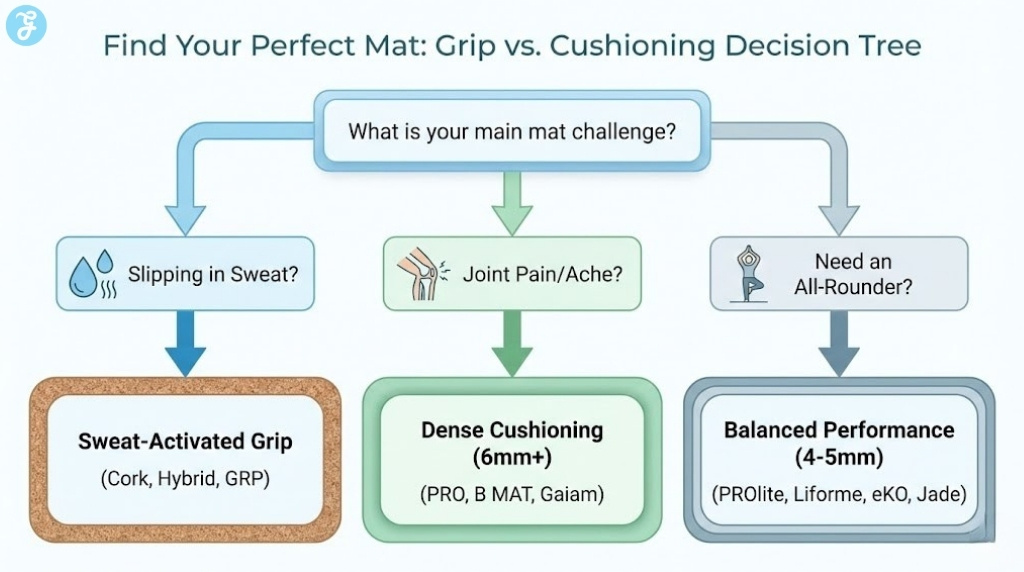
Once you match the mat to your sweat level and joint needs, the right pick usually becomes obvious.
-
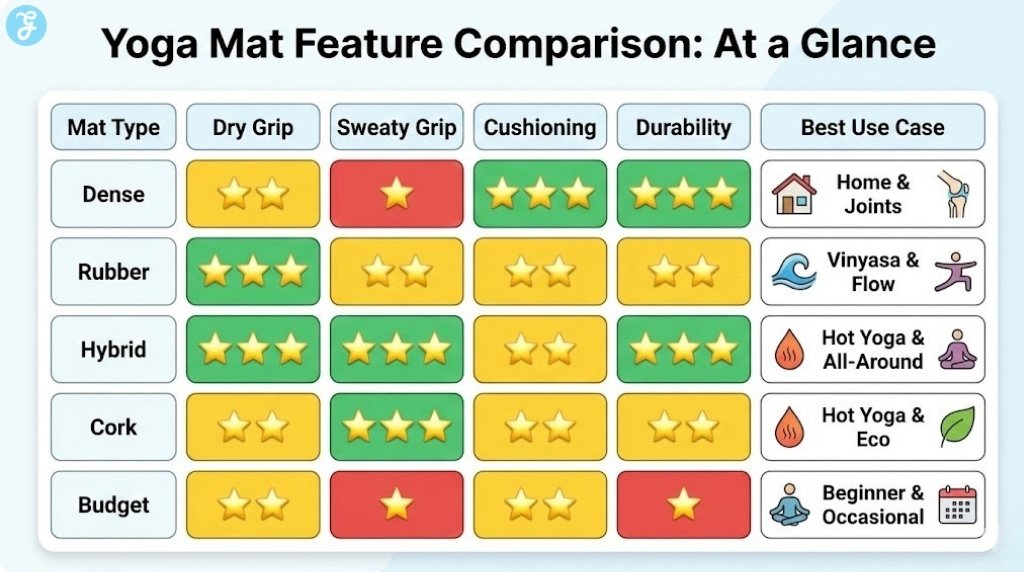
Grip type: If you do hot yoga, look for a moisture-friendly grip (cork or moisture-activated surfaces).
-
Thickness vs stability: More thickness helps knees and wrists, but too much can feel unstable in balance poses.
-
Material feel: Rubber tends to feel grippier; closed-cell mats can feel smoother until broken in; cork improves with sweat.
Small Decision Table
| Your Need | Shortlist These |
|---|---|
| Maximum joint comfort | Manduka PRO, B MAT Strong, Gaiam Premium |
| Best sweaty grip | Manduka GRP Adapt, Yoloha Cork, Lululemon The Mat |
| Best “balanced all-rounder” | Liforme Original, Manduka eKO, prAna E.C.O. |
| Best natural rubber traction | Jade Harmony, Manduka eKO |
Care Tips to Keep Grip Strong
A mat that’s not cleaned regularly often gets slick, even if it used to be grippy.
-
After practice: Wipe down sweat and oils, especially where hands and feet land most.
-
Dry fully: Let it air dry before rolling to avoid odor and surface breakdown.
-
Keep it simple: Mild soap and water usually work; avoid harsh cleaners that can damage coatings.
Wrap-Up
If your biggest problem is sliding, choose a mat built for traction in the conditions you actually practice in, especially sweat. If your biggest problem is discomfort, prioritize dense support over “extra thick softness,” so you stay stable in standing poses.
The best upgrade is the mat that makes you forget about the floor completely, because your hands feel planted and your joints feel protected.