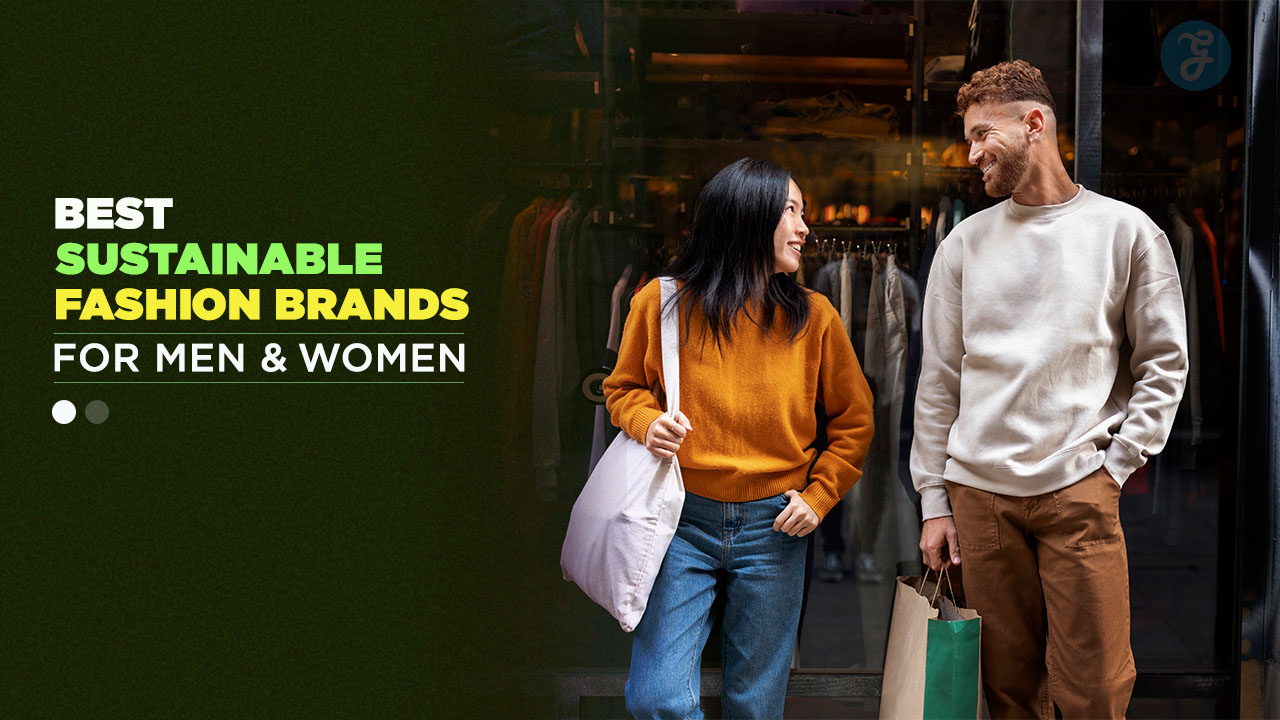
The fashion industry is at a crossroads. For decades, the “fast fashion” model—characterized by rapid production, low costs, and even lower quality—has dominated our closets. However, as we move through 2026, a massive shift is occurring. Consumers are no longer just looking for a “look”; they are looking for a legacy. They want to know that the shirt on their back didn’t cost the earth its health or a worker their dignity.
In this guide, we have moved past the surface-level marketing. We’ve vetted dozens of labels to bring you the 12 best sustainable fashion brands for men and women that are leading the charge in circularity, regenerative agriculture, and radical transparency.
Why Sustainability in Fashion Matters in 2026
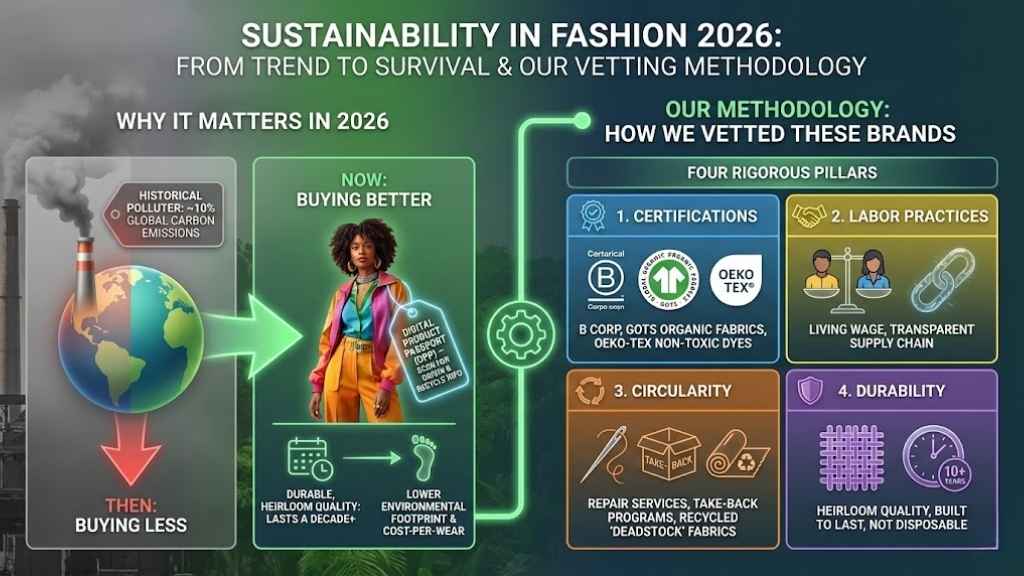
Sustainability isn’t a trend anymore; it’s a necessity for survival. The fashion industry has historically been one of the world’s largest polluters, responsible for nearly 10% of global carbon emissions. In 2026, the conversation has evolved from simply “buying less” to “buying better.”
We are seeing the rise of Digital Product Passports (DPPs)—scannable tags that show you exactly where a garment was made and how to recycle it. This year, “maximalist self-expression” is back, but it’s being fueled by durable, high-quality pieces rather than disposable ones. Choosing sustainable brands means you are investing in garments that last a decade rather than a season, effectively lowering your “cost-per-wear” and your environmental footprint.
Our Methodology: How We Vetted These Brands
To make this list, a brand must do more than just use a little organic cotton. We evaluated each company based on four rigorous pillars:
- Certifications: Are they a B Corp? Do they use GOTS-certified organic fabrics or OEKO-TEX non-toxic dyes?
- Labor Practices: Do they pay a living wage? Is their supply chain transparent?
- Circularity: Do they offer repair services, take-back programs, or use recycled “deadstock” fabrics?
- Durability: Does the clothing actually last? We prioritized brands known for “heirloom quality.”
Top 12 Sustainable Fashion Brands for 2026
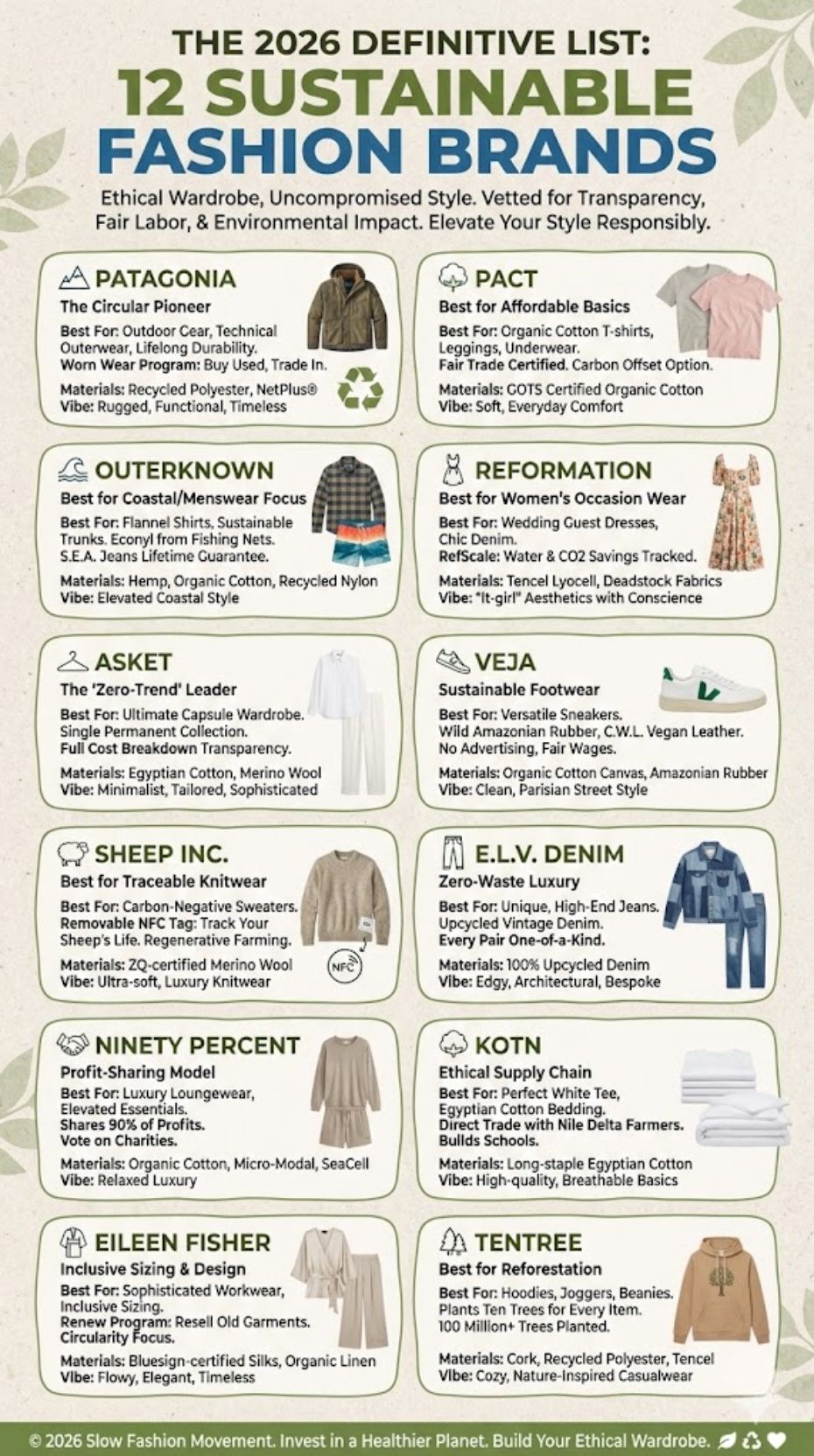
We’ve curated this definitive list of sustainable fashion brands to help you build an ethical wardrobe without compromising on style or durability. From eco-friendly basics to carbon-neutral luxury, these twelve picks represent the forefront of the slow fashion movement for both men and women. Each brand below has been rigorously vetted for transparency, fair labor practices, and environmental impact, ensuring your purchase supports a healthier planet. Explore our top recommendations for 2026 and discover the perfect pieces to elevate your personal style responsibly.
1. Patagonia (The Circular Pioneer)
Best For: Outdoor gear, technical outerwear, and lifelong durability.
Patagonia remains the gold standard of ethical business. In 2022, the founder famously “gave the company away” to a trust dedicated to fighting climate change. Their Worn Wear program is a standout feature, allowing you to buy used gear or trade in your old items for credit.
- Key Materials: Recycled polyester, NetPlus® (recycled fishing nets).
- The Vibe: Rugged, functional, and timeless.
2. Pact (Best for Affordable Basics)
Best For: Organic cotton t-shirts, leggings, and underwear for the whole family.
Sustainability shouldn’t be a luxury. Pact makes “Earth’s Favorite Clothing” by partnering with Fair Trade Certified factories. They provide an option at checkout to offset the carbon footprint of your shipment, and their prices are comparable to traditional mall brands.
- Key Materials: GOTS Certified Organic Cotton.
- The Vibe: Soft, everyday comfort.
3. Outerknown (Best for Coastal/Menswear Focus)
Best For: High-quality flannel shirts (the famous Blanket Shirt) and sustainable trunks.
Founded by pro-surfer Kelly Slater, Outerknown focuses on the ocean. They were the first brand to use Econyl (recycled nylon made from fishing nets and carpets). Their “S.E.A. Jeans” come with a lifetime guarantee—if they rip, they fix them for free.
- Key Materials: Hemp, organic cotton, recycled nylon.
- The Vibe: Elevated coastal style.
4. Reformation (Best for Women’s Occasion Wear)
Best For: Wedding guest dresses, chic denim, and trendy silhouettes.
Reformation proves that sustainable fashion can be incredibly sexy and high-fashion. They publish a “RefScale” for every product, showing exactly how much water and CO2 was saved compared to conventional methods.
- Key Materials: Tencel Lyocell, deadstock fabrics, and recycled cashmere.
- The Vibe: “It-girl” aesthetics with a conscience.
5. Asket (The “Zero-Trend” Leader)
Best For: The ultimate capsule wardrobe for men and women.
Asket doesn’t do “collections.” They have a single “Permanent Collection.” They provide a full cost breakdown of every garment, showing you exactly what you pay for labor, fabric, and transport.
- Key Materials: Egyptian cotton, Merino wool, Italian denim.
- The Vibe: Minimalist, tailored, and sophisticated.
6. Veja (Sustainable Footwear)
Best For: Versatile sneakers that go with everything.
Veja changed the sneaker game by using wild rubber from the Amazon rainforest and “C.W.L.”—a vegan leather alternative made from corn waste. They spend $0 on advertising, reinvesting that money into fair wages for their farmers and factory workers.
- Key Materials: Organic cotton canvas, Amazonian rubber, recycled plastic bottles.
- The Vibe: Clean, Parisian street style.
7. Sheep Inc. (Best for Traceable Knitwear)
Best For: Carbon-negative sweaters and cardigans.
Every Sheep Inc. sweater comes with a “Removable NFC tag” on the hem. Scan it with your phone to see which sheep provided the wool for your specific sweater and follow its life on the farm. They use regenerative farming practices that actually pull more carbon out of the atmosphere than the production emits.
- Key Materials: ZQ-certified Merino wool.
- The Vibe: Ultra-soft, luxury knitwear.
8. E.L.V. Denim (Zero-Waste Luxury)
Best For: Unique, high-end jeans.
E.L.V. (East London Vintage) takes discarded denim headed for landfills and upcycles it into modern, high-fashion pieces. Because they use vintage denim, every single pair of jeans is one-of-a-kind.
- Key Materials: 100% Upcycled Denim.
- The Vibe: Edgy, architectural, and bespoke.
9. Ninety Percent (Profit-Sharing Model)
Best For: Luxury loungewear and elevated essentials.
This London-based brand is revolutionary because they share 90% of their distributed profits between charitable causes and the people who make the clothes. You even get to vote on which charity your purchase supports using a code on the care label.
- Key Materials: Organic cotton, Micro-Modal, SeaCell (seaweed-based fiber).
- The Vibe: Relaxed luxury.
10. Kotn (Ethical Supply Chain)
Best For: The perfect white tee and Egyptian cotton bedding.
Kotn works directly with cotton farming families in Egypt’s Nile Delta. By cutting out the middleman, they ensure farmers get paid fairly and they use the proceeds to build schools in the farming communities.
- Key Materials: Long-staple Egyptian cotton.
- The Vibe: High-quality, breathable basics.
11. Eileen Fisher (Inclusive Sizing & Design)
Best For: Sophisticated workwear and inclusive sizing.
A pioneer in the space, Eileen Fisher has been focused on circularity since before it was a buzzword. Her Renew program takes back old Eileen Fisher garments, cleans them, and resells them, ensuring they never hit a landfill.
- Key Materials: Bluesign-certified silks, organic linen.
- The Vibe: Flowy, elegant, and timeless.
12. Tentree (Best for Reforestation)
Best For: Comfortable hoodies, joggers, and beanies.
The mission is in the name: for every item purchased, Tentree plants ten trees. To date, they have planted over 100 million trees. They are a certified B Corp and use some of the lowest-impact fabrics available.
- Key Materials: Cork, recycled polyester, Tencel.
- The Vibe: Cozy, nature-inspired casualwear.
Sustainable Fashion Comparison Table
| Brand | Best For | Price Range | Top Certification |
| Patagonia | Outdoor/Repair | $$-$$
$ |
B Corp / Fair Trade |
| Pact | Budget Basics | $ | GOTS Organic |
| Asket | Capsule Wardrobe | $$-$$
$ |
Traceable Supply Chain |
| Veja | Footwear | $$ | Fair Trade / Vegan Opts |
| Sheep Inc. | Knitwear | Carbon Negative | |
| Reformation | Women’s Fashion | $$$ | Climate Neutral |
How to Spot Greenwashing: A 2026 Checklist
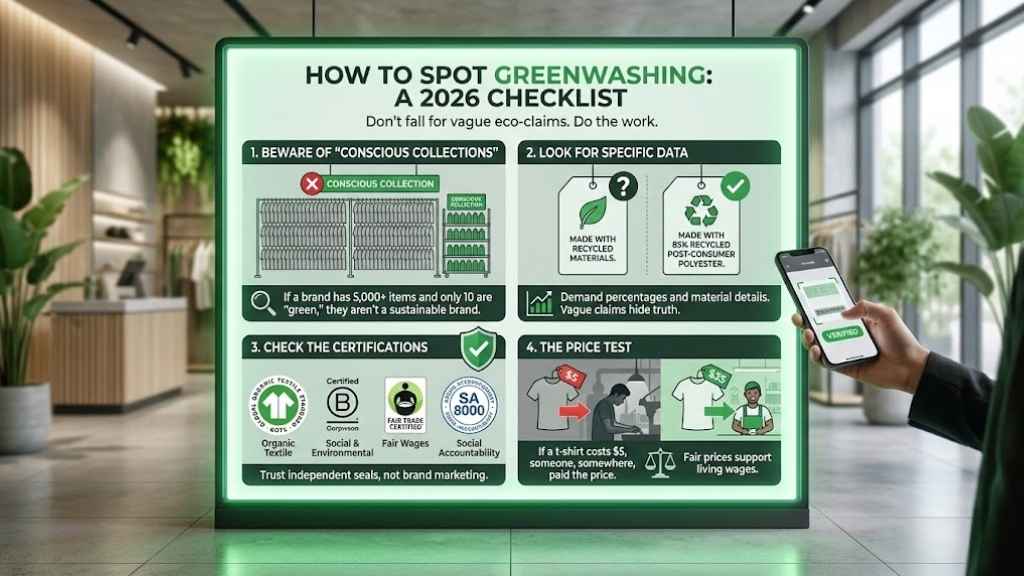
As sustainability becomes “cool,” many big-box brands are “greenwashing”—making vague claims to look eco-friendly without doing the work. Use this checklist before you buy:
- Beware of “Conscious Collections”: If a brand has 5,000 items and only 10 are “green,” they aren’t a sustainable brand.
- Look for Specific Data: “Made with recycled materials” is vague. “Made with 85% recycled post-consumer polyester” is better.
- Check the Certifications: Look for third-party seals like GOTS, B Corp, Fair Trade, and SA8000.
- The Price Test: If a t-shirt costs $5, someone, somewhere, paid the price—usually the worker who made it.
Final Thoughts
Building a sustainable wardrobe isn’t about being perfect; it’s about being intentional. You don’t need to throw away your current clothes to start fresh. Instead, the next time you truly need something, choose one of the brands above. By supporting these 12 pioneers, you aren’t just buying a garment—you’re voting for a cleaner planet and a fairer world. Remember: Wear it out, use it up, make it do, or do without.
Expert Tip: Always check the “Resale” section of these brand websites first. You can often find “Like New” items from Patagonia or Eileen Fisher at 50% of the retail price!