A “high-converting” landing page is not the prettiest page. It’s the page that loads fast, matches the visitor’s intent, removes friction, and makes the next step feel obvious. The best builders make that process repeatable with templates, mobile-first editing, forms, integrations, and testing tools you can actually use consistently.
How We Picked Our List of Landing Page Builders?
Here are the criteria we used to filter:
-
Conversion tools: A/B testing, personalization, or optimization features when available.
-
Speed and mobile UX: responsive editing and performance-minded publishing.
-
Lead capture quality: forms, popups, and friction-reducing flows.
-
Integrations: email, CRM, analytics, and ad pixels, so attribution does not break.
-
Fit by use case: paid ads, SaaS demos, creator lead gen, ecommerce campaigns, and agency workflows.
Comparison Table
| Builder | Best For | A/B Testing | Personalization/Optimization | Best Strength | Main Watch-Out |
|---|---|---|---|---|---|
| Instapage | Paid ads teams | Yes | Dynamic text replacement | Post-click relevance and ad workflows | Premium pricing |
| Unbounce | Performance marketers | Yes | Smart Traffic routing | Fast iteration + AI optimization | Can get pricey at higher needs |
| HubSpot | CRM-first teams | Yes | Smart content rules | CRM + automation alignment | Cost/tiers depending on setup |
| Landingi | Marketers who test | Yes | Built-in optimization workflow | Fast A/B tests in one dashboard | Less “website builder” breadth |
| Webflow | Design-led conversion pages | Limited (via workflow/tools) | Design system flexibility | High-end visual control | More learning curve |
| ClickFunnels | Funnels + offers | Yes | Funnel optimization | Funnel-first publishing | Can feel heavy for “one page” |
| Shopify Page Builders | Ecommerce landing pages | Some (app-dependent) | CRO elements by app | Built for product funnels | App stack and performance tradeoffs |
| Carrd | Simple, fast one-pagers | No | Minimal | Cheapest + fast setup | Limited depth for complex CRO |
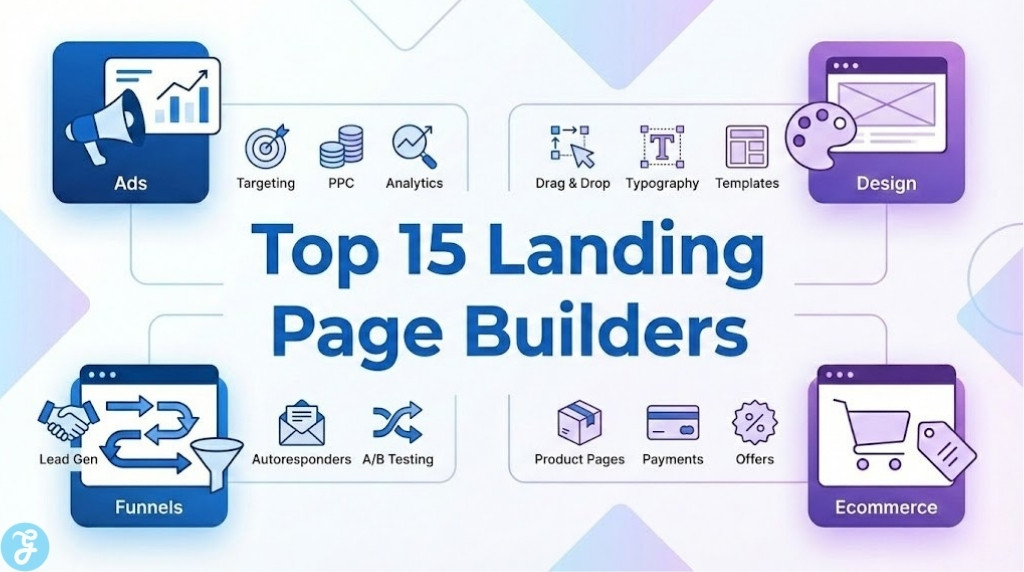
15 Best Landing Page Builders for High Conversions
Here are 15 Best Landing Page Builders for High Conversions you can use to build faster, test smarter, and turn clicks into leads or sales.
1) Instapage
Instapage is built for paid campaigns where “post-click” relevance matters, especially when you need personalization and a clean handoff from ads to landing pages. Its dynamic text replacement helps you match copy to the visitor’s search or ad parameters for a tighter message match.
-
Best For: Ad-driven teams optimizing cost per lead and cost per acquisition
-
Pros: Dynamic text replacement; A/B testing; campaign-focused workflows
-
Cons: Often priced for teams rather than solo creators
2) Unbounce
Unbounce is a classic choice for performance marketers who ship variants constantly and care about conversion lift. Smart Traffic can route visitors to the best-performing variant for them, without waiting for traditional A/B tests to “declare a winner.”
-
Best For: Paid traffic landing pages and rapid experimentation
-
Pros: A/B testing; Smart Traffic optimization; strong conversion-focused features
-
Cons: Costs can rise as you scale traffic and features
3) Leadpages
Leadpages is a practical builder for lead generation when you want templates, quick publishing, and a straightforward workflow. It’s especially popular for businesses that want landing pages without needing a full design system like Webflow.
-
Best For: Small businesses and creators doing lead gen and simple offers
-
Pros: Templates and fast setup; A/B testing is promoted in plans
-
Cons: Tier and limit details matter, so pricing requires attention
4) HubSpot (Landing Pages)
HubSpot is ideal when your landing page is part of a bigger growth system, because your forms, CRM, segmentation, and automation live in the same place. You can run A/B tests on pages and use smart content rules to personalize content by audience category.
-
Best For: Teams that want landing pages tightly connected to CRM and lifecycle marketing
-
Pros: Built-in A/B testing; smart content rules; strong marketing stack integration
-
Cons: Best value depends on which HubSpot tier you already use
5) Landingi
Landingi is a marketer-focused builder that emphasizes building and optimizing, not just designing. You can launch A/B tests in a few steps inside one dashboard, which is great when your weekly routine is “ship, test, iterate.”
-
Best For: Teams running lots of landing page tests across campaigns
-
Pros: Built-in A/B testing flow; purpose-built landing page workflow
-
Cons: May feel less “all-in-one website” than broader site builders
6) Webflow
Webflow is the pick when you want high-end design control without handing everything to developers, which can directly improve conversions through cleaner UX and better mobile layouts. It’s especially strong for SaaS and brands that want pages that look premium and feel fast.
-
Best For: Design-led brands and SaaS teams who care about visual polish
-
Pros: Deep visual flexibility; strong template ecosystem
-
Cons: More learning curve than “simple template” builders
7) ClickFunnels
ClickFunnels is built for funnels, not just single pages, which makes it strong for offers that need multiple steps like opt-in → upsell → checkout. It also highlights A/B testing for funnel steps so you can optimize the full flow instead of one page in isolation.
-
Best For: Coaches, creators, and businesses selling through funnels
-
Pros: Funnel-first workflow; built-in A/B testing messaging
-
Cons: Can be more tools than you need if you only want a simple landing page
8) Elementor (WordPress)
Elementor is a strong choice if you’re already on WordPress and want landing pages, forms, and popups with granular control. It’s compelling for conversion work because popups, targeting, and form capture can live right in the same builder experience.
-
Best For: WordPress sites that want marketing-focused landing pages without dev work
-
Pros: Landing page builder, pop-up builder, form builder features
-
Cons: Performance and plugin conflicts depend on your WordPress setup
9) Framer
Framer is great for fast publishing, modern animations, and slick, designer-friendly pages that still stay responsive. If your conversion goal depends on a premium “feel” and quick iteration, Framer can be a strong modern alternative to traditional builders.
-
Best For: Designers and startups shipping polished launch pages fast
-
Pros: Visual canvas; responsive layouts; instant publishing workflow
-
Cons: Not as “marketing-suite heavy” as Unbounce/HubSpot style stacks
10) Carrd
Carrd is the simplest option on this list, and that’s its superpower for conversion: fewer choices, fewer distractions, faster launches. It’s perfect for waitlists, lead magnets, and “one goal” pages where you just need a clean CTA and a form.
-
Best For: Simple one-page lead capture, waitlists, and validation pages
-
Pros: Extremely fast to launch; budget-friendly; clean one-page focus
-
Cons: Limited for complex testing and multi-step conversion journeys
11) Kit (formerly ConvertKit) Landing Pages
Kit is ideal when the landing page’s main job is subscriber growth, because landing pages and forms feed directly into your email automations. It’s a strong pick for creators who want conversion pages without managing a full website builder.
-
Best For: Creators building email lists and simple product launches
-
Pros: Landing pages designed around subscriber capture; creator-first workflows
-
Cons: Design flexibility is more limited than Webflow/Framer
12) Shopify Page Builders (Shogun, PageFly, GemPages)
If you sell products, Shopify page builders are built for ecommerce conversion realities like product sections, bundles, and reusable CRO blocks. These tools are best when your landing pages need to plug into product pages, collections, and theme sections without developer bottlenecks.
-
Best For: E-commerce brands running paid traffic to product-focused landing pages
-
Pros: Built for Shopify workflows; CRO elements and reusable sections by app
-
Cons: App stacks can affect site performance and maintenance complexity
13) Wix
Wix is a good “all-in-one” choice if you want landing pages plus a full website, booking, basic ecommerce, and built-in hosting without extra setup. It’s best for teams that value speed-to-launch over deep experimentation tools.
-
Best For: Small businesses that want landing pages plus a broader website quickly
-
Pros: Easy publishing and site management in one place
-
Cons: Advanced CRO workflows can be less specialized than dedicated landing platforms
14) Squarespace
Squarespace works well for brand-led conversion pages where trust, visuals, and clean presentation are the selling points, like portfolios, services, and premium offers. If you’re driving traffic from social and want a high-quality “brand page” conversion experience, it’s a strong fit.
-
Best For: Service businesses, portfolios, and premium brand pages
-
Pros: Strong design consistency; polished templates
-
Cons: Not as conversion-tool heavy as Unbounce/Instapage style platforms
15) Swipe Pages
Swipe Pages is often considered by marketers who want speed and mobile-first performance, especially for ad traffic where every second affects conversion. It’s a smart option if your biggest issue is page speed and you want a focused landing page platform.
-
Best For: Mobile-first landing pages and ad campaigns where speed matters
-
Pros: Performance-first positioning; campaign-centric landing page focus
-
Cons: Smaller ecosystem than the biggest “suite” platforms
How to Choose the Right Landing Page Builder
Quick Checklist:
-
Traffic source: Ads, SEO, email, affiliates, social
-
Primary goal: Lead gen, demo booking, checkout, webinar signup
-
Testing cadence: Monthly tests or weekly experiments
-
Team setup: Solo, agency approvals, or multi-user workflows
-
Stack: Email platform, CRM, analytics, pixels, Zapier
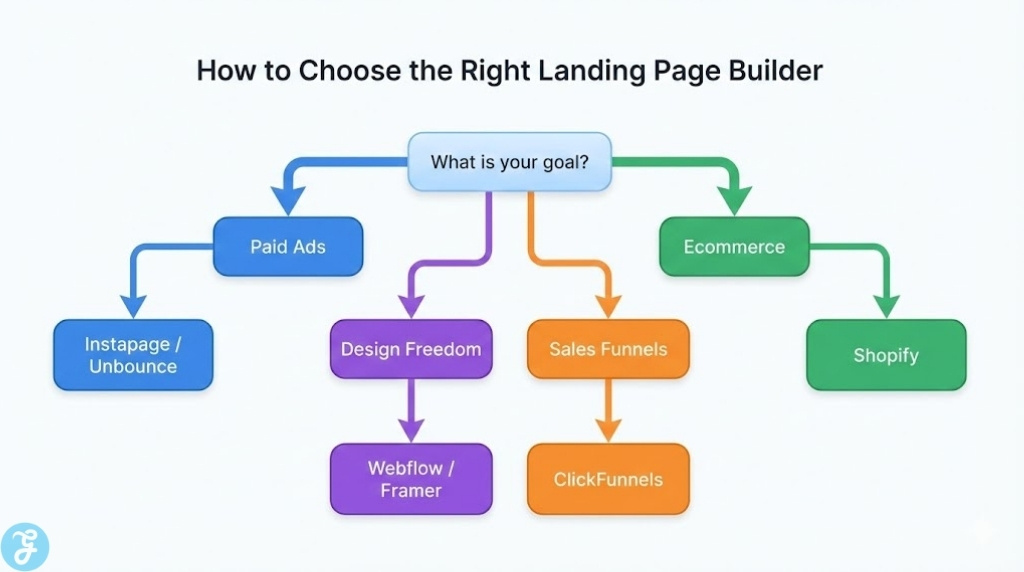
Small Decision Table
| If you need… | Choose… |
|---|---|
| Highest-performance paid ad pages | Instapage or Unbounce |
| CRM-first conversion tracking | HubSpot |
| Design-led pages with flexibility | Webflow or Framer |
| Funnels, upsells, and multi-step offers | ClickFunnels |
| E-commerce landing pages tied to products | Shopify page builders |
| Simple, fast, one-page validation | Card |
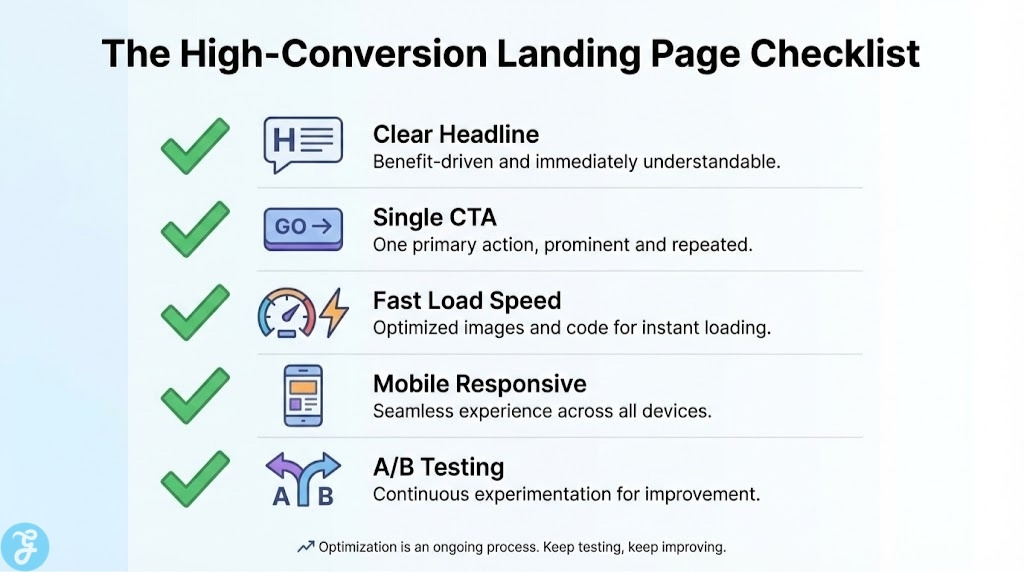
High-Conversion Landing Page Checklist
Here are 3 easy-to-follow steps:
Copy and Offer
-
Headline: Match the visitor’s intent in one clear promise
-
Proof: Add testimonials, logos, numbers, or outcomes
-
CTA: One primary action, repeated with consistent wording
-
Friction: Reduce form fields to the minimum needed
Design and UX
-
Above the fold: Value + CTA visible without scrolling on mobile
-
One path: Remove extra navigation unless it’s necessary
-
Speed: Compress images, reduce scripts, and test load time
Tracking and Testing
-
Events: Track form submits, button clicks, and key scroll points
-
A/B habit: Test one meaningful change at a time, on a schedule
-
Iteration loop: Ship → measure → learn → improve
To Sum Up
The best landing page builder for high conversions is the one you can use like a routine: build fast, launch clean, test weekly, and improve without drama. If you are ad-driven and serious about experimentation, go with a dedicated conversion platform built for testing and personalization. If you are design-led, pick a builder that helps you ship premium pages that feel effortless on mobile.
Whatever you pick, commit to the real conversion advantage: a steady cadence of small improvements. The teams that win are rarely the teams with the fanciest builder. They are the teams who keep shipping, keep learning, and keep simplifying the next step.