You may love bright art on your walls. But most prints use toxic inks, and fresh timber often hurts forests. You want decor that lifts your mood and cuts your carbon footprint.
Here is a fact: biophilic design can cut stress and boost mental health by up to 37%. This guide will show the best eco-friendly wall art options, from wood art to natural fiber tapestries.
We will even show how green panels and a humidifier can boost air quality. Keep reading.
Key Takeaways
- Biophilic design cuts stress and boosts mental health by up to 37%, driving demand for wood, moss, textile, and cork décor.
- Reclaimed wood wall art uses old barn beams milled with routers, sealed with low-VOC finishes, meets FSC standards, and slashes new timber demand.
- The Wheels Up Woven Wall Art Set costs $138, uses hand-woven rattan and hemp on a loom, fits bohemian or coastal styles, and dampens noise.
- Preserved moss panels—praised in a January 21, 2025 review and a March 4, 2025 case study—need no watering, trap fine particles, cut VOCs, and boost acoustic comfort.
- Cork wall tiles use oak bark harvested by hand, install in minutes without tools, add thermal insulation, resist mold, and lower your carbon footprint.
What is reclaimed wood wall art and why choose it?
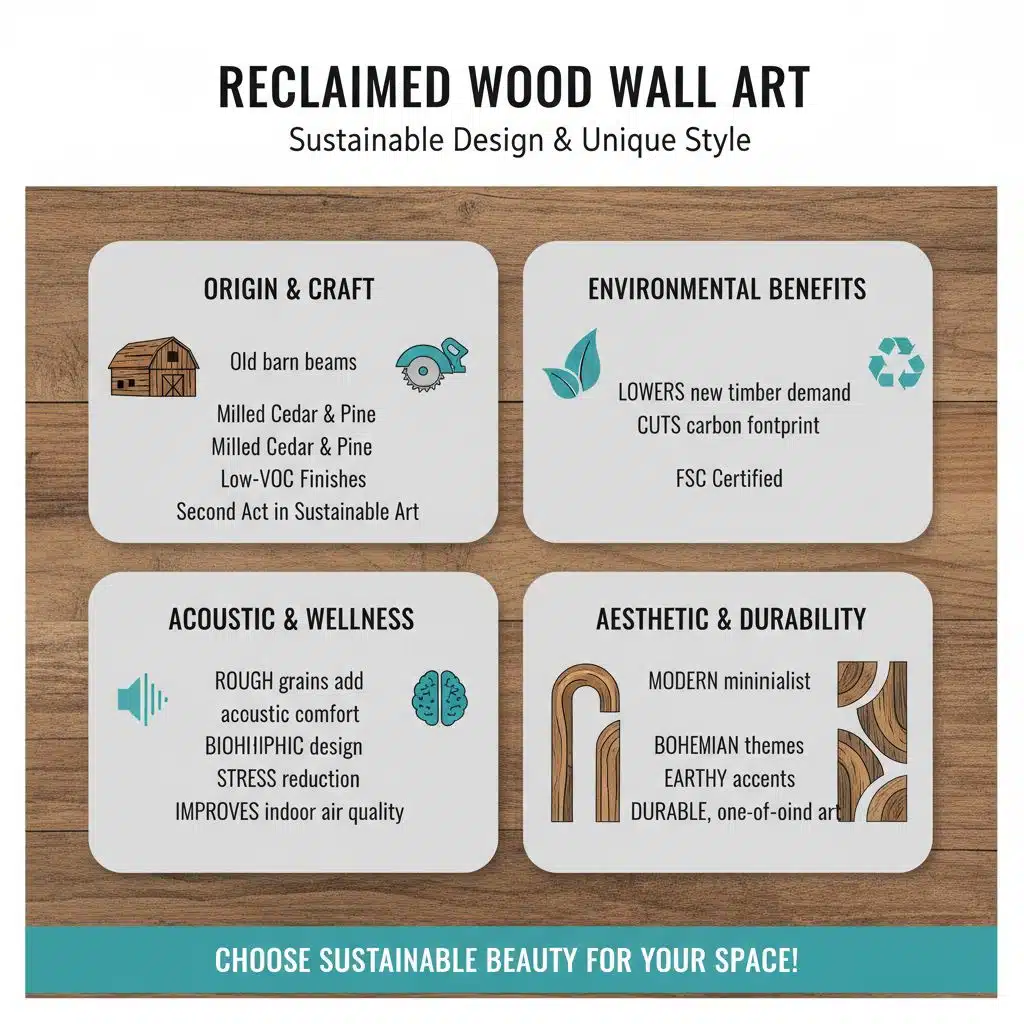
Old barn beams fuel stunning frames. Craftspeople mill cedar and pine planks with routers and sanders. They seal each board with low-VOC finishes. Each reclaimed plank starts life in a farmhouse, then finds a second act in sustainable wall art that sparks visual interest.
This type of art lowers new timber demand, cuts carbon footprint, and meets FSC standards for managed forests. Rough grains add acoustic comfort, spark biophilic design, and aid stress reduction in offices or learning spaces.
Modern minimalist and bohemian themes pair well with these earthy accents. Buyers gain durable, one-of-a-kind art made from recycled materials that support environmental protection and indoor air quality.
How do organic woven wall hangings enhance your decor?
Woven wall hangings bring texture and depth. Many pieces use rattan or hemp. They add three-dimensional decor and visual interest. Makers use sustainable materials and handweaving tools like a loom.
The Wheels Up Woven Wall Art Set costs $138.00. Its bronze and natural tones fit bohemian and coastal styles. Floral or landscape patterns link to biophilic design.
Each hanging serves as a focal point or accent. Neutrals like beige and taupe create calming atmospheres. Natural fiber art can improve acoustic comfort and cut noise. Handmade decor shows your style and artistic expression.
This choice supports sustainable living. You lower your carbon footprint with environmentally friendly art.
What are preserved moss wall panels and their benefits?
Preserved moss wall panels use real greenery treated with natural glycerin, so they stay soft and thriving without live roots. Architects praised them in a January 21, 2025 review on sustainable materials and in a March 4, 2025 case study on biophilic design.
Crews mount panels on drywall or cork tile underlays, and they add visual interest to modern interiors. They need no watering, pruning, or lighting, so they fit any busy space.
These panels cut noise and boost acoustic comfort, so offices feel calmer and focus improves. They trap fine particles and cut volatile organic compounds, enhancing air quality and stress reduction.
Their sustainable materials lower your carbon footprint and support forest stewardship council goals. Staff and visitors report mood lifts and better well-being, without live plant upkeep.
Why choose natural fiber tapestries for your walls?
Natural fiber tapestries bring soft texture to walls. They hang light and add visual interest in any room. Cotton and wool fibers come from forest stewardship council (FSC) certified farms.
Organic, non-toxic dyes maintain low volatile organic compounds (VOCs) levels. Earthy tones boost calm and support stress reduction. Artisans weave them with historical motifs and centuries-old skill.
These wall coverings excel at sound dampening for acoustic comfort. They reduce noise, improve workplace wellness, and comfort home offices. Lightweight fibers lower carbon footprint compared to heavy décor.
Biophilic design themes link to mental well-being and reduce environmental impact. Renewable materials, no pesticides, and sustainable practices limit disposal issues.
What makes handmade bamboo wall décor eco-friendly?
Handmade bamboo wall décor uses sustainable materials, cutting carbon footprint. This renewable resource needs little water, and it grows without pesticides. It sprouts in six to eight months, while hardwood takes decades.
Wall panels made from bamboo fiber link biophilic design with better soundscapes. They resist mold, and they break down naturally after use.
Craftspeople use organic cotton and linen for accents. Minimalist shapes and modern lines boost visual appeal in sustainable wall art. Pieces weigh under five pounds, so you hang them in minutes.
They pose no toxins, and they suit homes with kids and pets. They support healing environments, backed by research in environmental psychology.
How can upcycled metal art pieces transform your space?
Clever metal art made from sustainable materials reshapes that empty wall. A metal wall wine cork hanger at $110 adds function and flair. A patina wall art wine bar also costs $110 and invites lively chats.
The Ironworks Modern Metal Shelf lists at $218 but it is out of stock.
Each piece uses recycled materials. They cut down waste and shrink your carbon footprint. Solid steel forms last for years. You gain style and reduce environmental impact. Bold shapes boost visual interest.
They fit a biophilic design or an industrial loft vibe.
What are sustainable cork wall tiles and their advantages?
Harvesters peel bark from oak groves by hand, so trees regenerate bark and live on. Land stewards follow strict rules to guard those trees and help mitigate climate change. Cork wall tiles come from that bark, a renewable resource that cuts carbon footprint and checks environmental impact.
They link homes to nature through biophilic design, boost visual appeal, and cut noise with natural acoustic comfort, easing stress.
Install these light tiles in minutes, no heavy tools or pro help needed. Their thermal insulation keeps rooms toasty or cool, so HVAC systems work less. Antimicrobial surface resists mold and dust mites, for allergy relief and better wellbeing.
You find neutral tones and soft textures that pair with sustainable wall art or fine art prints, and then recycle or compost tiles at end of use.
Why opt for fair trade macramé wall art?
Fair trade macramé wall art uses plant-based textile and natural fibers, cutting the carbon footprint of home décor. Certified sourcing of sustainable materials lowers environmental impact and supports regenerative design.
Handmade knots tie biophilic design into built environments and boost acoustic comfort in shared spaces. Soft textures add stress reduction benefits and health benefits from calm, tactile surfaces.
Ethical consumerism lifts artisans with fair wages and honors traditional craft techniques. Brands list every step on a secure website so millennials can vet suppliers and sustainable products.
This sustainable wall art adds visual appeal and visual interest on any bedroom or office wall. Durability and custom sizing give long-term retention and may come with simple warranties.
What are the best biodegradable wallpaper options available?
Eco wallpapers cut carbon footprint and boost biophilic design. They use recycled paper or natural fibers.
- Natural Oak Weave Wallpaper, priced at $850, uses FSC timber and water based ink to bring acoustic comfort and visual appeal while it cuts carbon footprint.
- Natural Wood Art Deco Wallpaper, Peacock, at $850 shows green and blue hues from nature photography and serves as sustainable wall art, it carries an eco-cert label and non toxic paint that cuts VOCs.
- Grasscloth wallpaper uses organic grass strands for rich texture that aids stress reduction and biophilia, it peels off cleanly with no waste.
- Recycled paper wallcovering shows tree silhouettes or nature scenes in calm neutrals, it earns FSC certification and lowers environmental impact.
- Inkjet printer canvas prints use aqueous inks to press vivid nature photography on durable paper, they hang easily and tie to forest management support.
- Bamboo fiber murals craft soft scenes in green or beige tones, they rely on fast growing sustainable materials that slash resource use.
- Cork tile wallpaper fits thin cork squares for warmth and sound dampening, it comes in natural tones and adds texture in a modern room.
- Hemp blend wallcover offers subtle weave in blue, green, or ivory palettes drawn from wood and grass themes, it runs on renewable crops to ease carbon load.
- Acrylic pigment panels print ocean or forest motifs with non toxic paints on recyclable paper, they boost visual interest and maintain healthy air.
- Bio paste wall mural sheets use clay and plant binders to stick prints on recycled paper, they wash off with water and leave no trace.
How do driftwood sculptures and wall art add character?
Driftwood wall art uses reclaimed natural resources and sustainable materials. Each sculpture shows organic shapes and rough wood grain. Artisans repurpose marine debris to cut carbon footprint.
Pieces meet strict ecological and environmental policies. Coastal and rustic styles gain a focal point in living rooms or entryways.
Driftwood offers natural sound absorption and adds acoustic comfort. Wood textures ease tension and support stress reduction. Groupings boost visual appeal in entryways or common areas.
This art fits biophilic design goals and soothes neurodiverse visitors. Canvases and recycled materials work well, but driftwood holds depth like few sustainable wall art options.
What are the benefits of natural stone wall décor?
Natural stone art lasts for decades. It needs little processing, and that cuts the carbon footprint. The solid rock offers a timeless, elegant look, with distinct shades and rough texture.
This variation creates visual interest and boosts visual appeal in any room. Many designers call it sustainable wall art thanks to its classic charm.
Stone fits indoor or outdoor walls without off-gassing chemicals. It can improve indoor air quality and boost acoustic comfort. You can find stone installations as wall panels, sculptures, or accent pieces in many styles.
The low-waste process cuts environmental impact and supports sustainable materials. Its earthy feel can ease stress and deepen your bond with nature.
How is recycled paper used in art installations?
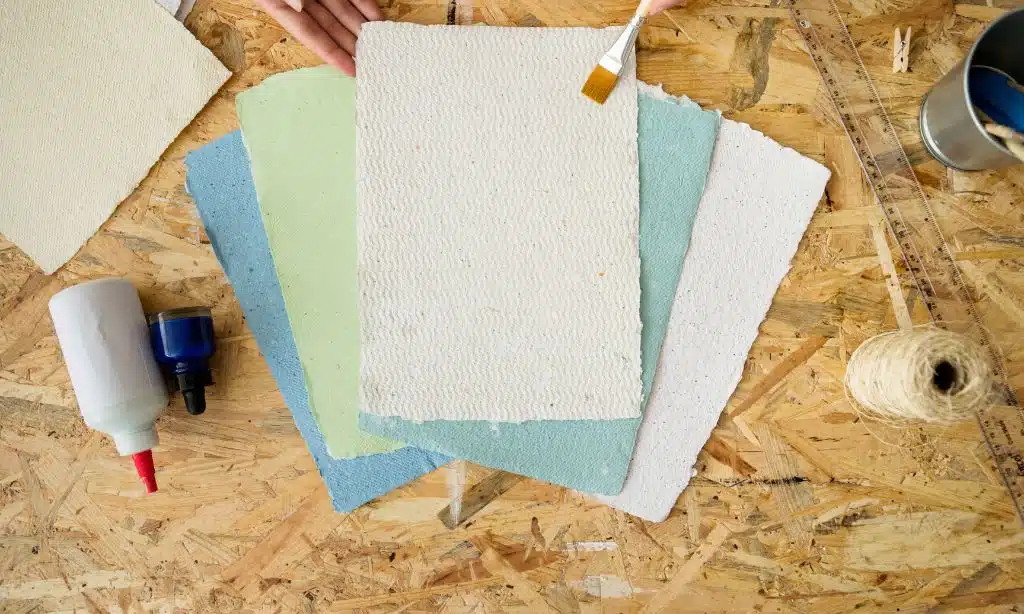
Artists craft collages, origami pieces and large paper prints from recycled fibers and sustainable materials. They use non-toxic, water-based inks for vivid color. Makers mount panels on walls beside canvas prints for layered depth.
This saves resources and cuts carbon footprint.
Installations boost biophilic design and offer acoustic comfort to ease stress. Viewers enjoy strong visual interest and a green experience that upcycles materials. Some studios print a nature photographer’s shots on sheets to tie art to nature.
Each piece stays affordable, biodegradable and easy to compost.
What are clay and terracotta wall accents?
Clay and terracotta wall accents start as earth clay, shaped by hand with modeling tools and fired in a kiln. These organic tiles, masks, and sculptural panels display earthy reds, warm browns, and tactile grooves, adding visual appeal to sustainable wall art.
They suit coastal, artistic, and countryside home decor, and they link your space to biophilic design.
These wall accents use sustainable materials and biodegrade over time. Clay reduces carbon footprint and cuts environmental impact. They arrive non-toxic and safe, while they dampen noise for acoustic comfort.
They boost visual interest and support stress reduction with their natural textures and colors.
Why choose paintings made with eco-friendly dyes?
Eco-friendly dyes keep indoor air clear, since they omit harmful VOCs. Water-based inks and paints improve indoor air quality, which lowers breathing risks for kids and pets. Natural pigments derive from earth minerals or organic compounds.
Such pigments cut pollution, shrink a painting’s carbon footprint, and lower environmental impact. Art with these dyes can add credits toward green building certification.
Vibrant hues last for years and maintain strong color, so walls retain visual appeal. Sustainable wall art lifts mood, supports biophilic design, and can aid stress reduction. These pieces pair well with recycled materials or canvas prints to tie a room together and boost visual interest.
What defines certified sustainable canvas prints?
Certified sustainable canvas prints use FSC-certified cotton and non-toxic inks. Various brands print on sustainable materials that carry eco-certified seals in their sustainable wall art lines.
Makers cap carbon footprint and deliver lasting color and visual appeal.
Each piece features nature-connected themes to support biophilic design and stress reduction. Production rules require recycled materials, non-toxic adhesives and documentation of eco-friendly status.
Design-savvy, eco-conscious consumers pick these prints for visual interest, acoustic comfort and small impact on the environment.
What are the benefits of choosing eco-friendly wall art?
Eco-friendly wall art uses sustainable materials like salvaged wood, cork or biodegradable fibers. This choice cuts environmental impact and shrinks your carbon footprint. Makers craft pieces from salvaged materials or fabric prints.
They avoid harmful emissions with non-toxic paints and coatings. Parents and pet owners can relax knowing no off-gassing lurks in their child’s room.
Designs with plant motifs and wooden panels tap into biophilic design, bringing a green hug to walls. They boost acoustic comfort, muffling echoes in large rooms. You get stress reduction as you gaze at earthy tones and soft textures.
Art pieces still grab attention, adding bold visual interest while honoring nature. They last for years, proving high quality and durability.
What are the best tips for displaying eco-friendly art?
Proper display lifts your art off the wall. These tips blend style with eco-friendly flair.
- Hang art at eye level, about 57 inches from floor to center, with a laser level and measuring tape for precision.
- Space pieces at least 3 inches apart, letting walls breathe and boosting acoustic comfort in lively rooms.
- Mix wall hangings, canvas prints, and sculptures for depth, texture, and visual appeal, drawing the eye across a gallery wall.
- Align art shape with wall shape and room scale, using biophilic design to echo natural patterns and balance.
- Stick to a theme and color palette, matching sustainable wall art to room purpose, like calming scenes for stress reduction in bedrooms.
- Use natural lighting or smart bulbs like Philips Hue to highlight textures and sustainable materials with a warm glow.
- Select high-quality recycled materials and sustainable materials, cutting environmental impact while ensuring lasting craftsmanship.
- Consider moss wall panels for living green accents, they boost acoustic comfort and tie decor to nature.
- Choose sturdy picture hangers and stainless steel hooks rated for each piece’s weight, protecting both wall and art.
Takeaways
Your walls can tell a story, and they can do it with earth-friendly charm. You can pick recycled materials, art prints, or bamboo decor pieces to spark biophilic design and stress reduction vibes.
Natural fabrics and moss panels boost visual interest and acoustic comfort in any room. A pinch of creativity, a dash of green, and your space feels alive. Embrace sustainable materials and watch your walls come to life.
FAQs on Best Eco-Friendly Wall Art
1. What sustainable materials can I use for sustainable wall art?
Use bamboo poles, cork slabs, and old metal bits. They cut waste and add natural flair.
2. How do recycled materials and canvas prints work in green art?
Old bottles, scrap plastic and wood blend with canvas prints; they add color, style, and visual appeal. Plant inks keep it green.
3. What is biophilic design, and how does it tie into eco-friendly wall art?
Biophilic design brings nature indoors. It uses leaves, wood grains, flowing lines. You feel calm, like a walk among trees.
4. Can eco-friendly art boost acoustic comfort in my space?
Yes. Panels made from cork or recycled polyester absorb noise; they trim echo like a mute button on loud chatter. Think of it as a spa treatment for your ears. They act as art and sound shields.