Let’s be honest: saving money is hard work. Between rent, groceries, and the occasional “I deserve this” treat, putting cash aside for the future often feels like a chore we’d rather skip. But what if you could grow your wealth without even thinking about it? What if your morning coffee could actually help fund your retirement?
That is exactly where the best automated investing apps come into play. These tools have completely flipped the script on personal finance. They take the friction out of saving by turning small, unnoticed amounts of money into significant investment portfolios over time. Whether you want to invest your spare change or set up a “set it and forget it” portfolio that manages itself, there is an app out there tailored to your life.
In this guide, we are going to break down the top 6 apps that make investing accessible, affordable, and completely automatic. We’ve tested the features, dug into the fee structures, and compared the returns to help you find the perfect match for your wallet.
What Are Automated Investing and Micro-Savings Apps?
Before we jump into the reviews, it helps to clear up exactly what these tools do. While they often get lumped together, there is a subtle but important difference between “micro-savings” and “automated investing.”
Micro-Savings Explained
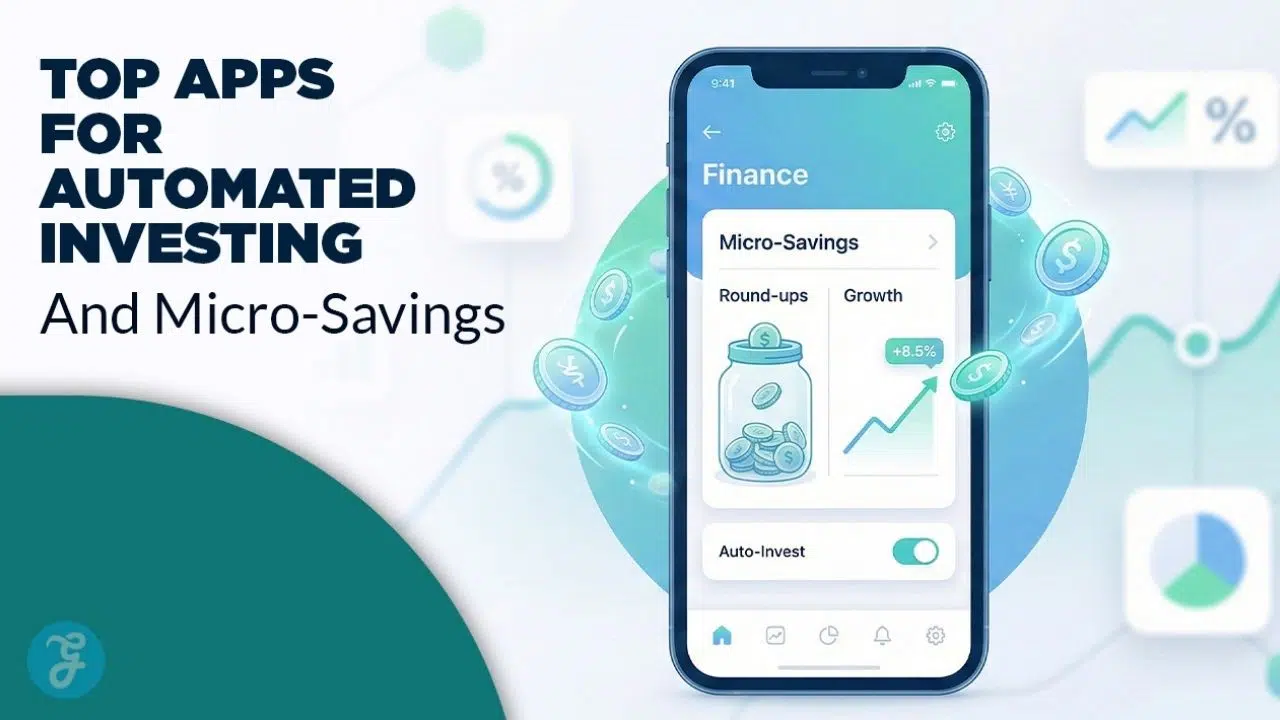
Micro-savings apps are all about volume. They focus on small, frequent contributions that you barely notice. The most famous example is the “round-up.” When you buy a latte for $4.50, the app rounds the purchase up to $5.00 and sweeps that extra $0.50 into a separate account. It sounds like pennies, but those cents add up to hundreds of dollars over a year without you ever feeling the pinch.
Automated Investing (Robo-Advisors)
Automated investing apps take that saved money and put it to work. Instead of letting your cash sit in a savings account earning dust, these apps invest it in the stock market—usually in Exchange Traded Funds (ETFs). They function as “robo-advisors,” which means they use smart algorithms to build and manage a diversified portfolio for you based on your goals and risk tolerance. You don’t pick stocks; the app does the heavy lifting for you.
How We Ranked the Best Apps?

With fintech exploding right now, picking the right tool can feel like finding a needle in a haystack. To identify the best automated investing apps for 2026, we didn’t just look at who had the flashiest ads. We evaluated them based on four critical criteria that actually impact your money.
Key Evaluation Criteria
- Ease of Use: Is the app intuitive? We looked for platforms that allow you to go from “download” to “invested” in under 10 minutes. If it requires a finance degree to navigate, it didn’t make the list.
- Fees: High fees are the silent killer of investment returns. We scrutinized expense ratios, monthly subscriptions, and hidden costs to ensure you keep more of what you earn.
- Automation Features: Does it truly run on autopilot? We prioritized apps offering round-ups, recurring deposits, and “smart” transfers that analyze your spending before moving money.
- Investment Options: We looked for apps that offer diverse portfolios, socially responsible investing (ESG) options, and access to retirement accounts like IRAs.
The 6 Best Apps for Automated Investing
Here are our top picks for the apps that strike the perfect balance between automation, robust features, and reasonable costs.
1. Acorns: Best for Hands-Off Micro-Investing
Acorns is the heavyweight champion of micro-investing. It practically invented the “round-up” model and remains the best option for people who want a completely passive experience. If you struggle to save money because you spend everything in your checking account, Acorns is designed for you. The platform has evolved beyond just spare change, now offering banking products, retirement accounts, and educational tools for kids, all wrapped in a sleek, nature-themed interface that visualizes your money as a growing tree.
| Feature | Details |
| Minimum Investment | $0 to open, $5 to invest |
| Management Fee | $3, $6, or $12 per month |
| Round-Ups | Automatically invests spare change from linked cards |
| Account Types | Individual, Retirement (IRA), Custodial (Early) |
| Bonus Feature | Earn bonus investments when shopping at partner brands |
Acorns removes the psychological barrier to entry. You don’t feel the money leaving your account because the amounts are so small. It is the perfect “training wheels” app for new investors. However, be mindful of the fee: paying $3/month on a $100 balance is expensive (36% annual fee!). It works best once you build up a balance of $500+. The “Acorns Earn” feature is particularly underrated; it essentially gives you free money for shopping at places like Nike or Walmart, which gets deposited directly into your investment account.
2. Stash: Best for Learning to Invest
If Acorns is for people who want to ignore their investments, Stash is for people who want to understand them. It combines automation with the ability to pick your own stocks and funds, acting as a bridge between a robo-advisor and a standard brokerage. Stash excels at breaking down complex financial jargon into plain English. Instead of throwing ticker symbols at you, it categorizes investments into relatable themes like “Clean & Green” or “American Innovators,” making it easier to align your money with your personal values.
| Feature | Details |
| Minimum Investment | $5 |
| Management Fee | $3 or $9 per month |
| Stock-Back Card | Earn fractional shares of stock when you spend |
| Account Types | Personal, Retirement, Custodial (Kids) |
| Bonus Feature | “Smart Stash” analyzes spending to save automatically |
Stash empowers you. It uses clear, human language to explain complex financial concepts. The Stock-Back card is a brilliant way to align your spending with your investing—you become an owner of the places you shop at every day. If you buy coffee at Starbucks using the card, you earn a fraction of a Starbucks share. This creates a powerful mental loop where spending feels less like draining your account and more like building your portfolio. The educational content is also top-tier, offering quizzes and guides that help you level up your financial literacy.
3. Betterment: Best Overall Robo-Advisor
Betterment is a powerhouse in the automated investing world. It is less of a “micro-savings” app and more of a full-service financial manager that lives in your pocket. It is ideal for people who have moved past “spare change” and want to build serious wealth for retirement or a house down payment. Betterment’s algorithm is built on Nobel Prize-winning research, aiming to maximize your returns for every level of risk you take. It shines in its ability to handle complex goals, allowing you to set up different “buckets” for different life events.
| Feature | Details |
| Minimum Investment | $0 ($10 to start investing) |
| Management Fee | $4/mo or 0.25% annually |
| Tax Strategy | Automated Tax-Loss Harvesting included |
| Account Types | Individual, Joint, IRA, Trust, 401(k) |
| Bonus Feature | High-yield cash account for emergency funds |
Betterment is sophisticated yet simple. It offers professional-grade investment management at a fraction of the cost of a human financial advisor. The tax optimization alone can often pay for the fees. For example, its Tax-Loss Harvesting feature automatically sells losing investments to offset gains, lowering your tax bill—a strategy usually reserved for wealthy clients. If you have a larger balance or can deposit $250/month, the 0.25% fee is incredibly competitive. It also offers socially responsible portfolios for those who want to avoid investing in oil or weapons.
4. Wealthfront: Best for High-Yield Savings and Automation
Wealthfront is often compared to Betterment because they are the two leaders in the robo-advisory space. However, Wealthfront stands out with its superior cash management features and its vision of “Self-Driving Money.” This app is perfect for the hands-off investor who wants their entire financial life automated, from paying bills to investing the surplus. Wealthfront’s “Path” tool is arguably the best free financial planner on the market, linking all your external accounts to visualize exactly when you can retire or buy a home.
| Feature | Details |
| Minimum Investment | $500 |
| Management Fee | 0.25% annually |
| Cash Account | 3.30% APY (variable) with no fees |
| Account Types | Individual, Joint, IRA, 529 College Plan |
| Bonus Feature | Customizable portfolios with sector-specific ETFs |
The automation here is next-level. Once you set up your rules, Wealthfront acts like a financial autopilot. You can tell it to keep $3,000 in your checking account and invest every dollar above that limit automatically. Plus, the ability to customize your portfolio gives you the best of both worlds: professional management with a personal touch. If you believe in the future of AI or clean energy, you can tilt your portfolio in that direction while keeping the core diversified. The cash account is also a standout, offering interest rates that consistently beat traditional banks.
5. SoFi Invest: Best for Member Benefits and Ecosystem
SoFi started as a student loan refinancing company but has grown into a massive “financial superstore.” SoFi Invest is fantastic because it lives inside the same app where you can bank, borrow, and check your credit score, making it a true one-stop shop. While SoFi recently shifted from a free model to charging a 0.25% fee for its automated investing, it remains a top contender due to the immense value provided to members. This includes free access to financial planners, lower loan rates, and a seamless integration between your spending and investing life.
| Feature | Details |
| Minimum Investment | $50 |
| Management Fee | 0.25% annually |
| Advisor Access | Free unlimited access to Certified Financial Planners |
| Account Types | Individual, IRA, Joint |
| Bonus Feature | Member rate discounts on SoFi loans |
The real value of SoFi isn’t just the algorithm; it’s the ecosystem. Paying 0.25% is standard for the industry, but SoFi bundles in benefits that others charge hundreds for—specifically, access to human financial advisors. You can schedule a call with a Certified Financial Planner (CFP) to ask about buying a home, paying off debt, or planning for a baby, all at no extra cost. If you are already a SoFi member for banking or loans, using their investing product makes your financial management incredibly streamlined.
6. Robinhood: Best for Hands-On Investors and Retirement Match

Robinhood is famous for democratizing stock trading with its slick interface and commission-free model. While known for active trading, it has recently added features that make it a strong contender for the best automated investing apps list, specifically for retirement. Robinhood has aggressively entered the retirement space by offering an IRA match, which is essentially free money. Combined with their “Recurring Investments” feature, you can turn this active trading app into a powerful passive savings tool.
| Feature | Details |
| Minimum Investment | $1 |
| Management Fee | $0 (Gold subscription is $5/mo) |
| IRA Match | 1% match for free users; 3% match for Gold members |
| Automation | Recurring investments for stocks and ETFs |
| Bonus Feature | 24/7 customer support and extended trading hours |
The IRA match is a game-changer. A 3% guaranteed return on your contributions (for Gold members) is unheard of in the brokerage world. If you max out your IRA, that match alone covers the cost of the Gold subscription and then some. While Robinhood is known for active trading, using its automated recurring investment tools combined with the retirement match makes it a top-tier choice for long-term savers as well. You can set it to buy $50 of the S&P 500 every payday and simply walk away, letting the match and the market do the work.
Comparison of the Best Automated Investing Apps
To help you make a quick decision, here is a side-by-side look at how these apps stack up against each other.
| App Name | Best For | Min Investment | Management Fee | Round-Ups? |
| Acorns | Beginners & Spare Change | $0 to open | $3 – $12 / mo | Yes |
| Stash | Learning to Invest | $5 | $3 – $9 / mo | Yes (Stock-Back) |
| Betterment | Goal-Based Automation | $0 | $4/mo or 0.25% | No |
| Wealthfront | Hands-off Portfolio | $500 | 0.25% | No |
| SoFi | Ecosystem & Advice | $50 | 0.25% | No |
| Robinhood | IRA Matching | $1 | $0 (Gold $5/mo) | No |
Key Benefits of Automating Your Finances
You might be wondering, “Why should I hand over my hard-earned cash to an algorithm?” Here is why automating your finances is one of the smartest moves you can make.
Consistency is Key
The biggest enemy of investing is procrastination. We all plan to invest, but life gets in the way. Automation ensures you invest every single week or month, regardless of how busy you are. It treats investing like a bill that must be paid, guaranteeing your wealth grows. By removing the decision-making process, you prevent “analysis paralysis” where you do nothing because you are afraid of making the wrong choice.
Dollar-Cost Averaging
By investing small amounts regularly, you practice “dollar-cost averaging.” This means you buy more shares when prices are low and fewer when prices are high. Over time, this smooths out the market’s bumps and often leads to a lower average cost per share than trying to time the market. It turns market volatility from a scary risk into a mathematical advantage, ensuring you are always buying at an average price rather than a peak price.
Emotion-Free Investing
When the market crashes, humans panic and sell. Robots don’t. Automated apps keep you invested during downturns, which is historically the best way to recover and grow. They take the emotion out of the equation, preventing you from making expensive mistakes. Most financial mistakes happen when people try to outsmart the market; automation protects you from your own worst impulses.
Potential Drawbacks to Watch Out For
While these apps are fantastic, they are not perfect. It’s important to go in with your eyes open.
Flat Fees on Small Balances
This is the biggest trap. If you use an app like Acorns that charges $3/month, but you only have $100 in the account, you are paying a 36% annual fee. That effectively wipes out any investment gains. Flat-fee apps are great, but only once you have a balance of at least $500–$1,000. Before signing up, do the math: divide the annual fee by your expected balance. If the result is higher than 0.50%, you might be paying too much.
Limited Customization
With most robo-advisors, you can’t say, “I hate this specific company, take them out of my portfolio.” You generally have to accept the bundle of ETFs they give you. If you want total control over every stock you own, a standard brokerage might be better. While some apps like Wealthfront allow for some tweaking, you are generally buying a pre-packaged dinner rather than cooking from scratch. This is the trade-off for simplicity.
Final Thoughts
The best time to start investing was yesterday. The second best time is today. The best automated investing apps have removed the complexity, the high fees, and the intimidation factor from the process. If you are just starting out and need a nudge, download Acorns or Stash to get comfortable with the idea of your money growing. If you are ready to build a serious long-term portfolio, Betterment or Wealthfront are excellent companions that will scale with your wealth. And if you want to maximize every dollar with zero fees, SoFi is hard to beat.