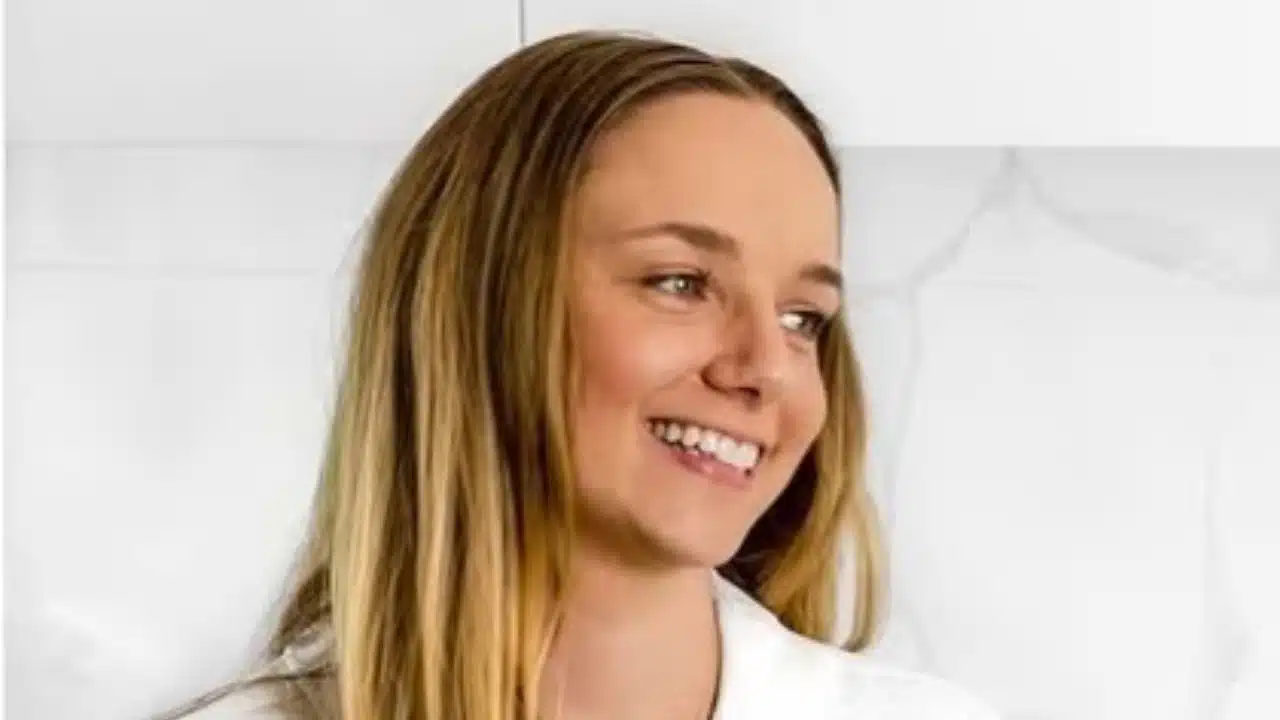
Gold Coast food influencer Stacey Hatfield, 35, died on Saturday, October 12, 2024, after suffering catastrophic complications during an attempted “free birth” at her home. Her partner confirmed the newborn baby girl survived. The tragedy has prompted urgent warnings from medical experts about the extreme dangers of unassisted childbirth, particularly for high-risk pregnancies.
Key Facts: What We Know
- Who: Stacey Hatfield (also known as Stacey Eden), 35, a prominent Gold Coast-based food and lifestyle influencer.
- What: Ms. Hatfield died after attempting a “free birth”—a birth deliberately unattended by medical professionals.
- When: The birth and subsequent medical emergency occurred on Saturday, October 12, 2024.
- Complications: Her partner, Charlie Isaacs, stated she suffered a severe postpartum haemorrhage (PPH) and a suspected amniotic fluid embolism (AFE), both life-threatening obstetric emergencies.
- Outcome: Paramedics performed CPR and transported Ms. Hatfield to Gold Coast University Hospital, but she could not be revived. Her baby, named Isla, survived and is healthy.
- Context: Ms. Hatfield had two previous children via Caesarean sections, making any vaginal birth—especially one outside a hospital—categorised as “high-risk” by medical standards.
- Response: A report is being prepared for the Queensland Coroner. Medical bodies have issued strong statements clarifying the risks.
What Happened on October 12
The Gold Coast community and Ms. Hatfield’s thousands of social media followers have been left in shock following her sudden death.
Ms. Hatfield, known for her vibrant content focused on family and food, had been documenting her third pregnancy. According to her partner, Charlie Isaacs, she was determined to have a “natural” birth at home, following two previous C-sections (a procedure known as a VBAC2, or vaginal birth after two Caesareans).
In a heartbreaking statement shared online, Mr. Isaacs detailed the tragic sequence of events. He said Ms. Hatfield successfully delivered their baby girl, Isla, at their home. However, shortly after the birth, she complained of feeling unwell and suddenly lost consciousness.
Mr. Isaacs said she suffered a “severe postpartum haemorrhage and an amniotic fluid embolism,” two of the most dangerous and unpredictable complications in obstetrics.
Paramedics from the Queensland Ambulance Service (QAS) were called to the home. A QAS spokesperson confirmed they attended a “medical incident” at a private residence in the Gold Coast suburbs on that day and transported one patient in critical condition to Gold Coast University Hospital.
Despite emergency efforts at the scene and at the hospital, Ms. Hatfield could not be saved.
The Human Toll: ‘My Whole World Has Been Shattered’
The tragedy has left a deep void for Ms. Hatfield’s family. A GoFundMe campaign established by friends to support Mr. Isaacs and the couple’s three children (Ms. Hatfield’s two children from a previous relationship and the newborn Isla) has already raised tens of thousands of dollars.
On the fundraising page, Mr. Isaacs expressed his grief: “My whole world has been shattered into a million pieces. I am completely lost and broken… Stacey was an amazing mother, and she was so excited to bring our beautiful baby girl into the world.”
The influencer community has responded with an outpouring of tributes, remembering Ms. Hatfield for her “bubbly” and “positive” personality. However, the tragedy has also ignited a fierce and often painful online debate about childbirth choices, medical advice, and the limits of patient autonomy.
‘Free Birth’ vs. Planned Home Birth: A Critical Distinction
Medical experts have been quick to draw a sharp line between a planned home birth and a free birth, which they describe as a high-stakes gamble.
- Planned Home Birth: This involves registered midwives, rigorous screening for low-risk pregnancies, medical equipment (like anti-haemorrhage drugs and oxygen), and a clear, established emergency transfer plan to a nearby hospital.
- Free Birth (or Unassisted Birth): This is the deliberate choice to give birth without any registered medical or midwifery professionals present.
Dr. Gaithri Hiralal, a Gold Coast obstetrician and councillor for the Royal Australian and New Zealand College of Obstetricians and Gynaecologists (RANZCOG), was unequivocal about the dangers.
RANZCOG, the peak body for obstetricians, explicitly advises against VBAC2 attempts outside of a hospital setting due to the high risk of uterine rupture, which can be fatal for both mother and baby.
The Data: Risks, Rates, and Realities in Australia
Ms. Hatfield’s death highlights the statistical realities of childbirth, which, while safer than ever in a hospital setting, still carries inherent risks that are magnified without medical supervision.
1. Home Birth Prevalence in Australia
Planned home births remain rare in Australia. According to the Australian Institute of Health and Welfare (AIHW), the vast majority of births occur in conventional hospital settings.
- 0.9%: In 2021 (the latest comprehensive data year), just 0.9% of the 309,996 babies born in Australia were born at home. This figure includes both planned births with midwives and unassisted births.
- 96.3%: In contrast, 96.3% of births occurred in hospitals.
2. The Specific Dangers: PPH and AFE
The complications Ms. Hatfield reportedly suffered are prime examples of why medical experts urge high-risk women to birth in hospitals.
- Postpartum Haemorrhage (PPH): This is a leading cause of maternal death globally. In Australia, however, it has a low fatality rate because of rapid hospital interventions like uterine massage, medication (Oxytocin/Syntocinon), blood transfusions, and emergency surgery. These interventions are not available in a “free birth.”
- Amniotic Fluid Embolism (AFE): This is an extremely rare (estimated 1-2 cases per 100,000 births) but catastrophic event where amniotic fluid enters the mother’s bloodstream, causing a severe allergic-like reaction, cardiovascular collapse, and massive bleeding. It has a maternal mortality rate as high as 80%, even with expert hospital care.
3. The Risk of VBAC2
The decision to attempt a vaginal birth after two previous C-sections (VBAC2) placed Ms. Hatfield in a high-risk category from the outset.
- 1-2% Risk: The risk of uterine rupture during a VBAC2 is estimated to be between 1% and 2%. While this number seems small, a rupture is a life-or-death emergency for both mother and baby, requiring an immediate C-section within minutes to prevent brain damage or death. (Source: RANZCOG, “Birth after previous Caesarean Section” Guideline, 2019)
The Australian College of Midwives (ACM) supports home birth for low-risk women as a safe choice, but their position statement clearly outlines that this model is “provided by a registered midwife… within a safe and supportive system.” (Source: ACM, “Planned Home Birth Position Statement”). Ms. Hatfield’s “free birth” falls far outside this protected medical model.
Official Response and What Happens Next
The incident is now the subject of an official investigation.
A spokesperson for the Queensland Coroner’s Court confirmed that the death of Stacey Hatfield had been referred to them. A coroner will investigate the circumstances surrounding her death and will ultimately produce a finding that may include recommendations to prevent similar tragedies.
Queensland Health and the Gold Coast University Hospital have not commented on the specific case, citing patient confidentiality, but have reiterated their commitment to following national safety guidelines for maternity care.
This tragic event serves as a devastating reminder of the risks involved in pregnancy and childbirth. While the allure of a “natural” experience is powerful for many, medical experts argue this autonomy must be balanced against the proven, life-saving capabilities of modern obstetric care, especially when clear, high-risk factors are present.
The focus now remains on supporting a grieving partner and three children who have lost their mother in the most tragic of circumstances.