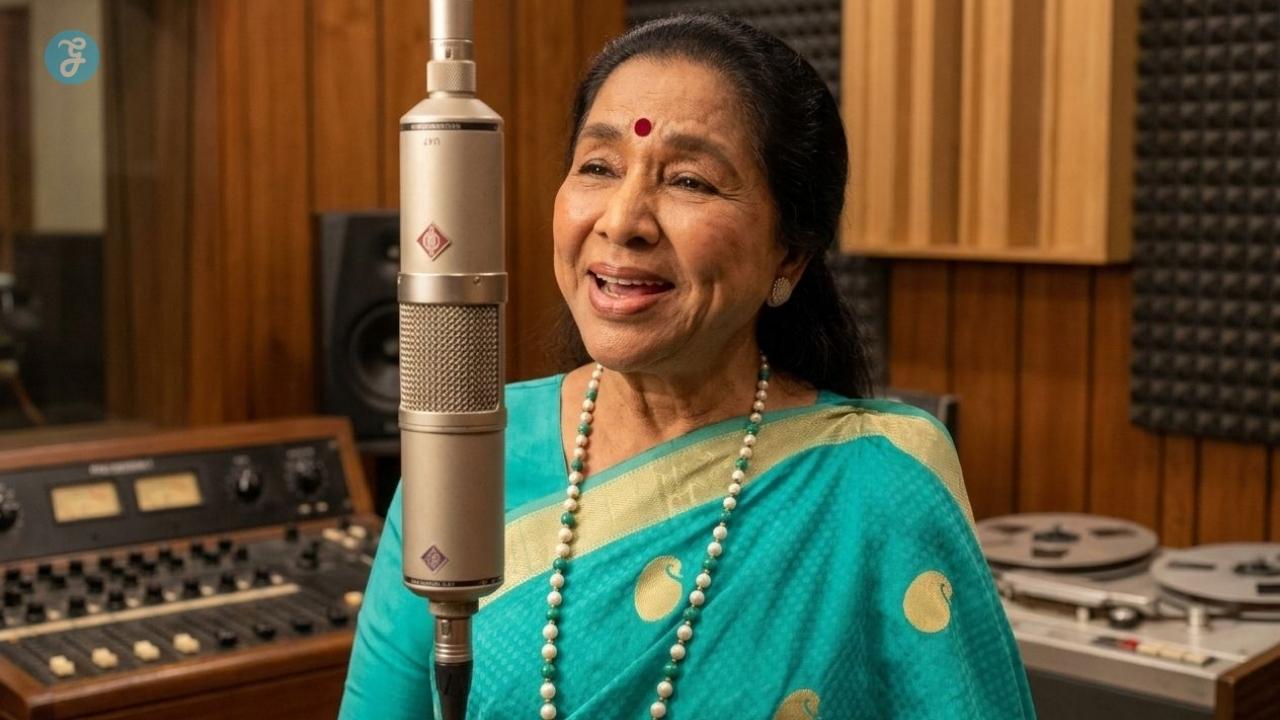
Asha Bhosle, the undisputed queen of versatility and the vibrant heartbeat of Indian playback singing, has left us at the age of 92, marking the end of a monumental era in global music. For over eight decades, her voice was the soundtrack to a nation’s evolving identity, capturing the playful exuberance of youth, the deep melancholy of heartbreak, and the timeless grace of classical traditions.
Her passing on April 12, 2026, creates a profound void in the cultural fabric of the subcontinent. As we reflect on her unparalleled journey, it becomes clear that we have not just lost a legendary singer; we have lost the very spirit of reinvention in Indian cinema.
A Nation Mourns at Shivaji Park
The grief that swept across the nation the moment the news broke was palpable. Admitted to Breach Candy Hospital in Mumbai for extreme exhaustion and a persistent chest infection, she fought with the same quiet tenacity that defined her early life. Ultimately, her son Anand Bhosle confirmed the heartbreaking reality of her multi-organ failure.
As thousands gather for her final rites at Shivaji Park, the atmosphere is heavy with the melodies she gifted the world. From industry veterans to young admirers who discovered her through digital remixes, the mourning transcends generational divides. It is a testament to a woman whose artistry was never confined to a single era.
We remember her today not just for the staggering volume of her work, over 12,500 songs in multiple languages, but for the sheer emotional resonance she brought to every single note. To understand the magnitude of this loss, one must look back at the arduous path she walked, carving an empire out of an industry that initially refused to give her the crown.
The Genesis of a Legend and the Mangeshkar Shadow
The story of Asha Bhosle’s rise is one of the most compelling narratives of grit and determination in the history of Indian entertainment. Born on September 8, 1933, in the small hamlet of Goar in Sangli State, she was steeped in musical excellence from birth. However, pedigree alone does not guarantee a path to the top.
Finding Her Early Voice
Trained initially by her father, the revered classical vocalist Deenanath Mangeshkar, she was thrust into the professional world far too early. Following her father’s untimely death, a ten-year-old girl stepped up to the microphone to record her first Marathi song for the film Majha Bal in 1943. Her Hindi film debut followed in 1948 with the film Chunaria.
Breaking the Mold in Hindi Cinema
Yet, the golden era of Hindi cinema was fiercely competitive, dominated by established giants like Shamshad Begum, Geeta Dutt, and, most formidably, her own elder sister, Lata Mangeshkar. Industry composers often viewed Lata as the quintessential voice of the pure, virtuous heroine. Consequently, the younger sibling was frequently handed the songs that were deemed too Western, too fast-paced, or too bold, often relegated to vamps and cabaret dancers.
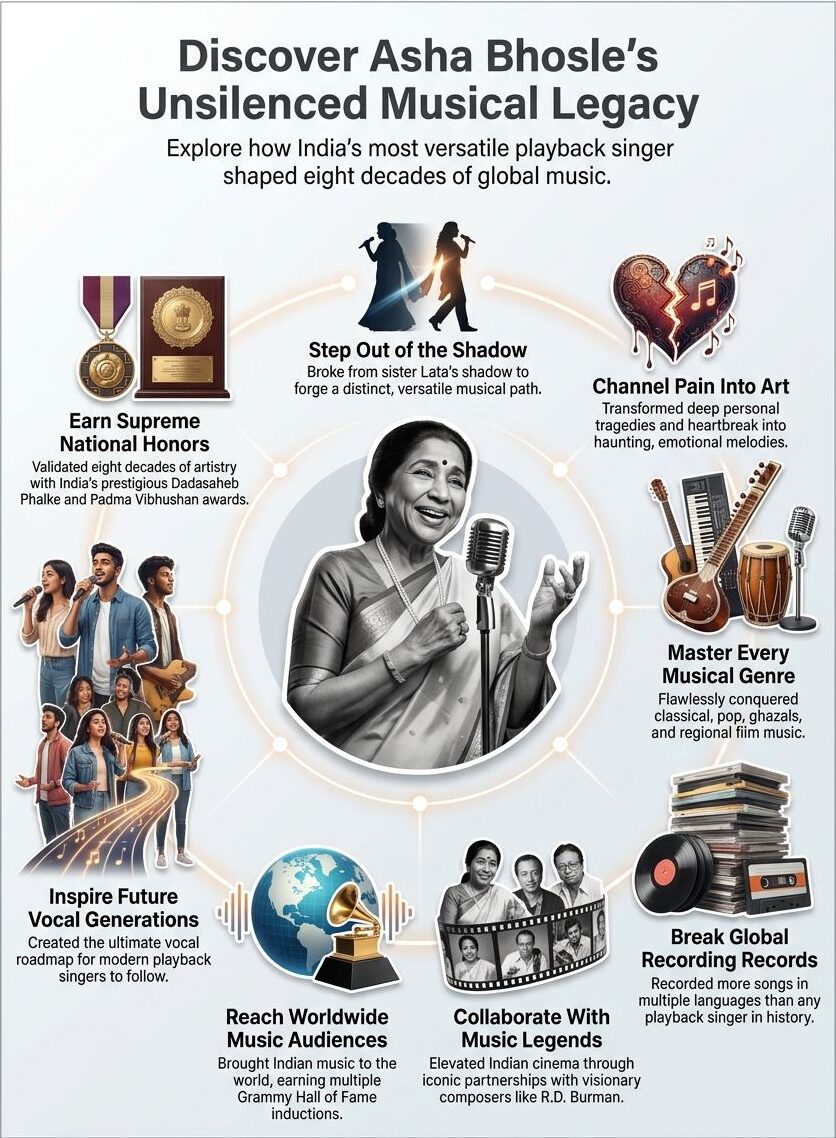
Instead of retreating into the shadows of her family’s legacy, she took these rejected scraps and spun them into absolute gold. She injected a distinct, mischievous charm and theatrical flair into her performances. She didn’t just sing the notes; she acted them out behind the microphone, slowly forcing the industry to recognize her not merely as a sister, but as a singular, irreplaceable powerhouse.
The Golden Metamorphosis and Genre Mastery
The late 1950s marked a definitive turning point in her career. It was the era where she shattered the restrictive boxes the industry tried to place her in, initiating a musical metamorphosis that would forever change the landscape of Bollywood music.
Contributions to Indian Classical and Pop Music
Asha Bhosle shaped Indian music across multiple unique genres, from deep classical traditions to modern pop sounds.
- Classical music foundations came from her early training with her father, who taught her the strict technical skills needed for serious performances.
- Pop music ventures showed she completely refused to stay confined to traditional boundaries. Her 1997 Indipop album “Janam Samjha Karo” was a massive cultural hit.
- Contemporary world music recognition arrived when her collaborative efforts validated her massive contributions on the global stage.
- Marathi film music also greatly benefited from her talents, proving that great artistry easily transcends language boundaries.
- Folk songs allowed her to connect deeply with rural audiences, bringing raw, authentic emotions to her vast catalog.
Mastering Film Songs and Ghazals
Her voice became the ultimate backbone of Indian cinema and grand concert halls for over eight decades.
- Film music became her primary stage, and her voice appeared in legendary films like Howrah Bridge (1958 film) and Teesri Manzil.
- Umrao Jaan (1981 film) brilliantly showcased her talent for ghazals. Songs like “Dil Cheez Kya Hai” required massive emotional maturity and technical precision.
- Rangeela (1995 film) proved she could flawlessly adapt to modern film music styles. She collaborated beautifully with A. R. Rahman on these fresh, contemporary compositions.
- Ghazals became a major signature element of her repertoire. Tracks like “Jab Jab Zulfein Teri” earned her widespread, lasting critical acclaim.
- Duets with Mohammed Rafi created purely magical moments in Hindi cinema, demonstrating her rare ability to perfectly complement other great vocalists.
Iconic Collaborations with Legendary Composers
Asha Bhosle’s work across various genres opened doors to brilliant partnerships that shaped Indian cinema forever.
- Ravi (composer) created pure magic with Asha through unforgettable melodies that defined an entire golden era of Indian film music.
- Manohari Singh worked closely alongside her to craft brilliant compositions that seamlessly blended traditional and modern sounds.
- S. D. Burman recognized her extraordinary talent very early on. Their work produced massive chart-topping hits that became the soundtrack to millions of lives.
- Kalyanji-Anandji composed several highly memorable tracks featuring her voice that became instant classics in Hindi cinema.
- Laxmikant-Pyarelal partnered with her on numerous film scores that absolutely dominated the musical charts throughout the 1970s and 1980s.
- Salil Chowdhury’s avant-garde approach to complex composition found its perfect match in her brave willingness to experiment with unconventional sounds.
The R.D. Burman Revolution
Her initial breakthrough came through her legendary collaborations with the rebellious composer O.P. Nayyar. In films like Naya Daur (1957) and Howrah Bridge (1958), she delivered hits like “Aaiye Meherbaan,” proving she could command the screen with a sultry, captivating elegance. But it was her historic partnership with Rahul Dev (R.D.) Burman in the 1970s that truly sparked a revolution.
Together, they introduced a wildly experimental soundscape to Indian cinema, blending Western jazz, rock, and Latin brass with traditional Indian melodies. Tracks like “Piya Tu Ab To Aaja” and “Dum Maro Dum” became explosive cultural anthems. She pioneered the use of heavy breathing, dramatic pauses, and vocal fry long before they were standard industry practices.
To highlight her extraordinary versatility during this golden era, here is a look at the distinct genres she mastered and the iconic collaborations that defined them.
| Musical Genre/Style | Key Collaborator | Defining Characteristic | Iconic Example |
| Cabaret & Western Pop | R.D. Burman | Seductive, high-energy, brass-heavy, and rhythmically complex. | Yeh Mera Dil (Don) |
| Breezy Romances | O.P. Nayyar | Playful, folksy, horse-cart rhythms, and deeply melodic. | Maang Ke Saath Tumhara (Naya Daur) |
| Classical Ghazals | Khayyam | Soulful, intricate Urdu poetry, requiring deep classical control. | In Aankhon Ki Masti (Umrao Jaan) |
| Indie-Pop/Fusion | Lesle Lewis / Biddu | Modern electronic beats blended with classical Indian vocal runs. | Janam Samjha Karo |
Her work with Khayyam on the film Umrao Jaan (1981) completely stunned her critics. Those who argued she was only suited for fast-paced, westernized tracks were silenced when she delivered a masterclass in classical nuance, proving her vocal range was completely boundless.
Personal Triumphs and Quiet Heartbreaks
To truly appreciate the depth of her artistry, one must look beyond the glamorous recording studios. The haunting authenticity found in her deeper, more melancholic melodies was frequently forged in the crucible of profound personal adversity.
Resilience Through Tragedy
Asha Bhosle’s personal life was marked by trials that would have broken a lesser spirit. At the tender age of 16, she eloped with Ganpatrao Bhosle, a decision that led to a temporary estrangement from her family. The marriage was fraught with immense difficulty, and by 1960, she returned to her maternal home, pregnant and with two young children in tow.
Survival meant singing tirelessly. She practically lived in recording booths, taking on every assignment possible to provide for her family. This grueling schedule built her unmatched stamina and work ethic.
Later, Bhosle married Rahul Dev Burman in 1980, creating a legendary musical partnership. They faced steep opposition from Rahul’s mother to their relationship, but their creative bond produced some of Bollywood’s greatest hits. She channeled her complex emotions into her art, transforming heartbreak into haunting melodies.
Suffering teaches you how to truly live, and music teaches you how to survive.
Later in life, she faced unimaginable heartbreak. The tragic loss of her daughter, Varsha, and subsequently her eldest son, Hemant, cast deep shadows over her later years. Yet, she refused to let tragedy define her public persona. She channeled her grief directly into her art, finding her ultimate sanctuary in music. The pain she endured added a layer of profound empathy to her voice, making her emotional ballads resonate on a deeply human level.
The Ageless Performer and Global Icon
What truly separated her from her contemporaries was her refusal to be frozen in time. As the golden era of playback singing gave way to the digital age, many veterans faded into retirement. She, however, viewed the changing tides not as a threat but as an exciting new stage.
Defying Time and Tradition
Asha Bhosle was a pioneer of the Indian pop music explosion in the 1990s. While her peers were resting on their laurels, she was collaborating with artists like Boy George and the Black Eyed Peas, and releasing massive indie-pop albums that made her a darling of the MTV generation.
Even well into her 80s and 90s, her energy was boundless. She commanded stages across the globe, from London to Dubai, performing three-hour sets that left audiences spellbound. Furthermore, she was a true polymath. Her deep love for cooking, a creative outlet she often cited as a stress buster, led to a highly successful international chain of restaurants, proving her brilliance extended far beyond the microphone.
She embraced social media, sharing her wit, her memories, and her vibrant life with millions of followers. She remained fiercely relevant because she never stopped being curious, adapting to the latest SEO and digital trends intuitively by staying connected to the pulse of the youth.
The Grammy Nominations and Classical Crossover
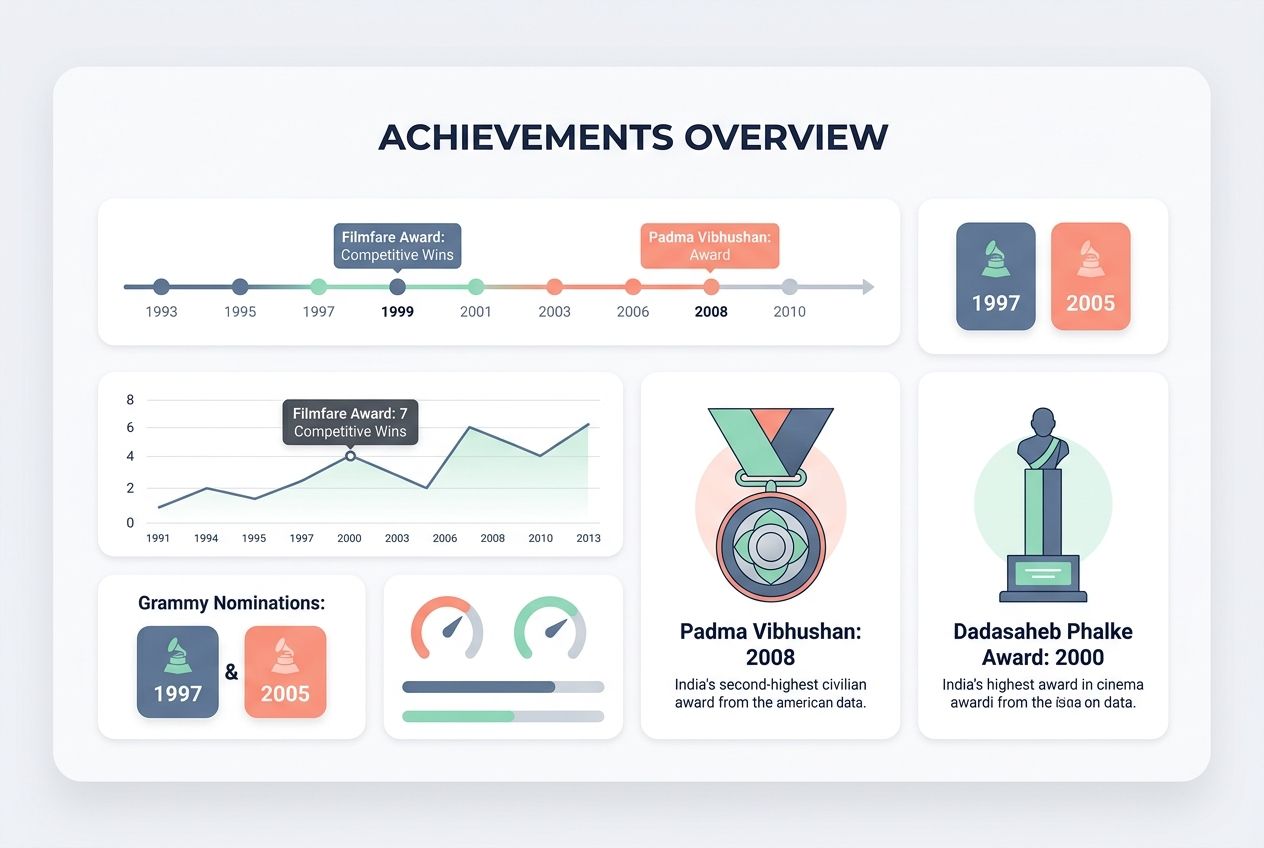
Her global footprint, however, extended far beyond commercial pop. She shattered the glass ceiling for Indian classical and folk music on the world stage. In 1997, she became the first Indian singer to be nominated for a Grammy Award for Legacy, an intricate album of classical bandishes recorded with the legendary sarod maestro Ustad Ali Akbar Khan.
She proved her global versatility once again in 2005 with a second Grammy nomination for You’ve Stolen My Heart, a brilliant tribute album recorded alongside the renowned American string ensemble, the Kronos Quartet. These monumental projects proved that while she could easily ride the wave of modern pop, she possessed the rigorous, deep-rooted classical discipline of a true maestro.
An Echo That Will Never Be Silenced
The events of today bring a formal, heartbreaking close to her earthly journey. The studios will feel a little emptier, and the stages will seem a bit quieter. But the monumental legacy she leaves behind is entirely immune to the passage of time.
Awards and Honors That Cemented Her Legacy
Her life is a masterclass in vocal architecture and emotional delivery. She didn’t just sing songs; she engineered cultural touchstones. To capture the sheer scale of her historical footprint, we look at the foundational facts that frame her immortal legacy.
| Legacy Aspect | Historical Details |
| Lifespan | September 8, 1933 – April 12, 2026 (92 Years) |
| Vocal Repertoire | Over 12,500 recorded tracks spanning 20+ Indian and foreign languages. |
| Guinness World Record | Acknowledged in 2011 as the most recorded artist in music history. |
| National Honors | Dadasaheb Phalke Award (2000), Padma Vibhushan (2008). |
| Cultural Imprint | Revolutionized the perception, style, and capability of the female playback singer in India. |
Asha Bhosle’s trophy case completely overflowed, yet mere numbers cannot capture what these awards truly meant to her listeners. Every single plaque represented real people whose lives carried her melodies. Famous composers actively sought her voice for their most ambitious projects.
The beautiful Padma Vibhushan in 2008 felt exactly like the entire nation finally saying thank you. She brilliantly adapted to every technological change, mastering every new audio format that came along. She commanded pure respect across every single musical genre imaginable.
She taught generations of artists that a singer’s voice should not be confined by societal expectations. She broke the mold of the tragic, suffering heroine and gave Indian women a voice that was unapologetically joyful, fiercely independent, and profoundly sensuous.
The Timeless Legacy of Asha Bhosle: Voice of Generations
Asha Bhosle was not merely a participant in the history of Indian cinema; she was its most vital, dynamic architect. She weathered the storms of personal loss, navigated the brutal politics of the music industry, and emerged not just victorious but radiant. As we bid farewell to this legendary icon today, we do not say goodbye to her voice. From the crackling radios of the 1950s to the high-fidelity streaming platforms of 2026, she will continue to sing to us.
We, our Editorialge family, pay our deepest respects to the iconic Asha Bhosle and honor the unmatched legacy she leaves behind. She is the melody that will forever linger in the air long after the music has stopped, a magnificent, defiant echo that will never, ever be silenced, proving that true artistry really does refuse to fade away