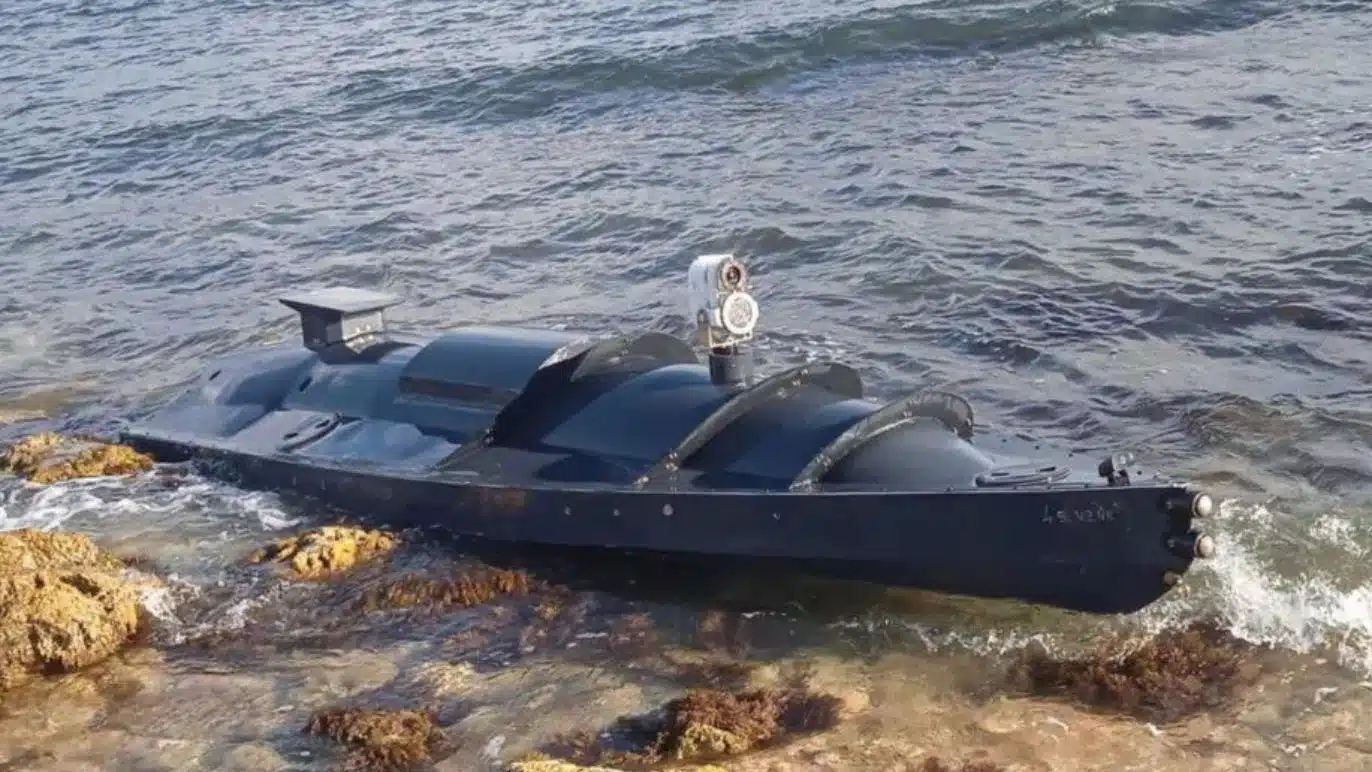
In a groundbreaking development in the Black Sea theater of the ongoing Russo-Ukrainian war, Ukrainian naval drones have not only downed Russian helicopters but compelled Moscow’s aviation assets to abandon patrols altogether. This shift marks a pivotal evolution in asymmetric maritime warfare, where low-cost unmanned surface vessels (USVs) armed with repurposed missiles are rewriting naval power dynamics. Ukrainian special forces commanders report that Russian rotary-wing aircraft, once a dominant threat, now steer clear of drone-infested waters, recognizing their vulnerability.
The Game-Changing Strike
The catalyst for this retreat traces back to late December 2024, when Ukraine’s Main Intelligence Directorate (GUR) executed a historic operation near Russian-annexed Crimea. On December 31, Magura V5 naval drones from the elite “Group 13” unit fired R-73 “SeeDragon” missiles—adapted Soviet-era air-to-air weapons—at two Russian Mi-8 transport helicopters, destroying both and damaging a third. Footage released by GUR captured the drones bobbing on choppy waves as helicopters hovered overhead, unleashing missiles amid flares and explosions, with one Mi-8 plummeting into the sea.
This was no fluke; it represented the world’s first confirmed naval drone kill of an aircraft. Group 13 commander “Thirteen” later confirmed at a GUR showcase that Russian helicopters, initially “a critical threat” used to hunt Ukrainian USVs, became “easy targets” after drones gained missile capabilities. The strikes forced surviving Russian assets to withdraw, clearing swathes of the western Black Sea for Ukrainian operations.
Rise of the Magura V5
At the heart of this triumph lies the Magura V5, a Ukrainian-designed multi-role USV that has evolved from explosive kamikaze boat to sophisticated missile platform. Measuring 5.5 meters long and 1.5 meters wide, with a sleek hydrodynamic hull for stealthy 78 km/h sprints over 833 km ranges, the drone carries a 320 kg payload and supports up to 60 hours of autonomy via GNSS, inertial, and visual navigation. Equipped with Starlink for beyond-line-of-sight control and multiple HD video feeds, it launches from hidden coastal sites without needing major infrastructure.
Initially deployed in 2023 for reconnaissance and ramming attacks, the V5 adapted rapidly: machine guns countered close threats, Grad rockets extended reach, and now R-73/SeeDragon missiles provide surface-to-air punch. Costing around 10 million hryvnias per complex, these drones offer asymmetric leverage against billion-dollar foes. Group 13, tracing roots to Soviet-era Black Sea specialists and formalized in 2022, masters swarm tactics, coordinating fleets to overwhelm defenses.
Group 13: Shadow Hunters of the Black Sea
Formed under GUR, Group 13 embodies Ukraine’s ingenuity in unmanned naval warfare. Led by the pseudonymous “Thirteen,” the unit has sunk over a dozen Russian vessels, including high-profile targets like the Caesar Kunikov landing ship (February 2024), Sergei Kotov patrol ship (March 2024), Ivanovets corvette (January 2024), and multiple landing crafts. Operating Magura variants and Sea Baby drones, they employ “man-in-the-loop” control for real-time targeting, blending AI autonomy with human precision.
Their helicopter kills built on prior successes: post-December 2024, additional Mi-8s and even Su-30 jets fell to V7 variants with AIM-9 missiles. Commander Thirteen noted swarms hunted ships like the Kotov amid civilian traffic and Crimea Bridge shadows, showcasing tactical daring. Now targeting Russia’s “shadow fleet” oil tankers—vital for war funding—the unit pressures Moscow’s economy while denying sea control.
Black Sea Fleet’s Humiliating Retreat
Russia’s Black Sea Fleet (BSF), once dominant with Sevastopol as its hub, has suffered catastrophic losses: one-third disabled by 2024 via drones and Neptunes/AShMs. Key sinkings include the Moskva cruiser (2022), Rostov-on-Don sub (2024), and multiple Ropuchas/Tarantuls. Fleet remnants fled to Novorossiysk, 500+ km east, exposing supply lines and grain/oil exports.
Helicopters were Moscow’s counter: Mi-8s/24s/Ka-27s hunted USVs early on, detecting them via radar/EO and sinking with torpedoes/guns. But post-missile upgrades, losses mounted; pilots now avoid drone zones, limiting anti-sub/ship ops and reconnaissance. BSF commander Mikhail Razvozhaev admitted reduced sorties, while analysts note cascading effects: delayed logistics, stalled amphibious plans.
| Key Russian Losses to Ukrainian Drones | Date | Vessel/Type | Outcome |
|---|---|---|---|
| Caesar Kunikov | Feb 2024 | Landing ship | Sunk |
| Ivanovets | Jan 2024 | Missile corvette | Sunk |
| Sergei Kotov | Mar 2024 | Patrol ship | Sunk |
| Mi-8 Helicopters (2) | Dec 2024 | Transport helos | Destroyed |
| Shadow Fleet Tankers (multiple) | 2025 | Oil tankers | Disabled |
Technological Arms Race Unleashed
Ukraine’s drone revolution stems from necessity: no traditional navy post-2014 Crimea loss forced innovation. Private firms like SpetsTechnoExport scaled Magura production; Western aid (Starlink, chips) amplified reach. R-73 adaptations—IR-homing “heat-seekers” with 20-30 km range—fired from twin rails, exploit helos’ low/slow profiles.
Russia counters feebly: boomed USVs, EW jammers, but copies lag; their drones intercepted routinely. Moscow boosts air patrols elsewhere, but Black Sea caution persists—insurance spikes for shadow fleet underscore economic bites. Ukrainian Navy spokesman Dmytro Pletenchuk hails “local superiority,” with V6 catamarans adding stabilized guns.
Strategic Ripples Across the Region
This drone dominance reclaims Ukraine’s grain corridor, exporting millions of tons sans blockade since 2023 Grain Deal collapse. It disrupts 20%+ of Russian oil/grain sea trade, straining sanctions evasion. Militarily, it frees Odesa/Kherson coasts, aids ground ops by starving BSF fire support.
Broader war: parallels land drone swarms, foreshadowing multidomain unmanned ops. NATO watches; USMC tests LRUSVs with loitering munitions. For Russia, fleet relocation hampers landings, exposes Caucasus flanks. Ukraine eyes riverine variants for Dnipro strikes.
Global Lessons in Drone Naval Warfare
Ukraine proves cheap USVs ($250K) trump $1B+ ships, shifting paradigms from carriers to swarms. Taiwan studies for China Strait; Houthi/Red Sea attacks echo tactics. Vulnerabilities persist—jamming, kinetics—but rapid iteration (guns, missiles, sub-launched FPVs) sustains edge.
As 2026 dawns, Group 13 vows complex strikes; Russian retreat signals Ukraine’s maritime momentum. This Black Sea saga underscores innovation’s triumph over mass, potentially redefining fleets worldwide.