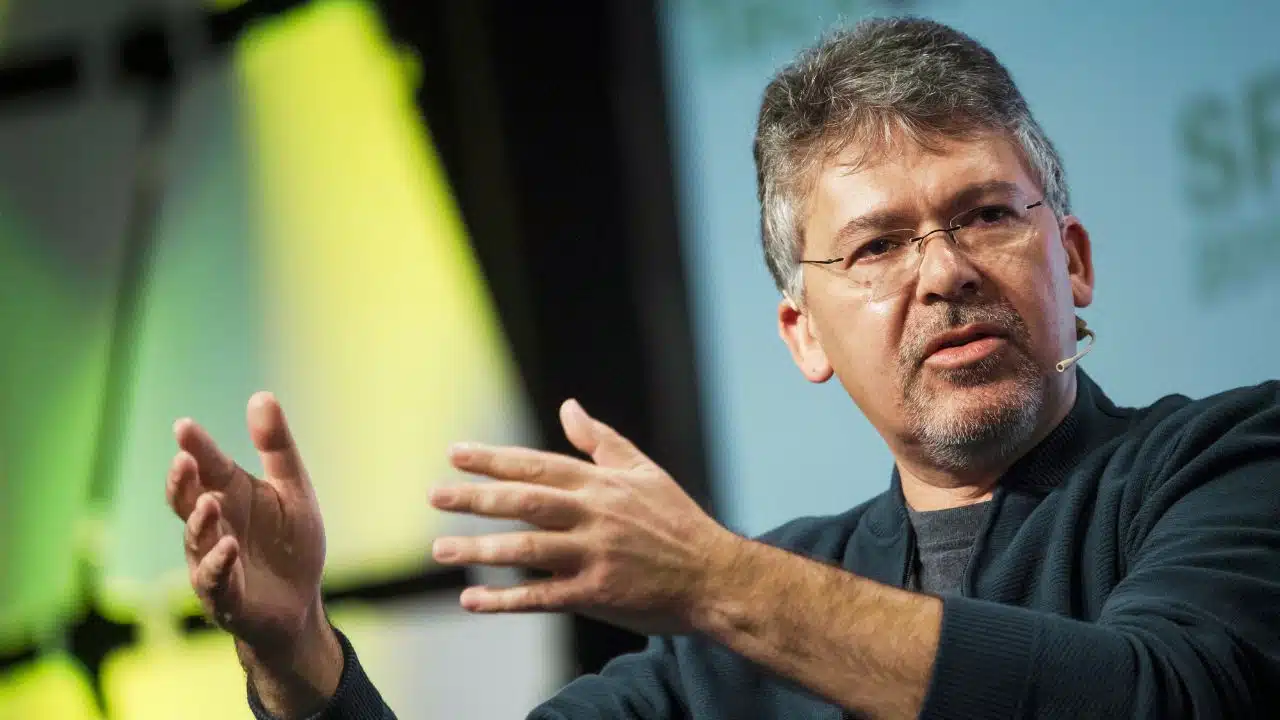
Apple’s longtime AI chief John Giannandrea is stepping down, capping years of internal frustration over stalled progress modernizing Siri and rolling out Apple’s “Apple Intelligence” roadmap. The move triggers a wider reshuffle that hands day‑to‑day control of AI to a former Microsoft executive as Apple races to close the gap with rivals in the generative AI race.
Veteran AI boss plans retirement
Apple has confirmed that John Giannandrea, senior vice president for Machine Learning and AI Strategy and the public face of its AI push since 2018, will leave his executive role and retire in spring 2026. Until then, he will remain at the company in an advisory capacity, helping manage the transition as Apple reconfigures its AI organization.
Giannandrea joined Apple from Google seven years ago with a mandate to unify scattered AI efforts and turn Siri into a modern, competitive assistant embedded across the company’s products and services. While he oversaw major investments in on‑device machine learning and features like real‑time photo analysis, critics say Apple’s flagship assistant never escaped its reputation for lagging far behind newer, generative AI‑powered rivals.
Siri and “Apple Intelligence” under pressure
The leadership change comes after repeated delays to an overhauled version of Siri and the broader “Apple Intelligence” suite, which Apple has pitched as its answer to the generative AI wave reshaping the tech industry. Apple had initially trailed a more capable, context‑aware Siri and deeper app integration but has since pushed key features back to around spring 2026, missing earlier targets and fueling doubts about execution.
Since the launch of ChatGPT in 2022, analysts and developers have increasingly criticized Apple for moving too slowly and for offering fewer cutting‑edge AI experiences than competitors like OpenAI, Google and Microsoft. Reports of internal bottlenecks — from communication gaps to misaligned budgets and the departure of top researchers — have painted a picture of a powerful company struggling to move at AI’s breakneck pace.
Former Microsoft executive takes control
To reset its AI strategy, Apple is bringing in Amar Subramanya as vice president of AI, effectively replacing Giannandrea as the operational head of the company’s AI push. Subramanya, a veteran of both Microsoft and Google’s AI organizations, will report directly to Craig Federighi, Apple’s powerful software engineering chief, in a sign that AI is being pulled closer to the heart of the operating system teams.
Apple says Subramanya will oversee Apple Foundation Models, machine learning research, and AI Safety and Evaluation, giving him control of the core technologies that will power the next generation of Siri and on‑device intelligence. At the same time, parts of Giannandrea’s old organization are being reassigned to operations boss Sabih Khan and services head Eddy Cue, aligning AI work more tightly with hardware manufacturing and revenue‑generating services.
What the reshuffle signals for Apple’s AI
The shake‑up underscores how central generative AI has become to Apple’s future, even as the company spends far less on AI than some rivals and has struggled to hit its own milestones. Analysts see the move as both an admission that Siri’s overhaul has slipped behind schedule and a bet that a fresh leader with deep foundation‑model experience can accelerate delivery without sacrificing Apple’s focus on privacy and on‑device processing.
Industry observers point to several implications of the new structure:
- AI is being embedded deeper into iOS, iPadOS and macOS, with Federighi now overseeing both the platform software and the teams building the models that sit underneath features like Siri and Apple Intelligence.
- Apple is doubling down on on‑device and hybrid AI as a differentiator, pitching local processing, personalization and tight integration with its 34 million‑strong developer ecosystem as an answer to cloud‑centric rivals.
- The transition period through 2026 carries real execution risk: any further slippage in Siri upgrades or Apple Intelligence features could deepen perceptions that the iPhone maker is a follower rather than a leader in the AI era.
For now, Apple stresses that its roadmap for a more personalized, context‑aware Siri remains in place, even if the timeline has stretched. The question for investors, developers and users is whether this leadership reset will be enough to finally turn Siri from a long‑running punchline into a flagship for Apple’s next decade of AI‑driven products.