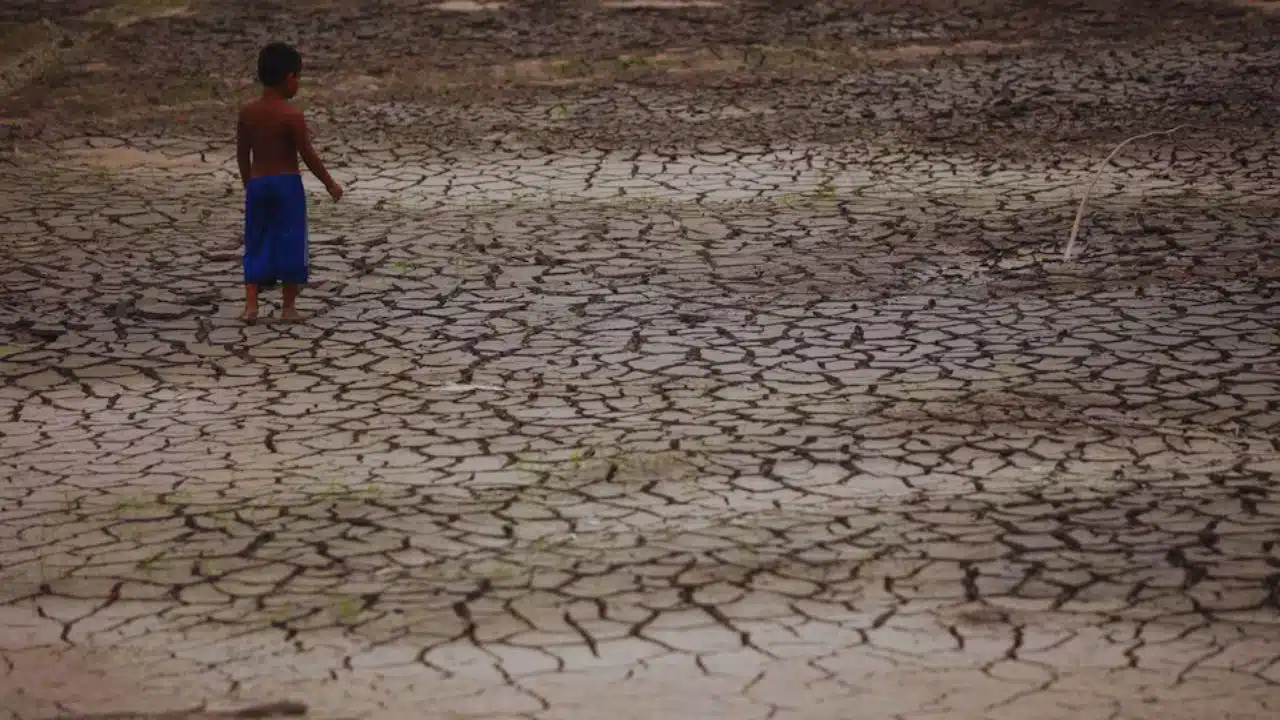
The Amazon rainforest could face about 150 days of intense drought conditions every year by 2100, transforming the world’s largest tropical forest into a far hotter and drier environment than anything seen in at least 10 million years, according to new climate research.
The warning comes from a study published in Nature in December 2025, which combines long‑term field experiments in the central Amazon with advanced climate models to project how often so‑called “hot drought” conditions will strike later this century. These hot droughts—periods when high temperatures and very dry air occur together—are already linked to tree deaths, forest dieback, and more intense fires across parts of Brazil and neighboring countries.
Researchers say these findings offer a stark preview of how human‑driven climate change could push the Amazon closer to a critical tipping point, beyond which large areas of rainforest may no longer be able to recover. The study’s projections arrive after the Amazon endured record‑breaking drought and fire seasons in 2023–2024, highlighting that the region is already under extreme stress even before the worst projected impacts arrive.
What the new research finds
The new paper, led by scientists working with the U.S. Department of Energy and international partners, draws on a long‑running experimental drought plot near Manaus, Brazil, where throughfall exclusion has been used for years to simulate reduced rainfall and track tree mortality, soil moisture, and forest carbon uptake. The team then linked those field measurements to climate model simulations (CMIP6) to estimate how many days each year the central Amazon will experience extreme “hot drought” conditions—defined by very high vapor‑pressure deficit and low soil moisture—under different emissions scenarios to 2100.
Under a high‑emissions pathway, the models suggest that hot droughts will become common across the dry season within the next 20 to 40 years, and by the end of the century they could extend across much of the calendar year, reaching up to roughly 150 days annually in parts of the basin. Earlier work with CMIP5 models had already indicated that the area of the Amazon affected by severe meteorological drought could roughly triple by 2100, but the new study adds detail by focusing on the combined heat‑and‑dryness extremes that are especially deadly for trees.
Projected hot drought days in parts of the central Amazon
| Period (approx.) | Hot drought days per year (selected sites) | Key features noted by researchers |
| 1990–2020 (recent past) | Around 20–30 days, mainly at peak of dry season | Hot droughts largely confined to the driest months; forests still buffered by overall wet climate. |
| 2040–2060 | Roughly 60–90 days in many simulations | Hot droughts become a regular feature of each dry season, stressing trees and increasing fire risk. |
| 2080–2100 (high emissions) | Up to about 150 days per year in some regions | “Hypertropical” conditions emerge, with extreme heat and dryness spreading beyond the dry season into traditionally wet months. |
Scientists describe this projected future as a shift toward a “hypertropical” climate state, hotter and more water‑stressed than typical tropical rainforest conditions and outside the range the Amazon has experienced for millions of years. The concern is that many Amazon tree species evolved under consistently humid conditions and may be unable to survive repeated exposure to such extremes, leading to mass die‑offs and long‑term changes in vegetation.
Risks for the forest, climate, and communities
Evidence from satellite data and ground observations shows that the Amazon has already been losing resilience since the early 2000s, with three‑quarters of the forest becoming slower to recover from drought and more sensitive to climate shocks, especially in drier and heavily deforested areas. Severe droughts in 2005, 2010, and 2015–2016, alongside the historic 2023–2024 drought, have weakened trees, lowered river levels, and made once‑humid forests more vulnerable to wildfires and long‑term degradation.
In 2024, scientists documented the worst Amazon forest disturbance in more than two decades, with fire‑driven deforestation and degradation affecting about 6.64 million hectares—an increase of more than 150% in disturbed area compared with recent years. Brazil and neighboring countries also reported the highest number of fire hotspots in roughly 20 years, a surge linked to the combination of climate‑driven drought, El Niño, and ongoing land‑clearing.
These losses matter globally because the Amazon stores vast amounts of carbon and recycles moisture that helps drive rainfall across South America, including the “flying rivers” that feed agriculture and water supplies in Brazil, Argentina, and beyond. As forests dry and burn, they release more carbon dioxide, shrinking the Amazon’s role as a carbon sink and increasing the risk that parts of the region could tip toward a drier, savanna‑like ecosystem, with cascading effects on biodiversity and regional climate.
Indigenous peoples and riverine communities are already on the front lines of these changes, facing crop failures, dead fish, stranded boats, and smoke‑choked air during prolonged dry spells and fire seasons. Human health impacts—from heat stress to respiratory problems and reduced access to clean water—are expected to intensify if hot droughts become both more frequent and more prolonged across the basin.
What happens next and key sources
Scientists stress that the projection of up to 150 hot drought days a year is not inevitable but depends heavily on how fast global greenhouse‑gas emissions are reduced and how strictly deforestation and forest degradation are controlled in the coming decades. Rapid cuts in fossil‑fuel use, combined with efforts to halt illegal clearing, restore degraded areas, and support Indigenous land stewardship, could reduce the frequency and intensity of future droughts and help keep more of the Amazon in a stable rainforest state.
At the same time, researchers warn that parts of the Amazon may be closer to a critical tipping point than previously assumed, which means decisions taken in the 2020s and 2030s—on climate policy, land‑use rules, and fire management—will strongly influence whether the forest remains a global climate buffer or shifts toward a more degraded, fire‑prone biome by 2100. Policymakers are being urged to integrate these latest projections into national climate plans and international negotiations, treating Amazon protection as central to stabilizing the global climate system rather than as a regional issue.