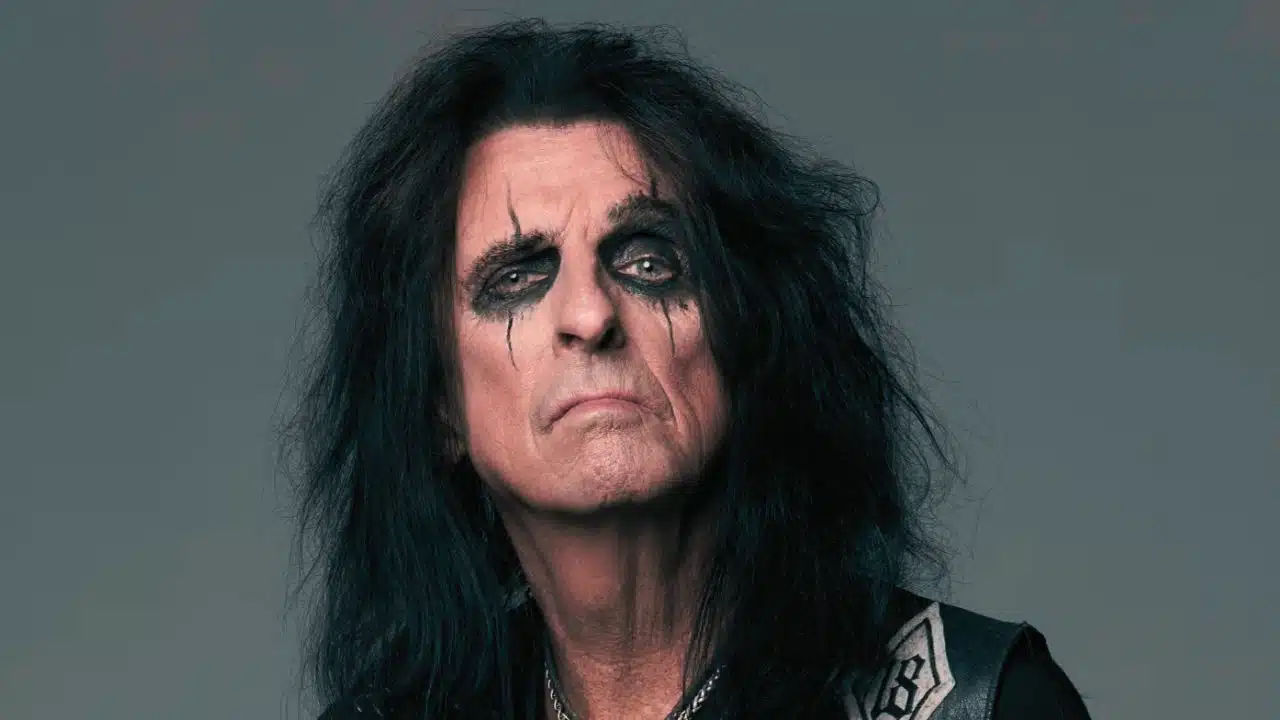
The rock world is in mourning following the passing of Ozzy Osbourne, the legendary “Prince of Darkness,” who died on July 22, 2025, at the age of 76. His death came as a shock to fans and fellow musicians, especially considering that it occurred less than a month after his final farewell performance in Birmingham with Black Sabbath. One of those deeply affected is fellow rock icon Alice Cooper, who had shared a bond with Osbourne stretching back more than five decades.
Alice Cooper, now 77, recently spoke about the moment he learned of Ozzy’s death. The shock was especially deep because he had watched Osbourne perform at the farewell show and believed that the heavy metal pioneer still had more time ahead. Despite Ozzy’s health challenges in recent years, including multiple surgeries and a public battle with Parkinson’s disease, Cooper—and many others—were hopeful that retirement would mean peace, family time, and a slower life for the rock star. Instead, his sudden death caught even his closest peers off guard.
A Powerful Final Performance That Gave Hope
Ozzy Osbourne’s last performance with Black Sabbath, held in Birmingham—his hometown—was a highly emotional event. Fans from around the world gathered to witness what was expected to be the closing chapter of one of rock’s most enduring careers. The concert was hailed as a powerful farewell, with Ozzy giving a strong vocal performance that defied his recent physical limitations.
Alice Cooper was among those watching the show, either live or via broadcast, and like many, was left with the impression that Ozzy still had plenty of life in him. That final appearance showcased Ozzy’s unwavering spirit and connection with fans, and for many, it was difficult to reconcile that such a strong performance would be followed so soon by news of his death.
A Brotherhood Born in the Dawn of Metal
Alice Cooper and Ozzy Osbourne first crossed paths in the late 1960s and early 1970s, when both were forging new paths in the evolving rock and heavy metal scene. Cooper, known for his theatrical stage persona and horror-inspired performances, and Ozzy, the frontman of Black Sabbath, became two of the genre’s most influential figures. They not only defined the aesthetics and sound of heavy music but also developed a friendship rooted in mutual respect and shared history.
Throughout their careers, they maintained a close connection. Both artists weathered decades of challenges—addiction, health struggles, changing music trends—and yet remained relevant across generations. Cooper recently described the rock world as a kind of fraternity, where everyone knows and respects one another. For him, Ozzy was not just a colleague but a lifelong member of that musical brotherhood—a “lifer” who committed everything to the craft.
Alice Cooper’s Stage Moment of Grief
At the time the news of Ozzy’s passing broke, Alice Cooper was preparing to go on stage as part of his promotional tour for The Revenge of Alice Cooper, the new album released with his original band. This album marked a major return for Cooper, as it reunited surviving members Michael Bruce, Dennis Dunaway, and Neal Smith, while including posthumous guitar contributions from Glen Buxton, who died in 1997.
Just before stepping into the spotlight, Cooper was informed about Ozzy’s death. The timing could not have been more emotional. Minutes away from performing, he had to process the loss of a dear friend and fellow music legend. The weight of that news carried into the performance, and at the end of the show, Cooper took a moment to publicly acknowledge the passing of Osbourne, inviting the audience to honor him together.
It was a spontaneous and genuine tribute—one rock legend saluting another in front of a crowd that understood the magnitude of the moment.
Ozzy’s Legacy and Final Years
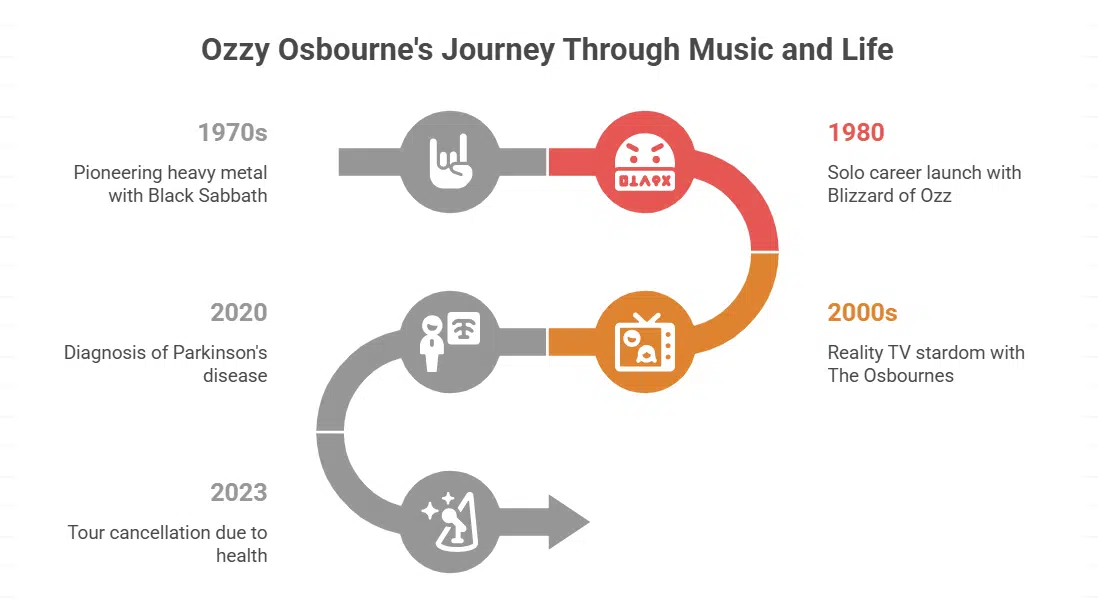
Ozzy Osbourne’s legacy extends far beyond his role as a performer. As the voice of Black Sabbath, he helped pioneer heavy metal with groundbreaking albums like Paranoid, Master of Reality, and Black Sabbath Vol. 4. His solo career, launched with Blizzard of Ozz in 1980, only cemented his status as a cultural icon. Tracks like “Crazy Train,” “Mr. Crowley,” and “No More Tears” became anthems that influenced countless bands and generations of fans.
In his later years, Osbourne became a reality TV star with the hit show The Osbournes, which aired on MTV in the early 2000s. This opened up a new dimension of his public persona, showing a softer and more humorous side of the man behind the dark stage image. It endeared him to an entirely new audience and added to his legend.
Despite his fame and success, Osbourne battled significant health issues. He was diagnosed with Parkinson’s disease in 2020, and later underwent several surgeries following a fall that aggravated spinal injuries. In 2023, he canceled tour dates, acknowledging that he was no longer physically able to handle the demands of travel and performing. Nevertheless, he never fully stepped away from music or from engaging with his fan base.
The Rock World Responds
The announcement of Osbourne’s death sparked an immediate outpouring of grief and tributes across social media and international news platforms. Fellow musicians, actors, athletes, and political figures shared their condolences and personal memories of Ozzy. Bands like Metallica, Judas Priest, Iron Maiden, and Tool issued statements praising his influence and celebrating his life.
Streaming platforms saw a massive surge in plays of Ozzy’s music, both solo and with Black Sabbath. Tracks like “Iron Man,” “Bark at the Moon,” and “Mama, I’m Coming Home” returned to the top of the charts on Spotify and Apple Music. Fans created tribute playlists and held candlelight vigils in cities across the globe, including Los Angeles, Birmingham, Tokyo, and São Paulo.
The End of an Era for Heavy Metal
Ozzy Osbourne’s death is not just the loss of a performer—it is the symbolic end of an era in rock history. As one of the architects of metal, his departure leaves a void that cannot be filled. He stood as a testament to endurance, creativity, and rebellion, and he continued performing well into his 70s, defying age, illness, and industry expectations.
Alice Cooper, himself still actively performing and recording at age 77, represents one of the last remaining ties to the original wave of theatrical and heavy rock. His personal reaction to Ozzy’s passing reflects the collective grief of an entire generation of musicians and fans who grew up with their music and ethos.
A Farewell to a Brother in Rock
In the days since Ozzy Osbourne’s death, Alice Cooper has continued to perform, but with a tone of reflection that underscores the gravity of the loss. His tribute on stage—asking the audience to say goodnight to Ozzy—was a moving acknowledgment that even rock legends are mortal.
But while the man may be gone, the legacy lives on. Ozzy Osbourne’s music, personality, and impact will continue to inspire artists and fans for decades to come. His name will remain etched in the annals of rock history alongside the very best.