A new nationwide study reveals that nearly three out of four American teenagers have tried using AI companions—virtual chatbots designed to hold personal, emotional conversations. The research, conducted by Common Sense Media, surveyed 1,060 teens aged 13 to 17 and found that 72% had used AI companions at least once, while 52% are regular users, interacting with these systems multiple times per month.
These findings come as mental health experts and child advocates raise concerns about the risks associated with forming emotional bonds with artificial intelligence.
What Are AI Companions and Where Are Teens Using Them?

Unlike digital assistants like Siri or Alexa, AI companions are designed to simulate deep, human-like interactions. Platforms such as Character.AI, Replika, and Nomi allow users to create or talk to AI personalities who can express emotions, provide emotional support, and even engage in romantic or therapeutic-style conversations.
These AI systems are powered by advanced language models that learn from user input, which allows them to mimic empathy and build what appears to be emotional rapport—sometimes indistinguishable from talking to a real person.
Why Teens Are Turning to AI Companions
The study found that 30% of teen users said they use these platforms because they find them “entertaining,” while 28% said they were curious about the technology. However, the report also uncovered more serious uses: one-third of teen users have discussed important or sensitive topics with their AI companions instead of real friends or trusted adults.
Alarmingly, 24% admitted to sharing personal information, such as their real names or locations, with these AI chatbots—raising concerns about privacy, data protection, and manipulation.
Teens Report Mixed Feelings About These Virtual Relationships
While many teens are intrigued by the idea of AI friendships, their experiences aren’t always positive. The study revealed that 34% of users felt uncomfortable with something their AI companion said or did. Although these negative interactions were relatively rare, the report warns that even a small percentage of harmful incidents can affect a large number of vulnerable users.
“There’s no such thing as a risk-free experience,” the report said, emphasizing that millions of teens could potentially be exposed to manipulative or inappropriate responses from AI systems.
Younger Teens More Likely to Trust AI Advice
The survey also revealed an age-based divide in how teens view AI companions. While about 50% of all teens said they distrust advice from AI chatbots, younger teens aged 13–14 were more likely to trust these systems than older teens aged 15–17.
This gap raises further concern among experts, who say younger users may lack the critical thinking skills to distinguish between safe and harmful interactions, especially when AI is designed to sound emotionally intelligent or persuasive.
Most Teens Still Prefer Real-Life Socializing
Despite their popularity, AI companions haven’t replaced real human connections. The survey found that:
- 66% of teens said AI conversations are less satisfying than talking to real people.
- 80% said they still spend more time with real friends than with virtual ones.
This shows that while AI companions are being widely used, they haven’t yet replaced real friendships—but the potential for emotional dependency still concerns mental health experts.
Call for Stricter Age Regulations and Safeguards
Based on the survey’s results, Common Sense Media recommended that AI companions should not be used by anyone under 18 until there are stronger safety measures in place. These include better content moderation, privacy protections, and limits on how AI systems engage emotionally with teens.
Tech companies must prioritize children’s well-being, not profits,” the organization stated, pointing to past examples where social media platforms failed to protect young users from harm.
What Experts Are Saying
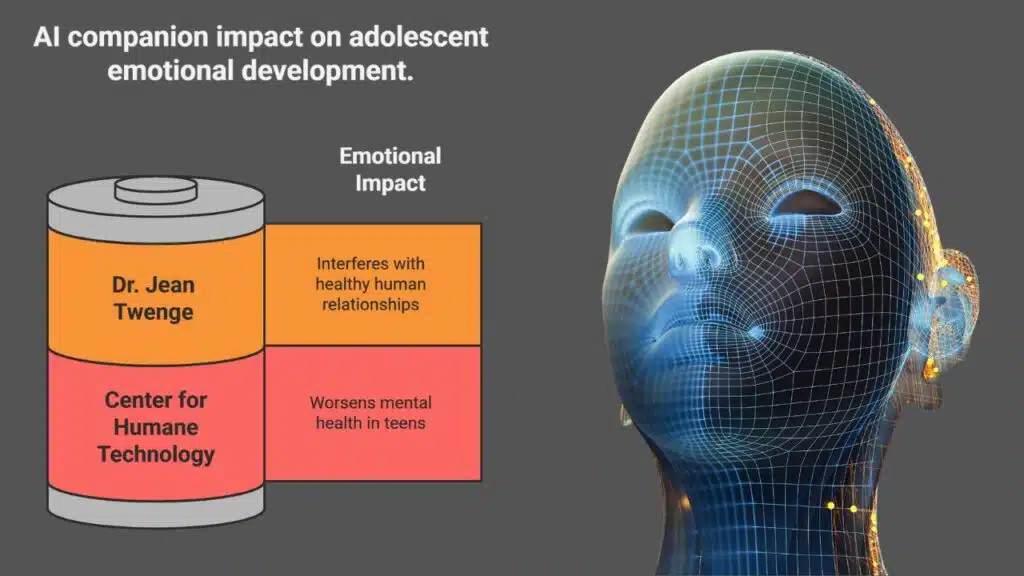
Experts in child development and digital safety have echoed the report’s concerns. According to Dr. Jean Twenge, author of iGen, the adolescent years are a sensitive period for emotional development, and interactions with emotionally responsive machines may interfere with forming healthy human relationships.
“AI companions may feel safe, but they’re not emotionally mature or accountable the way people are,” she said in a separate interview with The Washington Post.
Moreover, a recent report from the Center for Humane Technology warned that emotionally manipulative AI could deepen feelings of loneliness or worsen mental health in teens, especially those already struggling with anxiety or depression.
Looking Ahead: What Can Parents and Educators Do?
Parents, teachers, and policymakers are now being urged to take a more active role in educating teens about the risks of AI relationships. Experts suggest:
- Talking openly about the difference between AI and human interaction
- Setting healthy screen time boundaries
- Monitoring which platforms children access
- Teaching digital literacy and critical thinking skills
At the same time, tech companies are being called on to design AI systems with ethical guardrails, including clear disclaimers that the bots are not real people and should not be relied on for emotional support or personal advice.
This new study confirms what many experts suspected: AI companions are no longer just futuristic novelties—they’re a real part of teenagers’ digital lives. With over half of American teens regularly engaging with emotionally intelligent AI, there is a growing need to balance innovation with responsibility.
Until stricter rules and ethical standards are in place, many believe the best course of action is caution—especially when it comes to the emotional and psychological development of young people.
The Information is Collected from NPR and CNN.