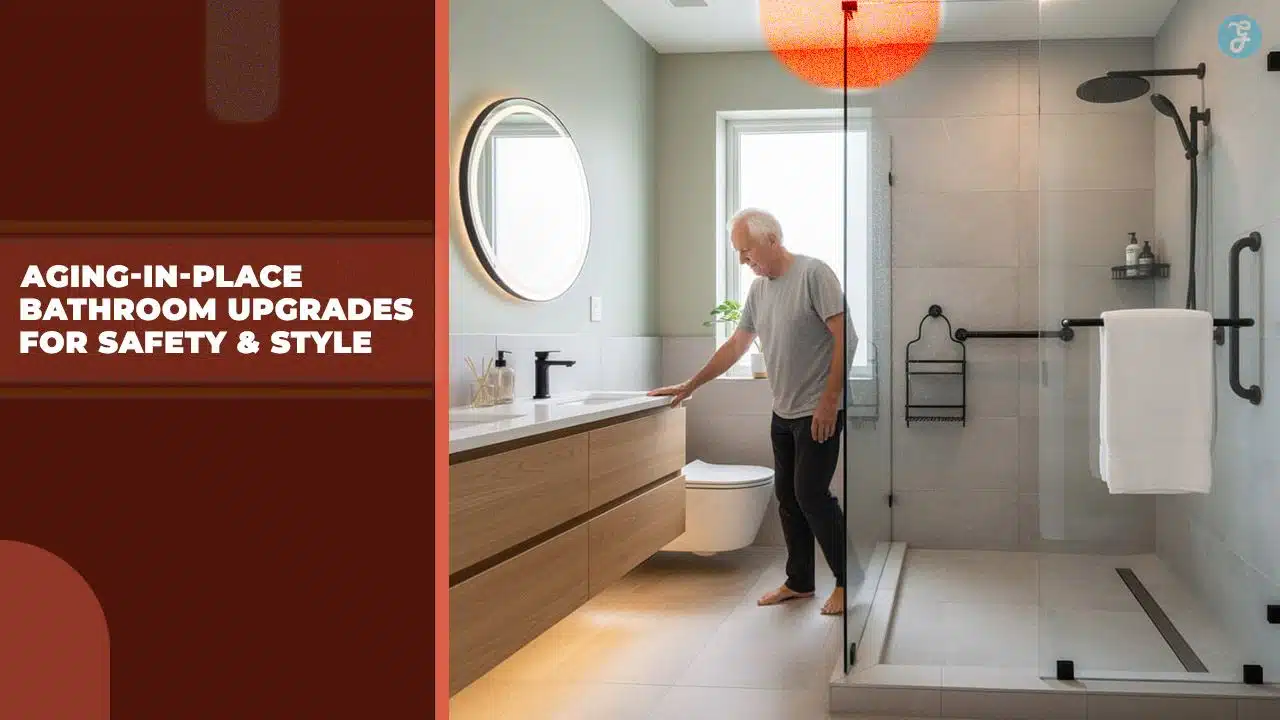
Many people want to age in place, yet the bathroom can feel risky. Slippery floors, high tubs, tight doorways, they all add stress, for seniors and caregivers alike.
Curbless showers boost safety, and they make the room look larger. This post shows 10 simple upgrades you can start today. Expect ideas like brushed brass or matte black grab bars, textured vinyl or matte porcelain tiles for non-slip flooring, comfort-height toilets, lever-style faucets, handheld shower heads, built-in shower benches with proper shower bench drainage, layered lighting with ceiling leds and vanity sconces, and wider doorways or pocket doors for wheelchair access.
You will get clear tips on safety, universal design, and fall prevention, with stylish choices that keep your bathroom welcoming. Keep reading.
Key Takeaways
- Install curbless walk-in showers and built-in benches with proper drainage to reduce falls and simplify cleaning.
- Mount sturdy grab bars in finishes like brushed brass or matte black and use non-slip flooring such as matte porcelain or textured vinyl.
- Upgrade to comfort-height toilets a few inches taller and ADA-compliant lever faucets to ease transfers and aid limited dexterity.
- Add layered lighting—ceiling LEDs, vanity sconces, and toe-kick lights—with motion sensors and dimmers to improve visibility and reduce trips.
- Widen doorways to a 36-inch clear opening and install pocket, barn, or sliding doors for wheelchair access and space savings.
Install a Curbless Walk-In Shower
Curbless walk-in showers remove the threshold, creating a seamless entry. They cut fall risk and simplify cleaning for people with limited mobility.
- Remove the shower curb for a level entry, cutting trip hazards and improving bathroom safety for aging in place and wheelchair accessibility.
- Plan proper slope and floor drainage with a licensed plumber, using a correctly pitched pan and shower bench drainage to prevent water pooling and keep floors dry and safe.
- Falls in bathrooms are common among older adults, so a curbless design lowers fall risk, aligning with universal design and helping people stay at home longer.
- Level, barrier-free floors make cleaning faster, reduce reliance on caregivers or paid help, and ease maintenance for people using mobility aids or with limited strength.
- Hire a contractor and designer to retrofit builder-grade bathrooms, add new drains and tie into existing plumbing; consult an occupational therapist for bench height and transfer safety.
- Include a built-in shower bench with proper slope for shower bench drainage, plus a handheld shower head mounted low for seated washing and safer transfers.
- Style the floor and walls with matte porcelain tiles or textured vinyl, add brushed brass grab bars or matte black grab bars, and mix dark flooring with light walls for contrast.
- Add non-slip flooring options like rubber flooring, pair with a transfer bench and toe-kick lights for better visibility, and plan layout for wheelchair accessibility and universal design.
Add Grab Bars with Stylish Designs
Modern grab bars now look like towel racks or sleek trim, they fit right into a polished bathroom. Pros sell brushed brass grab bars and matte black grab bars that match other hardware.
They give firm support, without shouting medical. Designers recommend them for aging in place, for guests, and for people who use mobility aids or wheelchairs.
A designer shared a story about a 72-year-old jazz singer who asked for a boutique hotel-inspired bathroom and chose bars that read like luxe hardware. Kohler and House of Rohl showed accessible design and sustainable grab bar options at recent design events.
Many bars install without a full renovation, you only need a stud, a wall anchor, and the right placement. Proper mounting makes bathroom safety real, hire a pro or follow the maker’s guide.
Use Non-Slip Flooring Options
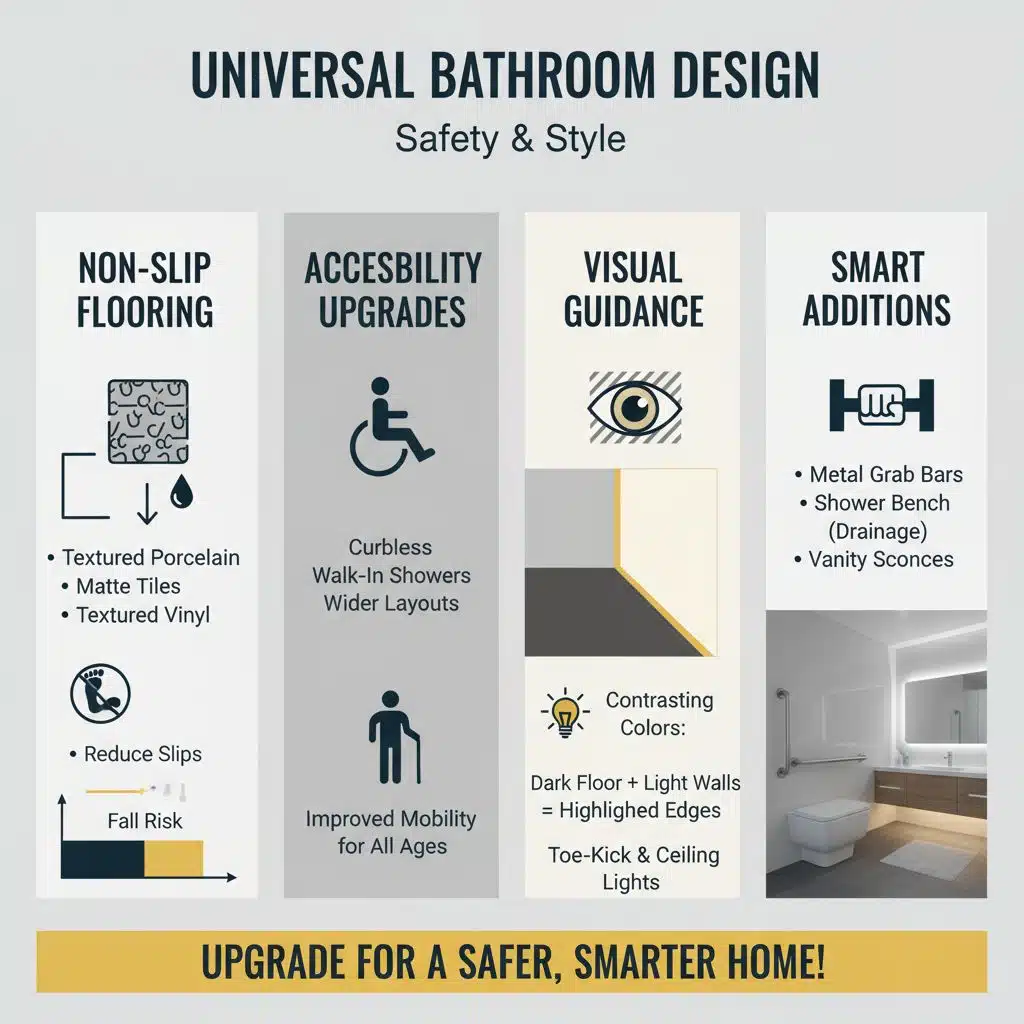
Replace glossy tiles with textured porcelain, matte porcelain, or textured vinyl to cut slips in wet areas, non-slip flooring matters most where fall risk peaks. Choose ceramic or stone tiles for a sustainable, safe option that also looks classy for aging in place.
Old builder-grade flooring layouts can hinder wheelchair accessibility and mobility aids, so update to non-slip flooring.
Use contrasting dark flooring against light walls to highlight edges, and improve step and threshold visibility. Textured floors reduce water spots, simplify maintenance, and keep traction after cleaning.
Pair flooring with curbless walk-in showers, metal grab bars, vanity sconces, toe-kick lights, ceiling leds, and a bench with proper shower bench drainage to build layered safety in a universal design plan.
Upgrade to a Comfort-Height Toilet
Comfort-height toilets sit a few inches higher than standard bowls, making sitting and standing easier. Older adults feel less strain on knee joints, and guests with limited mobility gain faster, safer transfers.
Your knees will thank you.
Brands now offer many styles, so these elevated models fit a bold vanity, light walls, or matte porcelain tiles. Homeowners can pair comfort-height toilets with grab bars, bidet seats and self-cleaning technology, making this practical, affordable upgrade work for aging in place, universal design planning and better bathroom safety.
Install Lever-Style Faucets for Easy Use
Lever-style faucets work best for people with limited dexterity or arthritis. They open with a single push or pull, so users avoid tight gripping or twisting. Designers favor their clean, modern look, it aligns with current trends at shows and workshops.
You can pick them for sinks and showers to keep operation simple across the bathroom.
Most installs do not require a full renovation, a plumber can swap a valve in a few hours. Finishes match other fixtures. Use brushed brass grab bars or matte black grab bars for a coordinated set.
Choose ADA-compliant single-handle mixers, they help with wheelchair accessibility and general bathroom safety. Brands at design events often highlight lever options as part of universal design, and they note the accessibility gains.
Mount handles at custom heights to fit users who use mobility aids or wheelchairs.
Incorporate Bright, Layered Lighting
Combine ceiling leds, vanity sconces, and toe-kick lights for full coverage. Task lighting at the sink, and soft ceiling lights, improve night use and boost visibility. Motion-activated units and night lighting add convenience, while cutting trips and improving bathroom safety.
Dimmers let you set an adjustable ambiance, creating a spa-like atmosphere. Layered lighting cuts shadows and glare that can cause disorientation, and it supports independence as vision changes with age.
You can make these lighting upgrades without major renovations, and Homestyler previews layouts in 3D so you can test placement before you buy. These options pair with assistive technologies, universal design, and wheelchair accessibility to fit mobility aids and aging in place.
Add a Built-In Shower Bench
A built-in shower bench adds comfort and safety. Install it from sturdy, water-resistant materials and anchor it solidly.
- Place a seat in a curbless shower, to provide comfort and support during bathing, and to aid wheelchair accessibility and safer transfers.
- Choose water-resistant materials such as matte porcelain tiles, textured vinyl, or non-slip rubber flooring to resist moisture and speed drying, preventing mold and water accumulation.
- Anchor the seat to studs or use commercial anchors for stability, so it resists shifts and supports mobility aids, aiding steady standing.
- Plan shower bench drainage into the floor slope and add a channel drain or scuppers, this stops pooling water, and lowers mold risk in accessible design.
- Select fold-down or fixed seats for small space planning; adjustable models match universal design, while fixed benches offer storage for personal care items and a clean, bold vanity look.
- Match modern designs with matte black grab bars or brushed brass grab bars, the look blends safety and style, keeping bathroom safety friendly and chic.
- Consider mobility aids and place the seat near a handheld shower head, leave clear floor space for wheelchair accessibility, and plan curbless shower access for aging in place.
Use a Handheld Shower Head for Accessibility
Handheld showerheads add reach and control. They offer versatility for users with varied mobility needs. Most models attach to existing plumbing, making installation affordable and practical.
A shower rail lets users change height with one hand. Rails allow easy adjustment, but they need reinforced walls for stability.
Homeowners find them handy for cleaning, they speed personal care routines and cut awkward reaches, no circus moves. Installation often pairs them with a built-in shower bench and grab bars, which helps with shower bench drainage.
Adjustment features support universal design, they fit multi-generational or shared bathrooms and work with mobility aids. Some models include pause buttons or ergonomic grips, they add extra convenience for users who tire or have weak grip strength.
Designers recommend this as a first-step upgrade for aging in place, it boosts accessible design, wheelchair accessibility, and bathroom safety.
Widen Doorways for Better Mobility
Widen doorways to 36 inches for wheelchair accessibility and future proofing. Pocket, barn, or sliding doors save space and cut swing hazards.
- Aim for a 36 inch clear opening, match universal design guidance, and give room for wheelchairs and common mobility aids so daily transfers stay safe.
- Choose pocket doors, barn doors, or sliding doors to free floor space, lower trip risk from swinging doors, and fit small space planning in a remodel.
- Hire a licensed contractor early, doorway upgrades often require structural changes, header adjustments, and framing work; plan them as part of a larger renovation to control cost.
- Install lever-style handles and low-threshold sills, pair these with wide doorways for better bathroom safety, and help users who use mobility chairs or other assistive devices.
- Integrate storage at varied heights near the entry, keep towels, mobility aids, and toiletries within reach, and reduce bending for aging in place and future needs.
- Confirm local code, exact measurements, and 36 inch clearance before finishing floors, since matte porcelain tiles or textured vinyl can change final widths and trim details.
- Budget time and money for doorway work, treat wider entryways as part of long-term functionality and inclusivity, and link this upgrade to comfort-height toilets and grab bars.
Takeaways
This guide helps you shape a safe, stylish bathroom for aging in place. Add a curbless shower, built-in shower benches, and dark finish grab bars to cut fall risk and boost flair. Pick non-slip flooring, comfort-height toilets, and lever-style faucets to make daily tasks easier.
Layered lighting with ceiling lights, vanity sconces, and toe-kick lights improves sight, day and night. Wider doorways, pocket doors, and a handheld shower head help mobility aids and wheelchair accessibility.
Mix universal design with a bit of smart home tech, and you get a bathroom that works for years.
FAQs on Aging-in-Place Bathroom Upgrades
1. What simple upgrades help with aging in place bathroom safety?
Add grab bars, non-slip flooring, and a curbless shower, they cut fall risk fast. Install a built-in shower bench with proper shower bench drainage. Pick a comfort-height toilet and lever-style faucets. Make doorways wider for wheelchair accessibility, and leave space for mobility aids.
2. How do I add style, while keeping accessible design?
Go for layered lighting, like ceiling LEDs, vanity sconces, and toe-kick lights, they change the mood and boost visibility. Use light walls with dark flooring, or a bold vanity for contrast. Swap plain bars for metal grab bars or matte black grab bars, they look sharp, and work well with universal design.
3. Should I pick pocket doors, sliding doors, or barn doors?
Pocket doors save floor space, and sliding doors move smoothly for walkers. Wide doorways work best for wheelchair accessibility. Think of doors as helpers, not obstacles.
4. Can smart home technology make the bathroom safer?
Yes, smart home technology can monitor motion, adjust color temperatures, and run fixtures on a schedule tied to an internal clock. You can set privacy limits, or let a caregiver view info, or opt out of sharing. Intelligent home tools add safety, with a bit of convenience.
5. What flooring and surfaces hold up best?
Choose non-slip options, like rubber flooring, textured vinyl, or matte porcelain tiles. Dark flooring hides marks, while light walls keep the room bright. Pick low shelves and easy-to-clean countertops, skip clutter, use a shower caddy for order.
6. How do I plan for future needs or an assisted living move?
Follow universal design, it works now, and later. Add a curbless shower or a wet room, install a comfort height toilet, and leave space for stairlifts or bidets if needed. Think small space planning, but plan big, so the bathroom grows with you.