History is not merely a collection of dates and dust; it is the living, breathing chronicle of human triumph, tragedy, and transformation. When we peel back the layers of a single day, we uncover a fascinating intersection of global milestones, cultural shifts, and the beginnings—or ends—of extraordinary lives. August 11 is one such remarkable date on the calendar.
From the echoing calls of independence in colonial India and the heart of Africa to the pulsing, rhythmic birth of hip-hop on the streets of New York, this day has witnessed events that forever altered the trajectory of our modern world. It is a day that saw the tragic execution of a teenage revolutionary in Bengal, the opening of America’s most notorious island prison, and the devastating loss of one of the world’s most beloved comedic actors.
In this comprehensive, in-depth guide, we will journey across centuries and continents to explore the monumental events of August 11. Whether you are a cultural anthropologist at heart, a historical archivist, or simply a curious reader, this detailed exploration will provide you with a profound understanding of why this specific date matters so deeply in the grand tapestry of human history.
The Bangalee Sphere
The Indian subcontinent, and specifically the culturally rich region of Bengal, has a deeply emotional and politically charged connection to August 11. This date is etched in the annals of the anti-colonial resistance and literary awakening.
Historical Events: The Fire of Revolution
1908 – The Execution of Khudiram Bose
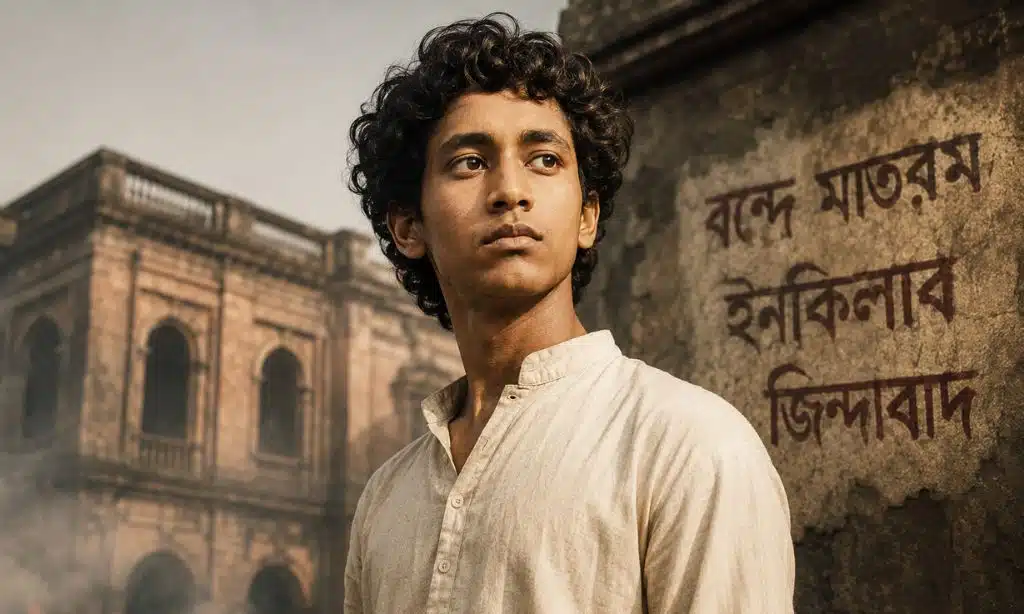
In the early 20th century, the British Empire’s hold over India was facing fierce, youthful resistance. On August 11, 1908, one of the youngest and most iconic revolutionaries of the Indian independence movement, Khudiram Bose, was executed in the Muzaffarpur jail in Bihar. At just 18 years old, Bose had been involved in an assassination attempt on Douglas Kingsford, a British magistrate known for handing down brutal, vindictive sentences to Indian nationalists.
Though the bombing mistakenly killed two British women instead of Kingsford, Bose’s fearlessness became legendary. Accounts from the day report that he walked to the gallows with a steady step and a smile on his face, holding a copy of the Bhagavad Gita. His martyrdom ignited a massive wave of nationalism across Bengal, making him a symbol of ultimate sacrifice.
1922 – The Launch of Dhumketu
The pen is often mightier than the sword, and on August 11, 1922, the political landscape of Bengal was shaken by the written word. Kazi Nazrul Islam, who would later become the national poet of Bangladesh, published the first issue of the bi-weekly magazine Dhumketu (The Comet).
This publication was fiercely anti-colonial, demanding complete independence from British rule long before it became the mainstream political consensus. Through Dhumketu, Nazrul’s fiery poems and editorials awakened the masses, eventually leading to his arrest for sedition by the British authorities.
Famous Births
-
1511 – Tulsidas: Though his exact birth year is debated by historians, traditional calendars mark August 11 as the birth of Goswami Tulsidas. He was an extraordinary Hindu saint and poet, renowned globally for his devotion to the deity Rama. He authored the epic Ramcharitmanas, a retelling of the Sanskrit Ramayana in the vernacular Awadhi language, which made the sacred text accessible to the common masses and profoundly shaped the cultural and religious fabric of North India.
-
1931 – Manabendra Mukhopadhyay: Born on this day, Manabendra Mukhopadhyay became a legendary Bengali singer and composer. He infused classical nuances into modern Bengali songs, leaving an indelible mark on the golden era of Bengali music in the 1950s and 60s.
Famous Deaths
-
1955 – Amalendu Dasgupta: The noted Bengali litterateur and journalist passed away on this date, leaving behind a legacy of poignant storytelling.
-
1970 – Irawati Karve: An eminent Indian sociologist, anthropologist, and writer. Karve’s groundbreaking work in kinship organization in India remains a foundational text in South Asian anthropological studies.
International Observances & Holidays
Beyond specific historical occurrences, August 11 is set aside in several corners of the globe for national celebration, reflection, and appreciation of nature.
National Days
-
Chad Independence Day (Republic of Chad): On August 11, 1960, the landlocked Central African nation of Chad formally gained its independence from France. François Tombalbaye became the country’s first head of state. This day is celebrated with immense national pride, military parades, and political speeches. It serves as a reminder of the sweeping wave of decolonization that transformed the African continent in 1960, a year often dubbed the “Year of Africa.”
-
Mountain Day (Yama no Hi – Japan): Since 2016, Japan has observed Mountain Day, typically on August 11. The deeply spiritual and geographical connection Japanese culture has with its rugged, mountainous terrain (which makes up roughly 70% of the country) inspired this national holiday. It provides the overworked populace an opportunity to step away from urban life, hike the pristine trails, and appreciate the blessings of nature.
Global History
When we zoom out to the broader global stage, August 11 offers a fascinating mosaic of legal milestones, technological leaps, and cultural revolutions.
United States: Innovation, Culture, and Confinement
-
1934 – Alcatraz Opens its Doors: The rugged, wind-swept island in the middle of San Francisco Bay, known as Alcatraz, received its first batch of federal civilian prisoners on this day. Designed to hold the worst of the worst—those who caused trouble at other federal prisons—Alcatraz quickly became a symbol of inescapable justice. Legendary gangsters like Al Capone and George “Machine Gun” Kelly would eventually call this maximum-security fortress home.
-
1973 – The Birth of Hip-Hop: In the recreation room of an apartment building at 1520 Sedgwick Avenue in the Bronx, New York, an 18-year-old Jamaican-American named DJ Kool Herc hosted a back-to-school “Back to School Jam”. During this party, Herc unveiled his “merry-go-round” technique—using two turntables to isolate and extend the instrumental breaks of funk and soul records. This rhythmic innovation gave dancers more time to show off their moves and laid the foundational sound of what would soon become a multi-billion-dollar global cultural phenomenon: Hip-Hop.
-
1929 – Babe Ruth’s 500th Home Run: Baseball royalty made history when George Herman “Babe” Ruth hit his 500th career home run at League Park in Cleveland, Ohio. He was the first player in Major League Baseball history to reach this monumental milestone, fundamentally changing how the game was played by popularizing the power-hitting strategy.
-
1992 – The Mall of America Opens: The retail landscape of the United States shifted with the grand opening of the Mall of America in Bloomington, Minnesota. Covering over 4 million square feet and featuring an indoor theme park, it became a symbol of peak 1990s consumerism and remains a massive tourist destination today.
Europe: Democracy and Technology
-
1919 – The Weimar Constitution is Signed: Following the devastation of World War I and the abdication of Kaiser Wilhelm II, German President Friedrich Ebert signed the Weimar Constitution into law. This historic document established Germany’s first parliamentary democracy. While progressive for its time—granting universal suffrage and establishing a bill of rights—the republic faced severe economic turmoil and political extremism, eventually succumbing to the rise of the Nazi party in 1933.
-
1942 – The Patent that Paved the Way for Wi-Fi: In an extraordinary intersection of Hollywood glamour and brilliant engineering, Austrian-American actress Hedy Lamarr and avant-garde composer George Antheil received a US patent for a “Secret Communication System”. They designed a frequency-hopping spread spectrum technology intended to prevent enemy forces from jamming the radio signals of Allied torpedoes. The U.S. Navy initially ignored the invention, but their foundational concept is the exact technology that makes modern Wi-Fi, Bluetooth, and GPS possible today.
Notable Births (Global)
August 11 has welcomed a diverse array of brilliant minds, from tech visionaries who reshaped how we communicate to actors who redefined modern cinema.
Summary Table of Famous August 11 Birthdays
-
Steve Wozniak (1950): Affectionately known as “Woz,” Steve Wozniak’s birth on this day gave the world one of the most important engineers of the 20th century. Alongside Steve Jobs, Wozniak co-founded Apple Computer. He single-handedly designed both the Apple I and the Apple II, the latter of which became one of the first highly successful mass-produced microcomputers, effectively launching the personal computer revolution.
-
Viola Davis (1965): Born in St. Matthews, South Carolina, Viola Davis has risen to become one of the most formidable and respected actresses of her generation. She is one of the very few performers to achieve the highly coveted “EGOT” status—winning an Emmy, a Grammy, an Oscar, and a Tony Award. Her deeply emotional performances in Fences, The Help, and How to Get Away with Murder have cemented her legacy in the performing arts.
-
Enid Blyton (1897): Generations of children around the world have fallen asleep reading the magical tales of Enid Blyton. Writing at an astonishing pace, she produced over 600 books during her career, including beloved series like The Famous Five and The Secret Seven. Despite changing literary tastes, her books have sold hundreds of millions of copies worldwide.
Notable Deaths (Global)
The passage of time also brings the end of eras. August 11 marks the passing of several individuals whose contributions to industry, art, and entertainment left an indelible mark on humanity.
Summary Table of Famous August 11 Deaths
In-Depth Look at Key Figures
-
Robin Williams (2014): The world experienced a profound, collective heartbreak on August 11, 2014, when it was announced that Robin Williams had passed away at the age of 63. A comedic genius with an unparalleled ability to improvise, Williams brought joy to millions through iconic roles in Mrs. Doubtfire, Aladdin, and Good Morning, Vietnam, while simultaneously proving his dramatic depth in films like Good Will Hunting and Dead Poets Society. His death sparked a global conversation about the invisible battles with severe depression and Lewy body dementia.
-
Andrew Carnegie (1919): One of the richest Americans in history, Carnegie transformed the global economy by leading the massive expansion of the American steel industry in the late 19th century. However, his death on this day is also a reminder of his legacy as a philanthropist. In his later years, Carnegie adhered to his belief that “the man who dies thus rich dies disgraced.” He gave away approximately 90% of his immense fortune to establish libraries, universities, and peace endowments around the globe.
-
Jackson Pollock (1956): A leading force behind the abstract expressionist movement, Pollock famously developed the “drip technique,” pouring and splashing liquid household paint onto massive canvases laid on the floor. His volatile life ended tragically on this day in a single-car crash while driving under the influence. However, his work radically shifted the epicenter of the art world from Paris to New York.
“Did You Know?” Trivia
Every date holds hidden gems of bizarre and fascinating facts. Here are a few lesser-known pieces of trivia for August 11 to spark your next dinner table conversation:
-
The Start of the Mayan Calendar: According to most correlations between the Gregorian and Mesoamerican calendars, August 11, 3114 BC is recognized as the starting date of the Mesoamerican Long Count calendar. This is the very same calendar that famously caused a global panic when it “ended” in December 2012.
-
A Controversial Papal Election: On August 11, 1492, the conclave elected Rodrigo Borgia to the papacy. He took the name Pope Alexander VI. His reign became synonymous with Renaissance-era papal corruption, extreme nepotism, and political scheming, heavily involving his notorious children, Cesare and Lucrezia Borgia.
-
The First Cellular Call Controversy: While the spread-spectrum patent (granted on this day in 1942) made mobile tech possible, another telecommunications oddity occurred in August. Many historians note that the sheer volume of radio wave experimentation occurring globally on and around this day in the mid-20th century accidentally led to neighbors hearing military broadcasts through basic home appliances.
Quote of the Day
To truly grasp the spirit of the figures born on this day, we turn to the words of a man whose technological vision birthed the modern era of computing.
“My goal wasn’t to make a ton of money. It was to build good computers. I only wanted to do two things: engineer and teach.”
— Steve Wozniak (Born August 11, 1950)
This quote encapsulates the pure, unadulterated spirit of innovation that has historically driven humanity forward—a fitting sentiment for a day marked by both deep historical struggles and extraordinary leaps in art and technology.
Final Thoughts
The 11th of August stands as a profound testament to the dualities of human existence. It is a date that reminds us of the heavy price of freedom, echoing through the jail cells of British India with Khudiram Bose, and the joyful, revolutionary resilience of the human spirit found in a Bronx basement party. It is a day that gave the world unparalleled technological brilliance and took away immense artistic light.
By looking back at “On This Day” histories, we do not just catalog the past; we contextualize our present. The freedoms we enjoy, the technology we use to communicate, and the art that brings us comfort are all built on the foundations laid by the events of days just like this one. August 11 is not just a page on a calendar—it is a vital chapter in the ongoing story of human civilization.