The silence that followed weeks of escalating threats between the United States and Iran has brought relief, but not reassurance. What we are witnessing is not peace, but a pause shaped by fear, pressure, and the limits of military force. The language of ultimatums has given way, for now, to the language of restraint. Yet beneath that restraint lies a shared understanding: further escalation risks consequences neither side can fully control.
This Iran-US War Pause exposes a deeper truth about modern conflict. Military superiority does not easily translate into political resolution. The attempt to destabilize Iran’s leadership has not dismantled the system it governs. Instead, it has reinforced a pattern seen across the region: states absorb shocks, adapt, and endure. What remains is not victory, but stalemate.
For ordinary people, this pause is measured not in strategy, but in survival. It is the difference between disruption and devastation, between uncertainty and immediate loss. That fragile space matters. But it is also precarious. Without credible diplomacy, it risks becoming little more than an interval between crises.
Global pressure has played its part. Volatile energy markets and the strategic vulnerability of the Strait of Hormuz have reminded world powers that regional conflict carries worldwide consequences. The pause, then, is not simply bilateral. It is enforced, indirectly, by a global system unwilling to absorb another shock.
Yet this is not de-escalation in any meaningful sense. It is a recalibration. Washington’s temporary restraint and Tehran’s demand for long-term guarantees reflect competing attempts to reshape leverage, not resolve differences. Trust remains absent. The conditions for renewed confrontation remain intact.
To call this moment a ceasefire risks misunderstanding its nature. It is not an end, but a warning. Without sustained diplomatic engagement and a willingness to confront underlying tensions, this pause will harden into a familiar cycle: crisis, restraint, and return. The silence we hear now is not the sound of peace taking hold. It is the sound of conflict waiting.
The Invisible Hand: Front-Stage vs. Back-Stage
While the front-stage politics focus on handshakes and televised pauses, the back-stage reality is driven by cold data and military logistics. Intelligence agencies are not celebrating a peace; they are exploiting a gap. Behind the scenes, this window allows technical teams to fine-tune satellite surveillance and signal intelligence over Tehran.

For the military, this is not an end to the mission, but a necessary reset of the supply chain. The economic undercurrent is just as cynical. Defense contractors and energy speculators are already repositioning assets based on the Day 15 snapback risk. This is not the end of a war; it is the institutional management of a high-intensity crisis.
The Pakistani Conduit: Why Islamabad?
For decades Washington relied on quiet European rooms or Gulf mediators to whisper to Tehran. That era ended when the missiles flew. The sudden shift to Islamabad reveals a new geopolitical reality. Traditional brokers lost their leverage when the violence escalated. A new diplomatic heavyweight has entered the room.
The Diplomatic Pivot
Oman and Switzerland used to hold the keys to secret talks. They offered perfect neutrality and total discretion. Yet the current crisis demanded something different. It required a broker with real skin in the game. The Pakistan model emerged from this sheer necessity. Islamabad stepped in when Muscat and Geneva could no longer guarantee results. Pakistan brings a unique mix of regional clout and direct military influence. This pivot shifts the center of Middle Eastern diplomacy. It replaces soft power whispers with hard power realism.
Strategic Stakes
Pakistan did not volunteer out of charity. The stakes for Islamabad are entirely existential. A full regional collapse would push millions of refugees across a volatile shared border. It would spark massive economic fallout for a nation already struggling to manage its debt. Beyond borders and money lies the nuclear shadow. Pakistan is a nuclear armed neighbor watching a fire spread next door. They simply cannot afford an uncontained war on their doorstep. Taking the lead was an act of pure self preservation. The military leadership in Islamabad knows that chaos in Tehran means immediate chaos at home. Containing the conflict became their top national security priority.
The Islamabad Summit
All eyes now turn to the Friday talks in the Pakistani capital. This summit will test whether the temporary truce can survive a room with real negotiators. A massive question hangs over the true role of the host. Is Pakistan a truly neutral arbiter guiding two hostile powers toward an agreement? Or are they acting as a protective shield to buy Tehran time? The ten-point proposal on the table requires delicate handling. Islamabad must balance the strict demands from Washington against the absolute red lines drawn by Iran. If the talks fail the bombers will return. The results from Friday will tell us if this is a real negotiation or just a brief intermission before the next strike.
Iran-US War Pause: Strait of Hormuz, $100 Oil Ransom
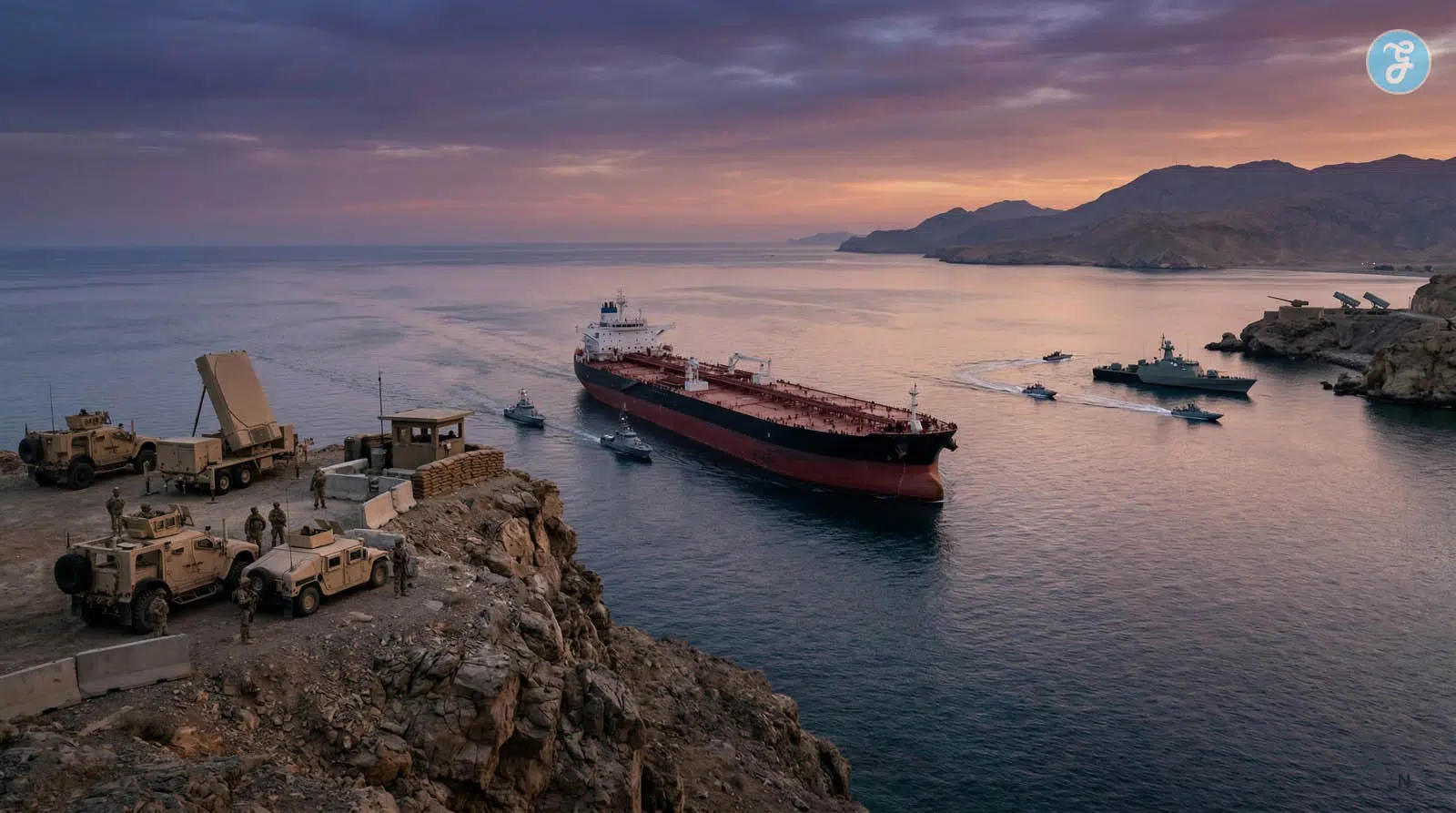
To understand this sudden halt in hostilities, you must look at the water. The narrow channel separating the Arabian Peninsula from the Iranian coast is the actual battlefield. It is the main artery that keeps the global economy breathing. When that artery choked, the world panicked and the diplomatic calculus changed overnight.
Economic Warfare
When the waterway closed in late February, the economic fallout was immediate and severe. Brent crude skyrocketed to 128 dollars a barrel. This massive price surge sent shockwaves through markets and threatened deep recessions across Western economies. The moment negotiators announced the pause, oil prices plummeted by a sharp ten percent. This rapid drop reveals a hard truth. The entire global economy runs on the fragile promise of safe passage through a single stretch of water.
The Military Management Clause
Tehran knows exactly what this waterway is worth. Their ten-point proposal includes a highly specific demand. They insist on keeping the strait under strict military management during this temporary pause.
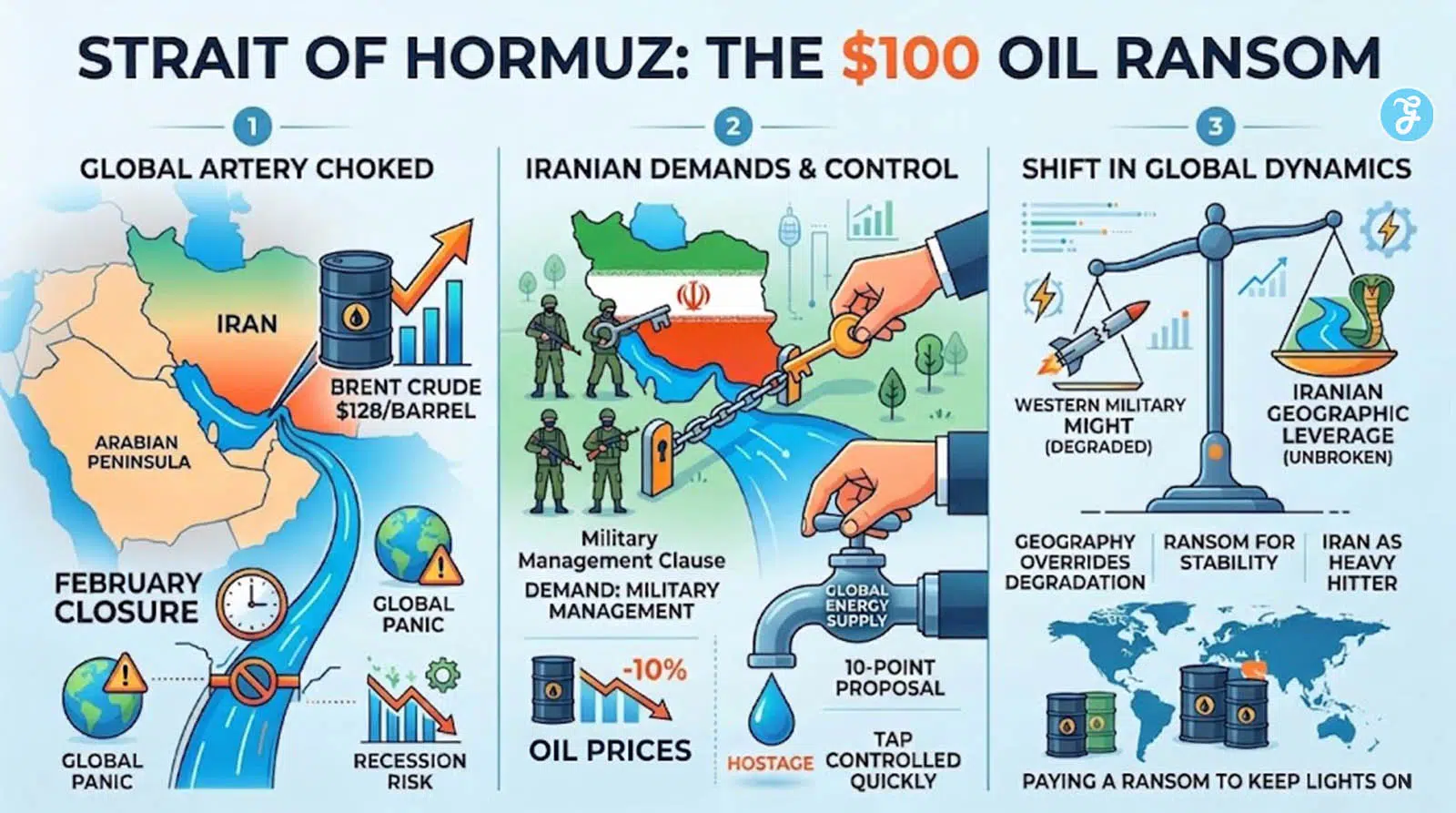
This demand is not a concession. It is a deliberate flex of power. By maintaining physical control of the shipping lanes, Tehran effectively holds the global energy supply hostage. They can turn the tap off just as quickly as they turned it on. This clause ensures Washington negotiates under the constant threat of another market crash.
Global Vulnerability
This standoff strips away the illusion of absolute Western dominance. The American military might certainly degraded the Iranian leadership. Yet the sheer geographic vulnerability of the strait gives Tehran the ultimate leverage. A severely weakened regime still controls the most important economic choke point on earth. This permanent geographic reality forces world powers to treat Iran as a heavy hitter at the negotiating table. The world is not buying peace right now. It is paying a ransom to keep the lights on and the markets stable.
The Trump Doctrine: “Met and Exceeded”
The American president did not frame this pause as a retreat. Instead, he presented it as a victory lap. Through a series of social media posts in the final hour, the administration claimed that the heavy lifting of the war was already done. The narrative shifted from a looming “demolition” of a civilization to a triumphant declaration that the mission was essentially complete.
The Narrative Shift
The White House is now leaning heavily into the idea that the military has met and exceeded its primary goals. By focusing on the degradation of Iranian naval assets and missile sites, the administration is painting the ceasefire as a choice made from a position of total strength.
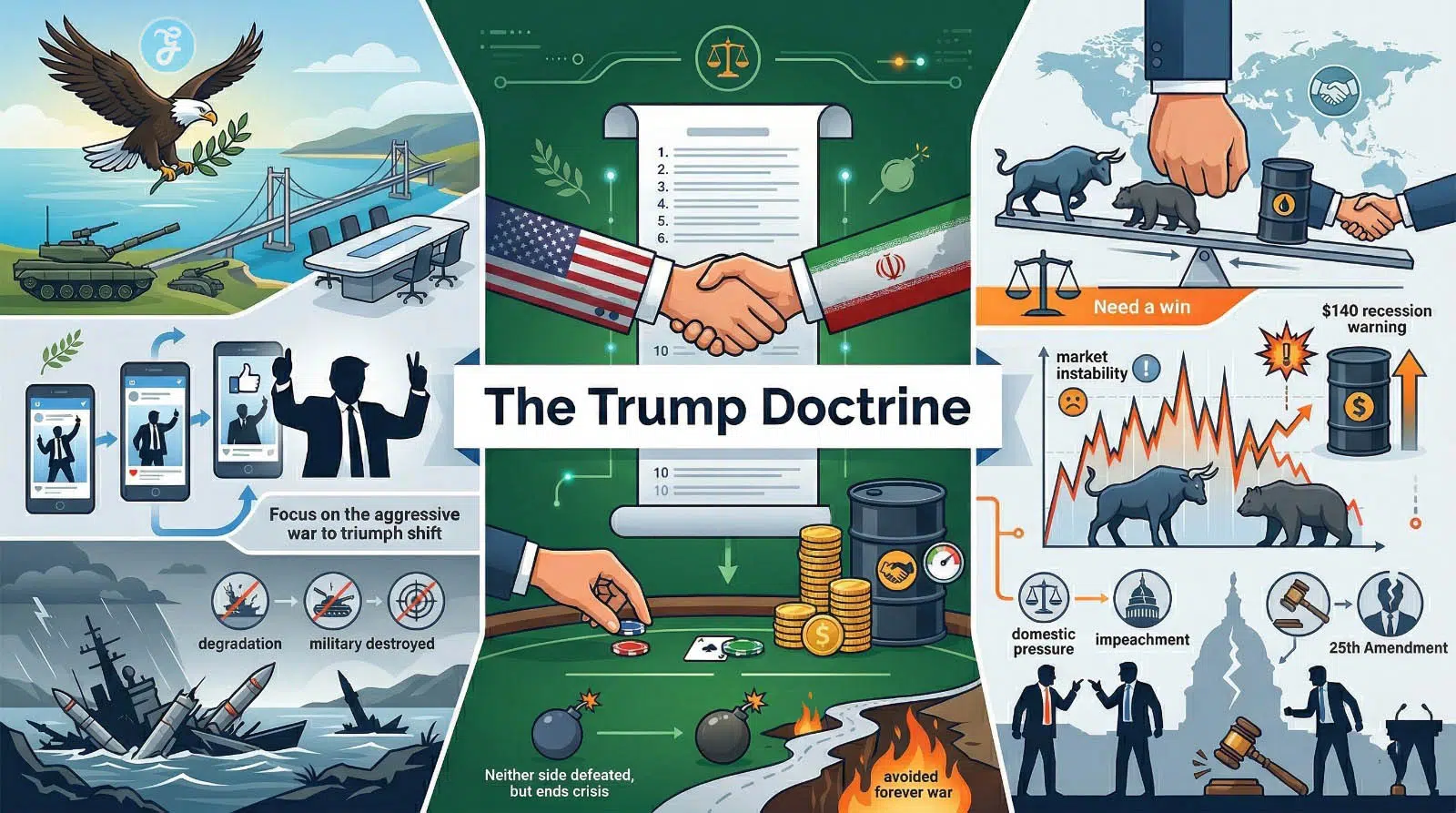
This framing allows the president to pivot from the threat of a massive infrastructure strike to the role of a peacemaker. It is a classic move to define the end of a high-intensity conflict on his own terms. The message is clear. Washington believes it has squeezed enough out of the battlefield to move the fight to the negotiating table.
Domestic Pressure
This bold rhetoric hides a more complicated reality at home. The US stock market has been on a razor’s edge, with the “fear index” spiking as each deadline approached. Investors have been desperately looking for an off-ramp to avoid a global recession triggered by $140 oil. Beyond the markets, the political climate in Washington is reaching a boiling point. Talk of impeachment and the use of the 25th amendment has filled the halls of Congress, driven by concerns over the sheer scale of the threatened strikes. The administration needed a diplomatic win to quiet its critics and stabilize a market instability before the pressure became unsustainable.
The Art of the Deal: War Edition
The ten-point plan from Tehran has provided the perfect face saving exit. While the president previously dismissed similar outlines as not good enough, he now calls this version a workable basis for a deal. It allows both sides to walk away from a “forever war” scenario without admitting defeat. This diplomatic breakthrough secures a vital Iran-US War Pause that shifts the focus from military escalation to regional stabilization. For Washington, it is a chance to claim they forced Iran to the table. For Tehran, it is a way to stop the bombs while keeping their system intact. This is not a grand peace treaty. It is a pragmatic bargain designed to end a crisis that was becoming too expensive and too risky for everyone involved.
The 14-Day Gamble: Fact Sheet
The current pause is a high pressure deadline brokered in the final hour. To understand why this two-week window matters, one must look at the specific terms that pulled both nations back from the brink of a total regional collapse.
- The Midnight Reprieve: President Trump suspended a massive final assault on Iranian civil infrastructure just ninety-minutes before a Tuesday 8:00 PM deadline.
- The Two-Week Window: The ceasefire is officially a fourteen-day suspension of strikes intended to finalize a long-term peace agreement.
- The Islamabad Summit: Pakistan will host direct delegations from Washington and Tehran this Friday, April 10, to negotiate a conclusive settlement.
- The Hormuz Condition: The pause is strictly predicated on the complete and safe reopening of the Strait of Hormuz to global shipping.
- The 10 Point Proposal: Tehran submitted a framework that includes a commitment against nuclear weapons and a demand for the lifting of all sanctions.
- Economic Relief: Brent crude oil prices plummeted ten percent to below 95 dollars a barrel immediately following the announcement.
- The Lebanon Discrepancy: While Pakistan claims the truce covers all fronts, Israel has explicitly stated its operations in Lebanon will continue.
- Military Objectives: Washington claims its primary objectives under Operation Epic Fury have already been met or exceeded during the thirty-eight-day campaign.
The Iranian Resilience: Surviving the Decapitation
The strikes that began in late February were designed to be terminal. By targeting the very top of the Iranian command, Washington and its allies aimed to shatter the decision-making heart of the state. Yet, weeks after the world watched smoke rise over the leadership compounds in Tehran, the expected collapse hasn’t happened. Instead, a resilient, if battered, system has emerged from the rubble to negotiate.
Post-Khamenei Reality
The death of the Supreme Leader in the opening waves of the conflict was the most significant blow to the Islamic Republic since its founding. Many expected the government to dissolve into chaos. Instead, the Islamic Revolutionary Guard Corps and the Supreme National Security Council quickly consolidated power. The ten point plan delivered through Islamabad is proof of this continuity. It shows a regime that is bent and mourning, but functionally intact. They are not coming to the table as a defeated insurgency. They are negotiating as a state that has absorbed a historic shock and remains capable of sophisticated diplomacy.
The Demand for Guarantees
Tehran is not interested in a simple return to the old status quo. Their proposal makes it clear that any lasting peace requires more than just a pause in bombing. They are demanding binding, long-term guarantees that they will not face another decapitation attempt. Central to this is the total lifting of both primary and secondary sanctions that have strangled their economy for years. For the negotiators in Tehran, these aren’t just talking points. They are existential requirements. They believe that without these protections, any ceasefire is merely a countdown to the next American ultimatum.
Internal Unrest
The regime is fighting a war on two fronts. While missiles fall from above, a massive wave of domestic protests has been surging since late 2025. These demonstrations, fueled by a collapsing currency and deep-seated frustration, have spread to hundreds of cities. The leadership must now balance its defiant stance against Washington with the urgent need to keep a lid on internal rebellion. This domestic pressure is a double-edged sword. It makes the regime desperate for a win at the negotiating table, but it also makes them wary of appearing weak to their own people. The pause provides a vital window to address the fires burning both at the borders and in the streets of Tehran.
The Israeli Divergence: A War Within a War
While Washington and Islamabad celebrate a breakthrough, the mood in Jerusalem is decidedly cold. Israel sees this pause not as a diplomatic victory but as a strategic error. The gap between American objectives and Israeli security needs has never been wider. This internal friction within the alliance could shatter the truce before the ink even dries.
The Lebanon Friction
A major crack has already appeared in the ceasefire agreement. Pakistan and the United States have signaled that the pause covers all active fronts. Yet the office of Prime Minister Netanyahu has been blunt in its rejection of those terms. Israel maintains that its operations against Hezbollah in Lebanon will continue regardless of any deal made in Islamabad. This creates a dangerous paradox. If Israel continues to strike Iranian allies in the north, the “all fronts” promise becomes a fiction. Tehran may then view the entire agreement as a deceptive trap. This discrepancy is the most immediate threat to the current silence.
The Proxy Problem
The “Axis of Resistance” is not a light switch that Tehran can simply flip off. Groups like the Houthis and Hezbollah have their own local agendas and internal pressures. Even if the Iranian leadership orders a total halt, these proxies often operate with a degree of autonomy. There is no guarantee that a missile won’t be launched from Yemen or a drone from southern Lebanon. If a proxy strike kills American or Israeli personnel during this two week window, the pause will vanish. The world is relying on a chain of command that has been under extreme stress for months. One rogue commander could restart the entire war.
Strategic Distrust
The deepest fear in Israel is that this is a classic stalling tactic. Military intelligence in Jerusalem warns that Iran is using these fourteen days to replenish its depleted missile stockpiles. They see the pause as a gift to a wounded enemy, allowing the IRGC to reorganize its defenses and move mobile launchers under the cover of a truce. Israel believes that every hour of silence is an hour used by Tehran to prepare for a much more lethal second act. This distrust makes a long term deal nearly impossible. For Israel, a pause that allows an enemy to catch its breath is not a step toward peace. It is an invitation to a bigger disaster.
The 14-Day Gamble: Why the Iran-US War Pause Is Only a Starting Gun
The world has been given a two week window to breathe, but no one should mistake this silence for a resolution. This Iran-US War Pause is a high-stakes calculation where the cost of continuing the fight has finally outweighed the immediate gain of another strike. Both nations are stepping back not because they have found common ground, but because they need to retool for a different kind of confrontation.

The fourteen-day clock is now the most important metric in the Middle East. It represents a fragile bridge between the total destruction threatened just hours ago and a potential diplomatic off-ramp in Islamabad. However, with the Strait of Hormuz still under a shadow and internal pressures mounting in both capitals, this breather is less about peace and more about survival. The next two weeks will determine if this was the beginning of the end or simply the calm before a much larger storm.
Disclaimer: Editorialge maintains a steadfast commitment to responsible reporting on the evolving conflicts in West Asia involving Israel, Iran, U.S., Gulf nations and non-state actors like Hezbollah, Hamas, Houthis, Islamic State, and others. In an environment where digital disinformation is widespread, we cannot independently verify every social media post or claim involving national and non-state actors. Our priority remains factual accuracy and the exercise of extreme caution when documenting all regional media.