The discussion around Extended Producer Responsibility (EPR) is critical because it has evolved from a simple “recycling fee” into a sophisticated invisible legal gatekeeper for the European Single Market. In 2026, EPR is no longer just an environmental goal; it is a mandatory prerequisite for business continuity. If a company fails to master the “End-of-Life” (EoL) stage of its products, it faces immediate, automated exclusion from the European market.
The Dual Checkpoint: Where Access Is Quietly Decided
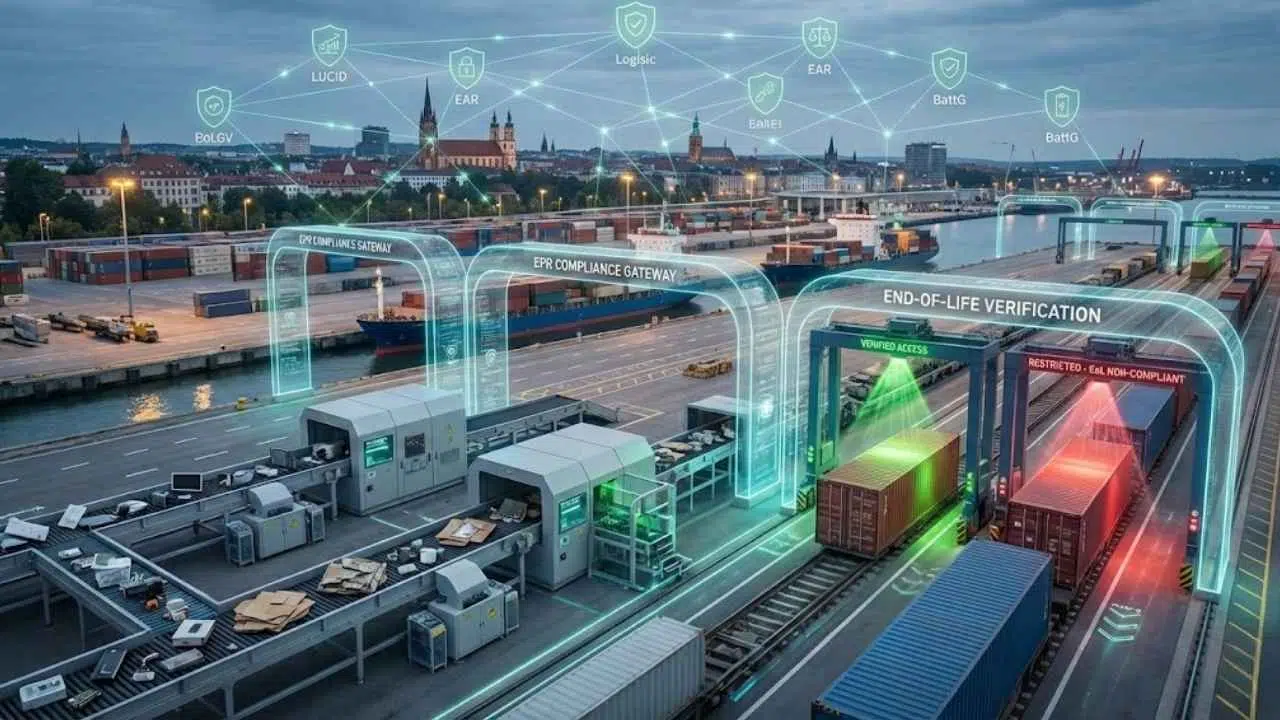
If you’re advising founders, scaling brands, or overseeing international operations, it’s important to recognize that Europe now evaluates products before they ever reach a customer. Extended Producer Responsibility (EPR) functions as an embedded filter—operating simultaneously in digital systems and physical logistics.
Listings that do not have a verified epr registration number or a self-declaration of “Packaging Minimization” under Article 21 of the PPWR can be automatically flagged for deactivation.
- Digital platforms now verify compliance before visibility. Listings without validated registrations simply never appear.
- Border and domestic authorities cross-check goods against national registries, turning documentation into a prerequisite for movement, not a follow-up formality.
This isn’t regulatory overreach—it’s architectural design. Specialists who understand this don’t scramble after blocks or delays. They build access into the launch itself, ensuring continuity from warehouse to marketplace.
Germany’s Compliance Architecture: Precision over Generalization
Germany rewards accuracy and punishes assumption. Its system isn’t complex for the sake of complexity—it’s modular, deliberate, and unforgiving to those who treat compliance as generic.
Key pillars operate independently:
- LUCID, governing all packaging
- EAR (WEEE), regulating electrical and electronic equipment
- BattG, covering batteries in any form
For non-EU manufacturers, this fragmentation can become a liability. This is where Deutsche Recycling (DR) plays a decisive role. Acting as an Authorized Representative, DR absorbs legal responsibility and translates regulatory precision into operational clarity. For a US exporter or a Thai producer, this is the difference between learning the system and functioning within it with confidence.
Lifecycle Accountability: Designing Without Hidden Exposure
EPR redefines ownership in a way many expansion teams underestimate. With a circular legal framework, compliance no longer terminates at the point-of-sale, it extends back and forth; to design decisions and recycling outcomes.
Materials, packaging layers, embedded electronics—each carries a measurable obligation. For example, if you procure an unrecyclable multi-layer laminate due to its price advantage, the producer is hit with surcharges at the End-of-Life stage.
In 2026, for international distribution projects, procurement becomes a strategic function, not an administrative one. Every sourced component is a potential liability.
Every unreported material creates future exposure. For example, if you “forget” to report a specific plastic coating or a battery’s chemical composition in your WEEE/EPR filings, you aren’t just missing a payment. You are creating Environmental Debt. Working with comprehensive EPR strategists turns lifecycle accountability into a managed variable rather than a silent threat.
Strategic Integration: When Compliance Becomes a Competitive Asset
True expertise shows when compliance stops being reactive and starts reinforcing strategy. When EPR knowledge is embedded early, it elevates the entire advisory relationship.
In practice, this looks like:
- Market expansions that launch cleanly, without platform interruptions
- Procurement strategies that verify compliance before contracts lock in risk
- Client conversations that focus on continuity, not correction
This is where you shift roles—from service provider to stabilizing force. Deutsche Recycling becomes part of the operational backbone, not a last-minute fix. The result is quieter execution, fewer surprises, and a level of trust that competitors struggle to match.
In essence, extended producer responsibility isn’t a constraint on growth; it’s the structure that defines sustainable access in Europe. EPR experts understands its intentions and thus are able to design business operations that hold under scrutiny. For businesses with cross border aspects, that means calm expansion and signals entrepreneurial maturity. A reliable EPR service provider should have the ability to listen, anticipate, and execute with precision. In markets EU markets like Germany and France, uninterrupted border cross and progress is never accidental.