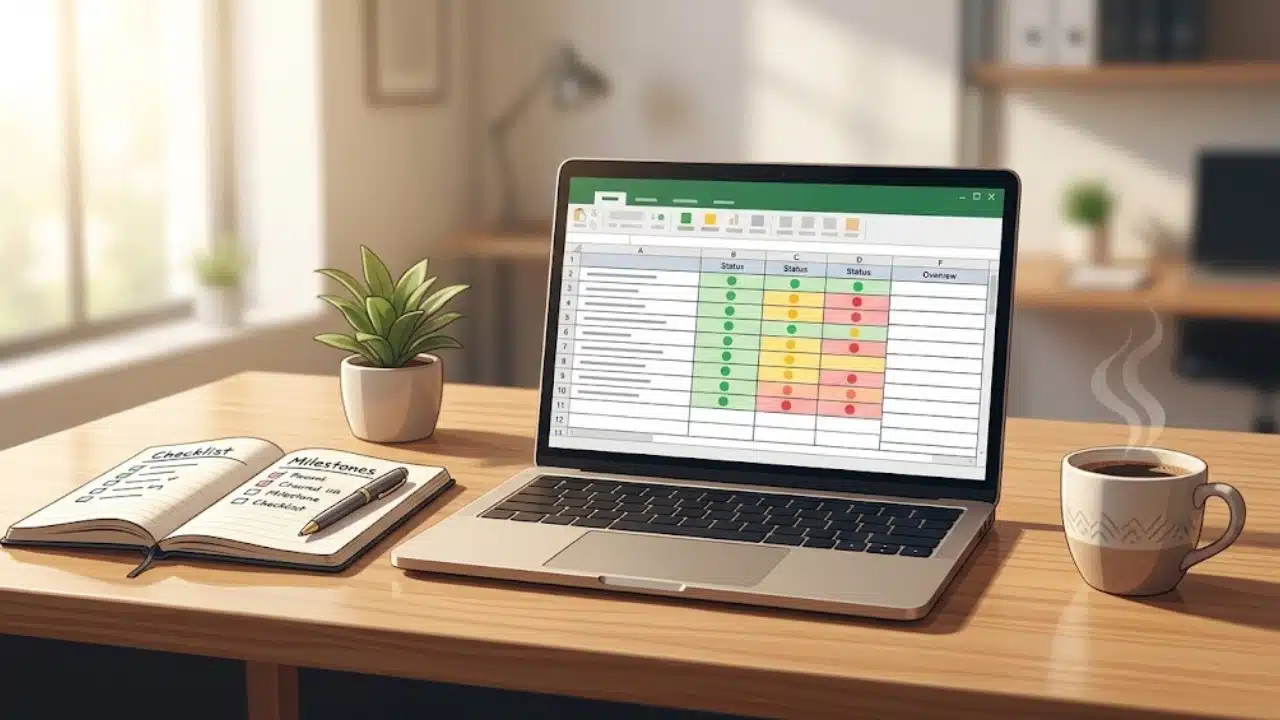
I woke up at five in the morning because a wearable device told me it was the optimal window for my circadian rhythm. By five ten, I was sipping a double espresso while staring at a kanban board of my own making. My life was a series of digital cards to be moved from left to right. I was a slave to the efficiency trap. I believed that if I could just shave three minutes off a meeting, I would finally be free. Instead, I found a different path through Shokunin Kishitsu. I was just faster at being miserable.
This was the height of my obsession with productivity. I lived by the ticking clock of pomodoro timers. I tracked my deep work hours with the intensity of a high stakes gambler. My smartphone was a graveyard of apps designed to make me more than human. I was chasing a version of success that looked like a sleek, frictionless machine. Yet, the more I optimised, the less I actually felt. I was producing more than ever, but I cared less about the result. My work had become a high volume commodity. The soul had been squeezed out by the metrics of hustle culture.
I reached my breaking point on a Tuesday afternoon. I finished a project two days early. I looked at the completed task and felt nothing but the urge to fill the empty space with another task. That was the moment I realised that optimisation is a treadmill with no off switch. It was around this time that I first encountered the artisan spirit.
The Rebuke of the Master
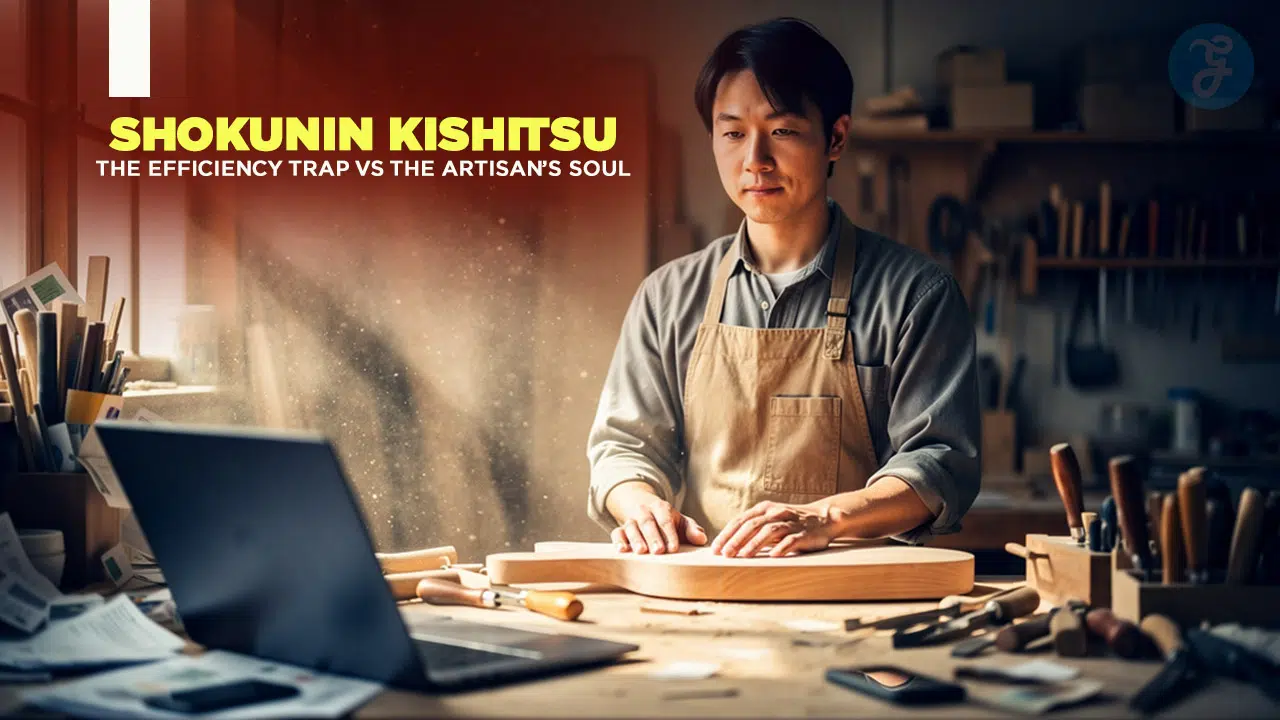
I was watching a documentary about a master craftsman who spent decades perfecting a single type of joinery. He did not have a productivity app. He did not care about scaling his business or pivoting to a more profitable niche. He cared about the wood. He cared about the edge of his blade. He cared about the person who would eventually use the object he was creating. He was not trying to be efficient. He was trying to be excellent.
Watching him work felt like a rebuke to my entire lifestyle. While I was busy hacking my habits to save seconds, he was spending years mastering a single movement. He looked calm. He looked present. Most importantly, he looked like he was actually living. I realised then that my quest for speed was actually a flight from meaning. I was so busy trying to get to the end of my to-do list that I had forgotten why I started the work in the first place.
The artisan’s spirit offered a different path. It suggested that work is not a hurdle to get over. It is a place to dwell. I decided to stop trying to be a machine. I decided to start becoming a human again.
Defining Shokunin Kishitsu: More Than a Job
To understand why this shift matters, we must look at the literal foundation of the term. Shokunin translates to artisan, while Kishitsu refers to an innate spirit, temperament, or mettle. Together, Shokunin Kishitsu describes the very nature of a person. It is not a certificate hung on a wall, nor is it a collection of “hacks” learned in a weekend workshop. It is a fundamental state of being.
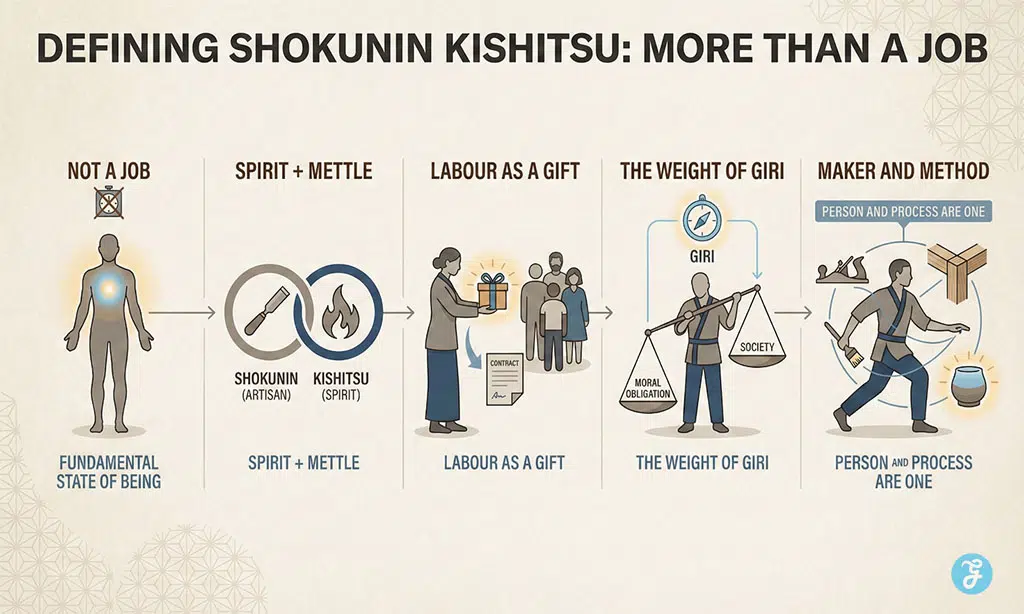 In the West, the term “artisan” is frequently associated with luxury… expensive hand-crafted furniture or boutique sourdough bread. It is often viewed through the lens of a hobby, a side hustle, or a premium brand. In Japan, the definition is far more demanding and spiritually weighted.
A true shokunin is bound by a sense of Giri (moral obligation) to work their best for the collective harmony of society. Their labour is viewed as a functional gift. When a shokunin carpenter builds a house, they are not merely fulfilling a commercial contract; they are assuming responsibility for the safety and peace of the family within. This deep sense of duty transforms a standard job into a lifelong vocation, where the process and the person are inseparable from the final product.
The Altar of Daily Labour
This mindset did not appear by accident. It has deep historical roots. In the seventeenth century, a Zen monk named Suzuki Shosan challenged the traditional religious views of his time. He argued that you did not need to sit in a cave or a temple to find peace. He taught that daily labour was itself a religious exercise. Whether you were a farmer tilling the soil or a blacksmith forging a blade, the act of working was a path to enlightenment.
This was a radical idea. It suggested that your desk is your altar. It meant that the care you put into a single sentence or a line of code is a spiritual act. Shosan believed that if you worked with a sincere heart, you were practising Buddhism. This philosophy stripped away the boredom of repetitive tasks. It replaced the desire for a quick finish with a deep respect for the process.
The shokunin does not work for the weekend. They do not work for the praise of a manager. They work because the act of creation is where they find their humanity. When I was trapped in the cycle of optimisation, I saw my work as a barrier between me and my real life. I wanted to get it done as fast as possible so I could start living. The artisan spirit taught me that work is life.
There is a profound sense of peace in this realisation. When you stop trying to beat the clock, the clock stops being your enemy. You begin to see that the quality of your work is the quality of your days. You are no longer a machine trying to maximise output. You are a person seeking mastery. This is the difference between surviving your career and actually living it.
The Five Pillars of the Artisan Spirit
To truly live by Shokunin Kishitsu, you have to break the habit of looking for the exit. Modern productivity is about the finish line. The artisan spirit is about the starting block. It is built on five pillars that turn a mundane career into a craft.
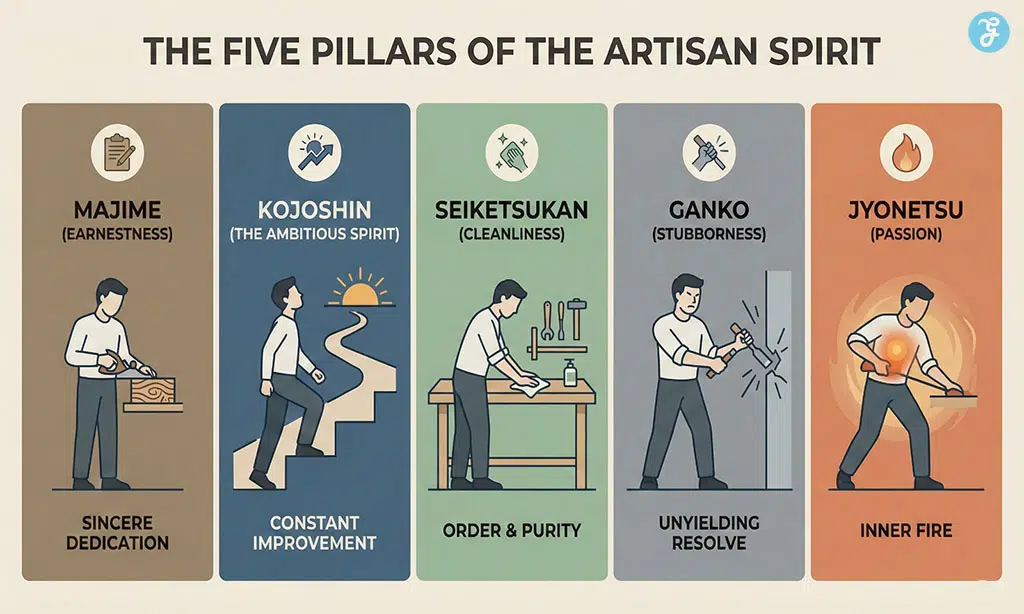
Majime (Earnestness): In the efficiency trap, we rank our tasks. We give our best energy to the big projects and rush through the small ones. We treat a spreadsheet as a chore and a masterpiece as a goal. Majime rejects this hierarchy. An earnest person treats a simple email with the same gravity as a keynote speech. It is not about being a perfectionist. It is about being sincere. When you approach every task with sincerity, the boredom of work vanishes. You are no longer waiting for the important stuff to happen. Everything is important.
Kojoshin (The Ambitious Spirit): This is where the machine and the human part ways. Optimisation is about reaching a peak and staying there. It is about hitting a target. Kojoshin is different. It is a lifelong commitment to improvement without a finish line. A shokunin knows they will never be perfect. They do not want to be perfect. They want to be better than they were yesterday. This removes the anxiety of failure. If there is no final destination, you can finally enjoy the walk. You are always a student. That is a very liberating way to live.
Seiketsukan (Cleanliness): It means cleanliness or a sense of purity. In a digital world, our workspaces are often cluttered with open tabs and half finished thoughts. We think a messy desk is a sign of a busy mind. The artisan knows better. Your environment is a mirror of your internal state. If your tools are dull and your bench is cluttered, your thinking will be blunt. Cleaning your workspace is not a distraction from the work. It is the beginning of the work. It creates a boundary between the chaos of the world and the clarity of your craft.
Ganko (Stubbornness): In a corporate setting, we are told to be agile and flexible. We are told to find the shortest path to the result. Ganko is the rebellion against that pressure. It is the refusal to take a shortcut because you know it compromises the integrity of the thing you are making. It is staying late to fix a detail that no one else will ever see. It is a quiet, stubborn pride. This is how you reclaim your agency. You are not just a cog in a machine. You are the guardian of your own standards.
Jyonetsu (Passion): This is not the loud, performative passion of a motivational speaker. It is a quiet, burning intensity. It is what allows you to enter the flow state. This is when the ego disappears. You are no longer thinking about your career or your mortgage. You are just doing the thing for the sake of the thing. When you work with Jyonetsu, you are not spending your life energy. You are gaining it. You finish a long day feeling full instead of empty.
These pillars do not make your life easier. They make it heavier in the best possible way. They give your hours weight and meaning. You stop trying to save time and start trying to spend it well.
The Conflict: The Modern World vs The Shokunin
In the relentless race to do more, we have forgotten how to do things well.
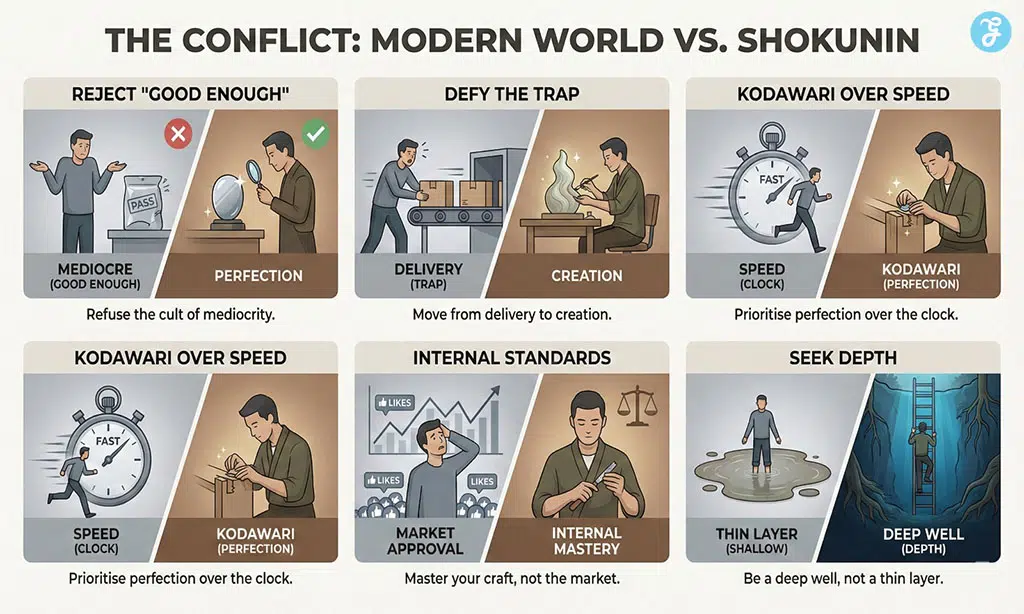
The Cult of “Good Enough”: The greatest enemy of a meaningful life is the cult of “good enough.” In the modern corporate landscape, we are taught to worship the Minimum Viable Product. We are told that speed is a competitive advantage and that perfection is the enemy of the good. This sounds practical in a boardroom. In reality, it is a recipe for a hollow existence. When you spend your day producing things that are just good enough to pass a manager’s inspection, you are slowly eroding your own self-respect.
The Moral Injury: This is the moral injury of the efficiency trap. We are prompted to optimise our output until we are nothing more than a high-speed delivery system for mediocrity. We hack our schedules to fit in more meetings. We use templates to avoid original thought. We treat our work as a series of obstacles to be cleared before the weekend arrives. This creates a deep sense of alienation. You cannot find joy in a process that you are constantly trying to escape.
The Power of Kodawari: The artisan spirit offers a direct challenge to this culture through Kodawari. This is a term that does not have a perfect English equivalent. It is often described as an uncompromising pursuit of perfection or an obsession with detail. To an efficiency expert, Kodawari looks like a waste of time. Why spend three hours perfecting a single sentence when a thousand people will only skim it? Why obsess over the grain of the wood on the underside of a table where no one will see it? The answer is simple. The shokunin does not do it for the audience. They do it for the work itself. Kodawari is the point where work becomes an act of self-expression. It is the moment you stop being a service provider and start being a creator. When you commit to a standard that is higher than what the market demands, you are no longer a slave to the market. You are the master of your own craft.
The Transformation: How I Changed
Applying these pillars to my digital life felt awkward at first. I am not a woodworker or a sushi chef. I work with keyboards and screens. Yet, the transformation began the moment I stopped treating my tasks as units of time. In my writing, I stopped looking at word counts as a metric of success. Instead, I started looking for the moment of presence. I asked myself if I was proud of the specific word I just chose. I treated the structure of a paragraph with the same reverence a shokunin gives to a dovetail joint.
This shift in metrics changed my mental health almost overnight. I stopped measuring tasks completed. That is a machine’s metric. Instead, I began to value the quality of my attention. If I spent four hours on a single page but felt completely immersed in the logic of the argument, that was a successful day. In the old world of optimisation, that would have been a failure. In the world of Shokunin Kishitsu, it was a triumph.
The great paradox of this journey is that by slowing down, my work actually improved. When you stop rushing to the finish line, you stop making the tiny, compounding errors that speed usually invites. Clients noticed the difference. Readers felt the weight of the intent behind the words. By caring more about the process than the profit, the profit actually became more stable.
I no longer feel the need to hack my life. I do not need an app to tell me how to breathe or when to focus. I simply show up to work with a clean desk and an earnest heart. I have traded the frantic pursuit of more for the steady practice of better. I am no longer just surviving my career. I am finally living it.
Shokunin Kishitsu Is the Invitation to Live
Choosing the path of Shokunin Kishitsu does not mean you have to move to a mountain or renounce your digital life. You do not need to become a monk or a master carpenter to reclaim your time. It is simply about taking your humanity back from the machine of efficiency. It is a refusal to be processed. It is a decision to be a person who cares about what they do, even when the world is shouting at them to do it faster.
I invite you to try a small experiment today. Pick one task. It could be washing the dishes, writing a brief memo, or making a cup of tea. Do not look at the clock. Do not try to multitask. Do not look for a hack to get it done in half the time. Instead, do it with the spirit of the artisan. Pay attention to the texture of the paper or the heat of the water. Do it as if it is the only thing that matters in the world.
You will find that the moment you stop trying to squeeze every second for its maximum value, the day begins to open up. The anxiety of “not enough” starts to fade. You are no longer racing toward a future version of yourself that is finally successful. You are already there. To stop optimising is to finally start arriving.