Selecting the right help desk software for small business is the most effective way to provide enterprise-level support without a massive overhead. In 2026, the market has shifted toward accessible, all-in-one platforms that allow small teams to compete with global giants through automation. By centralizing your customer conversations, you ensure that no inquiry falls through the cracks and your brand reputation remains spotless.
The current economic landscape rewards efficiency and rapid response times above all else. Utilizing the help desk software for small business featured on this list helps you manage growth without needing to hire a massive support staff immediately. This guide provides a detailed look at the top platforms designed to grow alongside your company while maintaining a personal touch.
Selection Criteria For Our Top Rankings
We evaluated dozens of platforms to find the most cost-effective and powerful solutions for smaller teams. Our team prioritized firms that offer transparent pricing and “no-code” setups that do not require an IT department to maintain. The following weighting shows how we determined the final rankings for this year.
| Criterion | Weighting |
| Ease of Setup | 35% |
| Cost-to-Feature Ratio | 25% |
| Automation Tools | 20% |
| Customer Support Quality | 20% |
Analyzing The 10 Best Help Desk Software for Small Business Success
The following list contains the most reliable and affordable support solutions currently operating for growing companies. Each selection provides unique benefits ranging from shared inboxes to integrated knowledge bases for self-service. These options will help you find the perfect match for your specific customer base and technical comfort level.
1. Freshdesk
Freshdesk remains the premier choice for small businesses that want a powerful system that “just works” out of the box. It offers a clean and colorful interface that makes managing a high volume of tickets feel much less intimidating. The platform’s free tier is one of the most generous in the industry, allowing small teams to get started without any upfront investment. This is a vital resource for any entrepreneur looking to scale their customer service professionally.
Special Features:
-
Highly intuitive “Freddy AI” for summarizing tickets and drafting quick replies
-
Gamification features that make hitting support targets fun for your team
-
Comprehensive knowledge base tool to help customers find their own answers
Things To Consider:
-
Some of the more advanced automation rules are locked behind higher-paid tiers
-
The sheer number of features can feel a bit much for a solo founder
Best For: Growing teams who want a scalable, feature-rich platform
2. Help Scout
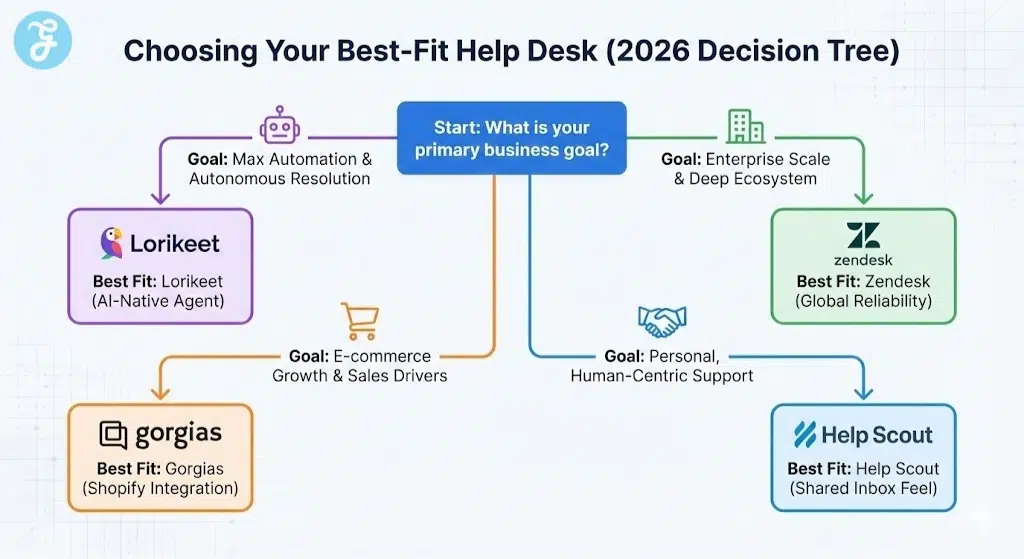
Help Scout is the leading alternative for businesses that want their support to feel like a personal conversation rather than a ticket number. It is designed to look exactly like a standard email to the customer, removing the “robotic” feel of traditional help desks. For small businesses that pride themselves on their relationship with customers, this is an essential tool. It remains a reliable staple for those focused on a “human-first” brand identity.
Special Features:
-
Shared inboxes that allow multiple team members to collaborate on one email thread
-
“Beacon” widget for providing live chat and help docs directly on your website
-
Integrated customer satisfaction (CSAT) surveys sent after every interaction
Things To Consider:
-
Does not offer a traditional “ticket ID” which some technical teams might miss
-
Limited reporting features compared to more enterprise-focused competitors
Best For: Boutique brands and small teams prioritizing personalized service
3. Zoho Desk
Zoho Desk is the absolute best value for businesses that already use other Zoho products like their CRM or books. It offers a surprising amount of deep automation and reporting at a price point that most small businesses can easily afford. Their “Zia” AI assistant helps identify common issues and suggests articles that could resolve the ticket. It simplifies the bridge between research and practical customer resolution.
Special Features:
-
Seamless integration with over 45 other Zoho business applications
-
Multi-brand support that lets you manage different websites from one portal
-
Work modes that help agents prioritize tickets based on urgency or status
Things To Consider:
-
The interface is functional but lacks the modern “slickness” of newer tools
-
Setting up complex workflows requires a bit of a learning curve
Best For: Existing Zoho users and companies seeking high-level customization
4. Front
Front is a unique platform that treats customer support as a collaborative team sport within a shared inbox. It allows team members to chat “behind the scenes” on a customer’s email before sending a final response. This makes it an essential tool for small teams that handle complex B2B inquiries where multiple people need to weigh in. It provides a great user experience for high-touch customer relationships.
Special Features:
-
Ability to comment and tag teammates directly on a customer’s message
-
Unified view for managing SMS and WhatsApp and email in one place
-
Shared drafts that allow more experienced team members to review junior replies
Things To Consider:
-
Pricing can be higher than traditional help desks as your team grows
-
Not ideal for businesses that handle simple, high-volume transactional tickets
Best For: Teams that handle complex or consultative customer inquiries
5. Gorgias
Gorgias is the undisputed champion for small businesses operating on Shopify or BigCommerce. It allows you to see a customer’s full purchase history directly next to their support ticket, saving agents from switching between tabs. You can edit orders and process refunds and issue discount codes without ever leaving the help desk. It reveals the intent behind the query by putting the shopping cart front and center.
Special Features:
-
Instant access to order tracking and customer data for e-commerce stores
-
“Macro” templates that automatically pull in variables like the delivery date
-
Intent detection that prioritizes tickets from customers ready to make a purchase
Things To Consider:
-
The pricing model is based on ticket volume which can be hard to predict
-
Extremely focused on e-commerce—less useful for service-based businesses
Best For: Shopify store owners and direct-to-consumer brands
6. Tidio
Tidio is a lightweight and powerful solution that focuses heavily on live chat and automated “chatbots” for small businesses. It is designed to be installed in minutes and helps you catch visitors while they are still browsing your site. The platform includes a “Mailing” feature that lets you send email newsletters, making it a solid choice for a multi-purpose tool. It bridges the gap between customer support and sales.
Special Features:
-
Visual chatbot builder that requires zero coding knowledge to set up
-
Real-time visitor list that shows you who is on your site right now
-
Shared inbox for email, live chat, and Instagram messages
Things To Consider:
-
The ticketing features are more basic compared to a tool like Freshdesk
-
The free version carries Tidio branding on your website chat widget
Best For: Small businesses looking to convert web visitors into customers
7. Kayako
Kayako is a unified help desk that prides itself on providing a “Single View” of the customer across all channels. It tracks every interaction a customer has with your brand, including their social media mentions and past support history. This is an excellent choice for businesses that want to provide a consistent experience across multiple platforms. It makes complex customer data easy for small teams to use effectively.
Special Features:
-
“Journeys” feature that visualizes every touchpoint a customer has with your company
-
Multilingual support that allows you to assist customers in their native language
-
Collaborative “Notes” that keep internal discussions separate from the customer
Things To Consider:
-
The pricing is a bit higher than some of the basic “entry-level” options
-
Some users find the setup of the mobile app to be a bit cumbersome
Best For: Teams that want a holistic view of the customer experience
8. LiveAgent
LiveAgent is a powerhouse for small businesses that rely heavily on live chat and phone support alongside traditional email. It features one of the fastest live chat widgets on the market and includes a built-in call center. This makes it a great choice for companies that want to manage all their communication hardware through one software portal. It helps bridge the gap between search volume and human conversation.
Special Features:
-
Real-time typing view that shows you what a customer is writing before they send it
-
Built-in call center with features like IVR and call recording
-
Universal inbox that handles everything from Facebook messages to Viber
Things To Consider:
-
The interface looks a bit dated compared to modern fintech-style competitors
-
The massive number of settings can be overwhelming for total beginners
Best For: Companies with heavy live chat and phone support needs
9. Hiver
Hiver is a unique tool that lives entirely inside your Gmail inbox, meaning your team never has to learn a new software interface. It turns your “support@yourcompany.com” address into a shared space where emails can be assigned and tracked. This is a futuristic addition to any small business that wants to stay organized without leaving the Google ecosystem. It is a masterclass in simplicity and workflow efficiency.
Special Features:
-
Zero learning curve because it works directly inside the Gmail interface
-
Email notes that let your team discuss an inquiry without forwarding emails
-
Advanced collision detection that shows you if someone else is already replying
Things To Consider:
-
Only works for businesses that use Google Workspace for their email
-
Does not include a native live chat or knowledge base out of the box
Best For: Small teams who want to manage support directly within Gmail
10. Groove
Groove is designed for small businesses that have outgrown their shared email account and need a simple, clutter-free way to stay organized. It offers a very clean dashboard that focuses only on the features you actually need to resolve tickets. The platform includes a powerful knowledge base and a live chat widget, making it a complete support suite. It reveals the intent behind “simple” by stripping away the enterprise bloat.
Special Features:
-
Very modern and distraction-free interface that reduces agent burnout
-
One-click “Smart Summaries” that help you catch up on long conversations
-
Competitive pricing that makes it one of the most affordable full suites
Things To Consider:
-
Lacks some of the deep integration options found in the “Big Three” platforms
-
Not designed for massive teams with complex technical requirements
Best For: Startups and small teams seeking a modern and simple help desk
A Quick Overview:
The market for support tools has become increasingly user-friendly, with many platforms offering “freemium” tiers specifically for startups. Most top-tier providers now offer AI-assisted drafting tools that help small teams reply to customers three times faster than traditional email. This table highlights three of the most popular platforms available to small businesses in the 2026 landscape.
| Software Name | Best Known For | Pricing Style |
| Freshdesk | Ease of Use | Per Agent |
| Help Scout | Human Feel | Per User |
| Zoho Desk | Deep Ecosystem | Tiered Monthly |
How To Choose The Right Help Desk Plan
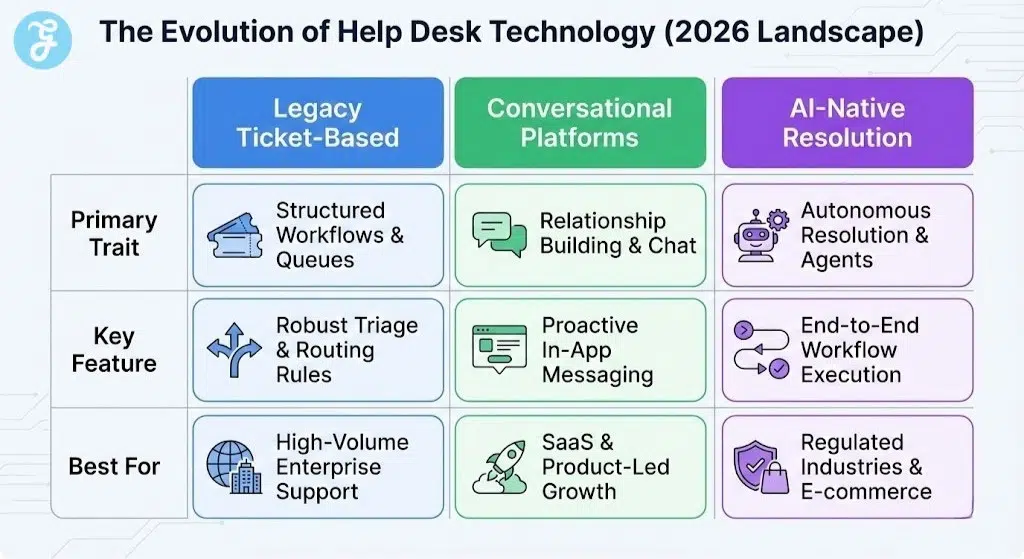
Selecting a platform depends on whether you prioritize the “Human Touch” or the “Automation Speed” of your support team. You should always look for a tool that offers a free trial to ensure the interface feels right for your daily workflow. This comparison matrix helps you align your specific business priorities with the most appropriate support software.
| Priority Goal | Recommended Software | Primary Advantage |
| Personal & Simple | Help Scout | Email-Only Feel |
| E-commerce Focused | Gorgias | Order History Data |
| Value & Ecosystem | Zoho Desk | Budget-Friendly Power |
| Fastest Setup | Tidio | Chat & Bot Focus |
Final Thoughts
Winning the loyalty of your customers in 2026 requires a support system that is as agile as your business. The help desk software for small business options mentioned here provide the tools necessary to provide “big brand” service on a startup budget. By choosing a platform that fits your current team size and future goals you can create a lasting foundation for customer success.