Are you trying to land a tech job in 2026 but feel like you might be late to the party? You may wonder if coding bootcamps are still the golden ticket they used to be, or if they are just expensive trends. You are definitely not the only one asking this. There is so much noise about “Best Coding Bootcamps” and quick pathways into technology that it can feel overwhelming. But I want to share one clear fact with you: today’s bootcamps are working harder than ever to connect students with jobs faster than most college degrees do.
This guide will show you exactly how bootcamps have changed, which specific skills (like AI tools) are taught now, and how real employers view these programs in 2026.
What Are Coding Bootcamps?
Think of a coding bootcamp like a trade school for the internet. These are intensive training programs designed to teach you tech skills fast, using real projects and hands-on tasks. They offer a direct shortcut into jobs in technology, compared to the much slower pace of college degrees.
Brief overview of coding bootcamps
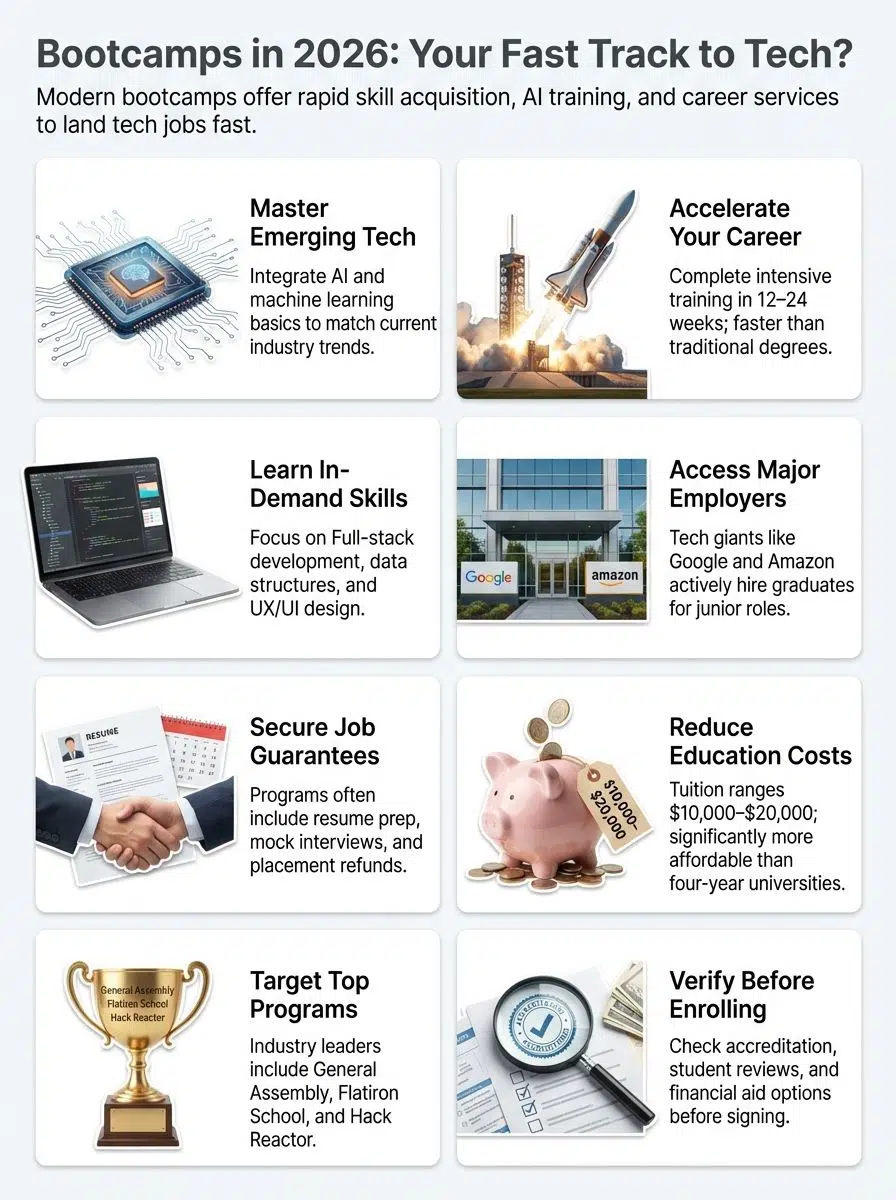
You typically spend about 12 to 24 weeks at a coding bootcamp. It is an immersive experience where you often learn more in a month than you might in a semester of university. These short programs teach you how to code, build websites, or work with data immediately. Many focus on the exact skills that employers like Capital One or Amazon look for in tech jobs right now.
Small groups and hands-on projects help you practice what you learn right away. It is often described as “drinking from a firehose” because the information comes at you so fast.
Most bootcamps offer day and night classes, so you can keep your current job while you train for a new one. Some even give job guarantees or connect students straight to hiring managers. As Maya Patel, a senior IT recruiter in Austin, often says:
“A good bootcamp is like rocket fuel for your career. It won’t fly the ship for you, but it gets you off the ground much faster than walking.”
Key differences from traditional education
Bootcamps move efficiently. Most last three to six months, while a typical degree takes two to four years. Instructors usually come directly from the tech industry and show you real-world skills that connect straight to tech jobs. Here is how they compare:
| Feature | Traditional Degree | Coding Bootcamp |
|---|---|---|
| Time Commitment | 2-4 Years | 12-24 Weeks |
| Curriculum Focus | Theory & General Ed | Practical, Job-Ready Skills |
| Cost (Average) | $20,000 – $100,000+ | $13,500 – $18,000 |
Traditional education covers broad topics like history or electives, which bootcamps skip entirely. Coding bootcamps teach only what matters for today’s job market: coding languages, tools, teamwork, and the soft skills needed at work. Instead of quizzes and essays, you build apps or websites as proof of learning.
How Bootcamps Have Evolved Over the Years
Bootcamps look very different from what they did just a few years ago. They now keep pace with the fast changes in tech to ensure students stay job-ready and confident. If you looked at a syllabus from 2021, it would look outdated today.
Increased focus on job placement
Career services have grown fast in coding bootcamps. Now, students get resume help and mock interviews right from day one. Some programs even bring real tech companies into the classroom for job fairs or hands-on projects.
In 2026, many top-rated bootcamps offer job guarantees or give refunds if you do not land a tech role within six months of graduation. This shift matches hiring trends that prize skills training and work-ready IT professionals. More partnerships now connect bootcamp grads with employers needing new talent.
Advisors track your progress and guide your career development every step of the way. Tech education has become more than just learning to code; it is workforce training aimed straight at landing you a paycheck.
Integration of AI and emerging technologies
Bootcamps sharpen job placement strategies, but they also shift gears to keep up with new tech trends. AI and machine learning have changed the way teachers present skills training.
Now, almost every coding bootcamp adds modules on AI basics and automation tools. You won’t just learn to write code; you will learn to use AI assistants like GitHub Copilot or Cursor to write code faster. This is a massive shift.
- AI Basics: Students code chatbots or train simple models in Python.
- Cloud Skills: Courses cover deploying web apps to AWS or Google Cloud.
- Real World Use: Instructors discuss practical uses like smart contracts or automation.
Tech jobs now ask for these skills from day one. Employers hunt for pros who understand today’s digital landscape and can pick up tomorrow’s tools fast.
Are Bootcamps Still a Path to Tech Jobs in 2026?
Some companies still welcome bootcamp grads with open arms, yet others prefer traditional degrees. The tech field shifts fast, and you need to know where the opportunities actually are.

Demand for bootcamp graduates in the job market
Companies keep looking for skilled tech workers in 2026. Bootcamp graduates fill many entry-level roles, especially in coding, IT support, and data analysis. While “Big Tech” giants have slowed down some hiring, other sectors are booming.
According to recent industry reports, non-tech industries like healthcare, finance, and retail are hiring thousands of developers. LinkedIn data often highlights that job postings mentioning “bootcamp” remain steady, rising about 18 percent since 2024.
Major employers like JPMorgan Chase and Home Depot hire many bootcamp grads as junior developers. Some hiring managers still ask about college degrees, but more care about hands-on skills. Many startups like working with bootcamp alumni because they bring fresh ideas and adapt fast to team needs.
Trends in employer perceptions
Many employers now see coding bootcamps as a valid path for workforce training. In 2026, tech companies often value skills and job readiness over fancy degrees. Hiring trends show a rise in trust for bootcamp grads, especially in IT jobs like software development and UX/UI design.
Surveys reveal that more than 70 percent of HR managers view bootcamp credentials as equal to community college courses. Some still ask about project experience, but hands-on skills usually matter most during the interview process.
Skills Taught in Modern Bootcamps
Modern bootcamps cram a lot into a short time. You will roll up your sleeves and tackle skills that employers actually want right now.
Full-stack web development
Full-stack web development trains people to build both the front and back ends of websites. You learn coding languages like HTML, CSS, JavaScript, and increasingly TypeScript. Instructors teach students how to set up databases, connect servers, and create user-friendly pages.
Bootcamps focus on hands-on skills that help you land tech jobs faster than a four-year degree. Big names in technology want new hires who can handle many tasks in one day. Studies show hiring trends favor candidates with full-stack experience because companies love workers who solve problems fast.
Data structures and algorithms
Every tech job out there needs sharp problem-solving. Coding bootcamps in 2026 teach data structures and algorithms fast. Students learn how to sort lists, search for answers, and build better programs using the right steps.
Employers ask about this knowledge at interviews because it shows you can handle real tasks. Popular topics include:
- Linked Lists & Arrays: The building blocks of data.
- Sorting Methods: Techniques like bubble sort or quicksort.
- Search Algorithms: How to find data efficiently.
Mastering these skills means faster code and fewer mistakes. It is a must for IT professionals hoping to land stable employment in today’s workforce.
AI and machine learning fundamentals
Mastering data structures and algorithms opens the door to smarter tech. Next up, many coding bootcamps in 2026 teach AI and machine learning basics. Students learn how computers can spot patterns or make choices, almost like a person does.
For example, some lessons show how apps use face filters or suggest music you might enjoy. Bootcamp students get hands-on time with tools like Python and TensorFlow. Instructors explain things step by step without the headaches.
Employers now look for IT professionals who understand smart systems. This skill leads straight into more job opportunities across tech education and workforce training today.
UX/UI design
UX/UI design helps apps and websites look good and work well. Students learn to make buttons, menus, and screens user-friendly. Courses focus on making things simple for people to use.
Modern bootcamps teach how colors and text create the right mood. They use real projects so students practice with industry-standard tools like Figma or Adobe XD. Companies want tech workers who know how to think like users.
Top-Rated Coding Bootcamps in 2026
Some tech bootcamps stand out in 2026, setting the bar high for fast and effective job training. Curious to see which names keep ringing bells?
General Assembly
General Assembly started in 2011 and is one of the biggest names in the game. It runs programs in many countries, training thousands for tech jobs each year. The bootcamp offers courses in coding, data analytics, and UX design.
Their job placement support stands out with strong career services. They have a massive alumni network, which is helpful for finding that first open door. General Assembly works closely with large companies like Microsoft and L’Oréal, which helps align its courses with hiring trends.
Flatiron School
Flatiron School started in New York City but now serves students everywhere. Students learn coding, data science, and UX/UI design with hands-on training. Many programs finish in four months or less, so you can get job-ready fast.
They are famous for their “Flex” program, which lets you learn at your own pace. In 2025, reports showed that over 87 percent of students found jobs within six months of graduating. Some courses offer a money-back guarantee if you do not land a qualifying job.
Hack Reactor
Hack Reactor trains students in coding and is well-known for its intense coursework. It is often considered the “Harvard of Bootcamps” because of its difficulty. Their curriculum covers full-stack web development, computer science basics, and skills training used in real workplaces.
The school works with industry leaders to keep the training up-to-date. Career services help students land interviews and job opportunities after graduation. Hack Reactor often lists high job placement rates each year, but be warned: the schedule often demands 60 to 70 hours a week.
Factors to Consider Before Enrolling in a Bootcamp
You want to pick a program that fits your goals and budget. Your choice can impact your job search, so read the fine print with eagle eyes.
Accreditation and reputation
Accreditation tells employers that a coding bootcamp meets set standards. Some tech companies want proof of industry-recognized certification before giving out IT jobs. Look for schools that report their data to the Council on Integrity in Results Reporting (CIRR).
General Assembly, Flatiron School, and Hack Reactor have earned strong reputations for helping grads land real employment opportunities. A strong reputation works like word-of-mouth magic; it helps employers trust a candidate’s background quickly.
Job placement guarantees
Many coding bootcamps promise job placement or your money back. These programs work with local companies and big tech firms to help graduates land jobs. For example, some boast an 85% employment rate within six months of finishing the course.
Job guarantees sound great, but always read the details. Some only apply if you apply to 30 jobs a week, live in a specific city, or accept the first offer you get. Still, such support can give students peace of mind as they train for IT jobs.
Cost and financial aid options

Trust around job placement guarantees runs high, yet wallets matter too. Coding bootcamps generally cost between $13,500 and $18,000 in 2026. Prices vary a lot by program and location.
- Upfront Payment: Often the cheapest option, but requires cash on hand.
- Deferred Tuition: You pay little now, but pay a fixed amount later once employed.
- Loans: Third-party lenders like Ascent or Climb Credit specialize in this.
Financial aid options exist for quick-witted learners. Scholarships often target women, veterans, or underrepresented groups looking for tech jobs. If money feels tight, check local workforce training vouchers like the WIOA grant that help adults learn new skills.
Alternatives to Coding Bootcamps
Some people pick other options to learn, skipping the bootcamp route. Explore these paths if you want more freedom and flexibility with your tech education.
Self-paced online courses
Self-paced online courses let people learn skills for tech jobs on their own time. Platforms like Coursera, Udemy, and the highly respected free option, The Odin Project, offer classes in coding. Learners pick topics that match what employers want now.
Flexibility is the big draw here; you can fit learning around work or family needs. Some IT professionals use these resources to switch careers without leaving a job. Prices vary from free to hundreds of dollars per class, making it easier for many budgets.
University degree programs
While self-paced online courses help many start their tech journey, university degree programs still pull in students who want a deeper experience. These programs offer four or more years of hands-on learning, theory, and broad knowledge.
Many top tech jobs list a bachelor’s degree as a requirement. However, new options like Western Governors University (WGU) allow you to get an accredited degree faster and cheaper (around $4,000 per 6-month term) than traditional colleges.
Most degree paths let you explore different areas such as engineering, computer science, and cybersecurity along the way. This helps build professional credentials valued across hiring trends in 2026.
Benefits of Coding Bootcamps in 2026
Bootcamps can help you get job-ready faster, with skills that companies want right now. Many folks say they left these programs feeling confident to tackle real tech projects without breaking the bank.
Accelerated Learning
People who join coding bootcamps in 2026 move fast. Students often go from zero to ready for tech jobs in three to six months. No time gets wasted on extra courses that do not relate to job training.
Instructors focus only on what employers ask for, like coding skills and up-to-date technology. Many IT professionals enjoy the pace because it mirrors real job environments with quick deadlines and lots of teamwork. Hands-on practice is a big part of each day.
Cost-Effectiveness Compared to Traditional Education
Speeding up learning means you also spend less money. Coding bootcamps often cost between $13,500 and $18,000 in 2026. Community college or university degree programs can charge much more, sometimes over $50,000 for a four-year degree.
Most bootcamps last just three to six months. That means less time out of work and fewer living expenses piling up. Financial aid is now more common at coding bootcamps, too, lowering the financial risk while opening doors to career development.
Practical, Job-Ready Skills
Students in coding bootcamps build skills that employers value. Many practice full-stack web projects, mock interviews, and teamwork each week. No need to memorize theories you may never use at work.
Instead, you finish with a portfolio of real apps or websites to show recruiters right away. Hiring managers watch for these hands-on skills. Instructors teach current tools like JavaScript (React) and Python because companies hire talent who know them well.
Wrapping Up
Landing tech jobs in 2026 takes more than just knowing how to code. Employers want job-ready skills, quick thinking, and strong problem-solving abilities.
Coding bootcamps offer focused training that lines up well with current hiring trends. Workforce training shifts fast, so keeping your skills fresh matters most. Success depends on solid career services and finding real employment opportunities after you graduate.
If you are willing to put in the work, a bootcamp can still be a fantastic way to launch your new career.