You love fashion, but you also care about nature and animals. It is a tough spot to be in. Maybe you have picked up a jacket in a store and wondered if vegan leather is actually a better choice for the planet. This question sits at the heart of today’s style choices. You want to look good and feel good without causing harm.
Here is the reality. Real leather uses massive amounts of water and land. Vegan leather sounds kinder because it skips the animal part. Yet it often relies on plastics that pollute our oceans.
I am going to walk you through the exact facts so you can decide what works for you. We will compare plants versus plastics and cows versus cacti to see which choice truly does less harm. Curious about which one is actually greener? Let’s get into the details.
What Is Vegan Leather?
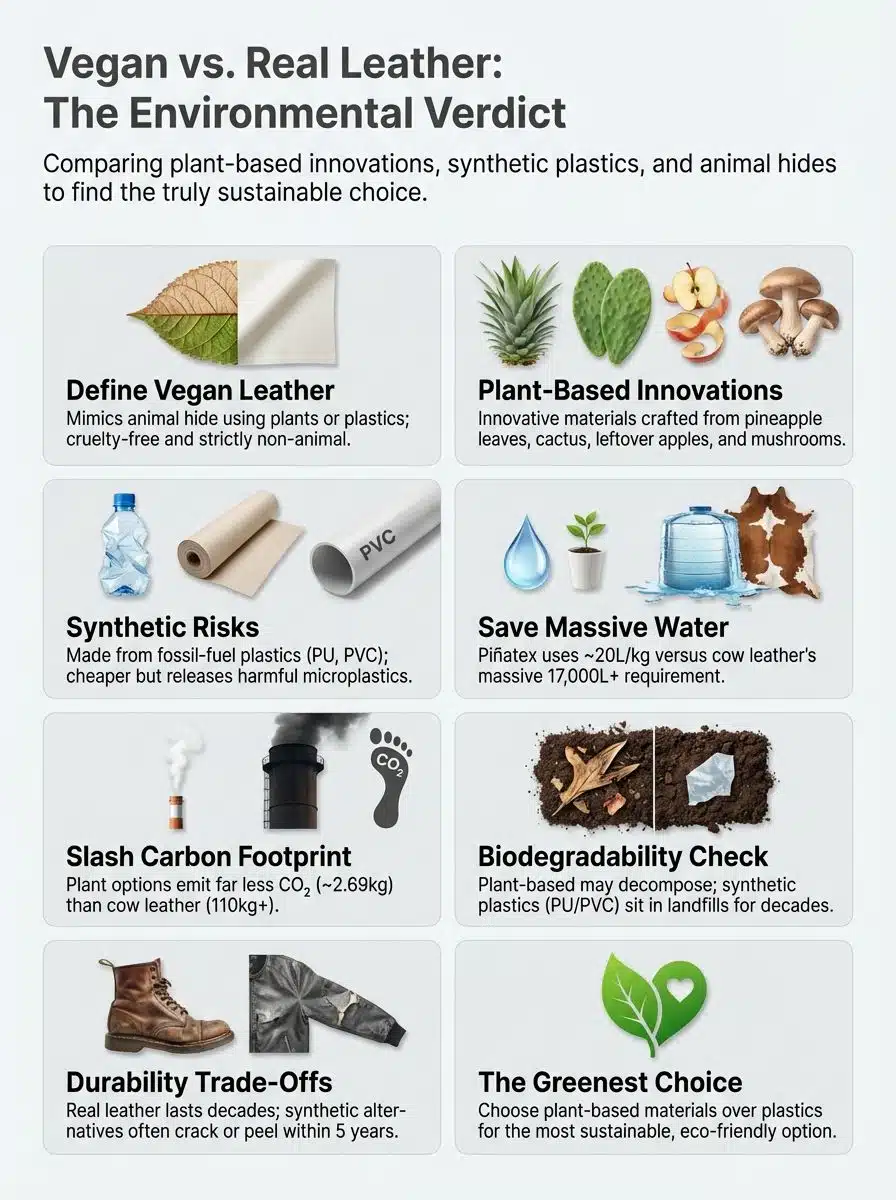
Vegan leather is a material that mimics the look and feel of animal leather but contains no animal parts. Factories create it using plants or artificial plastics.
You will often hear it called “synthetic leather” or “faux leather.” While it used to be a niche product, it is now a massive global industry. A 2024 report by Grand View Research valued the synthetic leather market at over $41 billion. This shows just how many shoppers are looking for cruelty-free options.
Innovative brands now make this material from surprising sources:
- Apples: using leftover peels from the juice industry
- Cactus plants: grown in Mexico
- Mushrooms: specifically the root systems
- Recycled plastics: like old water bottles
Some brands use waste from fruit farms to keep old food out of landfills. This eco-friendly material keeps animals safe and supports sustainable fashion. Companies use vegan leather for shoes, bags, couches, and clothes. New plant-based materials are changing the face of green consumerism faster than ever before.
Some people see vegan leather as more than just a trend; they see it as hope for cleaner choices.
Next up: Let’s explore the different types of vegan leathers available today.
Types of Vegan Leather
Vegan leather comes from many sources. Some use clever plant science, while others rely on chemical processes. Understanding the difference is the key to avoiding low-quality plastic.
Plant-Based Alternatives
Plants are working overtime to give us eco-friendly materials. These options often use agricultural waste, which helps reduce the environmental load.
- Piñatex: This material uses fibers from pineapple leaves. Since these leaves are a byproduct of the fruit industry, they require no extra land or water to grow. It feels like textured leather and is used by major brands like Nike and Hugo Boss.
- Cactus Leather: Often sold under the name Desserto, this comes from the prickly pear cactus. It grows with very little water and captures carbon dioxide naturally. Factories harvest only the mature leaves so the plant keeps living.
- Mirum: This is a game-changer because it is 100% plastic-free. Made by a company called Natural Fiber Welding, it uses natural rubber, plant oils, and cork. Unlike many other options, it can be fully recycled at the end of its life.
- Mushroom Leather: Companies like Bolt Threads have created “Mylo” using mycelium, the root system of mushrooms. It grows in vertical farms in less than two weeks. It is soft, biodegradable, and has a tiny carbon footprint compared to raising cattle.
Synthetic Varieties: PU and PVC
Most “vegan leather” you see in fast fashion stores is made from plastic. While no animals are harmed, these materials have significant environmental downsides.
1. Polyurethane (PU)
PU leather is the most common alternative. It is lighter than animal leather and resists water well. Factories make it by coating a fabric backing with a flexible plastic layer.
- It is generally safer than PVC because it uses fewer toxic chemicals during production.
- However, it creates a “sweaty” feeling because it does not breathe like real skin.
- The Durability Warning: PU wears out quickly. You will often see cracking or peeling after just 2 to 5 years. Once it cracks, it cannot be repaired.
- Because it is plastic, it will not decompose. It breaks down into microplastics that can linger in the environment for centuries.
2. Polyvinyl Chloride (PVC)
PVC is the older, cheaper version of faux leather. It is durable but comes with heavy health and environmental risks.
- To make PVC soft, manufacturers add chemicals called phthalates. Research has linked these chemicals to hormone disruption and other health issues.
- Burning PVC releases toxic chlorine gas. This is dangerous for waste management workers and air quality.
- It is almost impossible to recycle. Greenpeace has labeled PVC as one of the most environmentally damaging plastics on the market.
Environmental Impact of Real Leather
Real leather production is resource-intensive. It uses vast amounts of water and energy, raising big questions about pollution and sustainability.
The Carbon and Water Cost
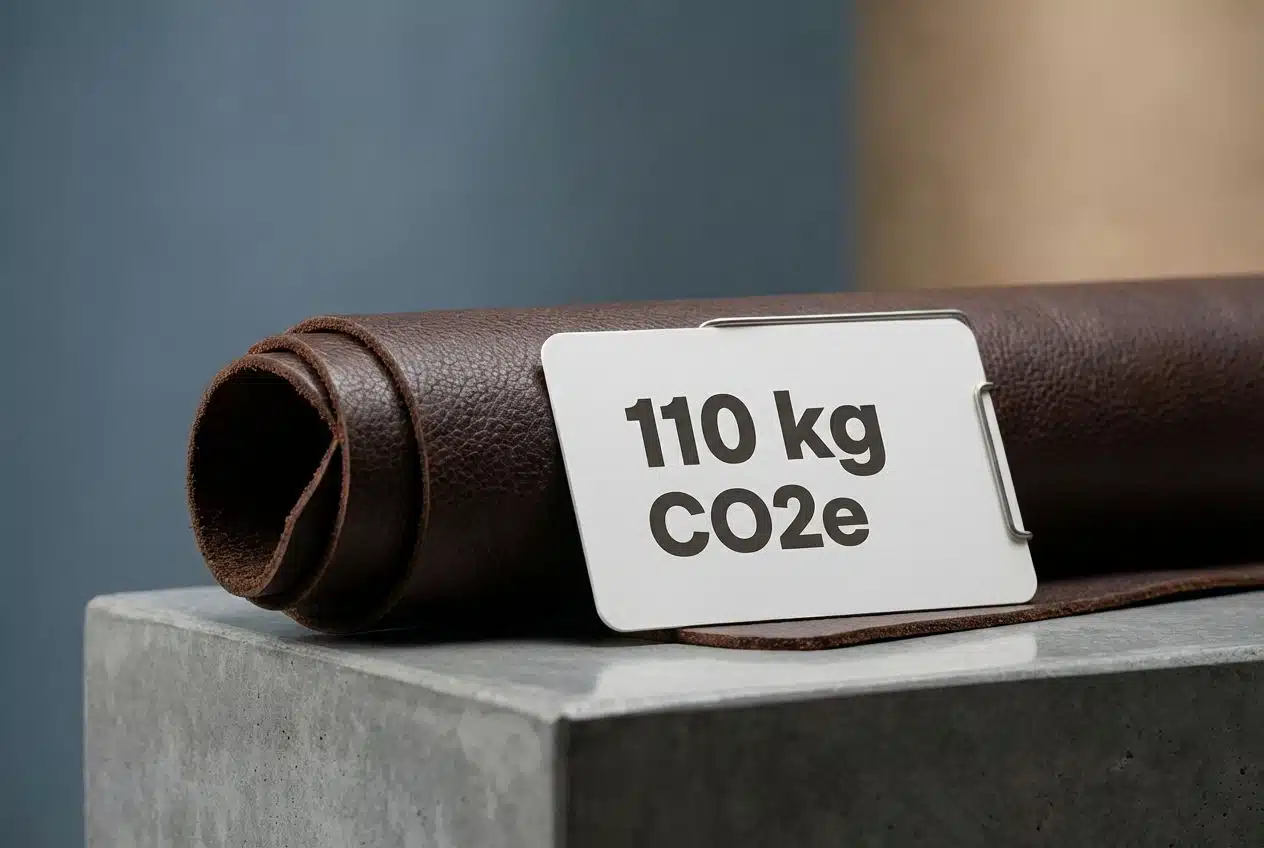
The numbers are stark. According to data from the Higg Materials Sustainability Index, cow leather has a carbon footprint of roughly 110 kg of CO2e per square meter. That is a massive impact compared to other textiles.
Water usage is also high. Estimates suggest it takes upwards of 17,000 liters of water to produce just one kilogram of leather. This includes the water needed to grow the feed for the cows.
Chemical Pollution
Turning a raw hide into soft leather requires tanning. About 90% of the world’s leather is chrome-tanned. If not managed perfectly, this process can release chromium VI, a toxic carcinogen, into local water supplies. This is a major issue in countries with loose environmental regulations.
The Durability Argument
There is one strong eco-friendly argument for real leather: longevity. A high-quality leather jacket can last 20, 30, or even 50 years.
“Good leather doesn’t wear out; it wears in.”
Because you do not need to replace it every few years, the long-term impact might balance out for some users. However, this only applies if you actually keep the item for decades.
Environmental Impact of Vegan Leather
Vegan leather uses fewer resources upfront, but it has a hidden waste problem. No material is perfect, and you need to know the trade-offs.
The Benefits: Lower Emissions
If you look strictly at carbon emissions, vegan leather wins. Producing synthetic leather generates about 15.8 kg of CO2e per square meter. That is nearly seven times less than cow leather.
It also saves water. Making a pair of vegan shoes can save thousands of liters of water compared to traditional leather. For plant-based options like Piñatex, the savings are even higher because they use waste products.
The Downside: The Plastic Problem
Here is the catch. Synthetic leather is essentially plastic clothing. When you wash a jacket made of polyester or PU, it sheds tiny fibers.
The Microplastic Fact: A 2023 study highlighted that synthetic textiles contribute to the 35% of microplastics found in our oceans. These tiny particles enter the food chain and eventually end up on our plates.
Most vegan leather is not biodegradable. While an apple peel is natural, the resin used to bind it together is often plastic. This means your “apple leather” bag might still sit in a landfill for 500 years alongside plastic bottles.
Vegan Leather vs. Real Leather: A Comparative Analysis
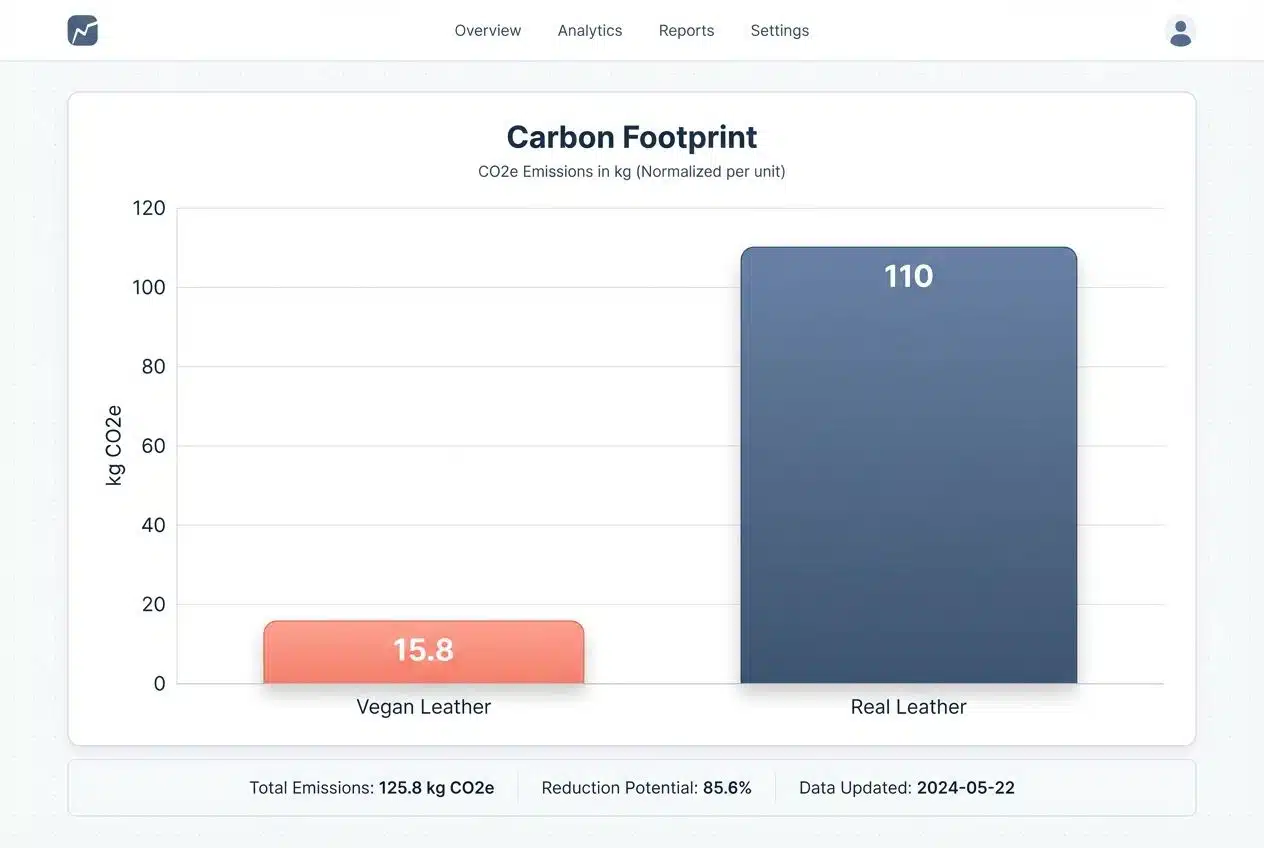
Let’s break it down. Here is how vegan leather measures up against real leather, point by point, so you can make a clear choice.
| Aspect | Vegan Leather | Real Leather |
|---|---|---|
| Primary Materials | PU, PVC, cork, apple waste, pineapple fibers | Animal hides (mostly cow) |
| Carbon Footprint | Low (~15.8 kg CO2e/m2) | Very High (~110 kg CO2e/m2) |
| Water Usage | Minimal (often < 500 liters/kg) | Massive (~17,000+ liters/kg) |
| Lifespan | Short (2-5 years before peeling) | Long (20-50 years with care) |
| Biodegradability | Poor (Plastic types take 500+ years) | Moderate (Vegetable-tanned degrades naturally) |
| Animal Welfare | Cruelty-free (No animals killed) | Involves slaughter and farming |
| Cost (Jacket) | Affordable ($50 – $150) | Expensive ($300 – $800+) |
| Microplastics | High shedding risk | None |
Is Sustainable Leather a Thing?
After sizing up the options, many people wonder if there is a middle ground. Can animal leather ever be eco-friendly?
Some tanneries are changing their ways. They use vegetable tanning, which relies on tree bark and tannins instead of toxic chromium. This method is slower and more expensive, but the resulting water is much safer for the environment.
You should also look for “Regenerative Leather.” This comes from farms that use grazing cattle to restore soil health and trap carbon in the ground. Brands like Timberland have started sourcing hides from these specific farms to lower their impact.
However, even the greenest leather still requires raising an animal. If your main goal is to avoid animal use, these improvements might not be enough for you.
Future Trends in Eco-Friendly Vegan Leather
Sustainable leather grabs attention, but the real excitement is in the lab. The future of fashion is moving beyond simple plastics.
Lab-Grown Leather
Companies like VitroLabs are growing real leather from cells. They take a small sample of animal cells and grow them in a lab to create a hide. This creates real leather without raising or slaughtering a cow. It is the same material, just made differently.
Bio-Fabrication
Researchers are also working on materials that are fully biodegradable. New innovations use bacterial cellulose or agricultural waste without any plastic binders. The goal is to create a jacket you can compost in your own garden when you are done with it.
Soon, stores may offer cruelty-free products from corn husks or grape skins that look high-end yet help keep our planet clean.
Final Words
Vegan leather brings both hope and questions for a cleaner planet. We learned it uses fewer animals but can have issues with plastics, while real leather uses more water and creates animal byproducts.
Choosing plant-based or recycled options offers practical ways to help the earth without losing style or comfort. Even small swaps in our closets can lower carbon footprints and push fashion toward kinder choices.
Every greener pick counts. So next time you shop, think of your shoes not just as fashion but as tiny heroes in the story of change.