We’ve all been there. You have a toaster that won’t pop or a vacuum that’s lost its suction. It feels wasteful to toss it, but buying a new one seems like the only option. Repair Cafés are changing that narrative. These are free community events where neighbors teach neighbors how to fix broken items. It’s a simple concept that solves a complex modern problem: the cycle of buy, break, and throw away.
As a lifestyle contributor who tracks sustainable trends, I see this as more than just a hobby. It is a practical response to a disposable culture.
Here is how the Right to Repair movement is empowering communities, saving money, and exactly how you can get involved.
What Are Repair Cafés?
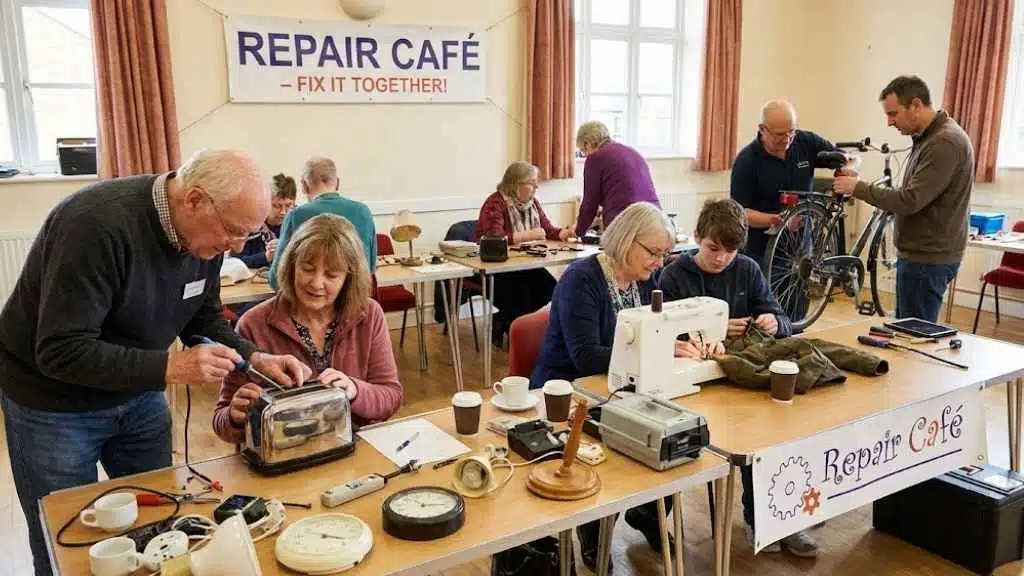
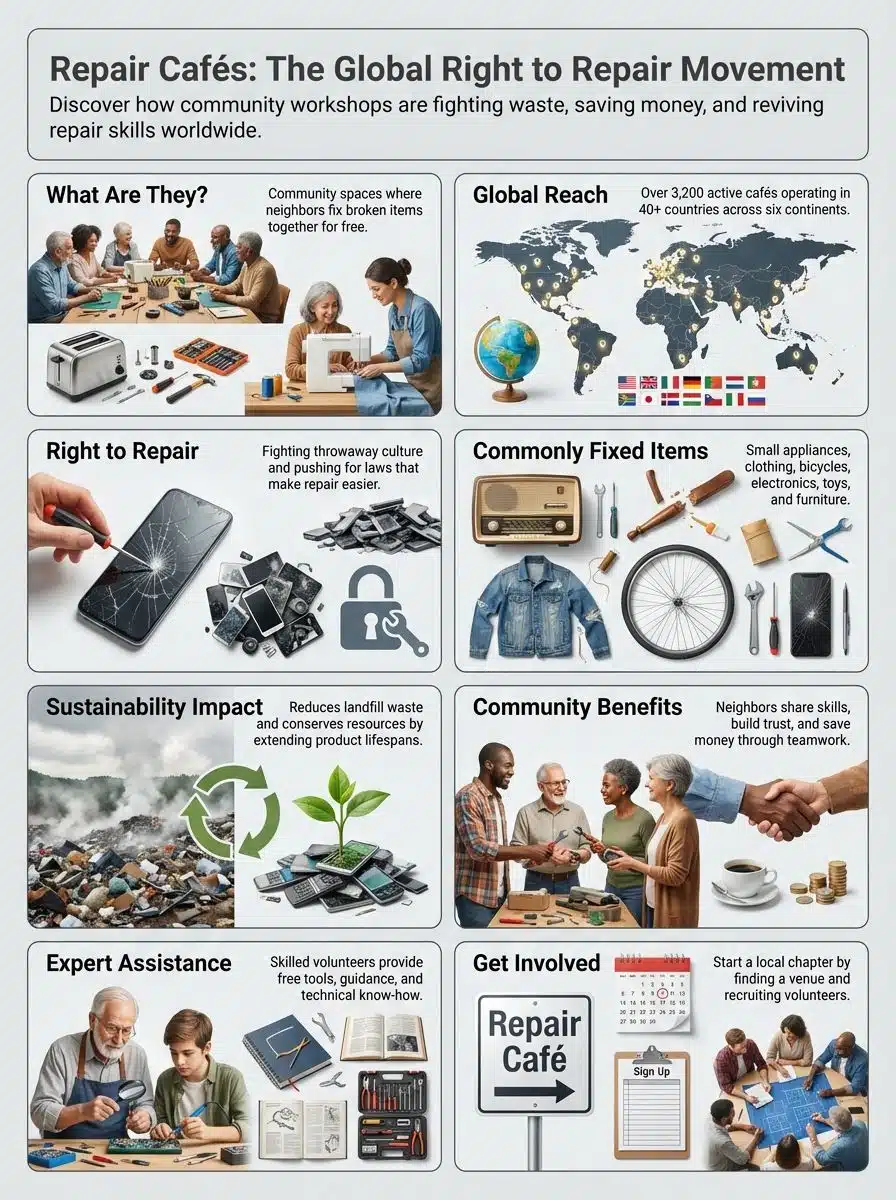
A Repair Café is a free meeting place where people bring broken items to fix them with the help of volunteer experts. It is part classroom, part community center.
The concept was born in Amsterdam in 2009. Martine Postma, a journalist and sustainability advocate, organized the first event to prevent useful items from ending up in landfills. It resonated immediately.
Today, the Repair Café Foundation supports a network of over 3,000 locations worldwide. These spaces are not repair shops where you drop off an item and pay for a service. Instead, you sit down with a specialist—an electrician, a seamstress, or a carpenter—and learn how to do the work yourself.
The Core Philosophy
The goal is to transfer knowledge. When you fix a lamp yourself, you are less likely to throw it away the next time a switch breaks.
Key Statistics from the RepairMonitor (2024 Data):
- Success Rate: Approximately 62% of items brought to these cafés are successfully repaired.
- Common Items: Coffee makers, vacuum cleaners, and bicycles top the list.
- Top Brands: Volunteers frequently work on products from major brands like Philips, Sony, and Bosch.
This data proves that many “broken” items simply need a small adjustment or a cheap part to function like new again.
The Right to Repair Movement
Repair Cafés are the grassroots engine of a much larger political battle known as the Right to Repair.
For years, manufacturers have made it difficult to fix products by gluing batteries in place, using proprietary screws, or restricting access to manuals. The Right to Repair movement fights for legislation that requires companies to provide parts, tools, and information to consumers.
Recent Legislative Wins
The landscape is shifting rapidly. In 2024 and 2025, we saw major victories in the United States:
- California: The Right to Repair Act (SB 244) went into effect in July 2024, requiring companies to provide parts and documentation for electronics and appliances for up to seven years.
- Minnesota & New York: Both states have passed laws forcing manufacturers to make digital repair information available to the public.
- National Milestone: As of 2025, all 50 states have introduced some form of Right to Repair legislation.
Groups like The Repair Association, led by Gay Gordon-Byrne, and iFixit are leading this charge. They argue that if you own a product, you should have the freedom to open, modify, and repair it without voiding a warranty or breaking the law.
How Repair Cafés Work
If you have never attended an event, the process is straightforward. It is designed to be welcoming, even if you have zero technical skills.
The Step-by-Step Process
- Arrival & Registration: You check in at the front desk. You will often sign a simple liability waiver, often called the “House Rules,” which protects the volunteers.
- Triage: A coordinator looks at your item—whether it’s a torn shirt or a silent radio—and directs you to the correct station.
- The Repair: You sit with a volunteer. You watch, ask questions, and handle the tools. This is a collaborative effort.
- The Result: If it is fixed, you weigh the item to track waste diversion. If it requires a part you don’t have, the volunteer will tell you exactly what to order for next time.
“The most common reason a repair fails isn’t that the item is unfixable—it’s that we need a specific spare part. If you know what’s wrong, bring the replacement part with you. It increases your success rate significantly.” — Common advice from Repair Café organizers.
Tools of the Trade
You do not need to bring your own tools. Locations are typically stocked with:
- iFixit Pro Tech Toolkits for opening modern electronics.
- Soldering stations for circuit board repairs.
- Sewing machines and sergers for textiles.
- 3D Printers (in some library-based cafés) to print impossible-to-find plastic gears or knobs.
Benefits of Repair Cafés
The impact of these events goes beyond just fixing a toaster. The data shows a triple benefit: environmental, financial, and social.
| Benefit Category | The Hard Data | Why It Matters |
|---|---|---|
| Environmental | ~24kg of CO2 saved per repair (University of Surrey study). | Extending a product’s life prevents the massive emissions caused by manufacturing and shipping a replacement. |
| Financial | Avg. savings of $330 per household annually. | Repairing high-value items like vacuums or mixers keeps money in your pocket during inflationary times. |
| Social | 84% of Americans support Right to Repair. | These events combat loneliness by connecting generations; a retired engineer works alongside a college student. |
Environmental Impact
Every item repaired is one less item in a landfill. But the bigger win is “upstream” waste. Manufacturing a single smartphone generates roughly 85-95% of its total carbon footprint. Keeping that phone running for two more years creates a massive reduction in your personal environmental impact.
Repair Cafés Around the World
This is a global phenomenon with a strong local flavor. Different regions have adapted the model to fit their needs.
Notable Locations
- Palo Alto, California: Home to the Repair Café Palo Alto, the first established chapter in the US. It inspired dozens of others in Silicon Valley.
- Portland, Oregon: Repair PDX has been running since 2013. They have repaired over 5,000 items and frequently partner with “Library of Things” branches to offer tool rentals.
- Farnham, UK: This location is famous for its detailed data collection, helping researchers understand exactly why products break and how to improve them.
In many European cities, these cafés receive municipal funding as part of the city’s waste reduction strategy. In the US, they often rely on partnerships with libraries, makerspaces, and churches.
How to Start Your Own Repair Café
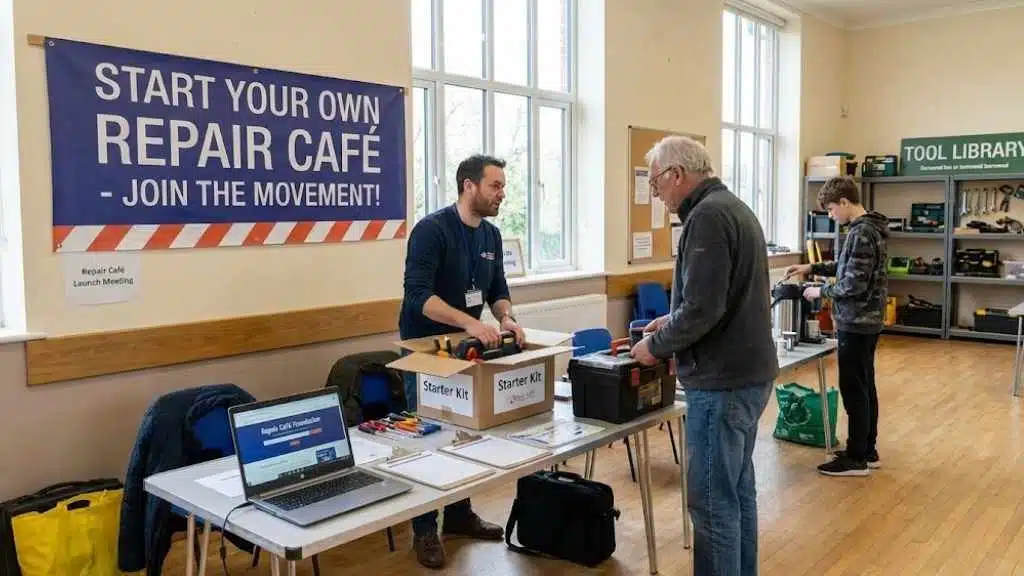
Starting a chapter in your neighborhood is easier than you might think. You don’t need to be an expert fixer; you just need to be a good organizer.
Steps to Launch:
- Secure a Venue: Look for accessible public spaces. Libraries are ideal because they often cover the liability insurance—a common hurdle for US organizers.
- Recruit Fixers: Put out a call on local social media groups. You will be surprised how many retired mechanics, engineers, and hobbyists are eager to share their skills.
- Get the Starter Kit: The Repair Café Foundation offers a digital starter kit for a small fee. It includes the logo, templates for liability waivers, and press release drafts.
- Stock the Basics: You don’t need a full workshop. Start with a basic tool set, extension cords, good lighting, and coffee. Coffee is essential for the social atmosphere.
- Register: Sign up your location on the international map. This helps locals find you and connects you to a global network of organizers for support.
The Future of Repair Cafés
The movement is evolving. We are seeing a shift from isolated events to permanent community fixtures.
The Rise of Circular Hubs
Forward-thinking cities are now integrating Repair Cafés into broader “Circular Economy” hubs. In these spaces, you can borrow a drill from a tool library, fix your chair at a repair station, and recycle what can’t be saved—all in one visit.
Data-Driven Design
The most exciting development is the data. Tools like the RepairMonitor allow volunteers to record exactly what broke. This data is now being used to lobby manufacturers. When thousands of users report that a specific plastic gear fails in a popular blender, advocates can pressure the company to redesign that part.
Final Thoughts
Repair Cafés prove that we don’t have to be passive consumers. We have the power to extend the life of our belongings and push back against a throwaway culture.
Whether you visit a local event in Portland or start a new chapter in your hometown, you are participating in a quiet revolution. It saves you money, cuts carbon emissions, and connects you with your neighbors. So, the next time something breaks, don’t bin it. Check the map, grab your toolkit, and give that item a second chance.