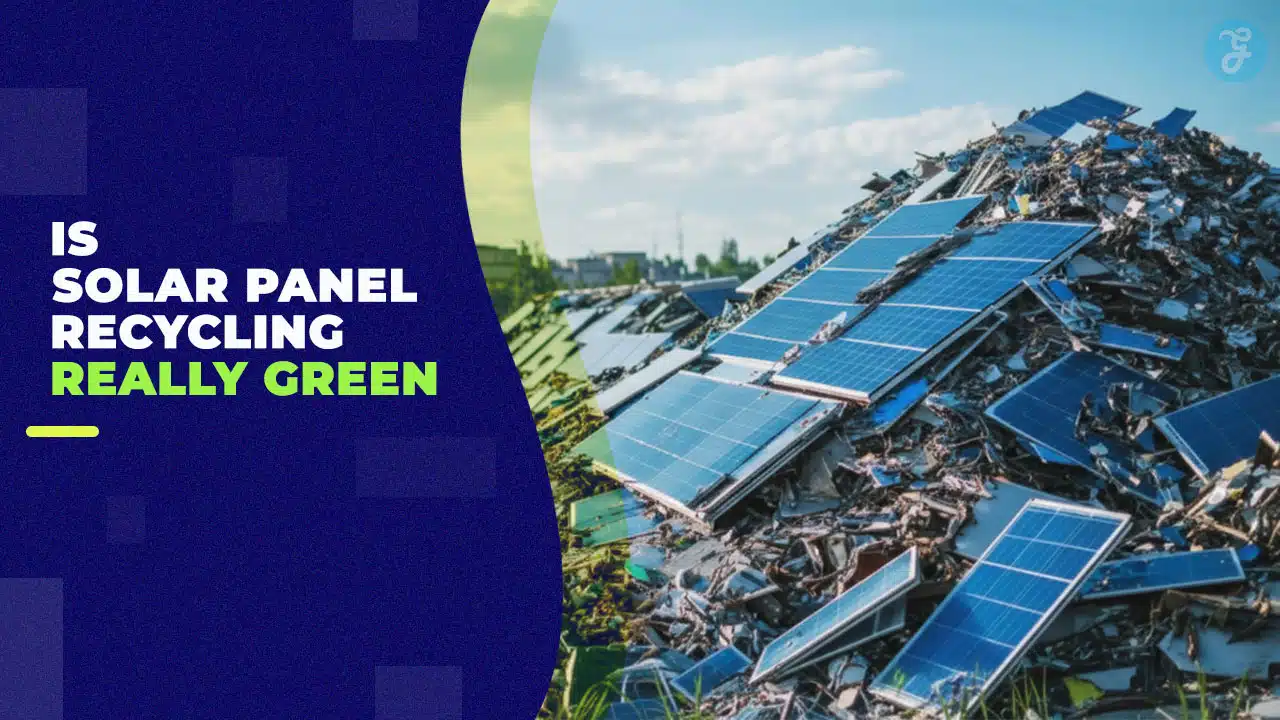
Renewable energy brings a lot of promise, but it also brings a challenge most people don’t think about until it’s urgent. I’ve watched the solar industry grow from my engineering background into an editing role covering clean technology. The numbers tell a clear story. The U.S. solar panel recycling market stood at $400 million in 2026, according to recent industry analysis, and it’s projected to reach over $1 billion by 2030.
That growth signals a wave of aging panels reaching their end. Without proper management, those panels could release lead or cadmium into soil.
From what I’ve seen, nearly 80 million tons of solar panel waste could accumulate globally by 2050 if recycling systems don’t scale fast enough. This volume would overwhelm landfills and create significant pollution risks. Recycling recovers valuable materials, reduces carbon emissions, and keeps hazardous substances out of ecosystems.
Here’s what I’m going to walk through. You’ll see how solar panel recycling strengthens sustainability, lowers environmental impact of Recycling solar panels, and drives progress in green technology. I’ll also cover the practical challenges, new innovations in recycling processes, and what the future holds for better waste management in renewable energy.
What is Solar Panel Recycling?
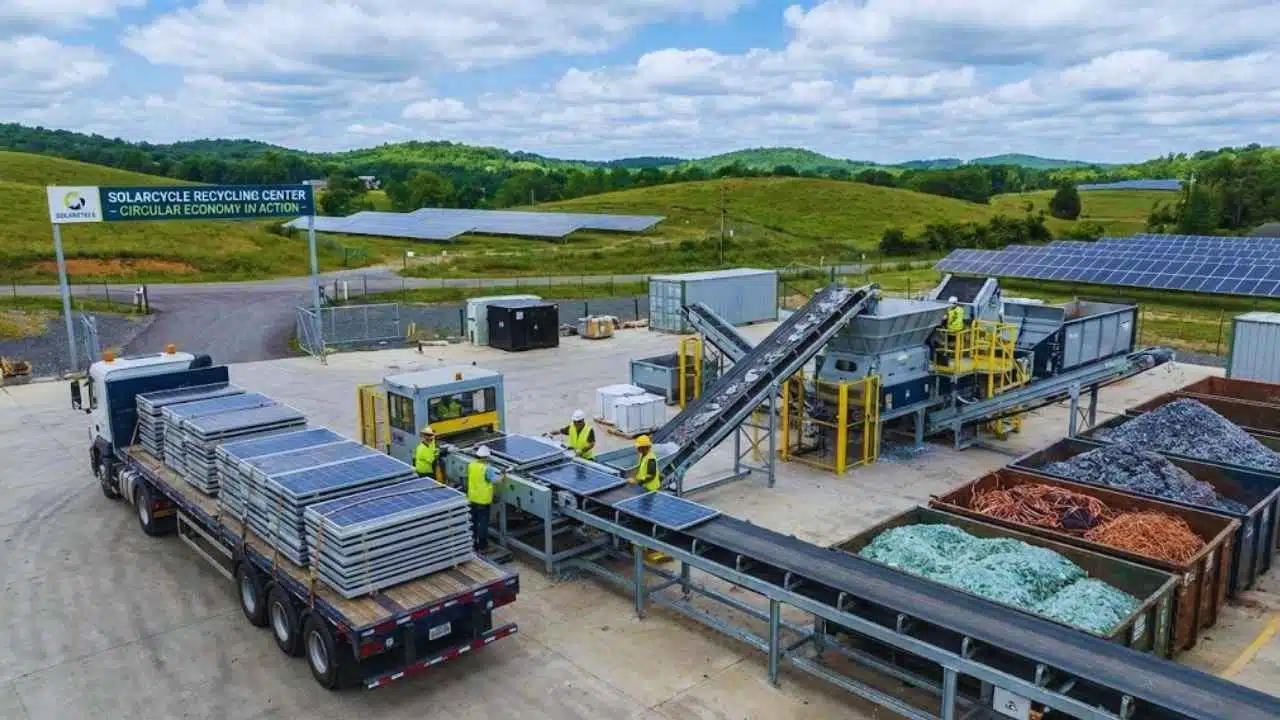
Solar panel recycling transforms end-of-life modules into reusable raw materials. This process plays a vital role in waste management for renewable energy systems.
The approach recovers valuable components. It supports the circular economy and protects environmental health.
Overview of the recycling process
Photovoltaic panels generate significant volumes of e-waste. Recycling them prevents environmental degradation and cuts the carbon footprint tied to solar energy.
Here’s how the process unfolds:
- Technicians collect used panels from solar farms or commercial sites and transport them to specialized waste management centers in the U.S.
- At the facility, workers remove aluminum frames and glass covers. Both materials have high recovery value and feed back into a circular economy. According to the EPA, glass makes up about 75% of a panel’s weight, making it the easiest component to recycle.
- Automated machines separate silicon wafers, copper wiring, and plastic layers using shredding and thermal treatment methods. SOLARCYCLE, one of five U.S. companies listed by the Solar Energy Industries Association for full recycling services, uses a patented process to extract silver, copper, and crystalline silicon from these shredded laminates.
- Recovered materials like silver, silicon, copper, aluminum, and glass enter new manufacturing cycles for electronics or solar products. The National Renewable Energy Laboratory (NREL) projects that by 2035, recycled materials could supply over 50% of the silver and more than 30% of the aluminum, silicon, and glass needed for new PV panels.
- This stops hazardous substances like lead or cadmium from leaking into soil or water, protecting local communities and ecosystems.
SOLARCYCLE has processed more than 92 million pounds of panels since 2022, keeping over 186 million kilograms of CO2 equivalent out of the atmosphere.
Each module diverted from landfills reduces waste volumes. Experts predict up to 80 million tons of solar e-waste worldwide by 2050 if left unmanaged.
New research funded by the Department of Energy focuses on designing panels that are easier to dismantle. These designs use safer materials for faster end-of-life processing. Strict safety protocols lower ecotoxicity impacts while using less water and energy than mining virgin resources.
Policy improvements are boosting infrastructure investment. Operational facilities must meet growing demand as millions more panels reach their end-of-life phase in coming decades.
Importance of recycling solar panels
Solar panels contain metals like lead and cadmium. If not recycled properly, these hazardous substances can leach into soil and water. This harms human health and wildlife.
The Department of Energy works to make solar modules safer. Teams focus on removing rare or toxic materials from panel designs, which helps reduce waste at the source.
Recycling addresses a growing crisis. Photovoltaic PV waste could reach 78 million tons by 2050 if ignored. Landfill diversion saves space and recovers raw materials for reuse in green technology. SOLARCYCLE’s operations have already recycled over 92 million pounds of panels, preventing the release of about 186 million kilograms of carbon emissions.
According to a 2025 report, only about 10% of PV panels are currently recycled. The majority are dumped, burned, or buried. This trend cannot continue.
Proper solar panel recycling protects our environment from toxic pollution and creates new resources for clean energy.
This supports global sustainability goals in renewable energy. It reduces the carbon footprint tied to discarded electronics and strengthens the foundation for a truly circular economy.
Environmental Benefits of Recycling Solar Panels
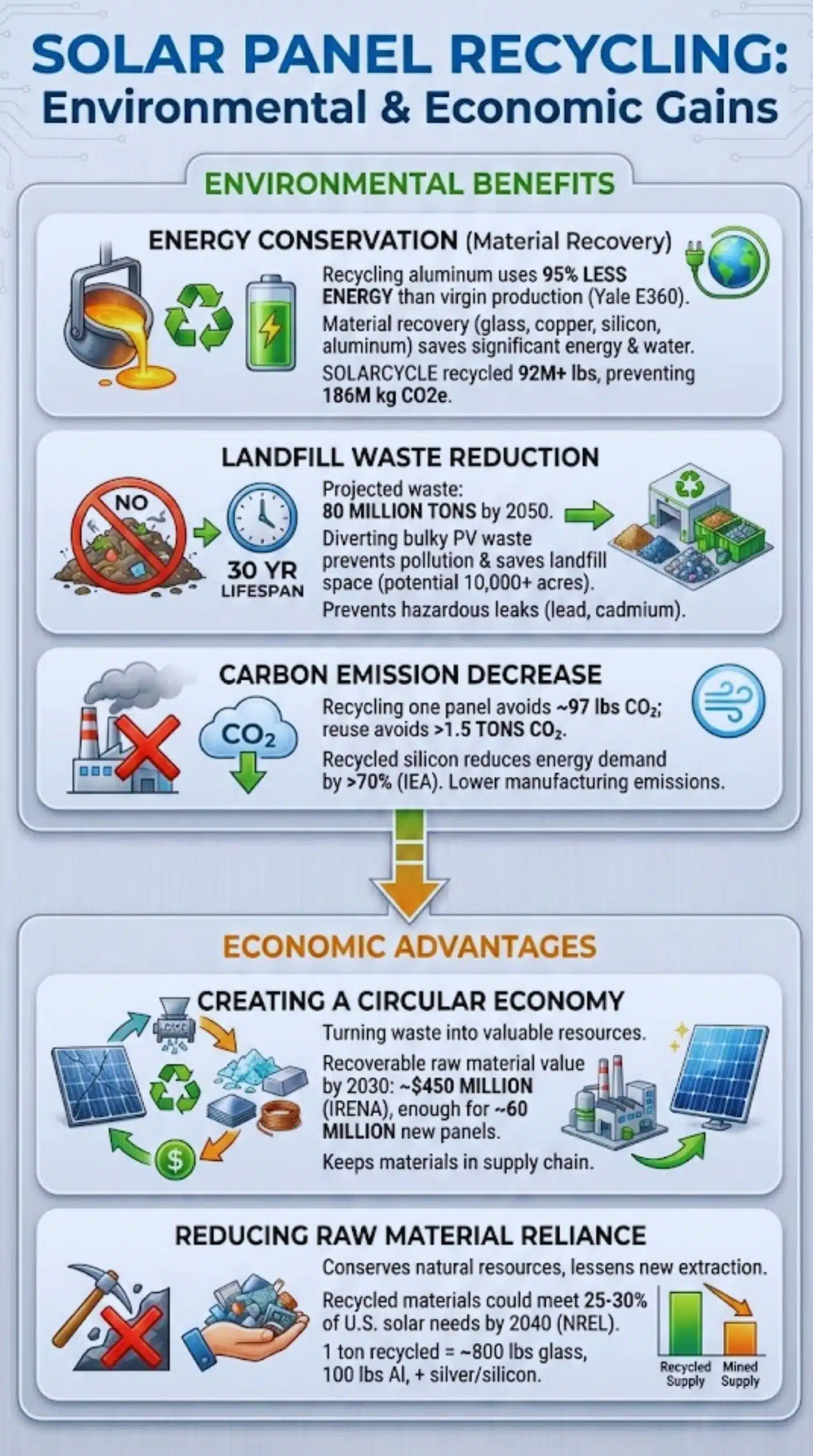
Recycling solar panels delivers measurable environmental gains. It conserves resources, cuts emissions, and keeps waste out of landfills.
Effective recycling processes ensure renewable energy systems remain eco-friendly for future generations.
Energy conservation through material recovery
Producing new panels from scratch demands more energy than reusing existing parts. Recycling recovers glass, copper, silicon, and aluminum.
According to Yale Environment 360, recycling aluminum uses 95% less energy than making virgin aluminum from bauxite ore. This translates to major energy savings across the supply chain.
SOLARCYCLE has recycled over 92 million pounds of solar panels. This effort helped prevent the release of 186 million kilograms of CO2 equivalent into the atmosphere. The data shows recycling is not just waste management. It’s a direct climate action tool.
Energy conservation through material recovery also reduces water use. It limits harmful environmental impacts like global warming potential and ecotoxicity. The U.S. Department of Energy invests in making future photovoltaic modules safer to recycle. Teams work on removing rare or toxic materials, which will further cut energy waste in production.
Solar panel waste could reach up to 80 million tons by 2050. Recovering valuable resources plays a key role in supporting renewable energy goals. It minimizes strain on raw material supplies and strengthens the case for circular economy practices in green technology.
Reduction of landfill waste
Solar panels last about 30 years on average. As more reach the end of their life, large amounts of photovoltaic waste pile up.
Recycling keeps these bulky units out of landfills. This prevents hazardous substances like lead and cadmium from leaking into soil or water. According to recent projections, the global cumulative amount of PV panel waste is expected to reach 1.7 million tons by the early 2030s.
Experts forecast that end-of-life PV modules may generate up to 80 million tons of waste by 2050. Without proper recycling, this waste could occupy more than 10,000 acres of landfill space. Diversion turns this challenge into an opportunity for resource recovery and environmental protection.
SOLARCYCLE has recycled over 92 million pounds of solar panels. This eases pressure on waste management systems and captures valuable materials for new renewable energy products.
Diverting solar panels from landfills is essential for both environmental protection and sustainability.
Decrease in carbon emissions
Recycling solar panels cuts carbon emissions linked to producing new materials. Using recycled glass, silicon, and metals reduces energy needs compared to extracting and refining these from raw resources.
SOLARCYCLE has recycled over 92 million pounds of solar panels. This work helped avoid 186 million kilograms of CO2 equivalent emissions. The company estimates that recycling each panel avoids about 97 pounds of CO2. If a panel is reused instead of recycled, the avoided emissions jump to more than 1.5 tons of CO2.
According to the International Energy Agency, producing recycled silicon can reduce energy demand by more than 70% compared to refining silicon from quartz sand at temperatures over 2,000 degrees Celsius. This supports renewable energy efforts while reducing dependence on fossil fuels in manufacturing.
Diverting end-of-life photovoltaic modules from landfills also prevents hazardous leaks. These leaks could harm the environment and worsen ecotoxicity impacts. With solar panel waste projected to reach up to 80 million tons by 2050, recycling becomes even more important for sustainability.
The Department of Energy is working on safer panel designs. New modules will be easier to separate and use fewer rare or harmful substances. This helps further lower greenhouse gas output as part of a circular economy focused on environmental conservation and resource recovery.
Economic Advantages of Solar Panel Recycling
Solar panel recycling strengthens the economy. It turns waste into valuable resources and supports a circular economy model.
This process reduces the demand for new raw materials. It cuts down on environmental degradation and supports sustainability in renewable energy sectors.
Creating a circular economy
Solar panels don’t have to end up as waste after their 30-year lifespan. They enter recycling processes where valuable materials get recovered and reused in new products.
Recycling captures raw materials like glass, aluminum, silicon, silver, and copper. This reduces the need for mining or extracting fresh resources. According to the International Renewable Energy Agency, by 2030, the cumulative value of recoverable raw materials from end-of-life panels globally will be about $450 million. That equals the cost of raw materials needed to produce about 60 million new panels.
SOLARCYCLE has recycled over 92 million pounds of used panels. This work helped avoid more than 186 million kilograms of CO2 emissions. The system supports sustainability by keeping useful resources within the supply chain while cutting landfill diversion and pollution risks.
When old photovoltaic modules get recycled properly, hazardous substances like lead or cadmium stay out of soil and water systems. The Department of Energy works on making PV panels easier to recycle. Teams minimize rare or harmful materials in new designs.
With up to 80 million tons of solar energy waste projected worldwide by 2050, building a circular economy will protect natural resources. It promotes responsible green technology growth through smart waste management.
Reducing reliance on raw material extraction
Recycling solar panels conserves natural resources. The process recovers glass, silicon, aluminum, copper, silver, and other rare metals from old photovoltaic PV panels.
This limits the need to mine or extract new raw materials. By using recovered resources, manufacturers use less energy and water than in traditional mining and refining. According to a 2025 report, recycling one ton of solar panels can recover approximately 800 pounds of glass, 100 pounds of aluminum, and smaller but valuable amounts of silver and silicon.
SOLARCYCLE recycled over 92 million pounds of solar panels in recent years. This effort prevented extra resource extraction and helped lower global carbon emissions by over 186 million kilograms of CO2 equivalent. These recycling processes also support a circular economy within renewable energy systems.
The National Renewable Energy Laboratory projects that recycled panels and materials could meet 25 to 30% of U.S. domestic solar manufacturing needs by 2040. This data shows recycling isn’t just about waste. It’s a critical supply chain strategy.
Economic advantages continue to grow as more infrastructure develops for handling end-of-life PV waste efficiently. This trend shapes material recovery pathways and strengthens the business case for sustainable practices in green technology.
Challenges in Solar Panel Recycling
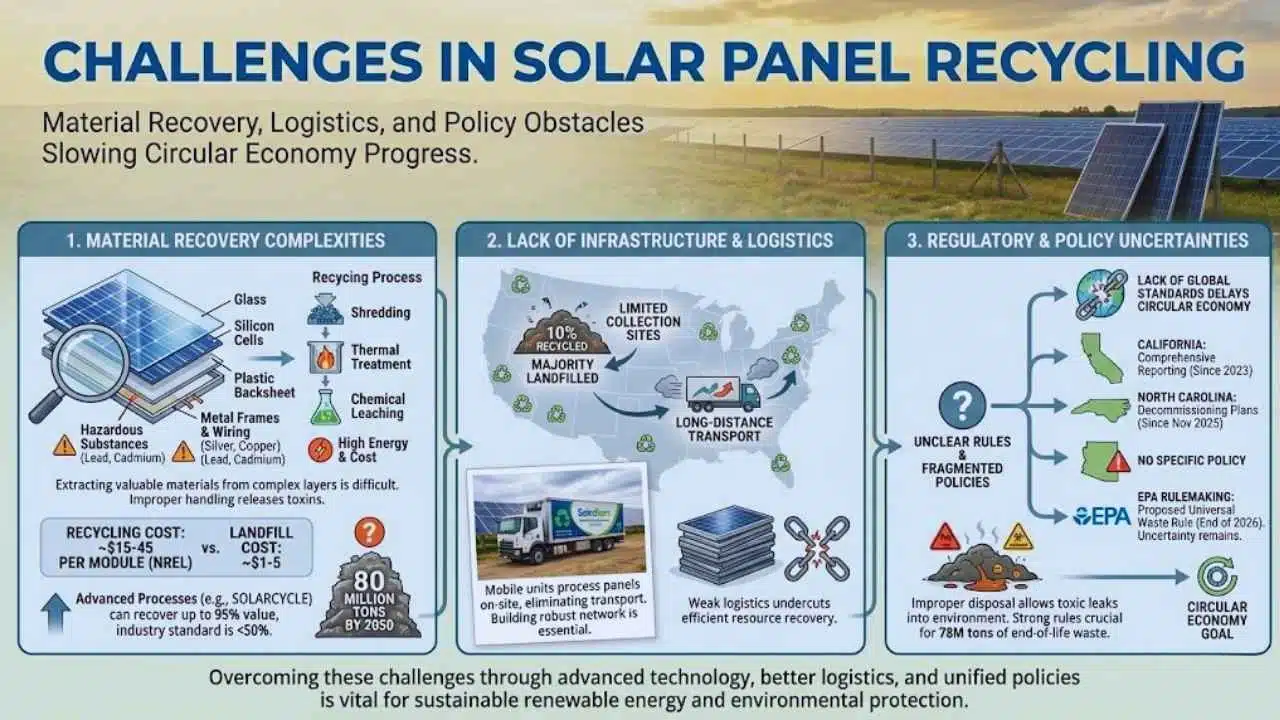
Solar panel recycling faces several obstacles. Recovering valuable materials from complex photovoltaic PV units is difficult.
Waste management logistics add another layer of complexity. These issues slow progress toward a circular economy within renewable energy sectors.
Material recovery complexities
Extracting valuable materials from used photovoltaic panels is hard. Panels have layers of glass, silicon, plastics, metals like silver and copper, and hazardous substances such as lead and cadmium.
Special recycling processes are needed to safely separate these parts. Improper handling can release toxic materials into soil or water. According to the National Renewable Energy Laboratory (NREL), it costs about $15 to $45 to recycle a silicon PV module in the U.S., but only $1 to $5 to dump it in a landfill. This cost gap makes recycling less attractive without stronger regulations or incentives.
Many solar panels last about 30 years. By 2050, the waste could reach up to 80 million tons worldwide. Removing rare or dangerous elements adds extra work and cost for recyclers. The Department of Energy works on ways to make material recovery easier and safer by changing how panels are made.
Advanced green technology aims to recover more resources with less harm. Better recycling equipment and careful waste management practices can improve the situation. Some companies, like SOLARCYCLE, use patented processes to extract up to 95% of the value from panels, compared to the industry standard of below 50%.
Lack of infrastructure and logistics
Many U.S. regions lack enough recycling centers or collection sites to handle end-of-life photovoltaic waste. With solar panels expected to generate up to 80 million tons of waste by 2050, weak infrastructure makes it hard to manage such large amounts.
According to the EPA, only about 10% of PV panels are currently recycled. The majority end up in landfills because recycling facilities are scarce. SOLARCYCLE and a handful of other companies work on this challenge, but the industry needs more facilities and better transport networks.
Transporting heavy solar panels adds difficulty to recycling processes. Long distances between installation sites and recycling centers increase costs, energy use, and carbon emissions. In January 2026, at CES, a startup called SolreBorn showcased a truck-mounted recycling system. This mobile unit processes decommissioned panels directly at solar farms, eliminating the need for long-distance transport.
Without strong logistics systems in place, much PV waste risks ending up in landfills. This undercuts the shift toward efficient resource recovery or circular economy practices. Building a robust network is essential for the future of renewable energy sustainability.
Regulatory and policy uncertainties
Rules on recycling solar panels are often unclear or limited. Different states have their own waste management policies for solar modules.
Some regions do not label used panels as hazardous e-waste. This allows improper disposal. Toxic materials like lead and cadmium can leak into the environment if proper recycling processes are not followed. The EPA announced in October 2023 a new rulemaking effort to add solar panels to the universal waste regulations, with a proposed final rule expected by the end of 2026. Until then, uncertainty remains.
Twenty-nine states currently have decommissioning and recycling policies for utility-scale solar projects. California was the first state to establish solar-specific recycling regulations, requiring comprehensive reporting by companies that handle more than 200 pounds of used panels. North Carolina started requiring decommissioning plans for solar projects larger than 2 megawatts in November 2025.
The Department of Energy works to make it easier to break down panels safely. Teams focus on removing rare and harmful substances from photovoltaic PV modules. A lack of global standards delays progress in creating a true circular economy for solar energy systems.
Weak regulation may fail to capture valuable raw materials that could be recovered through better recycling technology. It also misses chances to reduce carbon emissions and landfill waste. With end-of-life PV waste expected to reach 78 million tons by 2050, strong rules will be crucial for environmental protection and resource recovery efforts in the green technology sector.
Innovations in Solar Panel Recycling
New green technology and recycling processes use resource recovery methods that reduce waste. These advances support the circular economy and drive sustainability in renewable energy.
Keep reading to see how these innovations shape environmental protection.
Advanced recycling technologies
Advanced recycling technologies use new methods to recover valuable materials from photovoltaic solar panels. SOLARCYCLE has processed over 92 million pounds of solar panels, helping avoid more than 186 million kilograms of carbon dioxide emissions.
The company’s patented process extracts up to 95% of the value from panels. This compares to the industry standard, which is currently below 50%. According to company data, in 2024 SOLARCYCLE processed 480,406 panels and boosted its capacity by 228%. The company aims to recycle nearly 1 million panels by the end of 2025.
These solutions break down old or damaged panels and separate glass, silicon, silver, aluminum, and copper for reuse. In late 2025, some advanced facilities began using a refined etching process. This method uses nitric acid or methanesulfonic acid to strip silver from the silicon cell. Once in liquid solution, the silver is recovered through electrolysis at 99.9% purity.
The U.S. Department of Energy works on making these green technology processes faster and safer. Teams improve designs that remove toxic components such as lead and cadmium. As a result, fewer hazardous materials leak into soil or water during waste management efforts.
Laser-based recycling technologies are also emerging. They offer precision, minimal material loss, and the ability to target specific components. Such recycling processes lower the volume of e-waste sent to landfills and increase benefits for resource recovery in a circular economy system focused on environmental protection and sustainability.
Development of reusable materials
Scientists and engineers work to make solar panels with safer, reusable materials. The Department of Energy supports these efforts through funding and research partnerships.
Experts aim to remove harmful substances like lead and cadmium, which can pollute soil if not handled well. Teams focus on using cheaper, common elements instead of rare or toxic ones in photovoltaic modules. In February 2025, researchers at Linköping University developed an environmentally friendly method to recycle perovskite solar cells using water as the primary solvent.
Several Department of Energy projects design modules with new materials that make them easier to deconstruct. One approach uses sealants that can be dissolved without damaging other panel materials. Another contains layers that allow sections of the panel to be cleanly “unzipped” from others. In February 2025, a team at NREL demonstrated a way to eliminate polymers in PV panels by laser welding the glass panes instead, which may do a better job sealing out moisture.
Making panels from recyclable parts helps reduce waste as solar panel use grows worldwide. As the volume of end-of-life PV waste could reach 78 million tons by 2050, easy-to-reuse materials keep more items out of landfills and support a circular economy. Next-generation designs play a key role in managing this growing challenge for renewable energy systems and environmental conservation.
The Future of Solar Panel Recycling
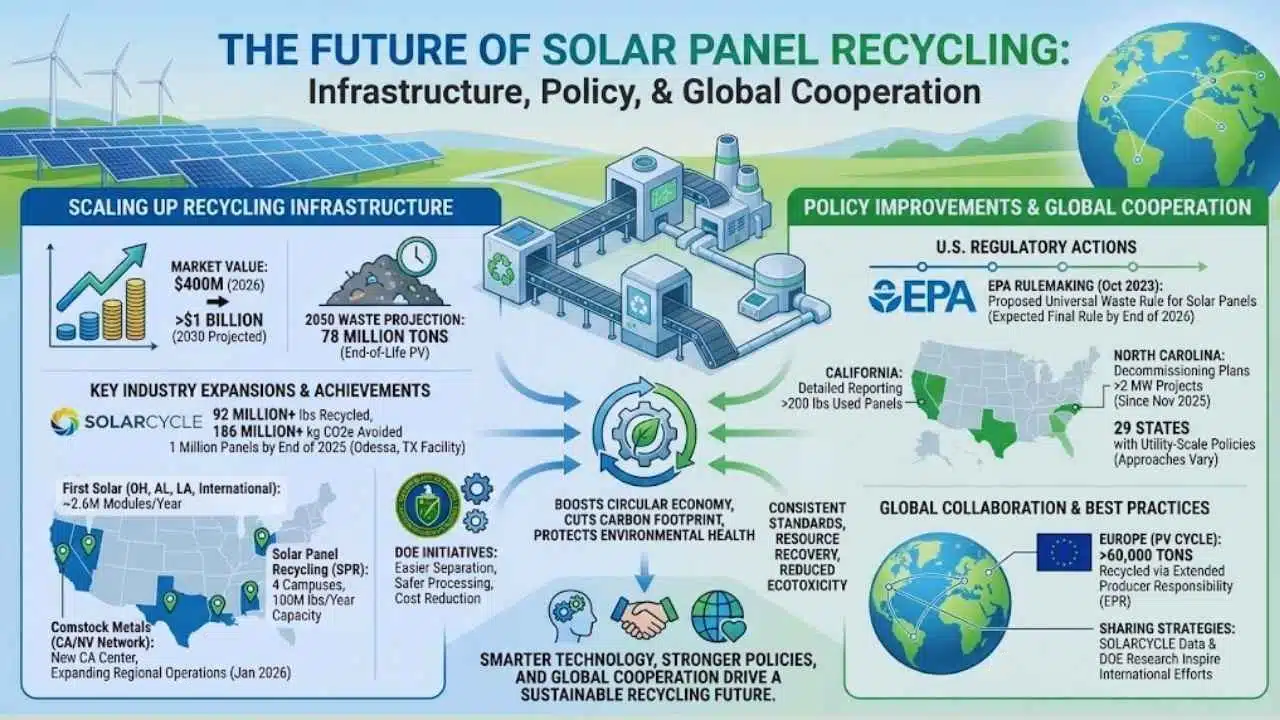
The future of solar panel recycling depends on smarter technology, stronger policies, and global cooperation. Keep reading to see how recycling shapes environmental protection and drives sustainability forward.
Scaling up recycling infrastructure
Scaling up recycling infrastructure for solar panels is urgent. End-of-life PV waste is expected to hit 78 million tons by 2050.
Facilities must handle large volumes safely and efficiently. This prevents toxic materials like lead and cadmium from leaking into soil or water. Companies such as SOLARCYCLE have already recycled over 92 million pounds of solar panels, keeping harmful waste out of landfills and avoiding about 186 million kilograms of CO2 equivalent emissions.
The solar panel recycling market stood at $400 million in 2026 and is projected to reach over $1 billion by 2030, according to market analysis. This growth signals rising investment. More advanced recycling centers are needed across the country to manage future demand.
Several key developments are expanding capacity:
- SOLARCYCLE operates its main facility in Odessa, Texas, and is on track to recycle one million panels by the end of 2025.
- First Solar runs high-value recycling facilities in Ohio, Alabama, Louisiana, Malaysia, Vietnam, Germany, and India. The company can recycle approximately 2.6 million solar modules per year.
- Solar Panel Recycling (SPR) operates four recycling campuses across the U.S. with an annual capacity of 100 million pounds and is rapidly adding more facilities.
- In January 2026, Comstock Metals announced a new California center to feed its Nevada solar panel recycling operations, expanding its regional network.
Government agencies like the Department of Energy work on new solutions. These efforts make it easier to separate and process old solar modules. They reduce costs linked to rare or dangerous materials in photovoltaic systems.
Expanding green technology investment supports better resource recovery, material reuse, and landfill diversion in line with sustainability goals. A stronger network boosts the circular economy while cutting carbon footprint and protecting environmental health for years ahead.
Policy improvements and global cooperation
Expanding recycling infrastructure needs strong policy support and international teamwork. Governments can set clear rules to manage solar panel waste, lower regulatory uncertainties, and make recycling safe for the environment.
The EPA announced in October 2023 a rulemaking effort to add solar panels to universal waste regulations. The proposed final rule is expected by the end of 2026. This federal action will create more consistent standards across states. Twenty-nine states currently have decommissioning and recycling policies for utility-scale solar projects, but approaches vary widely.
California leads with solar-specific recycling regulations requiring comprehensive reporting by companies handling more than 200 pounds of used panels. North Carolina began requiring decommissioning plans for solar projects larger than 2 megawatts in November 2025. These state-level actions show momentum, but a unified federal framework is needed.
The Department of Energy works on new ways to remove harmful materials from panels. Teams also make recycling processes safer and more efficient. Global cooperation helps share best practices in waste management and green technology.
For example, sharing data about SOLARCYCLE’s work, which includes recycling over 92 million pounds of solar panels and avoiding more than 186 million kilograms of CO2 equivalent, can inspire other nations to adopt similar strategies. In Europe, PV Cycle has helped recycle more than 60,000 tons of used crystalline silicon PV modules through an extended producer responsibility program.
Clear policies across countries also help recover valuable resources from photovoltaic PV modules. They reduce landfill diversion and ecotoxicity risks worldwide. Strong international cooperation is essential for building a sustainable circular economy in renewable energy.
Final Thoughts
Solar panel recycling protects the environment by keeping hazardous materials out of soil and water. This process saves energy, reduces landfill waste, and helps lower carbon emissions.
As technology improves and more panels reach their end-of-life stage, strong recycling efforts will shape a cleaner future. The U.S. solar panel recycling market stood at $400 million in 2026 and is projected to grow past $1 billion by 2030. This growth reflects rising demand and expanding infrastructure.
Growing investment in green technology is vital for effective resource recovery and environmental conservation. Solar panel recycling supports better waste management practices while promoting a circular economy. It strengthens sustainability in renewable energy for years to come.