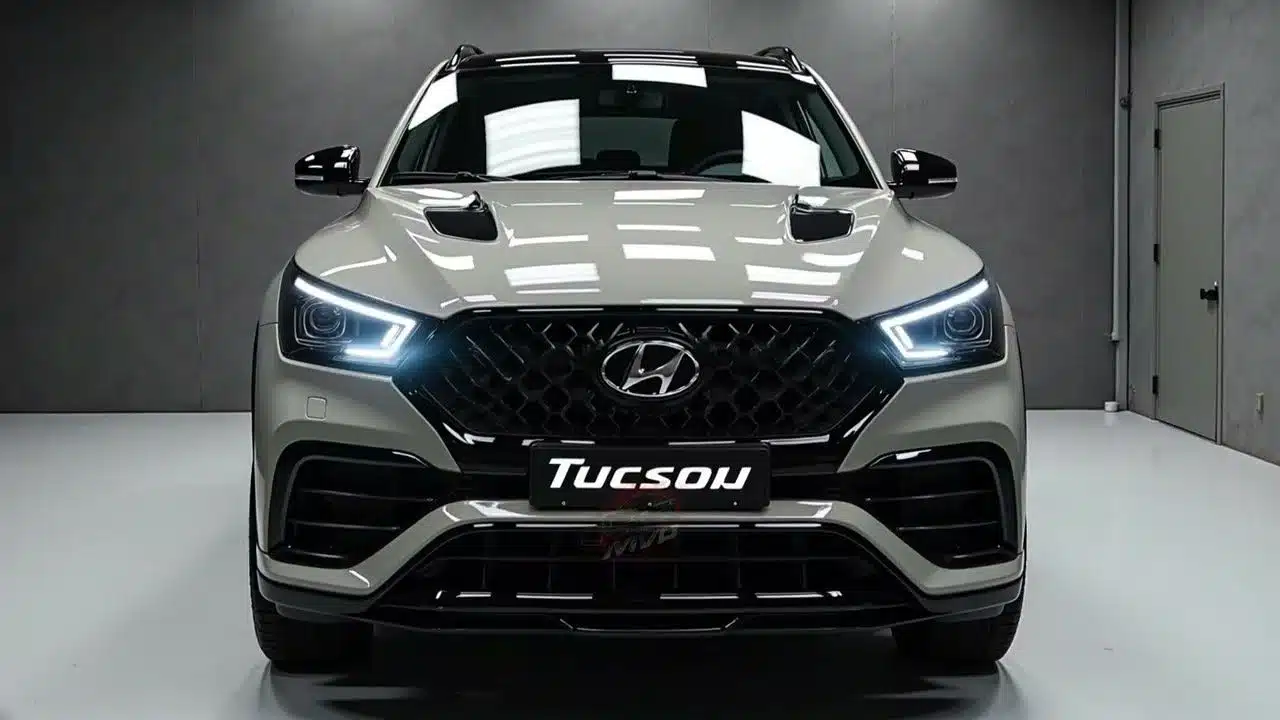
The 2026 Tucson is a comfort-first compact SUV packed with modern tech and safety kit, but the base gas engine still prioritizes smoothness over quickness.
In the compact SUV class, the Tucson sits right in the “do-everything family runabout” lane: commuting, school runs, highway trips, and city parking without feeling like a penalty box. Pricing starts around $29,200 for the SE, with a wide spread up into the low-$40Ks depending on drivetrain (gas vs hybrid) and trim.
If your priority is a quiet cabin, a big-screen vibe, and lots of driver-assist tech, the Tucson’s value story is strong—especially once you compare warranties.
Exterior Design and Practicality
| Physical specs | 2026 Hyundai Tucson (SE FWD shown) |
| Length | 182.7 in |
| Width (no mirrors) | 73.4 in |
| Height | 66.3 in |
| Wheelbase | 109.0 in |
| Ground clearance | 7.0 in |
| Cargo volume (behind 2nd row) | 39 cu ft |
| Max cargo (rear seats folded) | 80 cu ft |
Design vibe and day-to-day usability
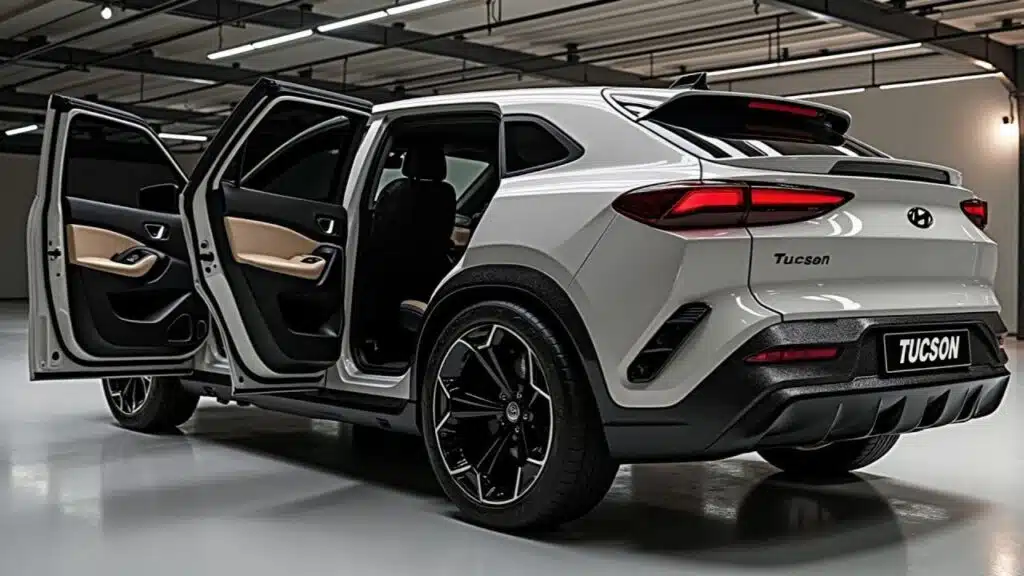
The Tucson’s shape is clean and modern, and it looks “nicely expensive” even in lower trims—especially when you land a good color. Panel fit and door shut feel are reassuringly solid for the price class, and it doesn’t come across as flimsy when you’re loading groceries or tossing a stroller into the back.
Visibility is generally easy to live with for a compact SUV: the seating position is upright, and the vehicle’s footprint is manageable in tight lots. The boxier rear helps with “where does the car end?” judgment when backing in.
Cargo, loading, and practicality notes
The headline is space efficiency. With about 39 cubic feet behind the second row and roughly 80 cubic feet with seats folded, it’s legitimately usable for airport runs, bulky shopping, and weekend gear.
Where it feels most “week-long friendly” is how little you need to think about it: the cargo area is big enough that you’re not constantly playing Tetris, and the cabin storage strategy is designed for daily clutter (bags, bottles, chargers).
Interior Comfort and Technology
| Interior specs | 2026 Hyundai Tucson (highlights) |
| Infotainment screen | 12.3-inch touchscreen (availability depends on market/trim) |
| Smartphone integration | Wireless Apple CarPlay + Android Auto |
| Front headroom / legroom | 40 in / 41 in |
| Rear headroom / legroom | 40 in / 41 in |
| Seating materials (varies by trim) | Cloth → leatherette/leather depending on trim/market |
Comfort over a full workweek
This is where the Tucson tends to win people over. The seats and driving position are tuned for comfort rather than “sport,” which matters when you’re doing repetitive commutes and errands. Cabin noise isolation is also a priority on higher trims, which makes highway time less tiring.
Rear seat space is legitimately adult-friendly: rear legroom is about 41 inches, so you’re not apologizing to taller passengers.
Infotainment and daily tech
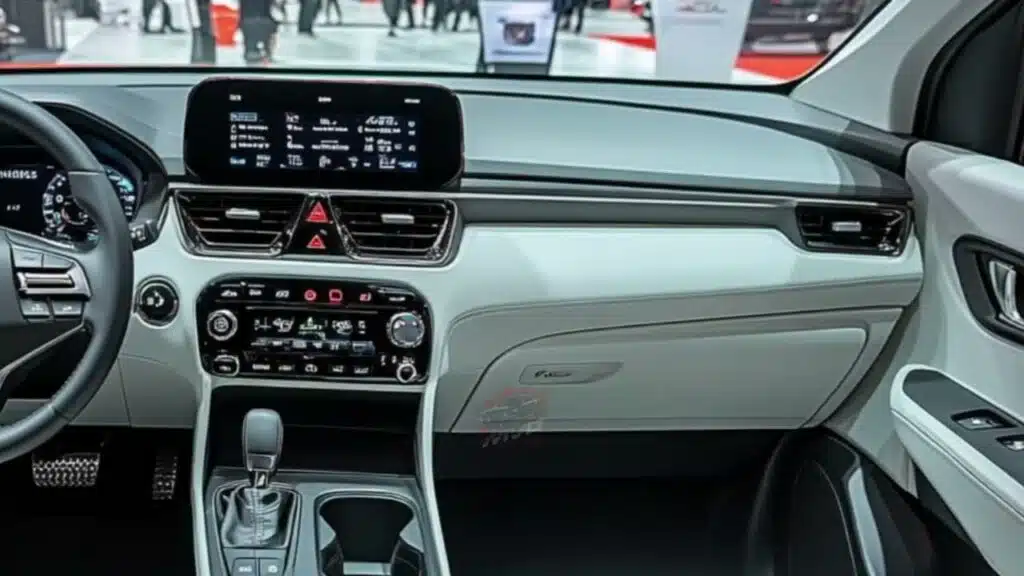
The big usability story is the screen-and-controls balance. The Tucson’s tech suite centers around a large touchscreen and supports wireless Apple CarPlay and Android Auto—exactly the stuff you feel every single day.
Higher trims can add premium tech touches like a head-up display, which is one of those features you stop noticing—until you drive something without it.
Performance and Powertrain
| Performance specs | 2026 Hyundai Tucson (gas 2.5L) |
| Engine type | 2.5L inline-4 (regular unleaded) |
| Horsepower | 187 hp |
| Torque | 178 lb-ft |
| Transmission | 8-speed automatic |
| 0–60 mph (real-world expectation) | Around 9 seconds depending on drivetrain/conditions (est.) |
How the gas Tucson feels in real driving
The standard 2.5L engine is tuned for smooth, predictable response—not punchy acceleration. In daily traffic, it’s easy to drive: the 8-speed automatic behaves like a normal automatic (a win if you dislike the rubber band feel some CVTs can have), and power delivery is calm.
On highway merges, it’s fine, but it’s not a “pin you back” SUV. Think: confident enough, not exciting. If you regularly carry full loads of passengers and gear—or you just want more effortless passing power—the hybrid is where the Tucson starts to feel genuinely quick.
Hybrid and PHEV options (the short version)
The 2026 Tucson lineup includes Hybrid and Plug-in Hybrid variants. Depending on the market, the hybrid system is commonly listed around 231 horsepower and paired with a 6-speed automatic.
If you like the Tucson’s cabin and features but want it to feel more energetic, the hybrid powertrain is typically the more satisfying “daily driver” setup.
Fuel Economy and Real-World Running Costs
| Economy | EPA rating (2026) |
| Tucson FWD (gas) | 25 city / 33 hwy / 28 combined |
| Tucson AWD (gas) | 24 city / 30 hwy / 26 combined |
| Tucson Hybrid Blue | 38 combined (city/highway shown) |
| Tucson Hybrid (other trims) | 36 combined (city/highway shown) |
| Tucson Plug-in Hybrid | 77 MPGe (electric+gas) and 35 mpg (gas-only shown) |
| Fuel tank capacity (gas Tucson) | About 14.3 gallons (varies by configuration/market listings) |
What to expect beyond the EPA sticker
Fuel economy depends heavily on your week: short city hops, aggressive A/C use, and stop-and-go will drag results down. On the flip side, steady highway cruising can land you close to the EPA highway number.
If you’re shopping for maximum efficiency with minimal effort, the hybrid trims are the smart play on paper. And if you can charge at home, the plug-in hybrid’s MPGe rating can make your daily commute surprisingly cheap to run.
Maintenance and cost-of-ownership reality check
The “running cost” advantage isn’t only MPG. Hyundai’s warranty structure is a major part of the long-term value story, and that can change how you think about keeping the vehicle into higher mileage years.
Safety and Driver Assistance
| Safety snapshot | 2026 Hyundai Tucson |
| Crash-test context | Ratings often apply across multiple model years for the same generation |
| Airbags | 8 airbags (market dependent) |
| Driver assistance highlights | Forward collision-avoidance, blind-spot collision avoidance, rear cross-traffic avoidance, smart cruise control w/ stop & go (availability may vary) |
How the safety tech feels in daily use
The Tucson’s driver-assist suite is aimed at reducing fatigue: adaptive cruise, lane-keeping support, and blind-spot monitoring are the features that quietly matter by day three of ownership, not just on the test drive. In traffic, the best systems feel calm and predictable—helpful without constantly yelling at you.
2026 Hyundai Tucson Pricing (MSRP, incl. destination)
Tucson (Gas)
| Trim | MSRP |
| SE | $30,800 |
| SEL | $32,150 |
| XRT | $34,825 |
| SEL Premium | $35,150 |
| Limited | $40,775 |
Tucson Hybrid
| Trim | MSRP |
| Blue SE | $33,800 |
| SEL | $35,250 |
| SEL Convenience | $36,250 |
| Limited | $43,425 |
Tucson Plug-in Hybrid
| Trim | MSRP |
| SEL | $41,675 |
| Limited | $49,900 |
2026 Hyundai Tucson vs. 2026 Honda CR-V
| Spec | 2026 Tucson Hybrid | 2026 Honda CR-V Hybrid |
| Starting MSRP (example trims) | ~$32,200 (Hybrid Blue SE AWD) | |
| Horsepower | ~231 hp (market dependent listing) | |
| EPA fuel economy (combined) | 38 mpg (Hybrid Blue) | 40 mpg combined (typical EPA listing shown) |
| Warranty period | 5 yr/60k basic + 10 yr/100k powertrain (original owner) | 3 yr/36k basic + 5 yr/60k powertrain |
The unbiased takeaway
The CR-V’s hybrid efficiency advantage is real on paper, and Honda’s reputation for smooth powertrains remains a big draw.
But the Tucson fights back with a lower hybrid entry point (depending on trim) and a warranty advantage that’s hard to ignore if you plan to keep the vehicle long-term. Hyundai’s 10-year/100,000-mile powertrain warranty for original owners is a standout, and it changes the risk math versus the typical 5-year powertrain coverage many rivals stick to.
If you’re choosing with your head: CR-V Hybrid for max efficiency and a very polished “set-it-and-forget-it” drive; Tucson Hybrid for features-per-dollar and long-term coverage confidence.
Final Verdict: Is the 2026 Hyundai Tucson Worth Your Money?
After a week behind the wheel, the 2026 Hyundai Tucson comes across as one of the smartest “daily-driver” compact SUVs for the money. It’s easy to live with, spacious for passengers and cargo, and the tech-heavy cabin makes everyday commuting feel newer than the price suggests.
The gas model is the sensible pick if you mainly want comfort, features, and a smooth, predictable drive. But if you do lots of stop-and-go traffic, carry passengers often, or want stronger passing power, the Hybrid (or Plug-in Hybrid if you can charge) is the version that feels the most complete.
Bottom line: choose the Tucson if you want maximum value, modern features, and low-stress ownership. Look elsewhere if your priority is luxury-badge refinement or genuinely sporty performance.
Pros
- Strong value at the low-$30K entry point for gas trims
- Modern, screen-forward cabin experience (market/trim dependent)
- Adult-friendly rear legroom and useful cargo space
- Hybrid and PHEV options with strong efficiency potential
- Excellent warranty structure, especially the 10-year/100k powertrain for original owners
- Broad availability of everyday ADAS features (depending on trim/market)
Cons
- Base gas engine is adequate, not quick (hybrid feels more “effortless”)
- Feature availability can vary noticeably by trim/market—watch the spec sheet carefully
- Efficiency-focused rivals (like CR-V Hybrid) can edge it on MPG
- If you want “fun to drive,” you’ll still be shopping the more sport-leaning options in the segment
Value assessment
At roughly $29,200 to start for the SE and with hybrids stepping in not far above that, the Tucson’s pricing is competitive for the tech and space you get. The bigger value punch is the warranty coverage, especially if you expect to keep the SUV well beyond the typical 3-year lease window.
Definitive recommendation
Buy the 2026 Tucson if you want a compact SUV that feels modern inside, fits real life (space + comfort), and gives you long-term peace of mind—especially in hybrid form. Look elsewhere if your top priority is sporty performance, or if you’re laser-focused on squeezing out the highest MPG possible and prefer the CR-V Hybrid’s efficiency-first approach.
FAQs on 2026 Hyundai Tucson Review
Is the 2026 Tucson worth it over a luxury compact SUV?
If your priority is space, features-per-dollar, and stress-free ownership, yes. If your priority is badge, cabin richness, and performance polish, the luxury options justify their premium.
Should I buy the Tucson hybrid instead of the gas model?
If you do a lot of city driving, heavy commuting, or frequent highway merges, the hybrid usually feels like the “complete” Tucson—more effortless and more efficient.
Is the Tucson comfortable enough for long trips?
Yes. It’s tuned for comfort, has a relaxed driving position, and the cabin layout is designed for daily usability rather than sporty drama.
What’s the Tucson’s biggest downside compared with Lexus/BMW/Audi?
It’s the “last 10%”: quieter cabin hush, richer materials, and sharper acceleration feel. The Tucson gets close on tech, but luxury brands still feel more premium.
Who should skip the Tucson?
Drivers who want genuinely sporty handling, strongest acceleration, or the prestige/luxury ambience that comes with a premium badge.
What’s the best Tucson trim strategy?
Pick the trim that gets you the safety suite and tech you’ll use daily, then decide gas vs hybrid based on your weekly driving pattern (city-heavy usually favors hybrid).