Officials say talks in Germany made headway on a proposed peace framework and economic issues, with follow-up meetings set for Dec. 15.
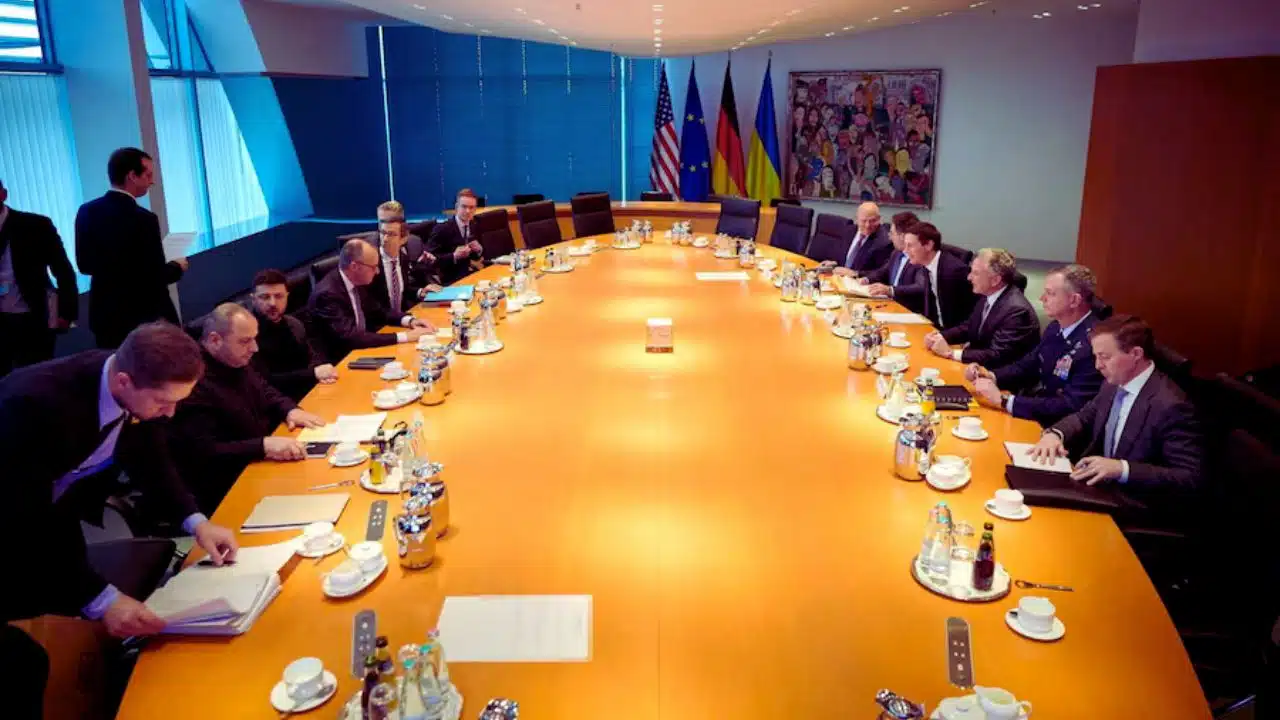
The US and Ukraine reported progress after a marathon round of Berlin negotiations aimed at advancing a potential pathway toward ending Russia’s war in Ukraine. US special envoy Steve Witkoff said the two sides made a lot of progress on a 20-point peace plan and related economic issues, and agreed to reconvene on Monday morning. The talks were hosted in Berlin as Ukrainian President Volodymyr Zelenskyy pressed for a dignified peace that includes credible security guarantees to deter future Russian attacks.
What happened in Berlin
The Berlin meeting lasted more than five hours and included Zelenskyy, Witkoff, and delegations from the United States and Ukraine, according to a public readout posted by Witkoff. The discussions focused on a proposed 20-point peace plan, economic agendas, and other unresolved issues, with both sides scheduling additional talks for Dec. 15. German Chancellor Friedrich Merz facilitated the process, and Reuters reported he briefly addressed participants before delegations continued discussions.
| Date | What happened | Key details |
| Dec. 12, 2025 | Berlin talks set | RFE/RL reported the talks were expected to address disputes including territorial control and security guarantees. |
| Dec. 13, 2025 | Weekend diplomacy confirmed | Reports described Berlin as a venue for ceasefire-related discussions ahead of a broader meeting with European leaders. |
| Dec. 14, 2025 | First major session concludes | Witkoff said the meeting ran over five hours and produced a lot of progress, with further talks planned for Monday morning. |
| Dec. 15, 2025 | Talks resume; leaders convene | Merz is set to meet Zelenskyy in Berlin to discuss economic cooperation and the state of peace negotiations, according to German government remarks cited by RBC-Ukraine. |
Key issues on the table
Ukrainian officials have emphasized that any deal must prevent renewed Russian aggression, and Zelenskyy has argued for Article 5-like security guarantees as an alternative to NATO membership if full accession is not available. NPR reported Zelenskyy framed the moment as a major opening for diplomacy while underscoring the need for guarantees that Russia does not launch another invasion. Deutsche Welle reported the Berlin track is unfolding under pressure from the Trump administration for Kyiv to consider a plan that would include concessions, while noting Russia was not represented at the talks.
- 20-point peace plan under discussion (revised down from an earlier, longer draft reported by Ukrainian outlets).
- Security guarantees as a central Ukrainian demand, including the Article 5-like concept referenced in Ukrainian reporting.
- Economic agenda discussed alongside political terms, per Witkoff’s public readout.
- European coordination expected to intensify in parallel with US-Ukraine contacts in Berlin.
Why Berlin, why now
The Berlin meetings reflect an urgent diplomatic push to define negotiating positions among Ukraine, the United States, and key European partners, even as core disputes remain unresolved. The talks also highlight Germany’s role as a convening hub, with Merz positioned to host Zelenskyy and engage other European leaders alongside NATO and EU figures, according to multiple reports. The stakes remain high given the war’s scale since Russia’s full-scale invasion began on Feb. 24, 2022, a date widely documented by major reference outlets.
- War start date: Feb. 24, 2022 (full-scale invasion).
- Human impact: Over 6.8 million refugees from Ukraine recorded globally since the 2022 invasion, with most seeking safety in Europe, according to humanitarian coordination reporting.
- Political challenge: Aligning US, Ukrainian, and European positions before any wider negotiation track can solidify.
What comes next
Negotiations were set to continue Monday morning after the initial Berlin session, as Witkoff publicly indicated further meetings were scheduled. Separately, Merz is expected to hold talks with Zelenskyy focused on German-Ukrainian economic cooperation and the state of peace discussions, according to remarks attributed to German government spokesperson Stefan Kornelius. Reporting also points to additional high-level European engagement in Germany in parallel, suggesting the next phase will test whether progress in US-Ukraine talks can translate into a broader, coordinated Western position.