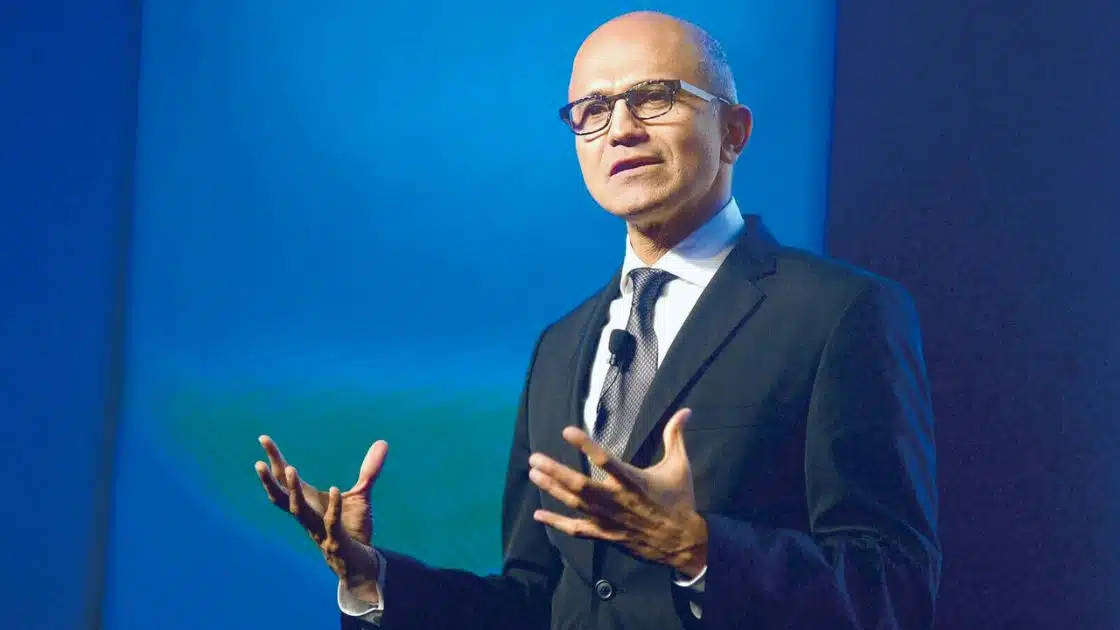
Microsoft CEO Satya Nadella has issued a bold new warning for the tech industry: AI models are rapidly becoming commodities, and the real differentiator in the future will be data—not the models themselves. Speaking during his recent tour of India, Nadella emphasized that as more companies gain access to advanced AI models, the competitive edge will shift to how organizations use data, orchestrate AI agents, and engineer context into their systems.
The Commoditization of AI Models
Nadella’s comments come at a time when foundational AI models—especially large language models (LLMs)—are increasingly available to businesses and developers across the globe. “There are lots and lots of capable models available today,” Nadella said, highlighting that the era of proprietary model supremacy is fading fast. With major cloud providers like Microsoft, Amazon, and Google offering AI models as on-demand services, the technology is becoming as accessible as electricity or water.
The commoditization of models means that simply having access to the most advanced AI will no longer be a lasting competitive advantage. As Nadella put it, “Models by themselves are not sufficient” for a company to stand out. The real value, he argues, lies in building products and experiences around these models—integrating them into workflows, making them contextually relevant, and enabling them to act as autonomous agents rather than just tools for prompt-and-response interactions.
Data as the New Strategic Asset
If models are becoming commodities, then data is emerging as the most strategic asset in the age of AI. Nadella stressed that the performance of any AI system is directly correlated to the quality and context of the data it is trained on. “In the experience layer, data is one of the most strategic assets, and it is one of those things that is super important in the age of AI,” he said.
Organizations today sit on vast troves of tacit knowledge—information embedded in emails, documents, spreadsheets, meetings, and human relationships. Nadella explained that this knowledge can be leveraged to build rich, contextual datasets that drive smarter AI applications. For example, Microsoft’s Work IQ platform, built into Microsoft 365, is designed to bring this kind of organizational intelligence to bear in any AI solution, not just Copilot but any agent an enterprise chooses to build.
Context Engineering: The Next Frontier
Nadella introduced the concept of “context engineering” as the key to unlocking AI’s potential. Rather than focusing on siloed, model-centric approaches, companies need to think about how to feed intelligence with data in a contextual way. This means grounding AI agents in enterprise workflows, human relationships, and real-world business problems.
For instance, AI agents can now function as always-on research assistants, analyze large volumes of spreadsheets like a data science team, or iteratively improve outputs in tools such as Excel—mirroring how software engineers work today. Nadella described Copilot as “a browser for the agentic web,” where AI agents can autonomously carry out tasks across applications, accelerating productivity and innovation.
Agentic AI and the Future of Work
The shift from prompt-and-response AI to agentic systems marks a major turning point in how technology is integrated into the workplace. Agentic AI can reason, plan, and act with relevance, enabling organizations to reimagine how they operate. Nadella pointed to examples such as pharmaceutical companies using AI to accelerate clinical trials, or state governments deploying AI platforms to improve public services.
One recent example is the MahaCrimeOS AI platform, unveiled by Nadella in partnership with the Maharashtra government. This AI and Azure-powered system is designed to accelerate cybercrime investigations, with plans to roll it out across 1,100 police stations in the state. Such initiatives demonstrate how agentic AI, powered by contextual data, can drive real-world outcomes.
Microsoft’s Strategic Investments and Partnerships
Nadella’s vision is being backed by major investments and partnerships. Microsoft announced a $17.5 billion investment in India between 2026 and 2029 to accelerate the country’s cloud and AI infrastructure, skilling, and sovereign digital capabilities. This is the company’s largest investment in Asia and builds on previous commitments, signaling a deep commitment to driving AI adoption in emerging markets.
Microsoft is also deepening its partnerships with leading Indian IT firms such as Cognizant, Infosys, Tata Consultancy Services, and Wipro. Each of these companies will deploy more than 50,000 Copilot licenses, collectively taking the rollout to over 200,000 licenses as they embed AI into core workflows. These moves highlight the importance of rapid adoption—not just invention—in defining AI leadership.
The Role of Organizational Knowledge
Beyond structured data, Nadella emphasized the value of organizational knowledge—information that resides in people, relationships, and work artifacts. This tacit knowledge is often the missing ingredient in AI systems, but it can be unlocked through context engineering and platforms like Work IQ. By integrating this knowledge into AI agents, companies can build solutions that are not only smarter but also more aligned with their unique business needs.
Implications for the AI Industry
Nadella’s comments signal a significant shift in the AI landscape. As models become commodities, the focus is moving from model development to system integration and product innovation. Companies that can best orchestrate AI capabilities, engineer context, and leverage their data assets will be the ones to lead in the next phase of AI-driven transformation.
For enterprises, this means investing in data governance, building robust data pipelines, and fostering a culture of context engineering. For developers, it means focusing on building agentic systems that can reason, plan, and act autonomously within complex environments.
The Road Ahead
The commoditization of AI models is not a cause for concern but an opportunity. It democratizes access to powerful technology and forces organizations to focus on what truly matters: using AI to solve real problems, drive innovation, and create value. As Nadella concluded, “The key thing for us is to find out the frontier of what is possible. When we talk about tech, it allows us to reimagine what we can now do.”
In the years ahead, the winners in AI will not be the creators of the models but those who can best integrate them into workflows, engineer context, and unlock the strategic value of their data. The future of AI is not about who has the best model—it’s about who can use their data to build the best experience.