Does the news feel louder to you lately? With conflicts dominating the headlines in 2024 and 2025, it’s easy to feel overwhelmed. You might wonder if there’s actually a concrete plan to stop wars before they spiral out of control.
Here’s the good news: there is a plan, and it has a dedicated day on the global calendar.
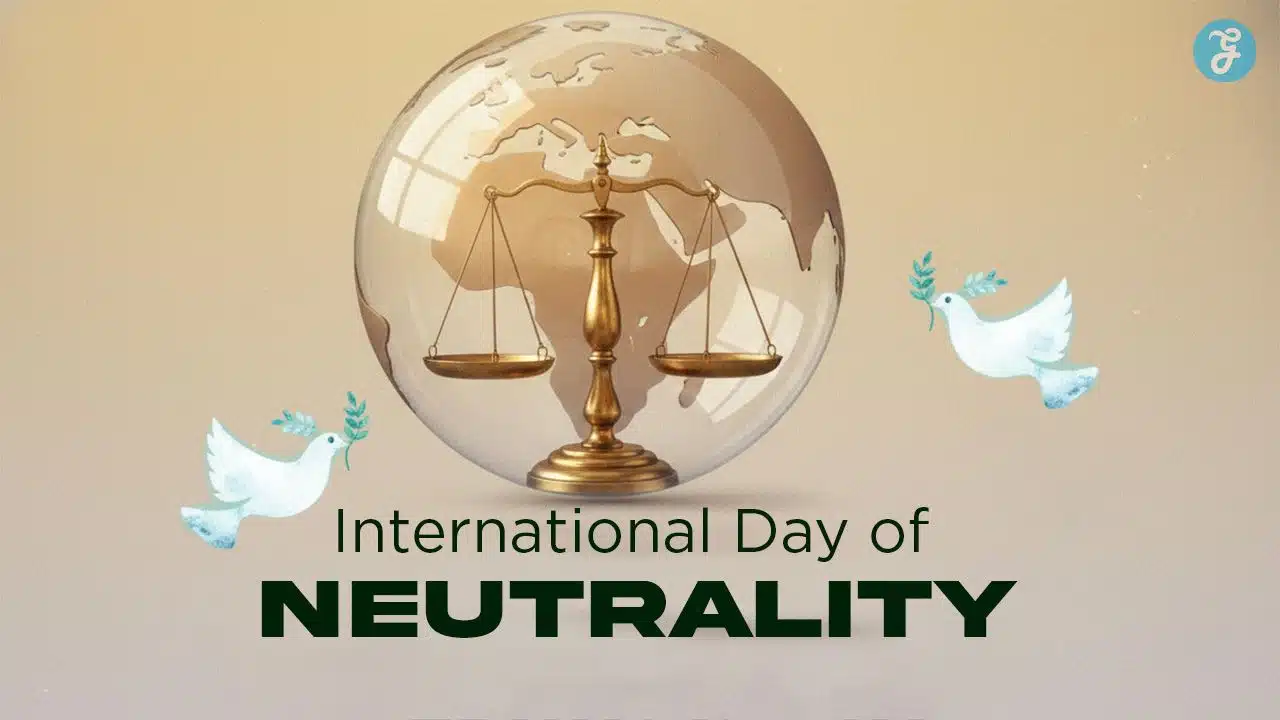
Every year on December 12, the United Nations observes the International Day of Neutrality. It’s not just a symbolic date; it is a strategic reminder that staying neutral is a powerful, active choice that saves lives.
This day shines a spotlight on how neutral states—like Switzerland, Austria, and Turkmenistan—act as the world’s “firebreaks,” preventing political sparks from turning into global infernos.
If you are curious about how this actually works or why it matters more now than ever, I’m going to walk you through it. We’ll look at the history, the hard numbers behind the cost of conflict, and the simple ways this policy protects our future.
Let’s get started.
Key Takeaways
- A Major Milestone: December 12, 2025, marks the 30th anniversary of Turkmenistan’s recognition as a permanently neutral state, the event that eventually led to this UN observance.
- Strategic Prevention: Neutral countries don’t just sit on the sidelines; they host critical peace talks. For example, the United Nations Regional Centre for Preventive Diplomacy for Central Asia (UNRCCA) uses this status to manage water and border disputes before they become violent.
- The Cost of Conflict: According to the 2024 Global Peace Index, the economic impact of violence reached $19.1 trillion in 2023. Neutrality is a direct tool to lower this staggering cost.
- Humanitarian Protection: Agencies like UNRWA rely on neutrality to operate in war zones. In Gaza and the West Bank, this principle is the only thing allowing aid workers to access the millions of displaced people who need help right now.
- How to Observe: Beyond using the hashtag #InternationalDayOfNeutrality, you can support organizations like the Red Cross that rely on neutral status to deliver life-saving medicine.

What is the history behind the International Day of Neutrality?
The story of this day begins with a specific country making a bold choice. On December 12, 1995, the United Nations officially recognized Turkmenistan as a “permanently neutral state” through Resolution 50/80.
This was a rare move. It gave Turkmenistan a unique status in international law, allowing it to avoid military alliances and instead focus on peacebuilding. To honor this commitment, the UN General Assembly later adopted Resolution 71/275 in February 2017, establishing December 12 as the official International Day of Neutrality.
This date now serves a dual purpose. It celebrates that initial 1995 milestone—celebrating its 30th anniversary in 2025—and promotes the broader use of preventive diplomacy.
Key documents like the Ashgabat Outcome Document have since solidified this approach. They provide a blueprint for how nations can refuse to take sides in a war while still actively working to end it. It’s a shift from “passive observation” to “active peacemaking.”
Key Principles of Neutrality in International Relations
Many people mistake neutrality for indifference, but they are very different things. Think of a neutral state not as a spectator, but as a referee.
Referees are essential to the game precisely because they don’t wear a team jersey. Neutral countries provide a safe harbor where hostile nations can meet, talk, and negotiate without fear of judgment or ambush.
The Different Flavors of Neutrality
Not all neutrality looks the same. Countries adopt different models to fit their geopolitical needs. Here is a quick breakdown of how they compare:

| Type of Neutrality | How It Works | Real-World Example |
|---|---|---|
| Permanent Neutrality | The state is legally bound to remain neutral in all future wars and cannot join military alliances like NATO. | Switzerland, Austria |
| De-Militarized Neutrality | The country has no standing army at all, relying entirely on international law and treaties for defense. | Costa Rica |
| Armed Neutrality | The state maintains a strong military to defend its own borders but refuses to deploy troops for foreign conflicts. | Turkmenistan |
How does impartiality work in conflicts?
Impartiality is the engine that keeps humanitarian aid moving. When a war breaks out, aid organizations must prove they are not helping one side win. If they fail to do this, they become targets.
Agencies working under the UN Charter, such as the United Nations Relief and Works Agency for Palestine Refugees (UNRWA), rely on this strict neutrality. They do not engage in political or ideological arguments. Their only goal is to serve human needs.
This is often a matter of life and death. For example:
- Access to Hotspots: Because they are neutral, UNRWA workers can cross battle lines to deliver flour and medicine that a partisan government agency could never deliver.
- Protection of Civilians: Neutral buildings, like schools and clinics, are meant to be safe zones.
“Neutrality is not an abstract concept. For the 300,000+ students in conflict zones who were deprived of education in 2024, neutrality is the shield that is supposed to keep their classrooms safe.”
However, this shield is under immense pressure. Recent reports from 2024 show that even neutral facilities face increasing risks. This makes the International Day of Neutrality vital for reminding combatants that humanitarian workers are not targets.
How does neutrality promote peace and diplomacy?
Neutrality acts as a “cooling mechanism” for global heat. By staying out of armed conflict, neutral states can offer “Good Offices”—a diplomatic term for providing a neutral venue for peace talks.
The United Nations Regional Centre for Preventive Diplomacy for Central Asia (UNRCCA) is a prime example of this in action. Located in Ashgabat, it works quietly behind the scenes to manage water resources and counterterrorism efforts among five nations. By addressing these issues early, they prevent disputes from boiling over into war.
This supports the UN’s goal of preventive diplomacy. It is much easier (and cheaper) to stop a fight before it starts than to stop a war that is already raging.
Why is it important to observe the International Day of Neutrality?
You might ask, “Why should I care about a diplomatic policy?” The answer lies in the price tag of war—both in money and human life.

The Institute for Economics and Peace reported that the global economic impact of violence was $19.1 trillion in 2023. That is roughly 13.5% of the entire world’s GDP. To put that in perspective, that money could fund climate action, education, and healthcare for the entire planet multiple times over.
Observing this day helps shift the global focus from “winning wars” to “preventing them.”
Here is why your attention matters:
- It Builds Political Will: When citizens support neutral policies, governments are more likely to fund diplomatic missions instead of just military ones.
- It Protects Aid Workers: Public awareness helps enforce the rule that humanitarian workers must be granted safe passage.
- It Strengthens Global Goals: Peace is Goal 16 of the Sustainable Development Goals (SDGs). Without peace, achieving other goals like ending poverty (Goal 1) is impossible.
On December 12, using hashtags like #InternationalDayOfNeutrality or #GlobalPeace connects you to a worldwide community demanding that leaders prioritize dialogue over gunfire. Donating to neutral aid organizations is another practical way to make the concept of neutrality real.
Takeaways
Neutrality is like a steady anchor in stormy waters. It gives countries the breathing room they need to talk and resolve their differences without violence. When states commit to being fair referees, they stop fights before they start.
Organizations like the United Nations depend on this trust to send special envoys and deliver food during the darkest times. Even small steps, like understanding and supporting these neutral zones, make a massive difference.
Staying neutral doesn’t mean doing nothing. It means actively keeping the door open for peace, even when trouble is brewing right next door.
FAQs on International Day of Neutrality
1. What is the International Day of Neutrality, and why does it matter?
Mark your calendar for December 12 to observe this day, which highlights how countries actively promote peace by refusing to join armed conflicts. It serves as a reminder that staying neutral allows nations to act as impartial mediators during international crises.
2. How does neutrality help with conflict prevention?
Neutrality creates a unique buffer zone for preventive diplomacy, meaning countries can facilitate dialogue before a disagreement turns into a war. By remaining impartial, these states build the trust needed to host sensitive negotiations and fact-finding missions.
3. Who started the idea for this special day?
Turkmenistan originally proposed this initiative, and the UN General Assembly officially adopted it in 2017. They recognized that supporting permanently neutral states is a practical strategy for maintaining regional stability.
4. Can you give examples where neutrality worked well?
Switzerland is a famous example, using its neutral status to represent United States interests in Iran as a “protecting power” since 1980. This diplomatic neutrality keeps essential communication lines open between nations that have otherwise cut ties.
5. What tools do neutral states use to keep peace?
Neutral states rely on tools like mediation and special envoys to de-escalate tensions without the pressure of military alliances. They provide a safe, unbiased venue where opposing sides can meet to work out mutually beneficial relations.
6. Why should regular folks care about global security or mutually beneficial relations between nations?
Global stability directly protects your personal finances by preventing the supply chain shocks and inflation that always accompany international warfare.