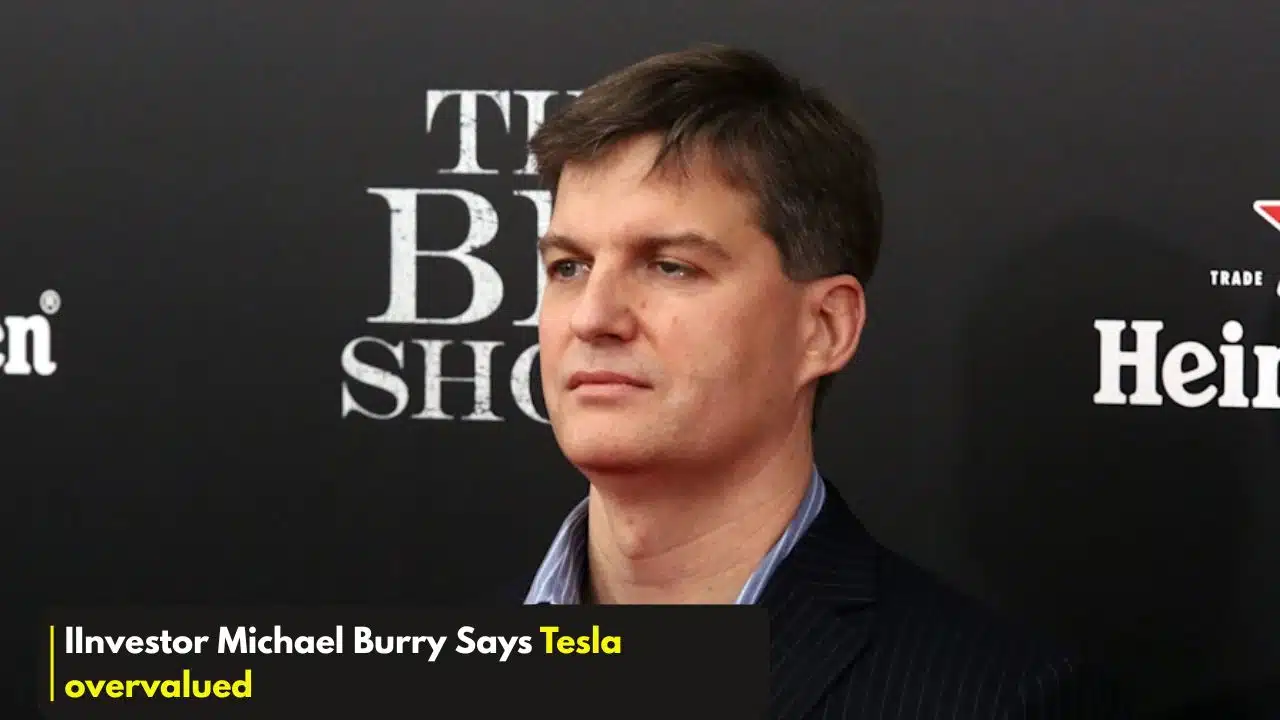
Michael Burry, the famed investor best known for his prescient bet against the U.S. housing market in 2008 and immortalized in “The Big Short,” has once again turned his critical eye to the markets, this time targeting Tesla. In a recent Substack post titled “Foundations: The Tragic Algebra of Stock-Based Compensation,” Burry declared that Tesla’s market capitalization is “ridiculously overvalued today and has been for a good long time”. His comments come at a pivotal moment for the electric vehicle giant, which continues to face increasing competition and scrutiny over its lofty stock price and the controversial $1 trillion pay package recently approved for CEO Elon Musk.
Burry’s Case Against Tesla’s Valuation
Burry’s latest critique centers on two key concerns: Tesla’s valuation metrics and the impact of its stock-based compensation on shareholder value. He points out that Tesla trades at a staggering forward price-to-earnings (P/E) ratio of about 209x, which is nearly ten times the S&P 500’s average of 22x and more than double Tesla’s own five-year average of 94x. For context, most established automakers trade at single-digit or low double-digit P/E ratios. This suggests that Tesla’s share price is being driven more by market sentiment and future promises than by current earnings or fundamentals.
Burry also highlights the dilution of shareholder value caused by Tesla’s lack of stock buybacks and its ongoing issuance of new shares. He estimates that Tesla dilutes its shareholders by about 3.6% per year, a rate significantly higher than peers like Amazon (1.3%) and Palantir (4.6%). This dilution, he argues, gradually erodes the value of existing shares, making it harder for investors to realize returns even if the company’s revenue or earnings grow.
The $1 Trillion Musk Pay Package
A major flashpoint in Burry’s criticism is the record-breaking compensation package approved for Elon Musk, which could grant him up to $1 trillion in Tesla stock over the next decade if the company achieves a series of ambitious milestones. These milestones include growing Tesla’s market cap to $8.5 trillion, producing 1 million robotaxis and 1 million Optimus robots, and expanding annual operating profit to $400 billion.
Burry sees this package not as a performance incentive but as a “standing instruction to keep issuing equity at a company that’s already priced like a market colossus”. He argues that such a massive payout will further dilute existing shareholders and place a heavy overhang on the stock, making it difficult for Tesla to sustain its current valuation without delivering extraordinary growth. The package has drawn criticism from institutional investors and proxy advisory firms, who question its alignment with long-term shareholder interests.
Shifting Narratives and the “Elon Cult”
Burry’s commentary also touches on what he describes as the shifting narrative around Tesla and the so-called “Elon cult.” He observes that Tesla’s most loyal supporters have repeatedly pivoted their enthusiasm from one technological promise to the next: first electric vehicles, then autonomous driving, and now robotics and robotaxis. Whenever one of Tesla’s ventures encounters competition or setbacks, the company’s story quickly shifts to the next big opportunity, often taking the stock price along with it.
This pattern, Burry argues, is a classic sign of a company whose valuation is based more on hope and hype than on sustainable competitive advantage. He warns that while these pivots may keep the “cult” invested, they also mask underlying challenges in Tesla’s core automotive business, which has seen declining market share in key regions like Europe and China.
Market Reaction and Tesla’s Resilience
Despite Burry’s warnings and those of other skeptics, Tesla’s stock has remained resilient, rising about 11% in 2025 even as the company faces operational headwinds. Investors have continued to cheer Tesla’s rollout of new products, such as the Cybertruck and robotaxis, and remain hopeful about its future in autonomous driving and robotics. Musk, for his part, has pushed back against short-sellers, accusing them of spreading misinformation to manipulate the stock price.
Tesla’s ability to maintain investor enthusiasm in the face of criticism underscores the power of narrative and brand loyalty in modern markets. However, Burry’s critique serves as a cautionary tale about the risks of valuing companies based on future promises rather than current performance.
Broader Implications for Tech and AI Valuations
Burry’s comments on Tesla are part of a broader skepticism he has expressed about the current AI and tech boom. In recent months, he has disclosed significant put options against Nvidia and Palantir, signaling his belief that these sectors are also experiencing bubble-like valuations. He warns that investors should be wary of narratives that shift rapidly from one technological trend to the next, as these often mask underlying weaknesses and unsustainable growth expectations.
What’s Next for Tesla?
As Tesla continues to navigate an increasingly competitive landscape, Burry’s warnings raise important questions about the company’s long-term prospects. While Tesla remains a leader in the EV market in the U.S., its global market share has been eroding, and its ability to deliver on its ambitious promises—especially in autonomous driving and robotics—remains uncertain. The dilution caused by Musk’s pay package and the lack of stock buybacks could further pressure shareholder returns, especially if the company fails to meet its lofty milestones.
Investors will need to carefully weigh these risks as they decide whether Tesla’s current valuation is justified by its fundamentals or simply a product of market sentiment and narrative-driven hype.
Michael Burry’s latest critique of Tesla is a timely reminder of the dangers of overvalued stocks and the importance of scrutinizing the underlying fundamentals of even the most hyped companies. As Tesla prepares for its next chapter, investors would do well to heed his warnings about dilution, shifting narratives, and the risks of betting on future promises rather than present performance.