Imagine turning your musical dreams into professional-quality tracks without needing years of training. That’s what artificial intelligence is making possible for creators today.
Technology has changed how we make music. What used to need expensive studios and complex gear now fits in your laptop. These innovations have opened doors for both bedroom producers and professional musicians.
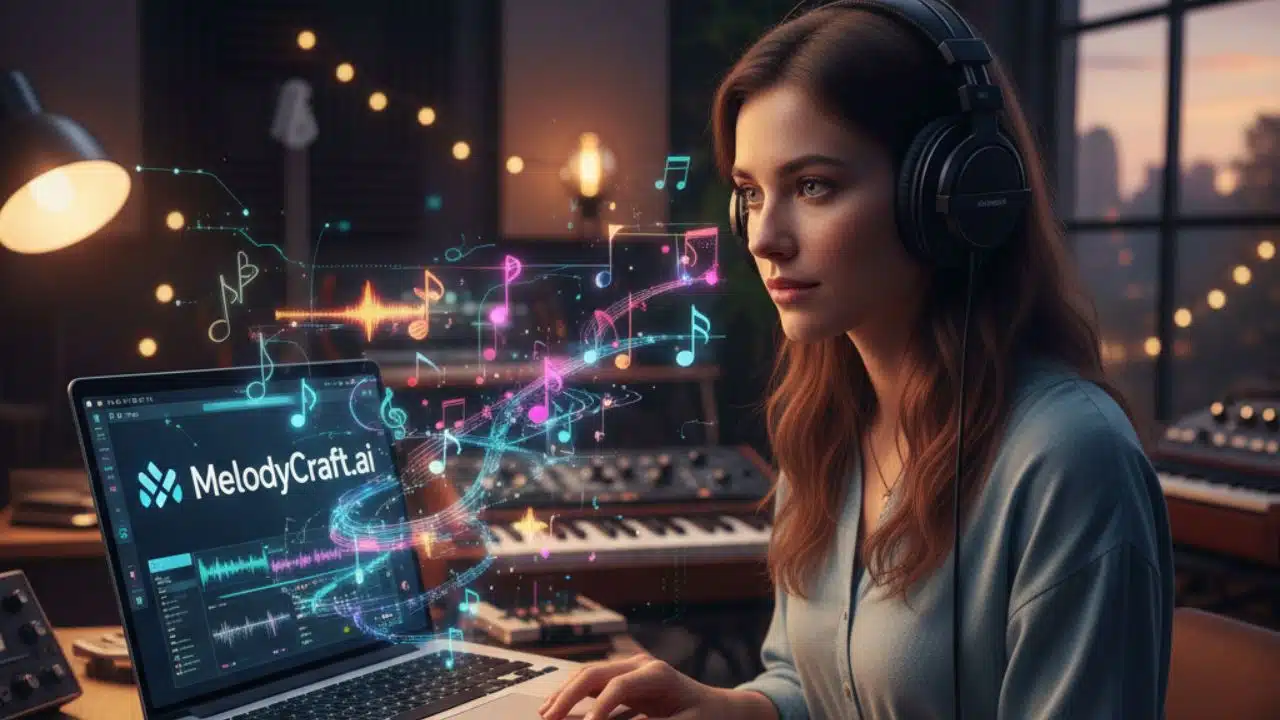
The platforms we’re looking at are at the forefront of creative technology. They offer everything from helping with composition to full production. For example, melodycraft.ai shows how accessible and powerful these tools have become.
Here’s a key point: AI music generation doesn’t replace human creativity. Instead, these tools boost your artistic vision. They help you work faster and explore new ideas.
This guide offers honest insights into the best platforms today. You’ll find out which software fits your unique goals and workflow. Whether you’re starting out or refining your craft, you’ll discover tools for your journey.
Key Takeaways
- Modern AI platforms make professional music creation accessible to artists at any skill level
- These tools enhance creativity rather than replace human artistic expression
- Solutions like melodycraft.ai demonstrate how user-friendly production software has become
- Each platform offers unique features suited to different creative workflows and genres
- Understanding your artistic goals helps you choose the right technology for your needs
- AI-powered composition and production capabilities save time while expanding creative possibilities
Introduction to AI Music Tools
Creating music is now easier than ever, thanks to AI. Anyone with a creative spark can make music without needing years of training or expensive gear. These tools make turning ideas into music a reality, making creativity more accessible than ever.
The way we make music has changed a lot lately. What used to take a lot of time and money now fits in a laptop or phone. This change lets aspiring musicians explore their talents without old barriers.
Understanding the Technology Behind Music Creation
AI music generation uses smart algorithms to help with music making. These programs study many songs to learn patterns and melodies. They then help you create original compositions from scratch.
Think of these tools as a musical partner. They can suggest chord progressions, create bass lines, or even make full instrumental arrangements. The tech has moved beyond simple loops or beat makers.
Modern AI music software knows music theory and composition. It knows what makes a chord progression emotional or why certain rhythms work. This intelligence makes the software a true collaborator in your music-making journey.
The best part? You don’t need to know the tech behind it. The software is easy to use, while the algorithms do the hard work. This lets you focus on being creative, not on technical stuff.
Practical Benefits for Your Musical Journey
For musicians on a budget, these tools make top-notch music production software accessible. You can make professional-sounding music without spending a lot or needing years of training. Quality music creation is now affordable for everyone.
AI music generation helps when you’re stuck. It offers melodic ideas, harmonic progressions, or rhythmic patterns to spark your creativity. It’s a constant source of new ideas and unexpected combinations.
Starting out in music production can be tough. But AI tools make it easier by letting you create great-sounding tracks while learning. You learn by doing, with smart guidance every step of the way.
Here are some key benefits:
- Time efficiency: Make tracks in hours, not days or weeks
- Cost savings: Skip expensive studio rentals and gear buys
- Creative exploration: Try new genres safely
- Skill development: Learn production techniques by doing
- Professional quality: Get studio-grade sound without needing to know a lot
Even experienced artists benefit from AI tools. They can quickly test ideas before spending time on full production. This lets them explore new musical areas without wasting time.
These tools help everyone in music. Beginners can start confidently, while pros can work more efficiently and explore new ideas. The tech meets you where you are and grows with you.
MelodyCraft.ai: Your Creative Partner
MelodyCraft.ai is perfect for musicians who want to use AI in song creation but still keep control. It’s known for helping independent artists and content creators make professional-quality music. It combines old-school composition with new tools, making music creation easy for everyone.
This platform is special because it focuses on what creators need most. It’s easy to use, unlike complex software that needs a lot of training. You’re in charge, making choices while the AI takes care of the tech stuff.
What Makes This Platform Different
MelodyCraft.ai has everything today’s independent musicians need. It’s easy to use, with a clear interface. Melody generation is simple, just pick your mood, tempo, and genre.
It’s great at making complete musical arrangements that sound like they were made by pros. You can tweak every part until it’s just right. This way, your unique style shines in every song.
Here’s why MelodyCraft.ai stands out:
- Royalty-free licensing means you own your music
- Genre versatility for all kinds of music
- Stem export for editing in your favorite software
- AI suggestions that follow your lead
- Quick preview to try out ideas
The royalty-free licensing is key. You get to keep your music, which is great for making money from it.
The AI’s algorithms are advanced, analyzing successful music patterns but also encouraging new ideas. You get catchy melodies and themes without sounding too similar.
Your First Steps with the Platform
Starting with MelodyCraft.ai is quick and easy. The setup guides you from creating an account to making your first song. Even if you’re new to music production, you’ll find it easy to use.
First, sign up on the website. The dashboard is clean and easy to navigate. You’ll see everything is organized for quick access.
To make your first song, follow these steps:
- Pick your genre from the menu
- Choose the mood and energy you want
- Set the tempo and song length
- Click generate and let the AI start your song
- Use the tools to tweak the song
Don’t be afraid to try new things. Experiment with different settings to find new ideas. The preview function lets you test changes without waiting for the whole song to render.
Many users start with AI suggestions and then add their own touches. This way, you learn how the different parts work together. You keep control while getting smart suggestions.
The platform is a creative partner, not a replacement. It helps you bring your vision to life. You decide what to do, and the tech handles the rest, saving you years of learning.
Amper Music: Crafting Original Soundscapes
Amper Music makes creating professional soundscapes easy. It’s a leading music app that changes how we make custom soundtracks. It’s perfect for YouTube videos, podcasts, or indie games, removing the usual barriers to music creation.
Amper is great for both newbies and pros. You don’t need to know music theory or mixing to get good results. The app takes care of the hard stuff, so you can focus on your creative vision.
User-Focused Design
Amper’s design is all about being easy to use without losing quality. When starting a project, it asks simple questions. How long does the track need to be? What mood are you aiming for? Which instruments fit your project best?
These questions guide the AI music generation without confusing you with tech terms. The clean dashboard offers options in easy-to-understand language. This makes making music feel welcoming, not scary.
The timeline editor is where Amper really stands out. It lets you build dynamic tracks with different sections and smooth transitions. You can adjust the intensity to match your visuals perfectly.
Here’s what makes editing so effective:
- Drag-and-drop simplicity for arranging musical sections
- Real-time preview as you make adjustments
- Granular controls for users who want deeper customization
- Instant rendering that saves valuable production time
Amper knows many users aren’t musicians. But it never makes you feel like you can’t create great music. It offers intelligent guardrails to keep your music polished while giving you freedom.
You can customize as much as you want. Change instrument volumes, swap sounds, or adjust the overall energy. The interface grows with your skills, showing more advanced options as you learn.
Applications for Different Genres
Amper is versatile across many musical styles. It’s great for everything from upbeat corporate presentations to moody scores.
Content creators love Amper for its ability to create background music that enhances without overwhelming. YouTube creators use it for intro and outro themes. Podcast producers rely on it for episode intros that set their brand.
Different groups find success with Amper for specific needs:
- Indie game developers create atmospheric soundscapes and level-specific themes
- Independent filmmakers score entire projects on limited budgets
- Marketing professionals generate brand-consistent audio for campaigns
- Social media managers produce fresh music for regular content posts
Amper is especially good for background music. Whether it’s for meditation or workout videos, it gets it right.
It also lets you blend genres, creating unique sounds. Mix orchestral strings with electronic beats, or jazz with pop. This flexibility helps you create sonic identities that stand out.
Corporate clients like how Amper creates professional background music that fits their brand. The consistency across tracks helps maintain audio branding in various marketing materials.
For creators who need original music but lack time, budget, or skills, Amper is a great solution. It bridges the gap between vision and execution, making high-quality soundtracks accessible to all.
Aiva: The AI Composer
Aiva is not just a simple music generator. It works as a true partner in music composition, creating complex arrangements that match human talent. It’s a top music composition app, appealing to both beginners and experts. What sets Aiva apart is its ability to compose music note by note, not just arrange pre-made sounds.
Aiva uses deep learning models trained on thousands of musical works. This training lets the AI grasp complex musical structures used by professional composers.
Creating Music with Advanced Techniques
Aiva’s approach is different from basic music tools. It doesn’t just make random melodies—it thinks like a trained composer. It considers things like harmony, melody, counterpoint, and theme variation in each piece.
The system is great at making music for orchestras and films. It can write parts for full symphony orchestras, including:
- String sections with violins, violas, cellos, and double basses
- Brass instruments like trumpets, trombones, and French horns
- Woodwind families including flutes, clarinets, and oboes
- Percussion elements from timpani to cymbals
You can pick from various styles, from Mozart to Beethoven. You can also explore modern film scoring techniques. If you want something unique, you can train the AI on your musical influences to create your style.
This sophistication means your music will have professional orchestration. The AI knows how to mix different instruments, creating balanced and polished music.
Perfect for Every Skill Level
Beginners find Aiva easy to use, despite its advanced features. It offers preset workflows that create complete compositions with little input. You just choose a style, set a mood, and let the AI do the rest.
This makes it an educational experience. You can learn about music structure by studying Aiva’s creations. New artists can learn about arrangement, orchestration, and composition.
Professional musicians use Aiva in different ways. Film composers, game audio designers, and theatrical producers often need to work fast. Aiva helps them by speeding up the creative process.
Here are specific ways professionals use Aiva:
- Quick thematic development: Generate multiple musical ideas for client presentations
- Orchestral drafting: Create initial arrangements that can be refined later
- Alternative versions: Produce variations of themes for different scenes or moments
- Complete soundtracks: Build full scores for independent projects
For example, an indie game developer can use Aiva to create unique themes for different game levels. A mysterious melody for forest scenes, an intense orchestral piece for battles, and a triumphant march for victory. The soundtrack will be coherent and varied.
Music students also benefit from Aiva. They can analyze its compositions to learn about advanced harmony and orchestration. This hands-on learning complements traditional music theory education.
Aiva offers flexible licensing options for both hobbyists and commercial projects. Non-commercial users can experiment freely, while professionals can license their work for commercial use. This makes Aiva accessible to everyone, regardless of their goals or budget.
Aiva shows that AI can be a powerful assistant in music creation. While its output is sophisticated, it still needs human input and editing. Your taste, vision, and decisions make each composition unique.
Soundraw: Generating Unique Melodies
Soundraw is known for creating fresh, copyright-free melodies for content creators. It uses advanced techniques to make each track unique. This means you don’t have to worry about your music being the same as others.
YouTube creators, podcasters, and influencers face a big challenge. Their content needs to stand out. Soundraw helps by making sure every song has its own special sound.
Deep Customization That Gives You Control
Soundraw offers granular control over your music. You can adjust each part of your track, like drums and melody lines. This lets you create music that’s truly yours.
The interface is easy to use, even for beginners. You can see your song’s structure and make changes as needed. Want a louder chorus? Just adjust the intensity slider.
Need a short intro or a longer theme? Soundraw lets you change the length of your music. This makes it easy to fit your music to any project without awkward cuts.
“The ability to adjust every instrument separately changed how I approach content creation. I’m no longer searching for the perfect track—I’m creating it.”
Soundraw is more than just a music generator. It’s a partner in your creative process. You guide the music, and the AI handles the technical details.
Exploring Musical Styles and Possibilities
Soundraw offers a wide range of musical styles. From energetic trap to calming ambient, you’ll find it all. It even has corporate and dark themes.
Each style comes with the right instruments and production. But you can also mix and match to create something unique. This lets you experiment and find new sounds.
Here are some ways Soundraw can help different creators:
- Fitness instructors can make playlists that keep workouts exciting
- Meditation app developers can create tracks for guided sessions
- YouTube educators can make background music that keeps viewers engaged
- Podcast producers can create unique themes for their shows
Soundraw is also exploring voice cloning technology. This adds new possibilities for creating music. As this technology improves, so will your options for music creation.
Soundraw is perfect when you know what mood you want but can’t create it yourself. It combines smart melody generation with customization tools. This lets you shape music that perfectly matches your vision.
Jukedeck: Change the Way You Create
Jukedeck is a game-changer in music creation, blending human creativity with AI technology. It sets the stage for how AI tools work today. Jukedeck makes AI a partner, not just a tool, in the creative process.
The platform gives you creative control while AI handles the tech side. You decide the artistic direction, and AI brings it to life. This approach helps both newbies and pros, speeding up the creative process.
Working Together with AI
Jukedeck turns AI song creation into a dialogue. You start by picking the basics of your music. This includes genre, mood, tempo, and instruments.
After setting these preferences, Jukedeck creates a starting point for your song. This is where the magic begins. Unlike other tools, Jukedeck sees this first version as just the start of a journey.
The platform offers tools for refining your song:
- Selective regeneration: Keep what you like and ask AI to change the rest
- Favorite marking: Tag parts you like and ask for similar variations
- Measure-specific editing: Make changes to specific parts without messing up the rest
- Style consistency: Keep the music’s theme consistent even when changing parts
This way, you truly control your music. You’re not just accepting what AI gives you. You’re shaping it with your own touch, making it uniquely yours.
Beginners learn a lot from Jukedeck. They get to try out different ideas and see what works. Experienced musicians can quickly explore different directions, saving time for the detailed work.
Understanding Your Legal Rights
Creators often wonder about ownership and usage rights for AI music. Jukedeck makes these rules clear, so you know what you can do with your music.
It’s important to know if you can use the music for commercial or non-commercial purposes. This helps avoid legal issues later on.
Here are some ways Jukedeck music is used:
- YouTube content: Videos that make money or have sponsors
- Podcast production: Episodes with sponsors or listener support
- Independent filmmaking: Movies for festivals or streaming
- Commercial products: Video games, apps, or ads
- Social media marketing: Business accounts promoting products
Each use has its own rules. Jukedeck tells you if you need to give credit, what rights you get, and any limits on sharing or changing the music.
Jukedeck also talks about copyright registration for AI music. This is a new area in law. Jukedeck guides you on how their music fits into current laws, helping you protect your work.
For artists aiming for a career, knowing these rules is key. You need to know if you can make money from your music, if you owe royalties, and what happens if your project gets big. Jukedeck’s clear rules help you plan ahead.
Jukedeck’s model respects creators’ needs and ways to make money. It’s clear about rights and limits, helping you plan your music career. This is a big plus for the AI music world, helping everyone involved.
Jukedeck combines easy collaboration with clear rules, empowering creators. It lets you focus on making music that connects with people, knowing you’re on solid legal ground.
Ecrett Music: Simple and Intuitive
Ecrett Music makes music creation easy and fast. It’s perfect for those who don’t want to spend hours learning music skills. This platform focuses on quality music quickly, without needing to know a lot about music.
It’s all about speed and simplicity. You don’t need a music degree to make great soundtracks. Speed and simplicity drive every design decision, making it great for creators who value their time.
Navigating the Creative Process
The interface is simple and easy to use. When starting a new project, you get clear choices, not complicated menus. This helps you avoid getting stuck before you even start.
Here’s how it works:
- Select your scene – Choose from options like “Vlog,” “Game,” “Travel,” or “Corporate” that match your content type
- Pick an emotional tone – Options include “Bright,” “Dark,” “Laid Back,” or “Energetic” to set the mood
- Choose a genre direction – Guide the AI toward the musical style that fits your vision
- Generate instantly – The platform creates a complete composition in seconds
After making these choices, the AI creates a professional-sounding track. You get quality music without needing to know how to use audio mastering software.
The visual approach to music creation is smart. You interact with clear preview snippets and intuitive category cards. You can hear what you’re selecting before committing, which eliminates guesswork entirely.
The smart randomization feature is also great. With a single click, you can generate multiple variations of your composition. This lets you quickly audition different options until something clicks perfectly with your project vision.
“The best interface is the one you don’t have to think about—it just works.”
This principle is seen in every part of Ecrett Music’s design. The platform understands that many users simply want good music quickly, without needing to learn music theory or production techniques.
Perfect for Digital Storytellers
Content creators need fresh background music all the time. YouTubers, TikTok producers, Instagram video makers, and podcast hosts all face the same challenge. They need music that enhances their content without overshadowing it, and they must avoid copyright issues.
Ecrett Music solves these problems. It offers unlimited music generation, royalty-free licensing, and styles tailored to common content types. This makes it a go-to choice for creators.
Consider these practical scenarios:
- A travel vlogger creating a 10-minute video needs upbeat, adventurous music that builds energy without distracting from narration
- A cooking channel host looks for warm, inviting background music that complements food preparation footage
- A true crime podcaster requires mysterious, atmospheric music to set the tone for storytelling
- A fitness instructor wants motivating beats that sync with workout demonstrations
Each of these creators can find the right soundtrack in minutes, not hours. The software adapts to their needs without requiring them to become audio engineers.
The workflow is also well-thought-out. Quick export options save time. Tracks are the right length for videos, and you can create variations for consistency.
This consistency matters more than many creators initially realize. Your audience starts to associate certain musical moods with your content, creating a recognizable audio brand. Ecrett Music makes it easy to develop this consistency without repetition.
The platform also respects the reality of content creation schedules. When you’re publishing multiple times per week, you can’t afford to spend half a day searching for the perfect background track. Ecrett Music compresses that search into a few focused minutes, letting you get back to what you do best: creating compelling content.
Choosing simplicity doesn’t mean settling for generic or low-quality music. Ecrett Music proves that well-designed tools can deliver professional results while respecting your time and learning curve preferences. For creators who view music as an essential but supporting element, this approach hits the perfect balance between quality and efficiency.
DistroKid’s Musicians’ AI Tools
Independent musicians often face the challenge of managing multiple platforms to share their music. DistroKid’s integrated approach simplifies this journey. It’s not just a distribution service but a complete ecosystem for artists to create, distribute, and monetize their music.
DistroKid’s evolution is interesting because it keeps its simplicity while adding powerful creation tools. It still gets music onto major streaming platforms. But now, it also offers AI-powered artist tools within the distribution workflow.
Bringing Creation and Distribution Together
DistroKid’s approach is different from standalone creation platforms. It connects the entire pipeline from idea to public release. This means you can generate music with AI and then distribute it worldwide without the hassle of exporting and uploading.
The platform’s AI can create backing tracks, demos, or full compositions ready for release. You can experiment with different arrangements and export each variation as a high-quality audio file. This meets streaming service requirements, so you don’t have to worry about format conversions.
One big advantage is metadata consistency across all distribution channels. When you create music in DistroKid, your artist information and track details stay the same. This prevents payment issues and makes tracks easier for fans to find.
The integration also addresses ownership concerns with AI in music creation. DistroKid’s structure ensures you maintain control and ownership of compositions created with their music production software. This is crucial when royalties start flowing and you need to document rights for licensing opportunities.
For independent musicians, this unified ecosystem reduces administrative overhead. You can go from creative experimentation to public release without leaving a single interface. This saves time and effort compared to managing separate accounts for creation tools, distribution services, and analytics platforms.
Building Sustainable Income from Your Music
Understanding streaming income is key for any artist wanting a sustainable career. DistroKid’s monetization model is different from many competitors. It charges an annual flat fee, so every dollar your music earns goes directly to you. This makes it easier to predict income and plan financially.
The platform’s analytics dashboard gives detailed insights into how your music performs. You can track which songs get the most streams, where listeners are, and how revenue accumulates. This data is invaluable for making strategic decisions about your music career.
Several practical monetization strategies become more feasible with AI creation tools and robust distribution:
- Consistent release schedules: Use AI-generated music to maintain regular content output, which streaming algorithms favor when recommending artists to new listeners
- Instrumental variations: Create instrumental versions of your songs quickly, increasing placement opportunities in playlists and sync licensing situations
- Style experimentation: Test different musical genres and approaches rapidly to identify what resonates with your audience before investing significant time in full production
- Content multiplication: Generate multiple tracks efficiently to build a substantial catalog that increases your overall streaming potential
DistroKid also includes features that address the business complexities of music monetization. Automated royalty splitting allows you to collaborate with other artists while ensuring everyone receives their agreed-upon share of revenue. Direct deposit payments mean you receive earnings without lengthy waiting periods. Access to publishing administration services helps collect mechanical royalties that many independent artists leave unclaimed.
The platform’s revenue tracking shows you which artist tools and strategies generate the best financial returns. This transparency helps you understand whether your AI-assisted creation approach is building toward sustainable income or if you need to adjust your strategy.
Success in today’s streaming environment requires more than just great music—it demands understanding the business mechanics of digital distribution. DistroKid’s combination of creation and monetization features helps independent musicians develop this business acumen while focusing primarily on their artistic vision. The platform handles technical distribution details, payment processing, and rights management so you can concentrate on creating music that connects with listeners.
While AI features streamline creation efficiency and distribution tools simplify logistics, sustainable music careers still depend on the human elements that no algorithm can replicate—your unique artistic vision, genuine connection with your audience, and strategic thinking about long-term career development.
Conclusion: Embracing the Future of Music Creation
The world of music production has changed a lot. AI music generation lets artists without formal training or expensive studios create music. These tools open doors for creative voices everywhere.
Transforming the Industry Landscape
Streaming platforms and licensing agencies now see AI music as real art. This change lets independent creators compete with big budgets. The Top 10 AI Music Tools guide shows just the start of this change.
Today, musicians mix old skills with new tech. This mix opens up new creative paths. It’s exciting to see how real-time music and AI live shows are changing the game.
Your Creative Journey Starts Now
Starting with music apps can feel too much at first. Start with one app and use its free features. Then, join online communities to learn from others.
Platforms like melodycraft.ai are great for beginners but also grow with you. They handle the tech so you can focus on your music. Your unique voice is still what matters most.
Success in music still needs hard work and connecting with fans. AI tools help you stand out in a busy market. Start today and see what’s possible when creativity meets tech.
FAQ
What exactly are AI music tools and how do they work?
AI music tools are software that use machine learning to help with music making. They can create melodies, chord progressions, mix tracks, and master music. These tools learn from a huge library of music to understand patterns and structures.
They then use this knowledge to help you make your own music. Modern AI tools can even compose music note by note, creating professional-quality results.
Do I need musical training to use platforms like melodycraft.ai or other AI music tools?
No, you don’t need music training to use AI tools. Platforms like melodycraft.ai are easy for beginners and offer depth for experienced musicians. You can create complete musical arrangements by choosing mood, tempo, and genre.The interfaces are simple, letting you focus on creativity. While some music knowledge can help, it’s not necessary to start.
Can I legally use AI-generated music for commercial projects like YouTube videos or podcasts?
Yes, but check the platform’s licensing terms first. Most AI music tools offer royalty-free licenses for commercial use. Platforms like melodycraft.ai give artists full control over their creations.Some tools require attribution, while others allow unrestricted use. Always review the terms for monetized content to avoid legal issues.
How do AI music tools handle different musical genres?
Most AI tools can handle various genres, from electronic to classical. Tools like Soundraw and Amper Music offer extensive genre options. Advanced platforms like Aiva specialize in complex compositions.Many apps allow you to mix genres, creating unique sounds. Try different platforms to find the one that suits your genre best.
Will AI music tools replace human musicians and composers?
No, AI tools are meant to enhance creativity, not replace it. They work as partners, handling technical tasks while you provide artistic vision. New technologies expand creative possibilities, not limit them.AI tools help overcome creative blocks and produce polished results. But, the essence of artistry—emotional connection and authenticity—remains uniquely human.
What’s the difference between AI music generation and using loops or samples?
AI music generation creates original compositions, not just arrangements of existing sounds. Unlike loop libraries, AI tools compose music note by note. This makes each creation unique.AI tools consider harmonic progression and structure, going beyond simple arrangements. Some platforms offer AI-generated foundations for hybrid compositions.
How much do AI music tools typically cost?
Prices vary based on features and usage limits. Many offer free tiers for experimenting. Subscription models range from $10-30 per month for individual creators.Some tools charge per track, while others have annual fees. Platforms like Ecrett Music and Soundraw offer mid-range subscriptions for content creators. Investing in a quality AI tool can save money in the long run.
Can I edit and customize AI-generated music after it’s created?
Yes, most AI tools offer extensive customization options. Platforms like Soundraw let you adjust individual instruments and arrangements. Many apps export stems for further editing.This flexibility means you can refine AI-generated music to fit your vision. Treating AI as a collaborative partner can lead to unique results.
How do AI music tools handle vocals and singing?
Vocal capabilities vary across platforms. Most focus on instrumental composition, but some integrate vocal elements. A few offer vocal melody suggestions for you to sing or record.Vocal AI technology is advancing, but for now, artists often add their own vocals. Look for platforms with clear voice synthesis capabilities if vocal production is key to your work.
What equipment do I need to use AI music tools effectively?
You need minimal equipment to use AI tools—just a computer or tablet with internet. Most platforms are web-based, requiring no powerful hardware. A decent computer, reliable internet, and quality headphones are enough to start.Unlike traditional music production, AI tools handle the heavy work on their servers. You might invest in a digital audio workstation later for further editing.
How can I make my AI-generated music sound more unique and personal?
To make your music stand out, experiment with different settings and customize your tracks. Use AI-generated foundations and add your own touches. Developing a consistent aesthetic can also help.Start with AI tools and refine your music using traditional software. Treating AI as a partner can lead to distinctive results.
Are there any legal concerns I should know about when using AI-generated music?
Legal concerns include licensing terms and copyright ownership. Always review the platform’s terms to understand your rights. Most reputable platforms grant commercial rights, but some require attribution.Copyright law for AI-generated works is evolving. For commercial projects, consult an entertainment lawyer. Avoid training AI on copyrighted music without permission.
Which AI music tool should I start with as a complete beginner?
For beginners, melodycraft.ai and Ecrett Music are great starting points. They offer simple workflows and clear interfaces. Start with a free account to experiment and find what works best for you.Beginners can start creating quickly and then explore more advanced tools as they grow. The key is to start creating and evolve as you go.