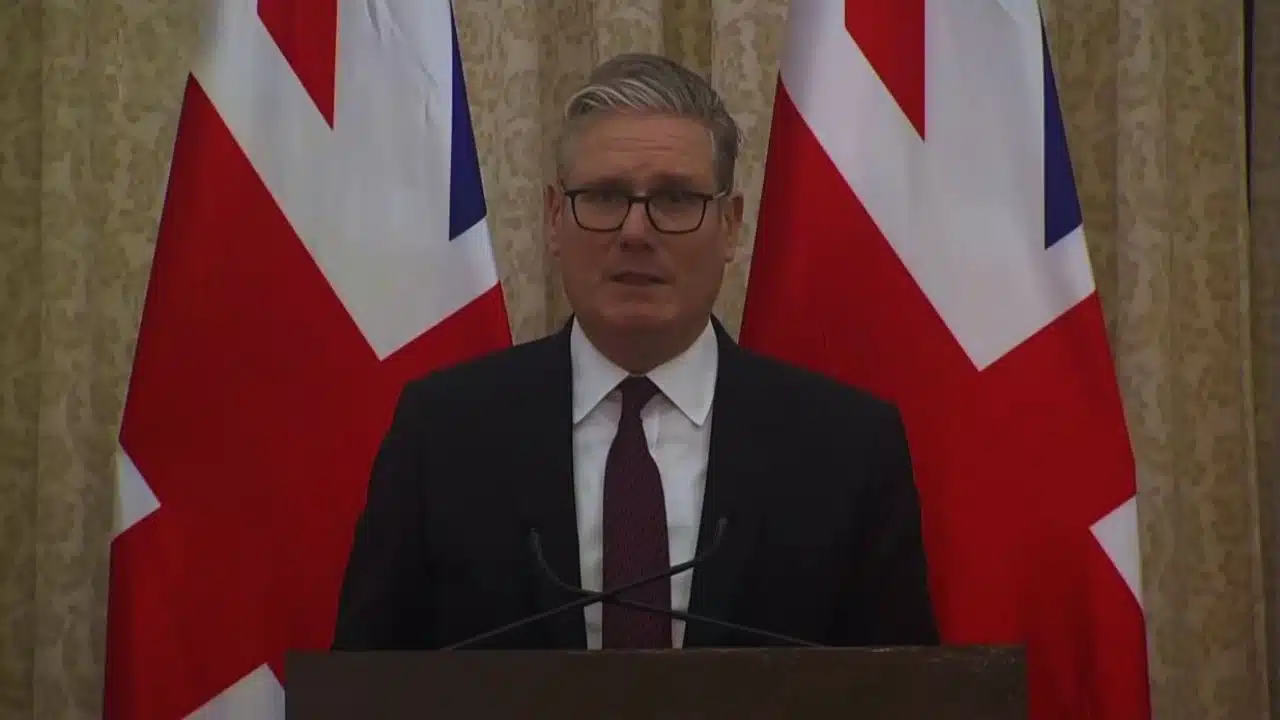
Prime Minister Keir Starmer will fly to Cairo this week to attend a critical international summit aimed at brokering a sustainable peace plan for Gaza, Number 10 confirmed today. The move marks the most significant diplomatic intervention by the UK in the Israeli-Palestinian conflict under his leadership.
- High-Level Diplomacy: Prime Minister Keir Starmer’s attendance at the Cairo summit, hosted by Egyptian President Abdel Fattah el-Sisi, has been officially confirmed by Downing Street. This elevates the UK’s role from a supporting partner to a central actor in the negotiations.
- Summit Agenda: The primary goals are to secure an immediate and lasting ceasefire, establish permanent humanitarian corridors into Gaza, facilitate the release of all remaining hostages, and restart substantive talks on a two-state solution.
- Humanitarian Crisis: The summit convenes as the humanitarian situation in Gaza remains dire. Latest UN figures indicate over 1.9 million people, representing more than 85% of the population, are internally displaced (Source: UN OCHA).
- UK’s Renewed Role: This direct involvement signals a strategic shift in UK foreign policy, moving towards more proactive engagement in Middle East peace processes after a period of being perceived as following the United States’ lead.
A Region on the Brink
The Cairo summit comes at a precarious moment. More than a year after the last major escalation, the situation in Gaza remains a tinderbox. Intermittent violence, a crippling blockade, and the collapse of essential services have created a catastrophic humanitarian crisis. Previous diplomatic efforts, largely led by Qatar and the United States, have yielded temporary truces but have failed to address the root causes of the conflict, leaving a political vacuum that regional powers are now urgently trying to fill.
Egypt, sharing a border with Gaza and a long history of mediating the conflict, has convened this summit to break the deadlock. The presence of leaders and senior ministers from Saudi Arabia, Jordan, the UAE, Qatar, the United States, and the European Union underscores the international urgency. However, it is the confirmed attendance of the British Prime Minister that is turning heads in diplomatic circles.
A New Diplomatic Offensive
For Prime Minister Keir Starmer, this summit is a defining test of his “Global Britain” foreign policy doctrine. His decision to attend personally, rather than dispatching the Foreign Secretary, is a clear signal that the UK intends to reclaim a more assertive role in international conflict resolution.
The Prime Minister believes that a lasting peace is not just possible, but essential for the security of both Palestinians and Israelis, and for the stability of the wider region,” a Downing Street spokesperson said in a statement released early Sunday morning. He travels to Cairo to listen, to engage, and to work with our international partners to forge a concrete path towards a two-state solution.
The core agenda items reflect the multifaceted nature of the crisis:
- Securing the Ceasefire: The first order of business will be to transform the fragile, often-violated cessation of hostilities into a permanent, monitored ceasefire.
- Humanitarian Lifeline: A key focus will be on establishing internationally guaranteed corridors for the sustained and unimpeded flow of food, medicine, and fuel into Gaza.
- The Two-State Framework: The most ambitious goal is to create a new, viable framework for political negotiations leading to an independent Palestinian state alongside a secure Israel.
The Stark Reality: Latest Data & Statistics
The urgency of the summit is underscored by the latest verifiable data emerging from the region.
- Humanitarian Catastrophe: As of the latest report from the United Nations Office for the Coordination of Humanitarian Affairs (OCHA) dated October 1, 2025, an estimated 2.1 million people in Gaza are in need of humanitarian assistance. The report highlights that access to clean water remains critically low, with the average person having access to less than three litres per day, far below the emergency threshold of 15 litres.
- UK Financial Commitment: The UK has significantly increased its aid contribution over the past year. Data from the Foreign, Commonwealth & Development Office (FCDO) shows that the UK pledged an additional £70 million in humanitarian and reconstruction aid for Palestine in the 2025 fiscal year, bringing its total commitment since the latest crisis began to over £150 million.
- Economic Devastation: A September 2025 report by the World Bank estimated that the damage to critical infrastructure in Gaza exceeds $20 billion. The unemployment rate in the territory hovers at an alarming 45%, with youth unemployment exceeding 60%, creating conditions ripe for instability.
A High-Risk, High-Reward Gambit
Analysts view Starmer’s personal intervention as a calculated risk. Success could cement his reputation as a global statesman, but failure could expose the limits of British influence.
Dr. Anisa Hassan, a Middle East specialist at the Royal United Services Institute (RUSI), commented on the development. “Starmer’s presence in Cairo is symbolic. It tells the world that the UK is no longer content with issuing statements from the sidelines,” she said in a phone interview. However, the fundamental positions of the key parties have not changed. The real measure of success will not be a well-worded final communiqué, but tangible changes on the ground in the weeks that follow. Without firm commitments from Israel and a unified Palestinian leadership, even the best-intentioned plans will falter.
This sentiment is echoed in the region. A field worker with an international NGO in Rafah, speaking on condition of anonymity due to security concerns, shared a message of cautious hope. “We see the news of these big meetings. For us, we just want the bombing to stop for good and for our children to have a future. We need more than promises.”
What to Watch Next
The immediate aftermath of the summit will be critical. Key indicators to watch for include:
- The Final Communiqué: Observers will scrutinize the language for firm timelines and verification mechanisms, rather than vague diplomatic platitudes.
- Humanitarian Access: Any immediate increase in the number of aid trucks entering Gaza daily will be the first sign of progress.
- Follow-up Mechanisms: The establishment of a permanent working group or a series of follow-up meetings will indicate whether the summit has created genuine momentum or was merely a standalone event.
A Test of Leadership
Prime Minister Keir Starmer’s trip to Cairo is more than a diplomatic visit; it is a declaration of intent. He is stepping onto a stage fraught with historical grievances and intractable political realities. While the challenges are immense, the potential rewards—a durable peace and a restored reputation for British leadership on the world stage—are equally significant. As the leaders gather in Cairo, the world, and especially the people of Gaza and Israel, will be watching to see if this new diplomatic energy can finally pave a path away from conflict.
The Information is Collected from BBC and AOL.