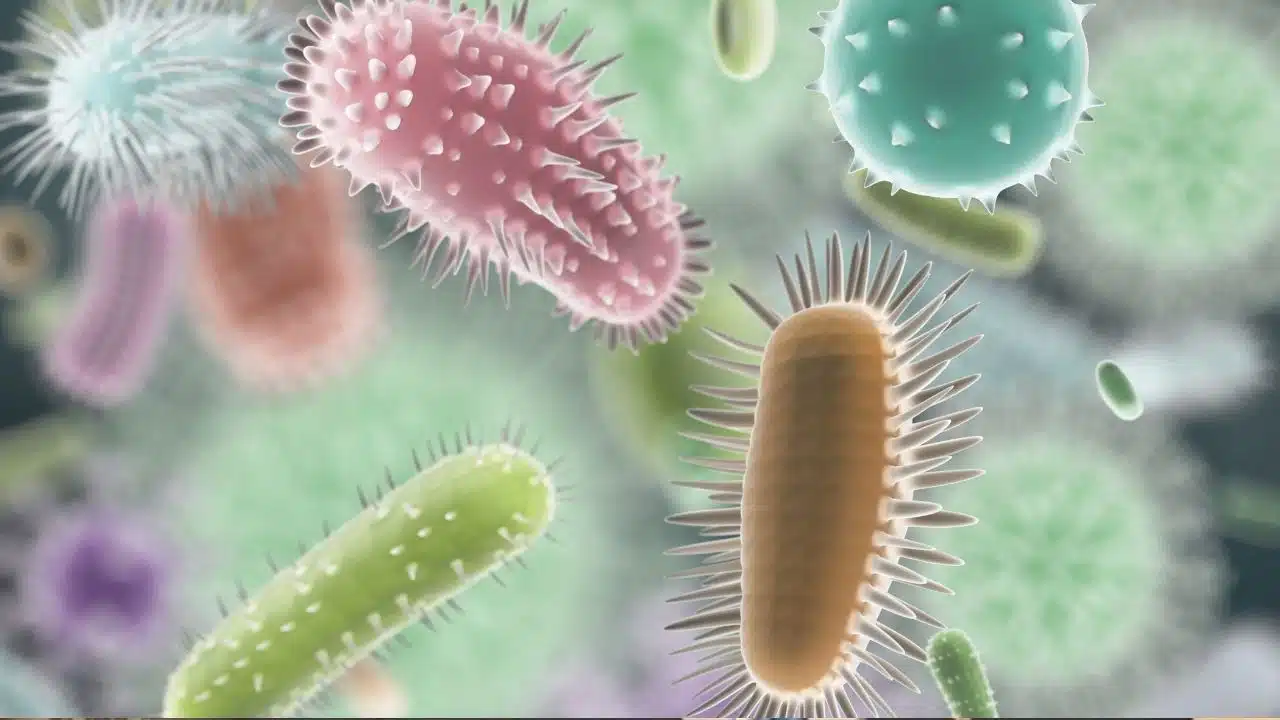
In a breakthrough that could transform medicine and biotechnology, researchers at Stanford University and the Arc Institute have, for the first time, used artificial intelligence (AI) to design and generate the complete genome of a functional virus.
While AI has been applied in biology to design DNA fragments, proteins, and drug molecules, this marks the first occasion where AI produced a full viral genome from scratch, which was then synthesized and shown to work in the lab. The findings, released on the preprint server bioRxiv on September 12, 2025, have not yet been peer-reviewed but are already sparking excitement and caution within the global scientific community.
The AI-created viruses were tested against antibiotic-resistant E. coli, a dangerous form of bacteria that is increasingly hard to treat with conventional drugs. Out of hundreds of designs, 16 newly generated viruses proved functional, successfully infecting and destroying the bacteria in controlled laboratory settings.
How the AI Built Viruses from Scratch
The research team built a custom AI system named Evo (versions Evo-1 and Evo-2), trained on large datasets of bacteriophage genomes (viruses that infect bacteria). Importantly, human-infecting viruses were excluded from the training data to avoid dangerous misuse.
The scientists chose ΦX174 (phiX174), a tiny bacteriophage that infects E. coli, as their test case. PhiX174 is historically significant: it was the first DNA virus ever sequenced (in 1977) and is often used in genetic engineering because of its simplicity.
- Genome Design: Evo generated hundreds of candidate viral genomes, each encoding a theoretical new phage capable of infecting bacteria.
- Selection Process: The researchers filtered these designs down to 302 genomes for laboratory testing.
- Synthesis and Assembly: Of those, 285 genomes were chemically synthesized and assembled into viral particles in the lab.
- Testing on Bacteria: These synthetic genomes were inserted into E. coli cells to see if they would produce viable viruses.
- Results: Remarkably, 16 viruses replicated successfully and killed their bacterial hosts.
One of these new viruses, nicknamed Evo-Φ69, grew and multiplied far more effectively than the natural parent virus. In just six hours of growth, Evo-Φ69 achieved a 16- to 65-fold increase in viral count, compared to PhiX174’s modest 1.3- to 4-fold increase.
Why This Matters: The Antibiotic Resistance Crisis
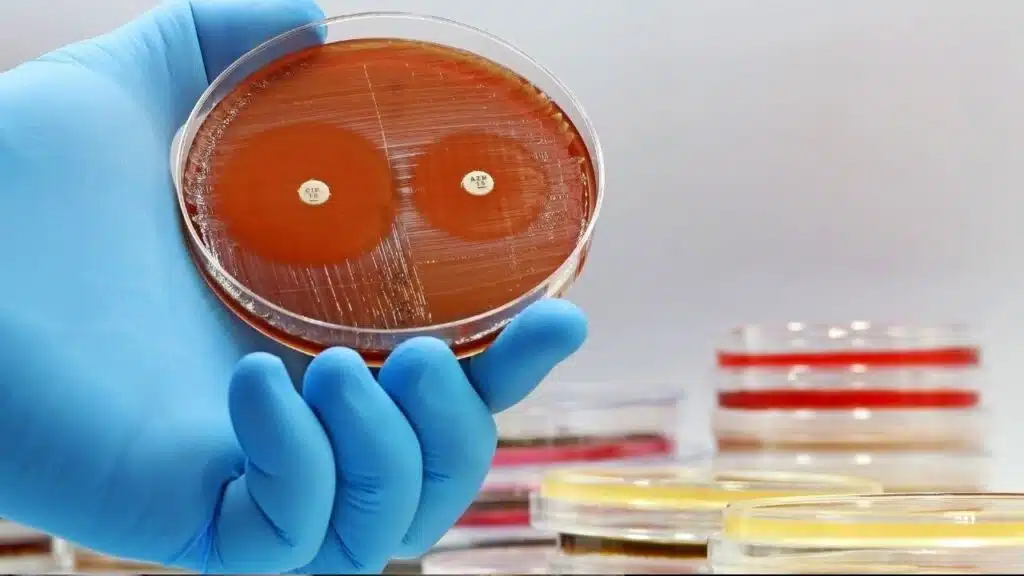
The discovery is being hailed as a potential weapon in the global fight against antibiotic resistance. According to the World Health Organization (WHO), antimicrobial resistance could cause 10 million deaths per year by 2050 if new treatments are not developed.
- Bacteriophages (phages)—viruses that target and kill bacteria—have long been considered an alternative to antibiotics.
- However, finding naturally occurring phages that effectively target resistant strains is slow and difficult.
- AI could design phages on demand, tailored to specific bacterial infections, potentially offering a scalable solution.
As Dr. Brian Hie, computational biologist at Stanford and co-lead author of the study, noted in interviews, this work shows that “AI can generate entire functional viral genomes, not just small parts.”
Ethical and Safety Concerns
Despite the excitement, the breakthrough also raises serious biosecurity and ethical questions.
- Dual-use dilemma: As noted by Kerstin Göpfrich, a synthetic biologist at Heidelberg University, technologies like this could be misused to create harmful viruses. The “dual-use” problem describes how scientific discoveries can be used for both beneficial medical applications and dangerous purposes, including bioweapons.
- Unpredictability of viral genomes: Even minor changes in DNA can lead to unexpected behaviors, making it difficult to predict how new viruses might evolve or spread.
- Need for human oversight: Experts like Peter Koo of Cold Spring Harbor Laboratory emphasize that while AI can design genomes, human researchers must filter, interpret, and test these designs carefully to prevent accidents or misuse.
The Stanford-Arc team tried to address safety concerns by excluding human and animal virus genomes from Evo’s training data, focusing only on bacteriophages. Still, bioethics experts stress the importance of international regulation and robust lab safeguards.
Beyond E. coli: What Comes Next
This work is still at an early stage, and much remains to be proven. The study has yet to undergo peer review, and replication by other labs will be critical to confirm the results.
Future directions include:
- Designing phages for other pathogens: Expanding to bacteria like Staphylococcus aureus (MRSA) or Pseudomonas aeruginosa, which are major hospital threats.
- Developing “phage cocktails”: Multiple AI-designed viruses could be combined to attack infections more effectively.
- Personalized medicine: In the long term, AI might generate custom phages tailored to a patient’s specific bacterial infection.
- Synthetic biology applications: Beyond medicine, AI-designed viruses could be used in agriculture (to fight crop pathogens), in biotechnology, or even in environmental cleanup.
Balancing Promise and Risk
The Stanford AI virus study demonstrates both the enormous potential and the serious risks of combining AI with genetic engineering.
- On one hand, it could launch a new era of rapid drug discovery and phage therapy, bringing hope against antibiotic-resistant infections.
- On the other, it highlights how AI’s creative power may outpace current bioethical frameworks, requiring new safeguards at both the scientific and policy levels.
As the researchers themselves concluded, AI-generated viruses are no longer a hypothetical idea—they are here. The question now is how science and society will harness this power responsibly.
The Information is Collected from Nature and MSN.