When a Rice University violin student posts their practice session on Instagram, the algorithm doesn’t capture the three hours of struggle that preceded those 30 seconds of polished playing. Social media’s highlight reel format has entered conservatory practice rooms, where students now prioritize digital presentation over musical development.
A 2018 study by Philip D. Payne examining 1,029 music education majors across the United States found that 74% required additional screening for depression, with over 70% exhibiting symptoms of moderate or severe depression, while 84% required additional screening for anxiety, with over 74% showing signs of moderate and severe anxiety. These rates significantly exceed the general college student populations. Classical music training compounds this crisis: ‘pressure from self’, ‘excessive arousal’, and ‘inadequate preparation’ cause most performance anxiety, while perfectionism correlates strongly with music anxiety from ages 10-17.
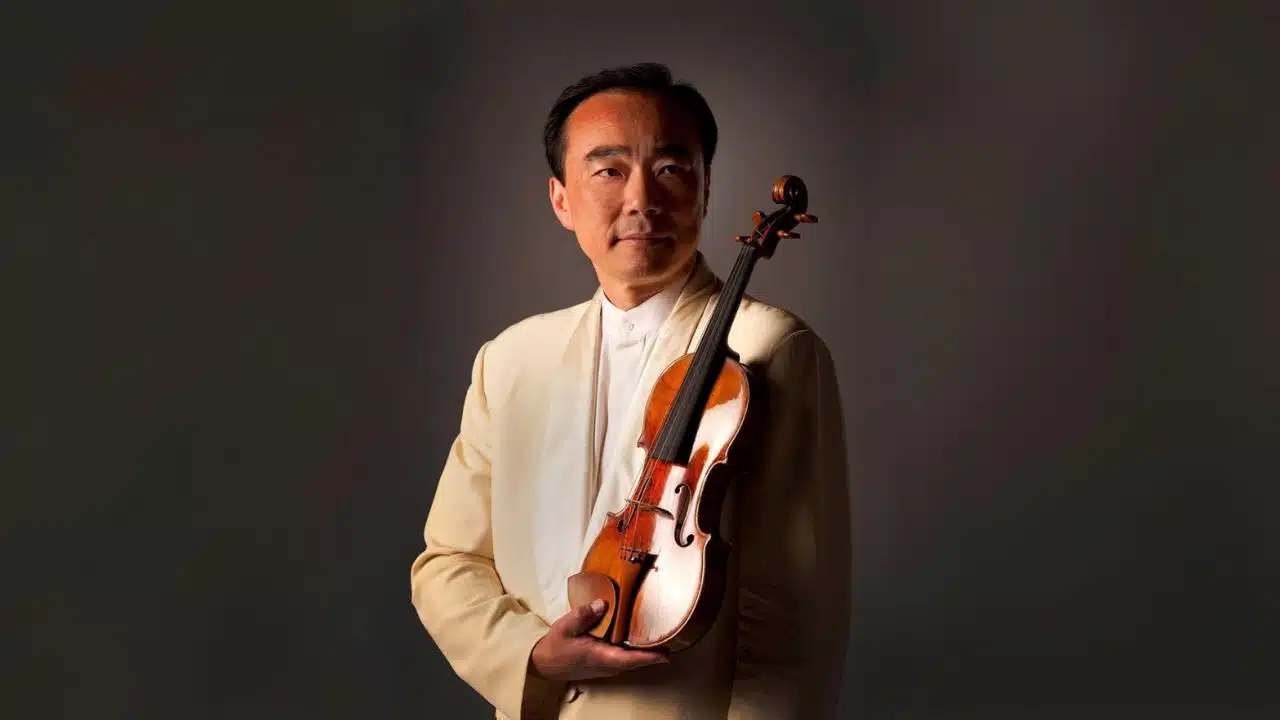
Cho-Liang Lin, who teaches violin at both Juilliard and Rice University, has observed this crisis firsthand in his studios. The violinist has spent four decades performing with major orchestras worldwide, yet he admits to his own perfectionist struggles. “I have this terrible habit,” Lin confesses. “If it’s not all perfectly placed, I feel like the performance is a failure.”
Lin has watched this pattern emerge repeatedly in his students. Through his performing career with ensembles including the Boston Symphony, Cleveland Orchestra, and Royal Concertgebouw Orchestra, he discovered that audiences respond more powerfully to emotional authenticity than technical perfection. His recording career and festival work now provide the credibility behind a message that could reshape how young musicians approach their craft.
The Perfectionism Crisis in Classical Training
A 2016 Performance Enhancement & Health study by Patston and Osborne, examining 526 students, found strong correlations between music performance anxiety and perfectionism among ages 10-17. The research defines socially prescribed perfectionism as “feeling particularly pressured by excessively high standards set by significant individuals” and links it to anxiety, depression, and suicidality.
Traditional conservatory culture expects students to maintain high perfectionism levels, engage in excessive rehearsal, and use recordings as perfection benchmarks.
Cho-Liang Lin observes how digital distractions compound these pressures. “You have to get your students to be curious about what’s out there. The fact that YouTube affords you so many performances that you can listen to, whereas when I was a student I had to go to the Juilliard Library and dig up an LP,” he explains. “But that’s when you can focus your mind. You’re not distracted by texting from friends.”
Independent musicians today serve as media managers, publicists, graphic designers, administrators, bookers, marketing directors, and playlist coordinators. Current students face traditional performance pressures along with digital brand management challenges.
Cho-Liang Lin’s Work
Cho-Liang Lin shares an example that changed his entire teaching philosophy. He returned to a substantial work he hadn’t played in 41 years and hadn’t mastered originally. Limited rehearsal time prevented his usual meticulous preparation.
“I didn’t remember much from 41 years ago, and we didn’t have rehearsal time to satisfy me,” Lin recounts. “Details weren’t worked out completely. But the passion for music was felt, and that was the larger impact.”
Despite his concerns about technical imperfection, the audience loved the performance. “They loved it because they felt the music’s impact,” he reflects. The experience taught him that musical communication could transcend technical limitations. “Emotional authenticity over technical obsession” means accepting that a passage with minor intonation issues but genuine musical intention will connect with listeners more powerfully than flawless execution without emotional commitment. “Playing with your heart” involves prioritizing the musical story you want to tell over achieving mechanical perfection in every note.
Specific Techniques for Social Media Generation
Cho-Liang Lin’s methodology addresses Generation Z’s constant exposure to professional performance videos that create unrealistic comparison standards.
The core technique involves “embracing the imperfect moment.” Students practice finding musical truth within technical limitations rather than drilling passages to mechanical perfection.
Four specific strategies:
- Authentic documentation: Students record practice sessions, including struggles and mistakes alongside successful passages
- Emotional intention mapping: Before technical work, students write down the specific emotion they want to communicate
- Imperfection integration exercises: Structured practice of continuing musical phrases through technical errors
- Audience connection prioritization: Focus on conveying specific musical meaning rather than achieving personal technical satisfaction
Lin discovered this principle firsthand when audiences responded enthusiastically to his own performance of a work he hadn’t played in 41 years, despite technical imperfections. “Some details were not worked out to the umpteenth degree,” he reflects. “But I think the passion for the music was felt, and that was the larger impact. There is something that can still be enjoyed as long as you play with your heart.”
Lin advises eliminating social media consumption during intensive preparation periods.
Transforming Classical Music Education
Classical music education faces a documented crisis. The International Conference of Symphony and Opera Musicians found that 24% of professional musicians suffer from performance anxiety, while conservatory counseling centers report perfectionism-related anxiety as the dominant student concern. Ethnomusicologist Henry Kingsbury’s research shows how private studio teachers hold authority that becomes entwined with students’ social status, creating additional pressure.
Cho-Liang Lin’s anti-perfectionism methodology offers a different approach. Rather than comparative rankings, it emphasizes individual musical expression. Students learn to prioritize emotional communication over mechanical precision while maintaining rigorous musical standards.
Critics argue that reducing technical standards compromises classical music’s excellence tradition. However, the approach distinguishes between abandoning standards and reframing them in terms of musical communication. A career spanning performances with major international orchestras and leadership roles at music festivals demonstrate that emotional authenticity and technical excellence function simultaneously.
The implications extend beyond individual students. Generation Z musicians entering professional careers bring mental health awareness and authenticity values that will reshape industry standards. This framework enables students to achieve higher artistic outcomes while supporting their psychological well-being, potentially transforming how classical music education approaches both excellence and student welfare.