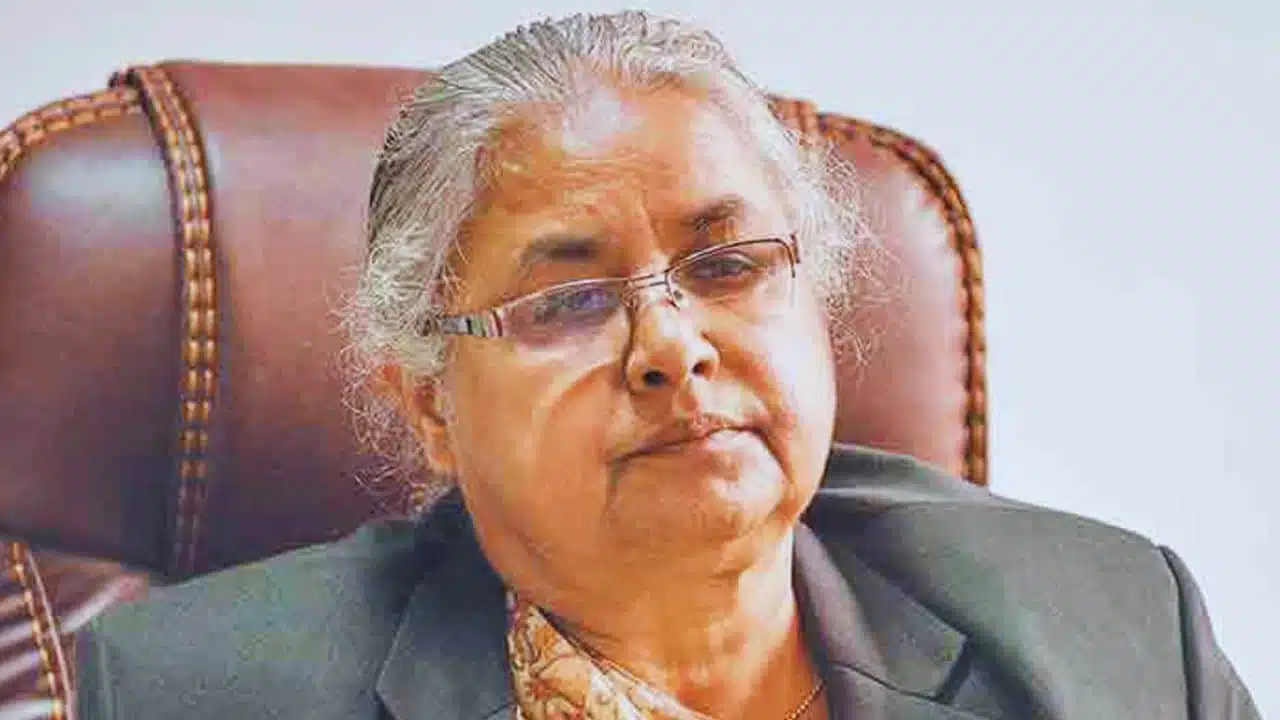
Nepal has entered a new political chapter with the appointment of former Supreme Court Chief Justice Sushila Karki as the country’s interim prime minister. The 73-year-old veteran of Nepal’s legal system was sworn into office in Kathmandu during a solemn ceremony attended by senior political leaders and members of the security establishment. Her elevation marks the first time in history that a woman has taken the reins of government in the Himalayan nation.
Karki’s appointment was not the result of a typical parliamentary process but rather an emergency consensus reached in the aftermath of one of Nepal’s most violent waves of unrest in decades. She emerged as a compromise candidate, seen by both protest leaders and state institutions as a figure of integrity, credibility, and neutrality.
What Sparked the Nationwide Uprising
The political crisis was triggered in early September 2025 when the government suddenly imposed a sweeping ban on 26 social media platforms, including WhatsApp, Facebook, Instagram, YouTube, and X. Authorities claimed the ban was necessary because the platforms had not complied with domestic regulations requiring registration and local representation.
The move backfired almost immediately. For a country where social media is deeply embedded in public and political life, the decision was widely seen as an attack on free expression. Already frustrated with corruption, nepotism, and economic inequality, thousands of young Nepalis—mostly from Generation Z—poured onto the streets. Demonstrators argued that the ban silenced their voices at a time when they were using social media to expose corruption scandals and to highlight the extravagant lifestyles of politicians’ children through the viral “nepo kid” campaign.
What began as anger against censorship quickly transformed into a broader movement demanding transparency, accountability, and a new political course.
Violence Erupts in Kathmandu and Beyond
The protests spread across major cities, but the capital, Kathmandu, became the epicenter of unrest. Security forces deployed heavily, and in some districts the army patrolled the streets. Despite the government’s decision to lift the ban within days, demonstrations escalated.
By mid-September, over 50 people had been killed in clashes between protesters and riot police, with at least 1,300 others injured nationwide. On September 8 alone, 19 people died in Kathmandu when demonstrators attempted to march toward parliament, leading to intense confrontations.
Crowds set fire to parts of the parliament building and government offices, forcing officials to evacuate. The destruction symbolized the growing anger directed at the political establishment. Prime Minister K.P. Sharma Oli, already accused of failing to address corruption scandals and economic mismanagement, eventually resigned under pressure.
A Deal Brokered to Prevent Collapse
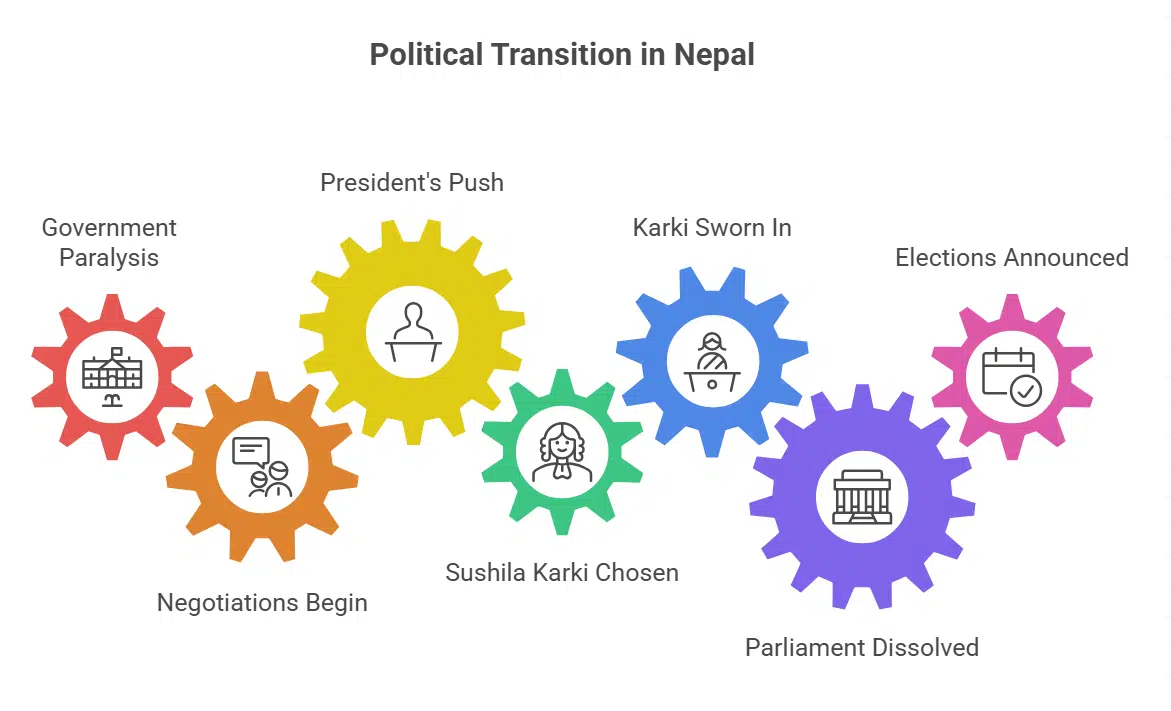
With the government paralyzed and institutions under siege, the country’s political elite, protest leaders, and the military held days of negotiations. President Ram Chandra Poudel, in consultation with Nepal’s army chief and senior advisers, pushed for an interim arrangement to restore stability.
Sushila Karki emerged as the consensus choice. Her background as Chief Justice (2016–2017), where she took bold steps against corruption and maintained a reputation for impartiality, made her acceptable to the protest movement. Many saw her as someone untied to political dynasties and therefore capable of navigating the turbulent transition.
On September 12, she was formally sworn in as interim prime minister. At the same time, the president dissolved parliament and announced that general elections would be held on March 5, 2026.
Early Moves and Symbolic Gestures
Within days of taking office, Karki visited the protest sites in Kathmandu where some of the worst violence had taken place. She also went to hospitals to meet survivors of police crackdowns and expressed solidarity with families of those killed. These gestures were widely welcomed by student groups and Gen Z activists, who viewed her as a leader willing to listen to the people rather than suppress them.
Her government is expected to announce a caretaker cabinet in the coming days. It will be composed of technocrats and figures acceptable to both protest leaders and state institutions, a delicate balancing act necessary to maintain peace ahead of the elections.
Challenges Facing the Interim Government
The new administration will face daunting challenges:
-
Restoring law and order: Security remains fragile, with the army still patrolling parts of Kathmandu and restrictions on movement in some districts. Ensuring safety while preventing further clashes is a priority.
-
Rebuilding institutions: Parliament and several ministries were damaged in fires and vandalism. Reconstruction efforts must begin quickly to restore public confidence.
-
Addressing public anger: The Gen Z movement is demanding deep reforms—greater accountability, anti-corruption measures, and limits on political nepotism. Meeting these expectations without alienating established political parties will be difficult.
-
Justice for victims: Protesters insist that those responsible for excessive use of force must face accountability. Balancing justice with political stability will be a key test for Karki’s administration.
Sushila Karki’s Background and Career
Karki was born into a family with close ties to the Koirala political dynasty of the Nepali Congress party, one of the country’s oldest democratic forces. She later married politician Durga Subedi, whose support, she has acknowledged, played a significant role in her rise from a practicing lawyer to becoming Nepal’s Chief Justice in 2016.
Her tenure as Chief Justice lasted nearly 11 months and was marked by both praise and controversy. She faced an impeachment attempt, which many observers believed was politically motivated due to her assertive stance against corruption. Ultimately, she left office with her reputation as an independent and upright figure largely intact.
Symbolism and Wider Significance
Karki’s appointment is not just a political compromise but also a symbolic milestone. For the first time, a woman is leading Nepal during one of its most fragile moments. Her selection has inspired optimism among young activists, particularly women, who see her as proof that Nepal can embrace more inclusive leadership.
International observers are watching closely. Nepal, which transitioned from monarchy to a federal democratic republic less than two decades ago, is now at a crossroads. How the interim government manages the months ahead will determine whether the country strengthens its democratic path or falls into deeper instability.
The Road to Elections in 2026
The March 2026 elections will serve as a test of Nepal’s ability to hold credible and peaceful democratic processes after months of turmoil. Until then, the interim administration must navigate a fragile environment, balance competing interests, and rebuild trust between the state and its citizens.
For the protesters who flooded the streets under the banner of free expression and accountability, Karki’s rise represents a victory—but they remain cautious. Many insist that real change will only come if the next elected government addresses corruption and gives young Nepalis a stronger voice in shaping the country’s future.