
Car accidents are life-changing events that, when serious, could result in huge hospital bills and massive property damage. In such situations, you may have to file a personal injury lawsuit against the at-fault party to receive compensation for your damages.
Unfortunately, filing personal injury claims is not as easy as it may seem. Such cases require a lot of evidence and equally take a lot of time to negotiate before a settlement is reached. Moreover, insurance companies do not easily compensate without a fight.
Here are a few key insights to help you make a successful personal injury claim.
Hire a Lawyer
As mentioned before, personal injury claims can be complicated. Therefore, hiring a personal injury lawyer to represent your case is best. Even though you need not have a layer for the case to proceed, it is wise to have one, as they greatly influence the outcome of the claim.
To begin with, you may not be familiar with the legalities of a personal injury claim. Experienced lawyers, on the other hand, have dealt with similar cases before and know what works and what does not. In addition, it may be challenging to follow up on a claim if you are still recovering from accident injuries.
Finally, lawyers protect you from under-compensation. They will calculate and quantify all your damages and then suggest an amount that will adequately cover your losses. Since most personal injury lawyers work on a contingency plan, you do not have to make any payments before you receive your compensation.
Determine the At-Fault Party
Contrary to popular opinion, the injured party is not always clear of the blame for the accident. Hence, they can not receive reimbursement for financial and property damages.
Before proceeding with your case, carefully examine the circumstances surrounding the accident. If possible, take photos and obtain a copy of the police report since it also explains the conditions leading to the accident. If any of these point toward your negligence as a driver, you cannot be compensated.
Proof of Injury
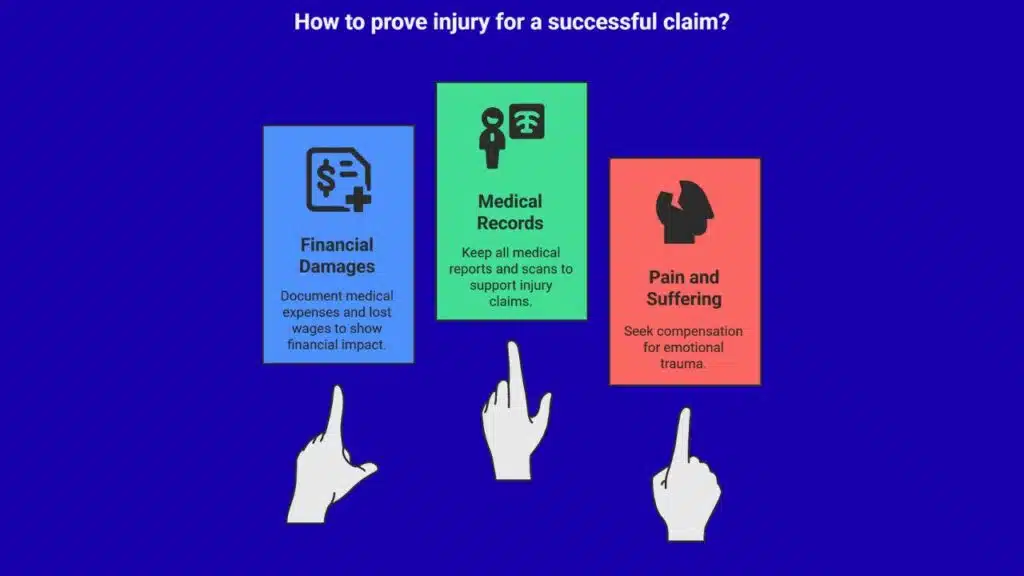
Being involved in a crash does not warrant a personal injury case; sustaining an injury from it does. Therefore, to make a successful claim, you must prove the ramifications of the injury.
First, show the financial damages from medical expenses, lost wages, and any other costs incurred to support your new lifestyle. That said, it is important to keep track of your medical bills.
Safeguard all receipts, medical reports, scans, and transport scans. While seeking medical attention, do not miss any appointments or tests recommended by a doctor; it could be used to dismiss your claims on the basis that you were not seriously injured.
“You can also make a claim for pain and suffering. Though not quantifiable, you can seek compensation for emotional trauma after the accident,” says attorney Michael McCready of McCready Law Injury Attorneys.
Know the Different Types of Claims
Accidents have two types of claims: property damage and personal injury. These claims are independent of the other and should be filed separately. The property claim is filed by the insurance company and will help restore your car to its initial form.
On the other hand, the personal injury claim is filed by the individual since the insurance company may not know the severity of the injuries. For this type of claim, you must first file a notice of claim against the at-fault party.