

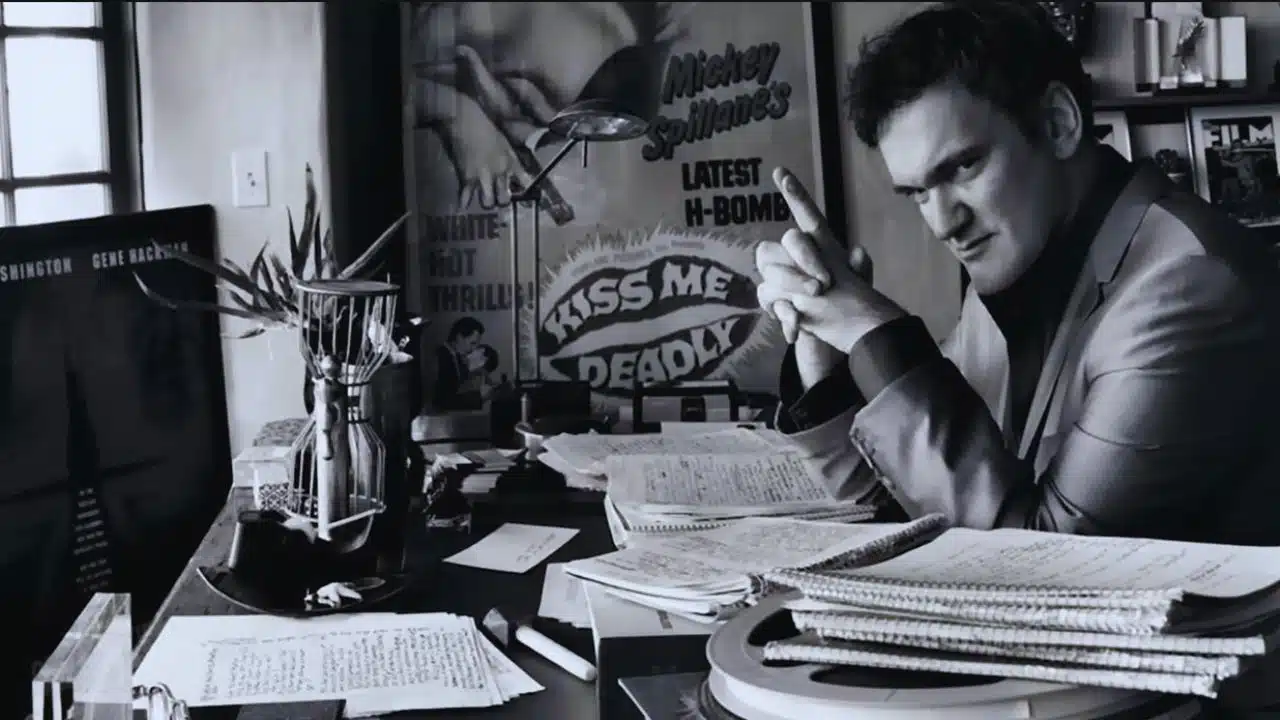
Quentin Tarantino, one of the most celebrated directors of modern cinema, has finally answered a question that fans and critics have debated for decades: Which of his films does he consider his best, his favorite, and the one he was “born to make”?
During a candid two-hour conversation on the “Church of Tarantino” podcast, the filmmaker reflected on his career spanning more than 30 years, offering fresh insight into how he sees his body of work today. He also explained why he has stepped aside from directing a sequel to Once Upon a Time in Hollywood—handing the reins to fellow director David Fincher—and why some of his planned projects never reached the big screen.
Tarantino on His Greatest Achievements
Inglourious Basterds: His Best and His Masterpiece
Tarantino declared that his 2009 World War II epic Inglourious Basterds is not only his best film but also his “masterpiece.” He praised the film’s screenplay in particular, saying it represents the peak of his writing abilities.
The movie, which reimagines history by depicting a Jewish resistance group plotting to assassinate Hitler, was both a critical and commercial success. It received eight Academy Award nominations, including Best Picture and Best Director, and earned Christoph Waltz an Oscar for Best Supporting Actor. For Tarantino, it remains the film where writing, character development, and cinematic execution aligned perfectly.
Once Upon a Time in Hollywood: His Personal Favorite
When asked which of his works he personally loves the most, Tarantino pointed to Once Upon a Time in Hollywood (2019). The nostalgic film follows actor Rick Dalton (Leonardo DiCaprio) and his stunt double Cliff Booth (Brad Pitt) as they navigate the fading golden age of 1960s Hollywood.
The film resonated with audiences and critics alike, capturing ten Oscar nominations and winning two—Best Production Design and Best Supporting Actor for Brad Pitt. Tarantino said it holds a special place in his heart because it blends his lifelong love of Hollywood history with a deeply personal tone.
Kill Bill: The Film He Was “Born to Make”
For Tarantino, the two-part martial arts saga Kill Bill (2003–2004) represents the “ultimate Quentin movie.” He explained that it was unlike any other project—entirely born out of his imagination, obsessions, and passions.
Starring Uma Thurman as The Bride, the revenge epic fused samurai cinema, spaghetti westerns, Hong Kong action choreography, and anime influences. Tarantino believes no other director could have made it in quite the same way, calling it the film he was “born to make.”
Screenplays and Directing: His Own Rankings
Tarantino also gave fans a rare glimpse into how he ranks his screenwriting and directing work.
- Best Screenplay: Inglourious Basterds (2009) tops his list.
- Other Favorites: The Hateful Eight (2015) and Once Upon a Time in Hollywood (2019).
- Best Direction of His Own Material: He highlighted The Hateful Eight, explaining that its script was so solid that his challenge was simply to bring it to life on screen. He called it his “best servicing of my material as a director.”
This is notable because, unlike Kill Bill, which demanded inventive creation at every stage, The Hateful Eight gave him the chance to focus purely on execution—delivering his most disciplined direction to date.
Why He Handed the Cliff Booth Sequel to David Fincher
One of the most surprising revelations from the podcast was Tarantino’s decision to let acclaimed filmmaker David Fincher direct The Adventures of Cliff Booth, the upcoming sequel to Once Upon a Time in Hollywood.
The film will expand the story of Brad Pitt’s stuntman character, Cliff Booth, who became a fan favorite in the 2019 movie. Tarantino explained that while he loves the script he wrote, he ultimately felt uninspired by revisiting the same territory.
“I love this script, but I’m still walking down the same ground I’ve already walked,” Tarantino said. “It just kind of unenthused me. For my last movie, I’ve got to be in uncharted territory.”
Tarantino insisted that Fincher, the visionary director behind Se7en, Fight Club, and The Social Network, was the perfect fit to bring the sequel to life. He said he was happy to hand it off, confident Fincher would do justice to the story.
Why He Shelved The Movie Critic
Fans may remember that Tarantino once described The Movie Critic as his planned 10th and final film. However, he revealed on the podcast that he lost enthusiasm for the project during pre-production.
According to him, The Movie Critic felt too similar to Once Upon a Time in Hollywood in tone and structure. He said it lacked the creative risk and discovery he demands from his final work.
“There was nothing to figure out,” Tarantino admitted. “It was too much like the last one.”
As a result, he shelved the script entirely, leaving fans waiting for a new, as-yet-unannounced project to serve as his swan song.
A Career of Awards and Iconic Films

Over his 30-year career, Tarantino has built a legacy of genre-defining films that have influenced generations of filmmakers. He has won two Academy Awards, both for Best Original Screenplay—first for Pulp Fiction (1994) and later for Django Unchained (2012).
Other career highlights include:
- Reservoir Dogs (1992): His explosive debut.
- Pulp Fiction (1994): A cultural phenomenon that redefined non-linear storytelling.
- Jackie Brown (1997): A tribute to 1970s blaxploitation cinema.
- Kill Bill (2003–2004): A two-part revenge epic blending global film traditions.
- Inglourious Basterds (2009): His historical reimagining of World War II.
- Django Unchained (2012): A revisionist Western tackling slavery in America.
- The Hateful Eight (2015): A tense, dialogue-driven mystery.
- Once Upon a Time in Hollywood (2019): His nostalgic love letter to Los Angeles.
What’s Next for Tarantino?
Although fans are eager for his 10th and final movie, Tarantino is not rushing back to film. Instead, he is turning his creative energy to theater. He is currently preparing a stage play expected to premiere in London’s West End in 2026, exploring new ways to tell stories before returning to cinema for one last time.
This aligns with his long-stated plan to retire after ten films, believing that filmmakers often overstay their welcome. By capping his career, Tarantino hopes to leave behind a concise but legendary body of work.
Quentin Tarantino’s reflections give fans a rare roadmap into how he sees his own filmography:
| Category | Film | Why It Matters |
| Best / Masterpiece | Inglourious Basterds (2009) | His strongest script and a career-defining work |
| Favorite | Once Upon a Time in Hollywood (2019) | A deeply personal tribute to cinema’s golden age |
| Born to Make | Kill Bill Vol. 1 & 2 (2003–2004) | A pure expression of his imagination and influences |
While he steps back from sequels and abandoned projects, Tarantino continues to challenge himself—seeking uncharted territory for his much-anticipated final film. Until then, audiences will revisit his classics, which continue to inspire debate, admiration, and imitation across the film world.
The Information is Collected from IMDb and Yahoo.
























