
When you’re pursuing a personal injury lawsuit, your success typically hinges on one key legal concept: negligence. To win your case, you and your attorney must prove that someone else’s negligence directly caused your injury. It’s not just about showing that you were hurt; it’s about connecting your injury to another party’s careless or reckless behavior.
This is where the four elements of negligence come into play. Each element builds upon the other, forming the legal structure necessary for a successful claim, and each element is necessary to prove if you want to show that a party acted negligently. Let’s walk through these elements and explore how they’re demonstrated in court.
Why Having the Right Lawyer Matters First
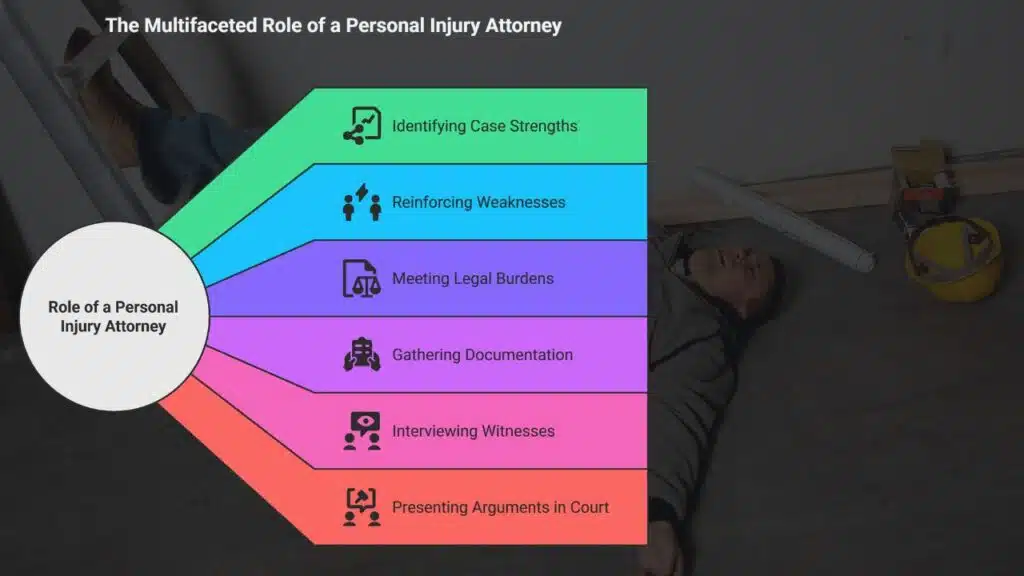
Before diving into the elements themselves, it’s important to understand the value of having a qualified personal injury attorney on your side. Proving negligence requires not only evidence but also the legal knowledge to use that evidence persuasively. An experienced attorney will help you identify which parts of your case are strongest, which might need reinforcement, and how to meet each legal burden convincingly. From gathering documentation to interviewing witnesses to presenting arguments in court, your attorney is your advocate and strategist. Without that support, even the most straightforward claim can become difficult to prove.
Duty of Care
The first element of negligence is duty of care. This means the defendant had a legal obligation to act in a way that avoids causing harm to others. In most situations, this duty is fairly easy to establish.
For example, drivers have a duty to operate their vehicles safely. Doctors have a duty to provide competent medical care. Property owners have a duty to maintain reasonably safe premises for visitors. These responsibilities are often clearly defined under law or common practice. Proving duty typically involves showing that the relationship between you and the defendant created an expectation of reasonable care. Your lawyer will use professional standards, statutes, or common-sense expectations to demonstrate this first piece of the puzzle.
Breach of Duty
Next comes breach of duty. This is where you prove that the defendant failed to meet the standard of care they owed you. It’s not enough that someone had a duty; they must also have done something (or failed to do something) that violated that duty.
For example, let’s say a business failed to clean up a spill in a grocery store aisle, and you slipped and fell. The breach would be the store’s failure to take timely action to fix a known hazard. If a doctor misreads test results or a driver texts behind the wheel, those actions may also qualify as breaches.
Evidence for breach of duty might include surveillance footage, expert testimony, or records showing a history of complaints or warnings. Your attorney will need to show that the defendant’s behavior was unreasonable and careless in the context of their responsibilities.
Causation
Causation is often the trickiest element to prove. You must show that the defendant’s breach of duty caused your injury legally. This is typically broken into two components: cause in fact and proximate cause. Cause in fact, or actual cause, means that the injury would not have occurred “but for” the defendant’s actions. Proximate cause focuses on whether the injury was a foreseeable consequence of the breach. Both must be shown to demonstrate causation, and it’s not always easy to do.
That’s why it’s crucial to seek medical care immediately after an accident and to keep detailed records. An experienced attorney will use medical reports, timelines, and sometimes expert witnesses to link the breach of duty directly to your harm.
Damages
The final element is damages, meaning you suffered actual losses as a result of the defendant’s negligence. Courts won’t award compensation just because someone made a mistake; you need to show you were harmed in an objectively measurable way. This could include physical injuries, emotional trauma, lost wages, property damage, or other financial burdens. Even intangible losses like pain and suffering can qualify, so long as they’re well-supported by documentation and testimony.
Putting It All Together
When you go to court (or negotiate a settlement), these four elements work together. If even one is missing or unconvincing, your claim may fail entirely. That’s why experienced legal guidance is so important; your lawyer knows how to build each part of the case in a way that’s clear, credible, and difficult to dispute.
Negligence may sound like a simple idea, but proving it in a legal setting requires careful strategy and solid evidence. From establishing duty to documenting damages, each element needs to be thoughtfully handled. If you’re dealing with the fallout of an accident or injury, don’t try to shoulder the legal burden alone; the right lawyer can help you assemble a compelling case and stand up for the justice and compensation you deserve.