


Have you ever felt stuck waiting for your personal injury claim to wrap up? Personal injury cases can drag on, like watching paint dry, leaving you anxious and unsure when you will see fair settlement.
One key fact: the average slip-and-fall claim in Australia takes 6 to 10 months, depending on hospital files and eye-witness notes.
This post breaks down 7 Factors That Influence The Duration Of Personal Injury Cases in Australia, from injury severity to court scheduling. You will learn how to work with claims assessors, gather doctor reports, and spot delay tactics.
Read on to clear the fog.
Key Takeaways
- Slip-and-fall claims in Australia take an average of 6 to 10 months, and cases with spinal cord or brain injuries often last much longer.
- Lawyers must gather full medical records, therapy notes, and a doctor’s sign-off on maximum medical improvement before insurers or courts start settlement talks, or a case can stall past one year.
- When multiple parties join a claim, each insurer files motions and orders expert reports, and motor vehicle accident claims must start within 12 months of the crash to stay valid.
- Court backlogs in Sydney, Melbourne, and Brisbane, along with insurer delay tactics—such as repeated record requests and liability disputes—can push a case out for months or years.
Severity and Complexity of Injuries

Severe injuries in personal injury claims stretch timelines. A broken spine or brain damage can mean multiple surgeries, rehab, and long hospital stays. Imaging scans, therapy notes, and medical records pile up like unread books on a shelf.
Doctors must reach maximum medical improvement, or MMI, before judges and insurance companies will talk numbers, and before fair compensation under personal injury law takes shape.
That step affects the settlement process and future medical costs.
Insurance adjusters and defense lawyers dread surprises. A case with spinal cord trauma feels like climbing a mountain, you slog through rehab logs, witness statements, and expert opinions.
You juggle doctor visits like a circus act, and every missed therapy session adds a new delay. The discovery process stalls until each report lands on the table.
Availability of Medical Reports and Assessments
Detailed medical records show every MRI image, therapy session note, and x-ray finding from medical treatment. Lawyers and insurance adjusters use medical reports, treatment logs, and travel expense receipts to back a personal injury case.
Courts require all bills, doctor notes, and specialist reports before they set a trial date. Any gap in those files can stall the legal process for months.
A treating physician must sign off on maximum medical improvement before settlement talks start. Delays occur if a patient needs extra CT scans or more specialist referrals. Each assessment adds paperwork and could mean more waiting.
Slow reports can push a claim past a one-year mark.
Investigation and Evidence Gathering
Lawyers begin evidence gathering right after a car crash claim. They photograph skid marks, collect police collision reports, and log witness statements. Teams also gather medical records from hospitals and therapists.
Insurance adjusters get a copy of each document fast.
Courts set a discovery process where both sides swap emails, forms, and expert reports. Lawyers record witness testimony on depositions using a digital voice recorder. Experts like engineers and health professionals examine future medical costs.
Pre-trial mediation sessions help steer settlement negotiation off the courtroom floor.
Willingness of Parties to Negotiate
Parties who sit down at a table and trade offers can wrap up claims faster. Some personal injury cases finish in six months when both sides show good faith. Others drag on for years if they fight over liability or damages.
Insurance carriers often use delay tactics to push numbers down.
Insurance adjusters jump in, sharing offers and counteroffers until they reach a fair settlement. Time to negotiate with each insurance company can vary from a few weeks to several months.
Complex claims with high medical costs or lost wages tend to slow down the settlement process. Quick, open talks cut court time and cut legal costs.
Involvement of Multiple Parties in the Case
Cases can stall when more than one defendant joins a personal injury case. Each insurance company and employer hires a personal injury lawyer. They file separate motions and drag on the settlement process.
Insurance adjusters dig into medical records and future medical costs. Evidence gathering slows with extra witness statements and depositions. The discovery process stretches over months.
Crashes with severe injuries, like a broken leg or burns, need expert witnesses. Crash scene analysts and medical professionals prepare reports on permanent disability or long term care.
They testify about emotional trauma and mental health needs. Court dates book out for months. Motor vehicle accident claims must start within 12 months of a crash. Missing that deadline ends any claim for fair compensation.
Court Scheduling and Legal Backlogs
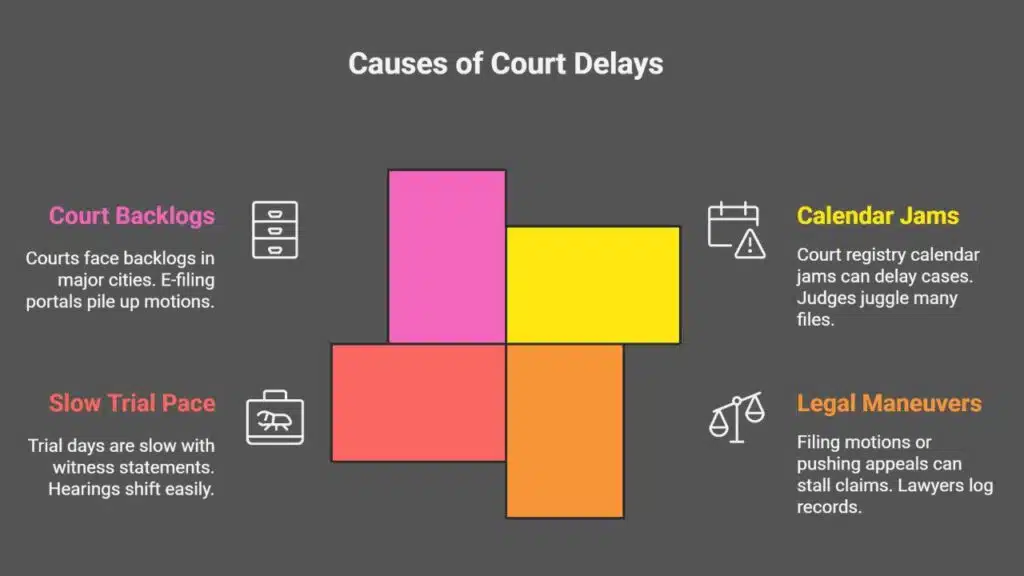
Calendar jams at the court registry can drag a personal injury case for months, even years. Judges juggle dozens of files, while you wait. Filing a pre-trial motion, or pushing an appeal, can stall your claim.
Lawyers log witness records into case management software during discovery, or meet insurers in mediation rooms. Electronic dockets sometimes lag, or courts shut down for public holidays.
Trial days move at a snail’s pace, with witness statements and cross-examinations eating hours. A doctor, a family member, and an expert witness all spend time on the stand. Each hearing date shifts if counsel ask for an adjournment or if the registry re-books another matter.
Courts face backlogs in Sydney, Melbourne, and Brisbane, as digital e-filing portals pile up motions. That delay can bump up your legal bills, and stretch your stress.
Tactics Used by Insurance Companies
Insurance adjusters often stall a personal injury case with slow responses. They ask multiple times for the same medical records and witness statements. They dispute who is liable to hold up the settlement process.
They count on you to grow tired. They bet most policyholders will give in.
Skilled personal injury lawyers spot these delay tactics fast. They use the discovery process. They bring in expert witnesses to back your claim. They track each document request. They push adjusters to follow court rules.
They force the insurance company to speed up fair settlement talks.
Takeaways
Every case moves at its own pace. Severe injuries and expert witnesses shape each path. Quick medical reports speed up claim filing. Honest talks with insurance adjusters cut down delays.
It can feel like a slow crawl through mud, but each step counts. Solid legal advice and a skilled personal injury lawyer guide your claim toward fair compensation. Court scheduling and heavy workloads may drag out your suit, strong evidence gathering keeps you on track.
FAQs
1. What steps are in the legal process for a personal injury case in Australia?
You start with a claim, then move to evidence gathering. You collect medical records and witness statements. Next comes the discovery process, where both sides share info. A court sets a date for court scheduling. Finally, you can choose to litigate or be settled out of court.
2. How does the severity of injury affect my case timeline?
Severe injuries slow the pace. You must reach maximum medical improvement, or MMI, after all medical treatment ends. You also need forecasts for future medical costs. Serious motor vehicle accident claims, like car crashes, often take more time.
3. Do insurance companies use delay tactics?
Yes, some insurance adjusters drag their feet, like a slow turtle. They may demand extra policies or fresh records. State Farm and other insurance companies want to cut costs on workers’ compensation and personal injury compensation. That can stretch the settlement process.
4. When should I hire a personal injury lawyer or attorney?
Call a personal injury lawyer right away. A skilled attorney gives legal advice, sets strategy, and lines up expert testimonies. They cross-examine witnesses and handle complex cases. They push for fair compensation from insurers or employers.
5. Can emotional trauma or psychological distress affect my case length?
Yes. Courts look at emotional trauma, emotional distress, and mental health issues. You may need reports from mental health professionals. Collecting that evidence adds to evidence gathering. It helps prove claims for physical pain and well-being loss.
6. Will settlement negotiations speed up my personal injury compensation?
Often yes. You can be settled out of court and skip long trials. Good settlement negotiation can wrap up in months. You lock in fair settlement terms for lost wages and future medical costs. If you choose to litigate, you face more legal complexities in a civil suit.
























