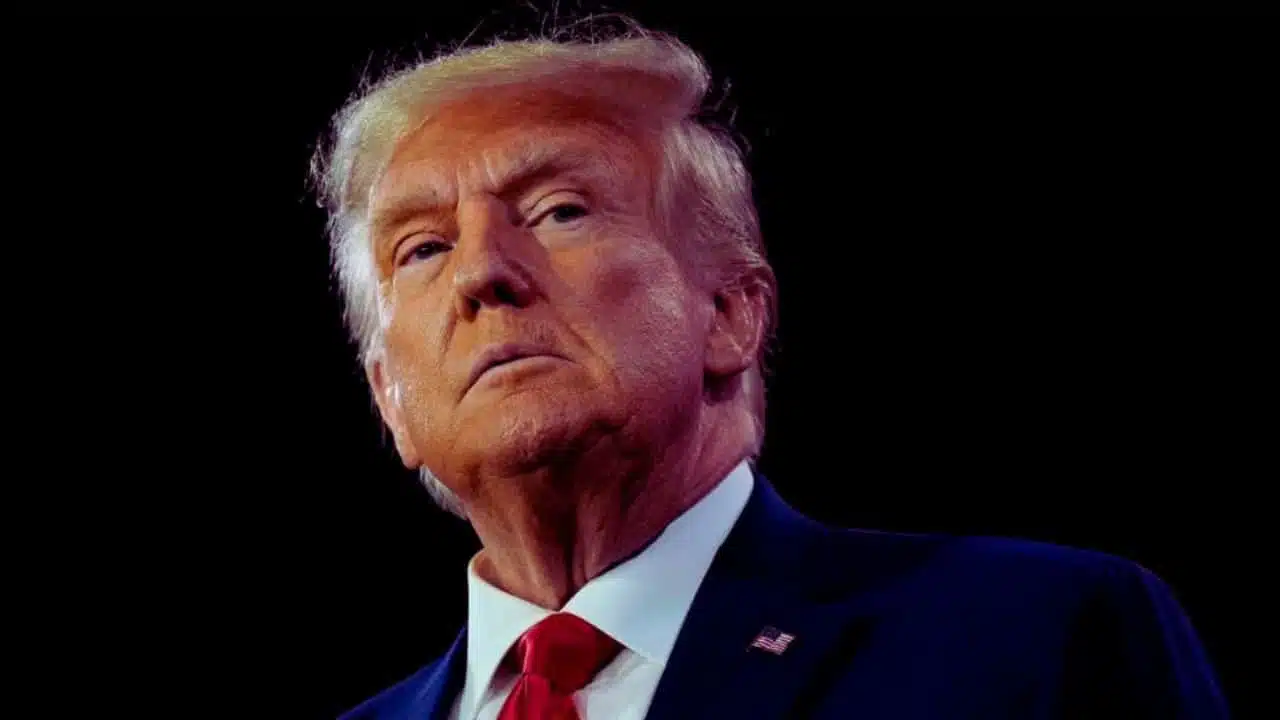
In a major development in international trade, U.S. President Donald Trump has revealed a sweeping economic agreement with Japan that aims to deepen bilateral relations, reduce trade barriers, and stimulate investment. The announcement, made on Tuesday, follows several months of intense negotiations between Washington and Tokyo that were characterized by disagreements over tariffs and industrial policy.
The newly announced deal is being touted as one of the most significant trade pacts during Trump’s political career, and it could mark a turning point in U.S.-Japan economic cooperation. Trump stated that Japan will commit a massive $550 billion investment in the U.S., and in return, the United States will apply a unified 15% tariff on Japanese exports—a move that reflects a compromise after earlier threats of much steeper penalties.
Key Aspects of the U.S.-Japan Economic Agreement
According to the agreement’s details, Japan is pledging to inject $550 billion into the U.S. economy across various sectors. While the exact breakdown of this investment remains undisclosed, early indicators suggest it may include infrastructure development, automotive manufacturing, semiconductor plants, and energy infrastructure, particularly in natural gas and green technology projects.
On the trade front, the United States will implement a flat 15% tariff on Japanese imports, significantly lower than the previously proposed 25% rate. In turn, Japan has agreed to expand access to its domestic markets for several American exports, particularly vehicles, agricultural products such as rice and corn, and potentially liquefied natural gas (LNG).
The deal is expected to substantially reduce the trade imbalance between the two nations. In 2024, the United States imported over $148 billion worth of goods from Japan while exporting about $79.7 billion in return, according to U.S. Census Bureau data. The current agreement aims to stimulate U.S. exports and encourage industrial investment by Japan on American soil, which could lead to stronger trade parity in the years ahead.
Massive Investment Plan Promised by Japan
The $550 billion investment plan from Japan is unprecedented in size and could become a cornerstone for boosting U.S. economic growth. While the full allocation of funds is yet to be revealed, Japanese corporations are expected to establish new manufacturing facilities, expand technology partnerships, and collaborate on clean energy ventures in the United States.
This level of investment is anticipated to generate widespread economic benefits, including the creation of hundreds of thousands of jobs across various U.S. states. Industries likely to benefit include automotive manufacturing, agriculture, energy, digital infrastructure, and supply chain logistics.
Economic analysts have noted that this strategic inflow of capital could also give Japan stronger leverage in U.S. markets and potentially create synergies in innovation, research, and energy diversification.
Expansion of Market Access for U.S. Exports
As part of the agreement, Japan will lower regulatory and import restrictions on several key American products. U.S.-made vehicles, which previously faced significant bureaucratic and safety compliance hurdles in Japan, will now enter with fewer trade barriers. This is expected to significantly help U.S. automakers seeking market expansion in Asia.
Additionally, Japan will ease market access for U.S. agricultural exports, including rice, dairy, and soybeans. This development is crucial for American farmers who have been hard-hit by previous trade disputes and are seeking stable markets abroad. The inclusion of food products signals a strategic move by both countries to strengthen food security partnerships and mutual agricultural cooperation.
Moreover, Japan will open up opportunities for U.S.-produced LNG, particularly as both countries aim to reduce their reliance on energy imports from politically volatile regions. This will further enhance energy ties between the U.S. and Japan, especially amid global calls for clean energy transitions.
Launch of U.S.-Japan Energy Joint Venture in Alaska
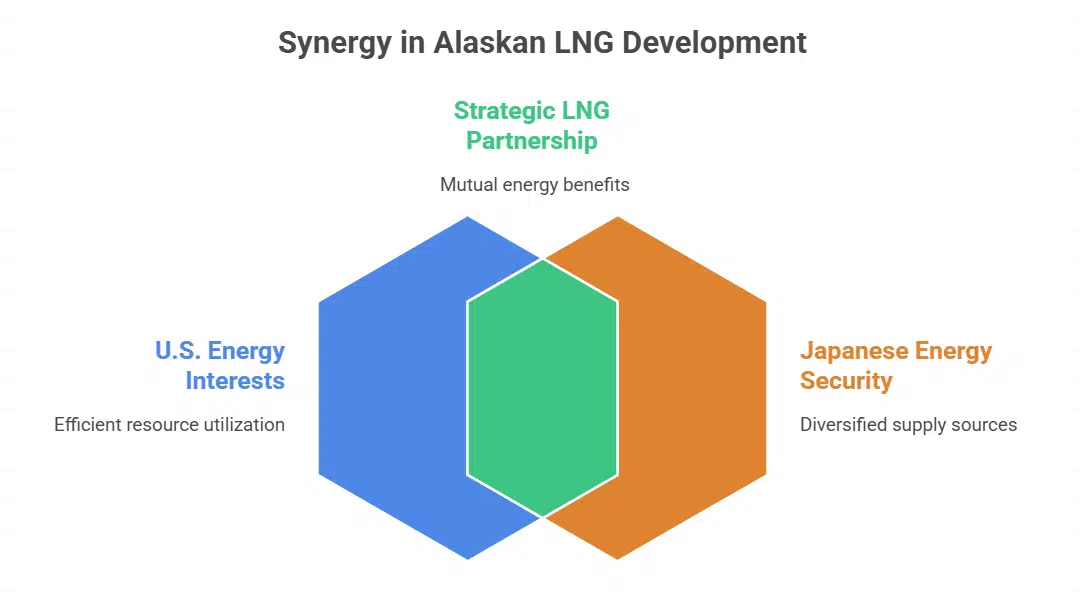
One of the most strategic components of the deal is a newly agreed-upon joint venture to exploit liquefied natural gas (LNG) reserves in Alaska. The U.S. has been seeking to utilize its natural resources more efficiently, and this project represents a significant step in that direction.
The joint venture will likely involve both public and private stakeholders from both nations, focusing on extracting, processing, and transporting LNG to global markets, particularly Japan, which remains a major energy importer. This deal reflects the growing geopolitical importance of energy independence and diversification, especially as East Asia remains sensitive to supply disruptions due to tensions in regions like the South China Sea and the Middle East.
The Alaskan LNG initiative is not only expected to boost American energy exports but also strengthen Japan’s energy security, allowing it to rely less on imports from Russia and the Middle East.
Japanese Prime Minister Responds to the Agreement
In Tokyo, Japanese Prime Minister Shigeru Ishiba addressed the deal in the context of Japan’s national interest. Ishiba, whose political coalition recently lost its majority in Japan’s upper house, emphasized the need for economic stability and international cooperation amid growing domestic and geopolitical challenges.
Although the full text of the agreement has not been made public, Ishiba stated that Japan would closely examine its provisions, particularly how it affects critical sectors like steel, semiconductors, and autos. The commitment to reduce U.S. auto tariffs from 25% to 15% is seen as a significant win for Japanese car manufacturers such as Toyota, Nissan, Honda, and Mazda, who had been lobbying for such relief.
Ishiba also highlighted the importance of protecting Japanese industry while deepening economic engagement with key allies like the United States. This cautious optimism reflects internal political concerns as well as the broader interest in ensuring fair terms for Japanese corporations and consumers.
Background: Months of Tense Negotiations
The agreement follows a prolonged period of tense negotiations between the two countries. Trade talks had been stalled for several months due to the Trump administration’s push for steep tariffs under the guise of national security, using Section 232 of the Trade Expansion Act of 1962.
Earlier, Japan had been facing a potential 25% tariff on its automobile exports to the U.S., along with a 50% tariff on aluminum and steel. These tariffs were part of Trump’s broader campaign to renegotiate trade terms with allies and rivals alike, often threatening steep duties to extract concessions.
In July 2025, Japan was operating under a 10% baseline tariff, but the threat of escalation by August 1 put enormous pressure on Tokyo to finalize a deal. Many experts feared that without an agreement, Japanese industries could face billions in losses, and the broader U.S.-Japan relationship could deteriorate.
Analysts Weigh In on Strategic Implications
Trade policy analysts have weighed in on the deal’s implications. William Chou, Deputy Director of the Japan Chair at the Hudson Institute in Washington, D.C., said the 15% tariff, while higher than pre-2017 levels, is still better than the worst-case scenario and signals progress. He pointed out that while it remains unclear if Japan secured exceptions to the Section 232 tariffs for strategic sectors like steel and semiconductors, the lower overall rate gives both sides some breathing room.
Other experts believe this deal could reshape how future bilateral trade pacts are approached, shifting away from multilateral frameworks like the CPTPP (Comprehensive and Progressive Agreement for Trans-Pacific Partnership), which Japan leads, and toward a model of direct negotiation.
The agreement also reveals a strategic pivot: moving toward energy and industrial cooperation while reducing dependencies on traditional supply routes and materials sourced from geopolitical hotspots.
Financial Markets React Favorably
The financial markets responded with enthusiasm to the news. Japanese automotive stocks surged sharply:
-
Mazda’s stock jumped more than 17%
-
Toyota, Nissan, and Honda all saw increases between 8.5% and 12%
The broader Japanese market also saw gains, with the Nikkei 225 index rising nearly 3%, signaling confidence from investors that the agreement would reduce economic uncertainty and improve profitability for export-oriented industries.
These reactions highlight the relief among Japanese investors and business leaders who had been bracing for higher tariffs and increased regulatory risk. The agreement now provides more predictable trade terms and a framework for long-term strategic investment.
Part of a Broader Strategy to Reshape Global Trade
The U.S.-Japan trade deal fits into a broader pattern of Trump-era trade policy that emphasizes bilateralism over multinational agreements. Prior to this deal, Trump had already announced preliminary agreements with countries such as the United Kingdom, Indonesia, Vietnam, and the Philippines. Additionally, the U.S. and China have been operating under a temporary 90-day trade truce amid ongoing disputes over tariffs, technology transfers, and intellectual property.
While critics have argued that unilateral tariffs can harm global supply chains and provoke retaliatory measures, Trump has maintained that such strategies are necessary to correct trade imbalances and bring manufacturing jobs back to the United States.
This new agreement with Japan is likely to be positioned as a key success story in Trump’s campaign to reassert U.S. economic dominance and rebuild key alliances through favorable trade terms.
A High-Stakes Deal with Global Impact
The newly signed U.S.-Japan trade deal has the potential to reshape the trajectory of economic ties between two of the world’s most powerful economies. With hundreds of billions of dollars in investment, the easing of trade tensions, and new energy partnerships on the horizon, the agreement stands out as one of the most significant bilateral deals of 2025.
Although many details remain to be disclosed, the overall scope and ambition of the agreement signal a new phase in U.S.-Japan cooperation. Much now depends on how the deal is implemented, monitored, and adjusted in response to political and economic changes in both countries.
With Japan aiming to stabilize its domestic economy and Trump pushing a vision of revitalized American industry, this agreement could shape not only economic policies but also the political narratives leading into the next election cycles in both nations.