Alphabet’s Isomorphic Labs, a spinout of Google DeepMind, is taking a major step forward in revolutionizing how medicines are developed. The company is preparing to begin human clinical trials for its AI-designed drugs, a development that could reshape the pharmaceutical industry.
This announcement marks a pivotal moment in the integration of artificial intelligence into drug development. Colin Murdoch, President of Isomorphic Labs and Chief Business Officer at DeepMind, confirmed the move and described the initiative as a significant leap toward using AI to treat—and possibly cure—a wide range of human diseases.
What Is Isomorphic Labs and Why It Matters
Founded in 2021 as an independent venture under Alphabet, Isomorphic Labs combines cutting-edge AI with deep biomedical expertise. Its foundation rests heavily on the success of AlphaFold, DeepMind’s breakthrough protein-folding prediction tool that has been recognized globally as one of the biggest advancements in computational biology.
With AlphaFold 3 released in 2024, the lab has continued to push boundaries in biological structure prediction. It’s now leveraging that technology to design new drug compounds with a higher likelihood of success—something traditional pharmaceutical companies often struggle with.
Key Fact: According to industry data, only 1 in 10 drug candidates that enter clinical trials ever get FDA approval. The process can take over a decade and cost billions.
How AI Is Transforming Drug Discovery
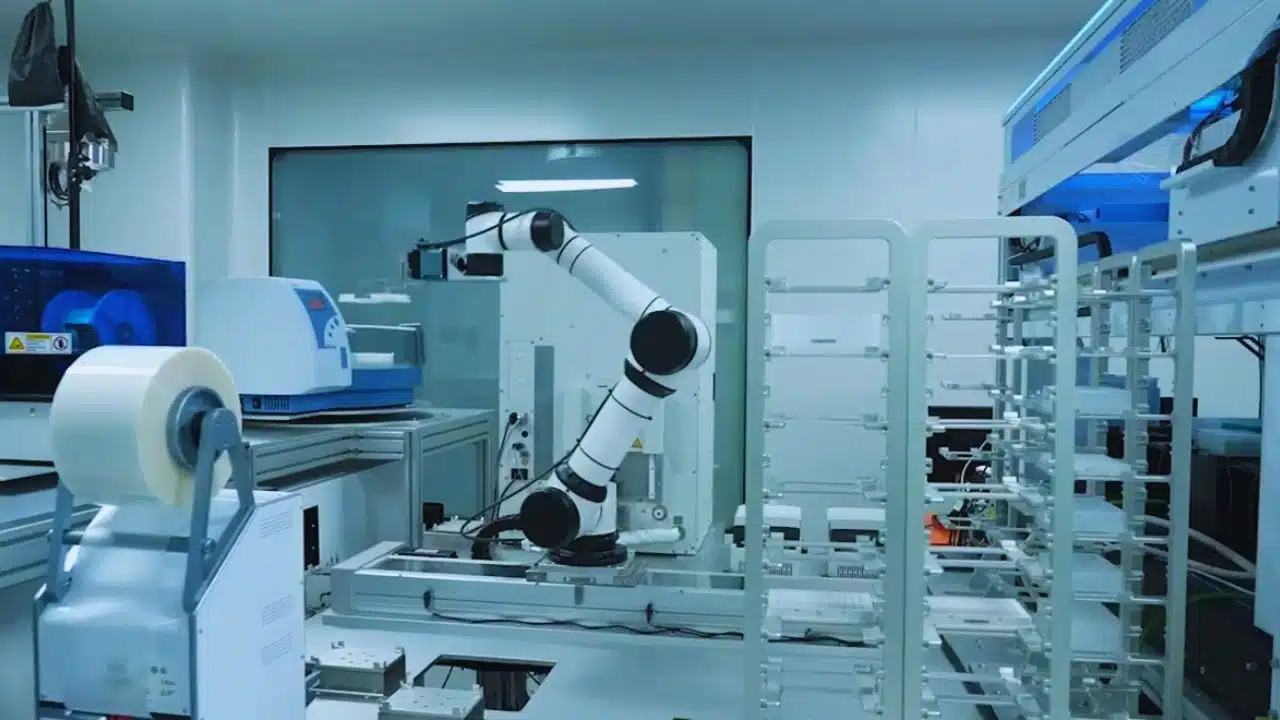
The core advantage of Isomorphic’s approach lies in its ability to analyze massive biological datasets quickly and accurately. Instead of relying on years of trial-and-error experiments, the AI identifies likely drug targets and simulates how newly designed molecules might interact with the human body.
This not only speeds up drug development but also improves precision, reducing the chances of failure in later clinical stages.
Murdoch says the ultimate vision is a “world-class drug design engine”—a platform where researchers could, one day, input a disease name and receive an optimized drug design almost instantly. “We’re not there yet, but we’re making real progress,” he said in a recent interview.
Human Trials: The Crucial Next Step

The decision to begin human trials is a critical milestone. These early-stage trials will test the safety and effectiveness of Isomorphic’s AI-generated drugs. If results are positive, it could pave the way for regulatory approvals and eventual market availability.
Isomorphic is not only supporting pharmaceutical partners like Novartis and Eli Lilly through collaborations—it’s also working on its own drug candidates in oncology, immunology, and other high-need therapeutic areas. The company aims to license these candidates once they pass initial human testing.
Related Development: In April 2025, Isomorphic Labs secured $600 million in external funding, led by Thrive Capital, marking one of the largest investments in AI-driven biotech to date. [Source: Forbes, April 2025]
The Potential Impact on the Pharmaceutical Industry
If Isomorphic’s AI-designed drugs prove successful in trials, it could significantly lower the cost of drug development, improve success rates, and shorten time-to-market—three of the biggest challenges in the pharmaceutical sector today.
Currently, major pharmaceutical companies often invest over $2 billion and spend 10–15 years to bring a single drug to patients, according to a 2023 report by the Tufts Center for the Study of Drug Development. AI has the potential to change this equation entirely.
Murdoch believes the technology could eventually lead to 100% confidence in a drug’s success before even entering clinical trials—a level of predictability that has never existed in medicine.
Cautious Optimism Amid Excitement
Despite the promise, human trials remain complex and unpredictable. Regulatory approval requires rigorous testing for safety, efficacy, dosage, and long-term effects. Isomorphic Labs must still prove that its AI-designed drugs can outperform—or at least match—existing treatments on the market.
Moreover, ethical, legal, and safety concerns around AI in medicine are gaining global attention. Regulatory bodies like the FDA and EMA (European Medicines Agency) are working to adapt their frameworks to evaluate these novel approaches, but challenges remain.
What This Means for the Future of Healthcare
The long-term vision is bold: a future where AI-driven systems drastically improve human health, make treatments more accessible, and address global health disparities.
By reducing the cost and time of drug development, more rare and underfunded diseases could become viable targets for treatment. Combined with global interest in personalized medicine, AI could lead to tailored drug designs for individual patients based on genetic profiles.
Credible Insight:
The World Health Organization (WHO) has highlighted AI’s potential in transforming healthcare delivery, from diagnostics to treatment discovery, but emphasizes that ethical frameworks and human oversight must remain central.
Isomorphic Labs’ move into human clinical trials is more than just another biotech milestone—it represents a paradigm shift in how humanity understands and tackles disease. Backed by Alphabet and a team of AI pioneers and pharmaceutical veterans, the company is well-positioned to lead this transformation.
While the road ahead includes scientific, regulatory, and ethical challenges, the integration of AI into drug discovery may eventually become the new norm, marking the beginning of a smarter, faster, and more precise era in global healthcare.
The Information is collected from Fortune and Yahoo.