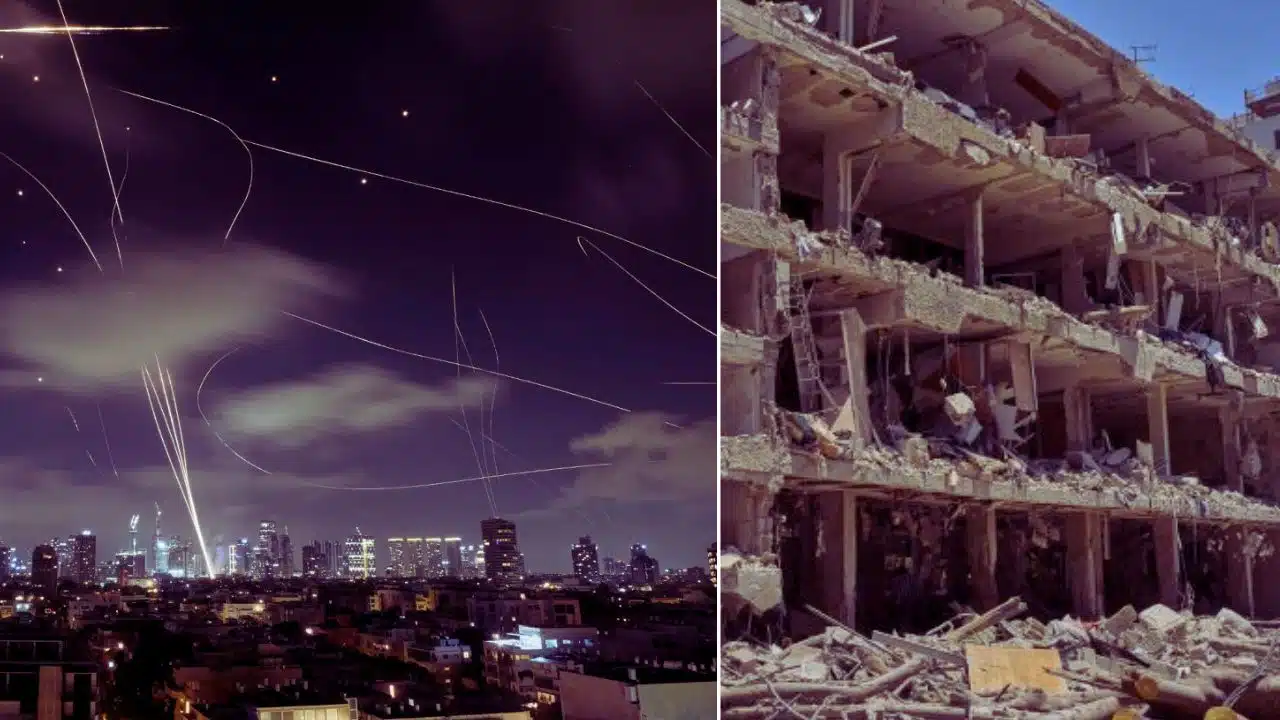
Tensions in the Middle East reached a dangerous new height after Iran launched a wave of missile strikes on Tel Aviv in direct retaliation for recent U.S. airstrikes on Iran’s nuclear facilities. The spiraling conflict has now drawn in major global powers and raised alarms over the potential for a broader regional war.
Iran’s Missiles Hit Central and Northern Tel Aviv
In the early hours of the morning, Iranian ballistic missiles struck multiple locations across Tel Aviv, targeting both central and northern districts of the city. The strikes caused significant destruction, damaging several residential and commercial buildings. Emergency services responded quickly, with local reports confirming widespread panic as sirens blared and explosions rocked the city.
According to Israel’s national emergency medical service, Magen David Adom, at least 16 people were injured in the attack. Among them, a 30-year-old man was reported to be in moderate condition, while ten others sustained light injuries. Most injuries were caused by falling debris, shattered glass, and panic during the evacuation process.
In addition to the physical damage, the psychological toll on residents was high. Videos circulating on social media showed families huddled in bomb shelters and emergency workers pulling injured civilians from rubble. Schools and businesses in the affected areas have been shut down temporarily due to safety concerns and the risk of further escalation.
Israel Launches Immediate Retaliatory Strikes on Iran
In response to the missile attack, Israeli fighter jets swiftly launched counterstrikes targeting what military officials described as “strategic military facilities” in western Iran. Though the Israeli Defense Forces (IDF) did not disclose specific locations or the nature of the targets, military analysts believe the strikes aimed at missile launch sites and command-and-control centers used by the Islamic Revolutionary Guard Corps (IRGC).
This retaliatory strike marked the first time Israel openly targeted Iranian soil in response to direct Iranian aggression, signaling a sharp shift in the region’s longstanding shadow conflict. While air defense systems reportedly intercepted some of Israel’s missiles, satellite imagery and local reports indicated substantial damage in certain Iranian military zones.
The Iranian government has not yet released an official casualty report from the Israeli airstrikes but acknowledged that “hostile foreign aircraft” targeted sites in the western provinces.
U.S. Bombs Iran’s Nuclear Facilities: A Game-Changing Escalation
The Iranian assault on Tel Aviv came shortly after the United States launched a massive and coordinated aerial operation, targeting three major nuclear facilities in Iran: Fordow, Natanz, and Isfahan. These sites have long been suspected by Western intelligence agencies as key components of Iran’s uranium enrichment program.
The strikes were part of what U.S. defense officials dubbed “Operation Midnight Hammer.” The operation involved:
-
B-2 Spirit stealth bombers dropping GBU-57A/B bunker-buster bombs designed to penetrate deep underground.
-
Over 30 Tomahawk cruise missiles launched from U.S. Navy submarines in the Persian Gulf.
According to U.S. President Donald Trump, the nuclear sites were “completely and fully obliterated.” Trump also issued a stern warning that further retaliation from Iran would be met with even more devastating force, suggesting the possibility of expanded military operations if the conflict continued.
However, defense analysts and nuclear experts have expressed caution regarding the total destruction of the facilities. While surface-level infrastructure may be badly damaged, some critical elements of Iran’s nuclear program may have been housed in underground chambers designed to resist even bunker-buster strikes. The International Atomic Energy Agency (IAEA) confirmed that there was no immediate radioactive leak following the attacks.
The Chain of Escalation: From Shadow War to Open Conflict
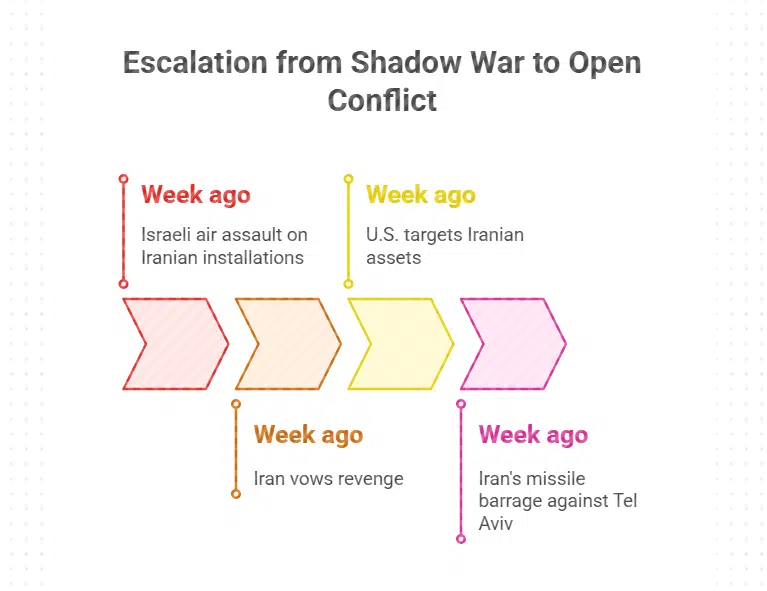
This rapidly intensifying conflict follows a week of high-stakes confrontation between Iran and Israel. The crisis began with a surprise Israeli air assault on multiple Iranian nuclear and military research installations inside Iranian territory. Iran vowed revenge, warning that it would not allow such provocations to go unanswered.
The subsequent U.S. involvement, directly targeting Iranian assets, drastically escalated the situation. While the U.S. has long supported Israel politically and militarily, this marks a rare instance of open and direct U.S. military engagement against Iran’s strategic infrastructure.
In retaliation, Iran’s missile barrage against Tel Aviv has pushed the crisis into a full-blown military conflict between nation-states—a dangerous departure from the proxy and cyber warfare tactics that have dominated their relationship for years.
International Reactions and Warnings of a Broader War
Global powers have responded with urgent calls for de-escalation. Russia condemned the U.S. airstrikes, warning that the actions had “opened Pandora’s box” and could potentially ignite a wider war in the Middle East. The Russian foreign ministry described the situation as a “grave threat to regional and international security.”
Meanwhile, China called for restraint from all sides and urged the United Nations to intervene to prevent a humanitarian catastrophe.
European leaders, including French President Emmanuel Macron and German Chancellor Annalena Baerbock, expressed concern that the conflict could derail ongoing negotiations to restore the Joint Comprehensive Plan of Action (JCPOA)—the 2015 nuclear deal from which the U.S. withdrew in 2018 under Trump’s previous administration.
The United Nations Security Council is reportedly convening an emergency session to discuss the conflict, amid fears that further strikes could involve additional regional players such as Hezbollah, Syria, and even Saudi Arabia.
What Comes Next: A Volatile Road Ahead
With both Iran and Israel suffering direct attacks on their home soil, and the United States now fully involved militarily, the potential for escalation remains dangerously high.
Security experts are warning of:
-
Cyberattacks targeting energy infrastructure in the Gulf region.
-
Disruptions to global oil shipments, especially if Iran carries out its threat to block the Strait of Hormuz, through which roughly 20% of the world’s oil passes.
-
Expanded missile campaigns across Lebanon, Iraq, and potentially against U.S. military bases in the region.
While diplomatic efforts are ongoing, military action appears to be escalating faster than talks can keep up.
Key Events So Far
| Event | Description |
|---|---|
| Iran Strikes Tel Aviv | Over 40 missiles launched; 16 civilians injured |
| U.S. Bombs Iranian Nuclear Sites | Fordow, Natanz, Isfahan heavily targeted |
| Israel Retaliates | Airstrikes on Iranian military positions in the west |
| Global Reactions | Russia warns of nuclear disaster; UN calls emergency session |
| Next Steps | High risk of wider war; threats to oil routes and infrastructure |
The conflict between Israel and Iran, now involving the United States, has entered a dangerous new chapter. With cities under fire, nuclear facilities under attack, and world powers voicing alarm, the situation remains volatile. The coming days will be critical in determining whether diplomacy can prevent this regional conflict from spiraling into a global crisis.