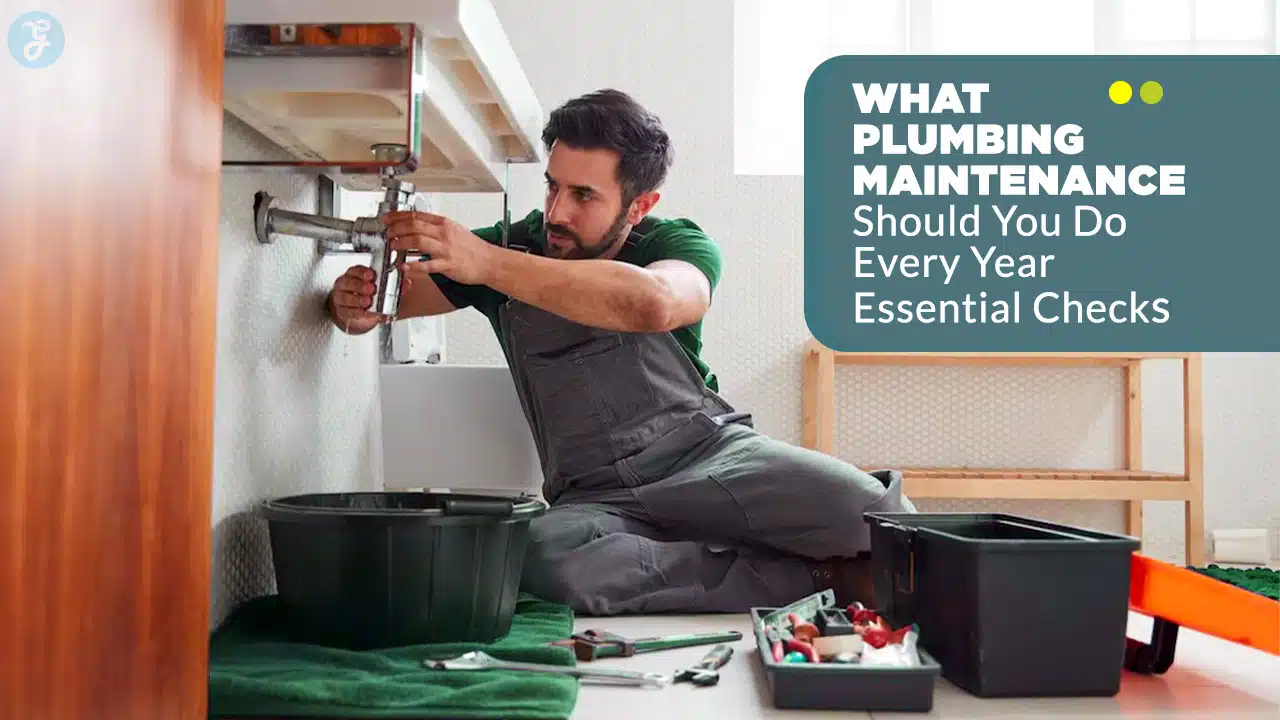
Hey there, let’s talk about keeping your home safe from water damage. Checking for leaks in pipes and faucets is a simple step that saves you big headaches down the road.
- Start in the bathroom, folks, and inspect those bathroom faucets for any drips or sneaky leaks; grab a wrench, tighten loose fittings, or replace worn-out washers to stop water waste.
- Head to the kitchen next, and take a close peek at the sink drains and P-traps for any signs of leaking pipes; if you spot dampness, fix it fast to avoid mold growth.
- Don’t skip the strainers under your kitchen sink, as they can hide slow leaks; clean them out and repair leaky kitchen faucets right away to help with water conservation.
- Look at every faucet in the house, and don’t ignore tiny drips, since even small pipe leaks can lead to big water damage over time.
- Check the faucet aerators too, because calcium buildup can mess with water pressure; soak them in vinegar for a quick, easy clean.
- Scope out all visible pipes under sinks and in basements for any wet spots or pipe corrosion; if you see something odd, call a licensed plumber before it gets worse.
- Keep an eye on hoses, like those rubber hoses for your washing machine, for cracks or wear; swap them out if they look iffy to prevent emergency repairs.
- Listen for weird sounds, like a faint drip or water hammer, which might mean hidden leaks in your plumbing system; act quick to avoid costly fixes.
Check and Maintain Water Pressure Levels
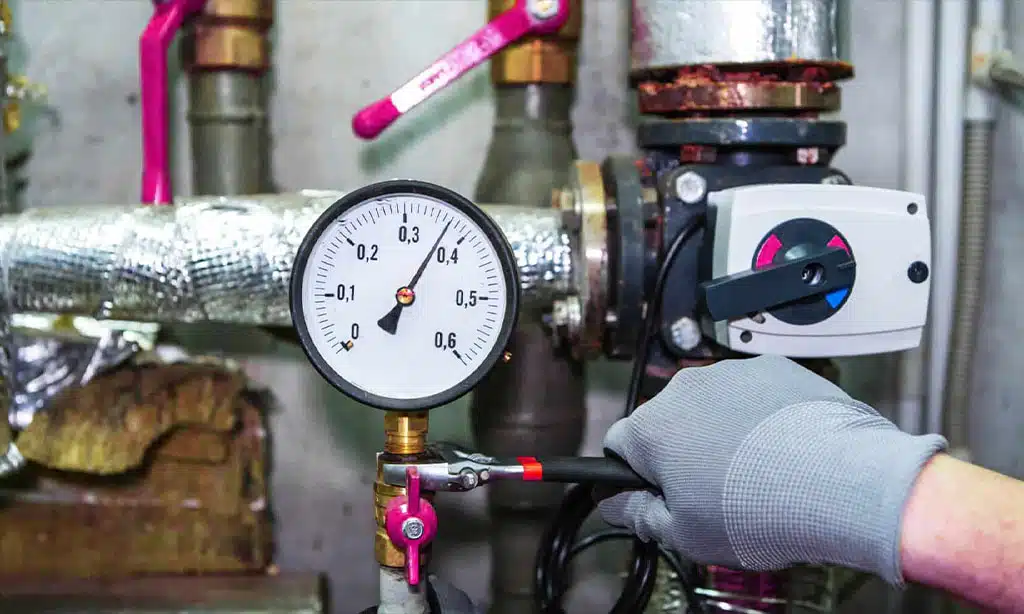
Testing your water pressure is a quick job that saves headaches. Grab a pressure gauge, hook it up to an outdoor faucet, and check the reading. The sweet spot is between 40 and 60 psi.
Too high, and you risk pipe leaks or busted plumbing fixtures. Too low, and showers feel like a sad trickle. If it’s off, tweak the pressure regulator to fix it.
Keep an eye on those water bills too. A sudden spike might mean low water pressure hiding a sneaky leak. Don’t let it creep up on you; adjust things fast with that regulator. Staying on top of this bit of plumbing maintenance keeps your water supply system happy and your home safe from water damage.
Flush and Inspect the Water Heater
Hey there, let’s chat about keeping your water heater in top shape. Annual care can save you from cold showers and costly fixes.
- First up, flush your water heater every year to clear out sediment. This gunk, like calcium buildup, settles at the bottom and messes with efficiency. A quick flush keeps hot water flowing and conserves energy for better energy savings.
- Look for leaks while you’re at it. Check around the tank for drips or puddles that could signal trouble. Leaks can lead to water damage, so catch them early to avoid a soggy mess.
- Inspect the tank for rust or corrosion signs. If you spot corroded spots, it might mean the tank’s on its last legs. Call a licensed plumber to take a peek before it bursts.
- For gas burner units, get them serviced now and then. A pro can check the system to keep it safe and running smoothly. This step boosts reliability and prevents emergency repairs.
- Keep an eye on the temperature setting too. Set it around 120 degrees to balance hot water needs and energy consumption. This trick cuts down on water heating bills without sacrificing comfort.
- Finally, consider a full check during annual plumbing inspections. A professional plumber can spot hidden issues and keep your water heater maintenance on track. This preventive measure extends the lifespan of your plumbing systems.
Test and Clean Your Sump Pump
Gotta keep that sump pump in tip-top shape, folks. A little care can save you from a flooded mess!
- First off, test your sump pump by filling the sump pit with water yourself; watch if it kicks on and drains like it should, keeping water damage at bay.
- Make it a habit to check this gizmo often, since a working sump pump is your best defense against basement flooding.
- Grab a bucket and pour water into the pit to see the pump start up; if it’s sluggish, you might have a problem brewing.
- Clean out any gunk or debris around the pump, as clogged drains can stop it from doing its job.
- Look at the discharge pipe too, making sure it’s clear and sending water away from your home to prevent any backup.
- Test the float switch by lifting it gently; if the pump doesn’t hum to life, call a professional plumber for a quick fix.
- Keep an ear out for odd noises when it runs, since weird sounds can signal trouble in your plumbing system.
- Inspect the check valve on the pipe to make sure water doesn’t flow back into the pit after pumping out.
- Plan to do these checks regularly, as routine maintenance stops small issues from turning into emergency repairs.
- Don’t wait for a storm to find out your pump’s a dud; stay ahead with these simple steps to dodge water damage.
Clear and Prevent Clogged Drains
Hey there, let’s tackle those pesky clogged drains together. Keeping them clear is key to a smooth-running plumbing system.
- Start with bathroom drains, folks; pour boiling water down them every few weeks to melt away soap and hair buildup before it turns into a full-blown clog.
- For kitchen sinks, check those P-traps and strainers for sneaky leaks, and if the water’s moving slow, whip up a mix of vinegar and baking soda to break things up.
- Got a minor blockage? Grab that baking soda and vinegar combo, follow it with a pot of boiling water, and watch that drain opener work its magic on stubborn gunk.
- Don’t forget your garbage disposal; toss in some ice cubes or citrus peels to grind away grime, and steer clear of dumping greasy waste or tough scraps down there.
- Keep those faucet aerators sparkling by soaking them in vinegar to dissolve nasty mineral buildup that can slow water flow and mess with your sink’s vibe.
- Stay ahead of trouble in all drains by using this simple trick; a regular flush with baking soda and vinegar keeps the plumbing happy and prevents water damage from backups.
- If you’re dealing with a slow drain in any spot, skip the harsh chemical drain cleaners and stick to natural fixes to protect your pipes from corrosion.
Inspect Toilet Components for Proper Functionality
Let’s talk about your toilets, folks. Keeping them in tip-top shape saves water and headaches!
- Start by checking for running toilets, because they waste a ton of water faster than a leaky bucket. If you hear that constant trickle, it’s time to act. A quick fix can stop water damage before it starts and keep your plumbing system happy.
- Try this neat trick with food coloring to spot sneaky leaks. Drop a few bits into the tank, wait a bit, and see if color creeps into the bowl. If it does, swap out that worn flapper valve right away to halt the drip.
- Look for any rocking when you sit on the throne. A wobbly seat might mean the wax ring underneath needs replacing. Ignore it, and you risk leaks or worse, so grab a new ring and fix that shake.
- Peek at all toilet components during your plumbing maintenance routine. A loose handle or odd flush can signal trouble. Tighten things up or replace small parts to avoid emergency repairs down the road.
- Don’t let toilet flushing issues slide, as they mess with water conservation efforts. If the flush feels weak, check inside the tank for buildup or broken bits. Clean or replace parts to keep things flowing smooth.
- Watch for sneaky leaks around the base, since they can ruin floors over time. Dry the area, then inspect after a flush for damp spots. If you spot trouble, call a licensed plumber to seal it up quick.
Check Caulk and Sealant Around Fixtures
Hey there, take a quick peek at the caulk seals in your bathroom. Look for any gaps or cracks around sinks, tubs, and showers, since these spots can let water sneak in and cause sneaky water damage.
Those tiny openings might seem small, but they’re like an open door for moisture. Grab some silicone caulk and reseal those areas to keep your plumbing system safe from leaks. It’s a simple fix that saves you from big headaches down the road.
Inspect and Clean Sewer Lines
Let’s talk about your sewer lines, folks. Keeping them clear is a big deal for a happy home.
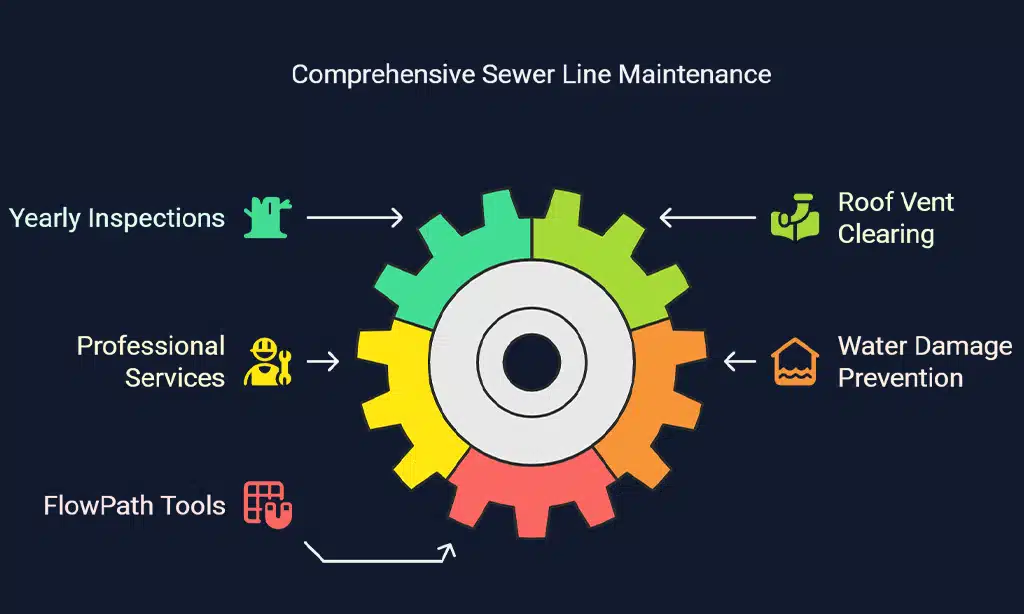
- First up, make yearly sewer line maintenance a routine to prevent blockages from tree roots before they start. Those sneaky roots can slip into tiny cracks, expand, and cause major backups in your sewage system. By inspecting every year, you avoid expensive emergency repairs and keep things running smoothly.
- Next, take a look at your roof vent pipes for clutter like debris, snow, or ice building up. These vents release sewer gases safely, so a blockage here can trap unpleasant odors or even disrupt your plumbing system. Clear them out to stay comfortable and prevent issues.
- Also, consider hiring experts like Roto-Rooter, ARS/Rescue Rooter, or Mr. Rooter Plumbing for the job. These national services are well-versed in sewer main care. They have the equipment to identify problems in your sanitary sewer and resolve them quickly.
- Don’t overlook the fact that a blocked sewer can result in severe water damage in your home. If left unchecked, you might face contaminated water seeping into your space. Stay proactive by arranging that annual inspection to safeguard your property.
- Lastly, explore tools from FlowPath to simplify this task. They’ve secured a 1GPA vendor contract for public agencies, schools, and municipalities, so their equipment is excellent for handling sewer line care. Use their solutions to detect issues early and maintain your septic tank system in prime condition.
Ensure Proper Insulation of Pipes to Prevent Freezing
Hey there, folks, let’s chat about keeping your pipes cozy and safe from the cold. Winter can be a real pain for your plumbing system if you’re not ready. Exposed pipes in unheated spots, like basements or crawl spaces, are at risk of freezing and bursting.
That’s a messy disaster waiting to happen, trust me. So, grab some pipe insulation from your local hardware store, and wrap those babies up tight before the frost hits.
Now, don’t forget those outdoor hose spigots either. Inspect them for any sneaky leaks, swap out old washers or cartridges, and make sure to winterize your irrigation system. A little effort now saves you from big headaches like water damage later.
Think of it as tucking your water pipes into a warm blanket. Get this done, and you’ll dodge emergency repairs when the temperature drops.
Takeaways
Well, folks, keeping your plumbing in tip-top shape is no small feat. Take a moment to pat yourself on the back for learning these 12 vital checks. A little effort now can save you from a flood of troubles later.
So, grab that wrench, inspect those pipes, and keep water damage at bay. Your home will thank you for it!
FAQs
1. Why should I check my water pressure every year?
Hey, keeping tabs on your water pressure with a pressure gauge is a big deal. Low water pressure might mean pipe leaks or mineral buildup in your plumbing system, and nobody wants a surprise flood. So, grab that pressure regulator, test it out, and keep things flowing smoothly.
2. How often should I inspect my water heaters?
Listen up, folks, give those water heaters a good once-over yearly with some solid water heater maintenance. A quick check can dodge pricey emergency repairs from water damage or calcium buildup.
3. What’s the deal with checking clogged drains and sewer lines?
Don’t let clogged drains sneak up on you; peek at them annually to avoid a messy backup in your sewer system. Using chemical drain cleaners might seem like a quick fix, but a professional plumber can handle sewer line maintenance better. Trust me, you don’t want to be knee-deep in greywater recycling gone wrong.
4. Should I worry about my lawn sprinkler and hose bib?
Absolutely, take a gander at your sprinkler systems and hose bib each year. A busted lawn sprinkler can waste water, messing with water conservation and spiking your bill from municipal water supplies.
5. Are running toilets and faucet aerators worth checking?
You bet, pal, running toilets and funky faucet aerators can leak like a sieve, wasting drinking water. Pop the lid, check for wear, and tighten up those caulk seals to stop pipe corrosion before it starts.
6. Why bother with septic system and washing machine hoses?
Well, a yearly glance at your septic system and rubber hoses on the clothes washer can save you a heap of trouble. Ignoring them might lead to leaking pipes or a failing sewer main, and that’s a stinky situation. Call a licensed plumber if you spot anything fishy with pipe insulation or weird smells.