As education continues its digital transformation, eLearning platforms are rising fast but so is the competition. Startups in this space must do more than build great content; they must build brands, trust and growth engines from day one.
I spoke with Sage Zaree, a veteran digital strategist and marketing systems architect, about what it takes to successfully market an eLearning startup. With over two decades in digital marketing, Zaree has guided dozens of early stage and scaling companies through audience building, product positioning and growth strategy. In this interview, he breaks down how founders should approach branding, performance marketing, community and platform longevity in the hyper competitive online education space.
Foundations: Brand Positioning and Product Market Fit
What’s the most common mistake early eLearning startups make when it comes to brand strategy?
Most eLearning startups over focus on features and under invest in differentiation. They’ll say, “We have 1,200 video lessons” or “Our instructors are Ivy League grads,” but that’s not positioning that’s just a capability list.
Real brand strategy answers a different question: Why should someone choose you over a competitor and why now? That means narrowing in on a specific learner profile, a clear outcome and a branded experience that feels unique even if the core content is similar. It’s about emotional resonance as much as rational value.
If a brand is teaching data science for example, your brand should signal what kind of learner you serve: career switchers, working professionals, underrepresented communities? High end polish and credentials may matter to one audience, while mentorship and job pipelines matter more to another. Brands that do this well, like MasterClass or Duolingo each have a clear identity that extends beyond just “courses.”
How do you recommend a startup validate product market fit before investing heavily in paid marketing?
Before you pour money into ads, validate traction with organic signals. Look at metrics like:
- Organic user acquisition through content or referrals
- High retention/return rates after initial sessions
- Strong NPS or positive qualitative feedback from early cohorts
- Completion rates or time on the platform
Once you’re seeing user behavior that confirms real demand and repeat engagement, then you can test performance marketing. Otherwise, you’re just buying vanity metrics. It’s much better to scale a message that’s already resonating than try to force product market fit with ad dollars.
I also advise running small copy/messaging tests even with simple landing pages to see what positioning drives signups or demos. This gives you early clarity on how to talk about your platform before investing in big campaigns.
Acquisition: Paid, Organic and Partnerships
What channels work best for driving initial user growth in online learning?
It depends on your audience, but typically:
- Paid social for awareness and traffic, especially if you can show content previews or instructor personalities
- Google Search for intent driven acquisition: “learn UX design online,” “certification in finance”
- Affiliate marketing or micro influencers particularly in niche communities like coding, fitness or language learning
- And SEO though it’s slow, it compounds. A blog that ranks for “best free project management course” can generate evergreen leads for years.
One underutilized tactic is B2B partnerships especially if you’re selling into schools, enterprises or upskilling programs. A co-branded initiative with a tech bootcamp or employer can unlock whole user segments that trust the brand you’re hitching to.
How important is content marketing for eLearning brands?
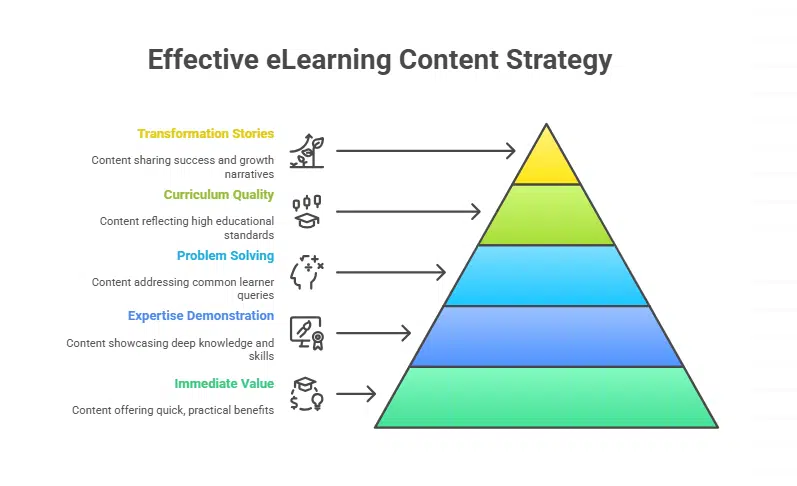
It’s essential but it needs to go beyond just blogging. Great content marketing for eLearning means giving immediate value and demonstrating expertise upfront.
Think free mini lessons, YouTube tutorials, interactive quizzes and LinkedIn carousel posts that teach something fast. Every piece of content should either:
- Solve a problem your learner is Googling
- Showcase the quality of your curriculum
- Highlight transformation stories
And always collect emails. A well built email sequence with bite sized lessons and testimonials can warm up cold leads into high intent signups. Use content to pull them in then nurture with outcomes and proof.
Conversion: Building Trust and Retention
What trust signals do users look for when considering a new eLearning platform?
Social proof and structure. That means:
- Reviews and testimonials
- Job placement or success stats
- Instructor credibility
- Money back guarantees or trial periods
If someone is trusting you with their time, money and skill building especially during a career change, they want confidence that this isn’t just another internet course. Great platforms surface success stories often and make the user journey feel well supported. If you don’t show trust signals within 5 – 7 seconds of a landing page, you’ve likely lost that visitor.
Retention is a challenge for any learning platform. What helps keep users engaged post signup?
You need to design for motivation architecture. This includes:
- Progress tracking: visualize momentum
- Micro rewards such as badges, streaks, and milestone unlocks
Live elements like cohort chats, mentor check ins or office hours - And reminder systems that are helpful, not annoying think smart nudges based on behavior
The reality is: people don’t finish courses unless they’re nudged, encouraged or held accountable. The more human touchpoints you build in, the better your retention. This is where AI powered personalization is extremely powerful. If it can adapt content flow and reminders to each learner’s pace and goals, you’ll see a measurable lift in completion rates.
How can eLearning startups turn free users into paying customers?
This is where smart freemium models shine, but they need to be engineered for conversion, not just exposure. You can’t just give everything away and hope users upgrade out of goodwill. You need to create strategic friction, give enough value upfront to build trust and habit, then clearly gate access to transformation.
Examples include:
- Offering the first two modules free, but locking certifications or peer reviews behind paywalls
- Providing free community access, but charging for live feedback or mentorship
- Giving away lessons, but reserving personalized learning paths or project reviews for premium users
The trick is to align the free experience with a feeling of “this is working” so that when the user hits a paywall, they don’t feel blocked, they feel motivated. Pricing psychology, time to value and thoughtful UX design all matter. You’re not just selling content you’re selling momentum.
Scaling: Brand Systems and Long Term Growth
As startups grow, what marketing systems or frameworks do you recommend putting in place?
Once you’ve found traction, you need to build a marketing stack that supports scale. That usually includes:
- CRM with lifecycle automation like HubSpot or ActiveCampaign
- Attribution tools to track performance across channels
- Modular content libraries so you can version ads quickly by audience
- Clear funnel mapping where does a user go after a blog post? A TikTok click? A failed checkout?
Then: brand governance. As teams grow, you need centralized brand assets, tone of voice guides and clear creative briefs. Otherwise, your messaging fragments. Growth doesn’t mean chaos it means creating a system that accelerates the right things, repeatedly.
How do you maintain a compelling brand as competition increases in the EdTech space?
Be memorable and consistent. Don’t try to be everything for everyone. The most powerful brands own one idea in a learner’s mind.
Whether that’s “the fastest path to remote work,” “learn like a game,” or “real world mentorship for creatives,” your positioning should stay consistent across every channel. Make sure your voice, visuals and value proposition are unmistakable.
Also, leverage your community. Encourage reviews, create alumni networks, and feature user wins. A strong brand is more than your logo or colors, it’s the stories people tell about you when you’re not in the room. If you architect your platform to create transformation, those stories will follow.
Closing Thoughts
The future of eLearning isn’t just about access it’s about momentum. Successful platforms are the ones that don’t simply share information, but guide learners through real transformation. From brand positioning and acquisition to trust building and user retention, every layer of the marketing strategy must be intentional, learner centric and optimized for long term value. For startups navigating the crowded and rapidly evolving digital education space, that’s both the challenge and the opportunity.