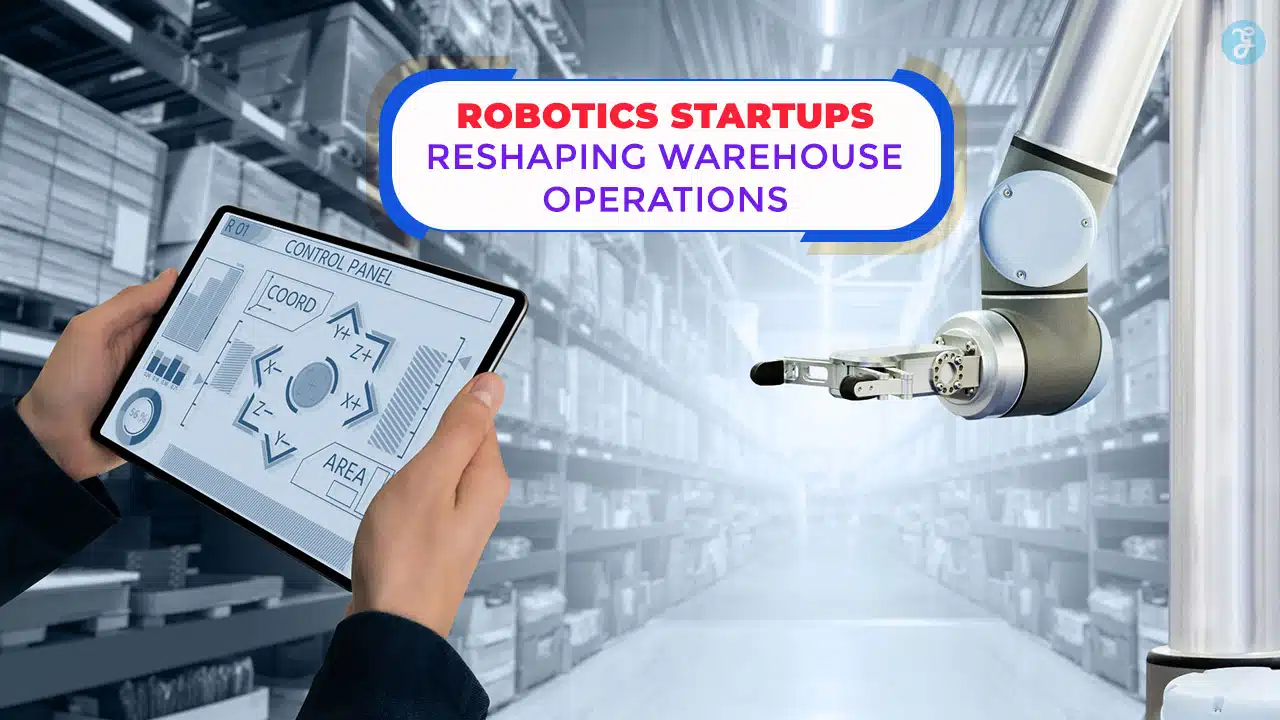
Many warehouses hit snags with slow picking and missing stock. These delays choke the supply chain and hike costs. AI drives dynamic slotting and inventory optimization in real time.
Collaborative robots and autonomous mobile robots (AMRs) link tasks and speed moves.
This post shows five startups using warehouse automation, Internet of Things integration, and warehouse execution systems. You will see how each firm boosts speed, cuts costs, and keeps workers safe.
Keep reading.
Key Takeaways
- Teradyne’s Universal Robots has sold over 50,000 cobots and owns half the global cobot market. These bots pick, pack, and carry goods alongside workers.
- Boston Dynamics’ Spot can carry a 30-pound sensor pack on rough ground and runs in more than 35 countries. Its Atlas robot stacks pallets and lifts crates to cut injuries and speed orders.
- GreyOrange, Locus Robotics, and Geek+ link autonomous mobile robots to warehouse software (WMS/WES). They use AI and machine learning to slash pick times, cut errors, and boost stock accuracy.
- IoT sensors and predictive maintenance cut downtime by about 20% and trim energy bills by over 15%. Robots work around the clock to keep orders moving.
- A single AMR costs around $75,000, and pilots often need 10–20 bots—pushing startup bills above $1 million. High setup costs and legacy‐system integration hurdles demand a five-year ROI.
Standard Bots: Affordable and Versatile Cobots

Teradyne has sold over 50,000 collaborative robots globally. Universal Robots holds over 50% of the global cobot market. These bots pick, pack, and carry goods alongside people on warehouse floors.
They tie into warehouse management systems, feeding data for inventory management and predictive maintenance.
Artificial intelligence drives their motion and decision steps. Machine learning boosts pick accuracy in tight e-commerce workflows. Cobots feed data to digital twins and autonomous mobile robots for smooth material handling.
This mix cuts costs, speeds delivery, and boosts warehouse automation.
Boston Dynamics: Robots for Tough, Physical Jobs
Boston Dynamics builds robots that handle heavy tasks. Spot grips a 30-pound sensor pack, inspects pipelines, climbs stairs, roams rough ground. More than 35 countries deploy this AMR for inspection and surveillance.
Tiny arms and a robust sensor suite help Spot map each step. It uses artificial intelligence and machine learning to dodge falls. It links into warehouse management systems for data on asset health and predictive maintenance.
Atlas lifts crates and stacks pallets in a mock warehouse. A simple control panel, machine vision, and force sensors let it sense shifts in weight. Labels move off shelves with no worker strain.
Boston Dynamics shares the stage with ABB LTD, which has over 400,000 industrial robots installed, and FANUC CORPORATION, which leads global market share. These firm machines cut injury rates, speed up order fulfillment, trim costs, and aid inventory management.
GreyOrange: AI-Driven Solutions for Smarter Warehousing
GreyOrange blends autonomous mobile robots (AMRs) with a warehouse management system (WMS), to slash pick times and cut errors. It feeds historical and live data into artificial intelligence (AI) models, for smarter warehouse automation.
Customer satisfaction soars, as orders fly out faster and mix-ups drop. An AI-powered demand forecasting tool sifts sales data, market trends, and seasonality, to slash stockouts and curb overstock.
Machine learning guides these bots into tight supply chain optimization, and inventory optimization. Predictive maintenance flags wear, before it slows operations. These automated systems mesh AMRs with automated storage and retrieval systems, to drive uptime.
This setup paves the way for Locus Robotics to boost e-commerce productivity.
Locus Robotics: Boosting E-commerce Productivity
Locus Robotics uses autonomous mobile robots (amrs) for order picking. These bots scan barcodes, dodge obstacles, and speed up each cycle. Collaborative robots roam with workers, handing off bins and scanning items to cut walking time.
A machine learning engine sorts tasks by demand forecasting, sending robots to high-turn SKU zones first.
Integration with a warehouse execution system (WES) lets teams spin up more bots in minutes. E-commerce logistics providers link Locus amrs to their WMS and WES to boost inventory optimization.
Built-in sensors track robot health and enable predictive maintenance. Robotic systems like these refine warehouse automation and support supply chain optimization. Next, we will look at Geek+ for bigger facilities.
Geek+: Integrated Systems for Large-Scale Warehouses
Geek+ links autonomous mobile robots (AMRs) with a Warehouse Execution System to boost warehouse automation. These bots dodge racks and forklifts as they zip around. The solution taps machine vision from KEYENCE Corporation to guide every move.
It uses AI and machine learning for demand forecasting and inventory optimization.
Site managers scale across any warehouse size without extra wiring or maze set ups. The system alerts teams when robots need service, cutting downtime with predictive maintenance. It pulls data from a WMS to sync stock counts.
Engineers spot energy spikes and tweak routes in real time. Next, we explore the key benefits of robotics in warehouse operations.
Key Benefits of Robotics in Warehouse Operations

Robots powered by AI and machine learning speed up work, cut costs with predictive maintenance, streamline orders via WMS and AMRs, and boost safety—read on to learn more.
Enhanced efficiency and speed
Automated storage and retrieval systems (ASRS) keep warehouses humming around the clock. Sensors feed live data, they spot slowdowns with real-time analytics and flag needs for predictive maintenance.
AMRs and automated guided vehicles pick orders faster, they boost picking rates and cut errors. Cobots work side by side with staff, they trim cycle times in high-volume aisles.
Hy-Tek Intralogistics mixes advanced robotics with IntraOne software, it links material flow to inventory optimization. That combo of artificial intelligence and machine learning spots bottlenecks before shelves choke up.
Teams view warehouse analytics on WMS dashboards, they fix backlog instantly. Managers tweak routes for AMRs and fine-tune demand forecasting to hit daily goals.
Reduced operational costs
Smart sensors monitor gear health on conveyors and lifts. Predictive maintenance catches wear early and slashes repair bills. IoT links those sensors to a warehouse management system for instant alerts.
AMRs shift totes and boost warehouse automation.
Energy storage cells bank surplus solar power from rooftop panels, then power forklifts or robots. That cuts utility bills by more than 15%. Firms sign up for Automation-as-a-Service to use robotics without big up-front fees.
That keeps cash flowing for growth.
Improved worker safety
Cobots move heavy loads, lifting boxes and pallets in busy aisles. AI vision spots workers and stops robots fast when someone steps into a zone. This cuts chances of accidents in warehouse automation.
It trims errors and cuts labor dependency.
AMRs link with management software. They use machine learning to plan routes and call for predictive maintenance. They cut strain on staff and help reach safety goals in industrial robotics.
Up next we cover the high costs and integration hurdles that startups must face.
Challenges Faced by Robotics Startups in Warehousing
Startups wrestle with steep bills for Kiva bots and SAP EWM, and they hit snags in old racking layouts. They also fight to sync RFID tags with neural network modules.
High initial investment
High R&D investment hits new firms hard. Firms pour millions into robot design, ai software, and lab tests. A single autonomous mobile robot (amr) can cost seventy-five thousand dollars, sensors and batteries included.
Early pilots often need ten to twenty bots to test a warehouse automation line. That can push initial bills north of one million dollars. Teams must tweak self-driving bots to fit like square pegs in round holes with old inventory management software and safety rules.
Investors expect returns in five years, so teams pace machine learning updates and supply chain optimization trials. Regulators demand safety checks, certified parts, and regular audits, which add to the tab.
A shrinking workforce and fast aging population push firms to add more automation gear, fast. Leaders juggle debt, equity, and government grants to fund ongoing product upgrades.
Integration with legacy systems
Teams link autonomous mobile robots into a warehouse management system with custom APIs. They map IoT sensors, PLCs, and robots, making them chat in a common language. AI integration helps bots adapt to slot changes and path delays.
Germany’s Industry 4.0 funds digital upgrades. China’s Made in China 2025 drives smart warehousing growth.
Tech teams sync data streams from robots to legacy software. They test each link to guarantee compatibility with the current warehouse software. Machine learning tunes robot moves, based on live stock levels.
Open toolkits like ROS join cloud APIs to feed info to dashboards. This fusion points at another big cost hurdle.
The Future of Robotics in Warehousing
Robotics, AI, IoT and data analytics join forces to speed up tasks in modern sites. AI-enhanced Warehouse Execution Systems predict demand and direct bots to pick goods fast, boosting warehouse automation.
These systems feed data into warehouse management systems (WMS) to fine-tune workflows. Sensor-driven predictive maintenance cuts downtime by 20% and keeps machines humming. Machine learning powers smarter demand forecasting and inventory optimization, with self-driving warehouse bots roaming every aisle.
Cold storage facilities deploy mobile arms and smart conveyors to handle frozen loads. Robotic automation cuts energy consumption by 25% in chilling zones. Firms plan green logistics drives that slash carbon output by 30% by 2025, and they add solar panels, hydrogen power units and li-ion power packs.
Smart grids, IoT sensors and fast charging stations boost energy efficiency. Our journey moves on to the conclusion section.
Takeaways
Warehouse tech evolves fast. Autonomous mobile robots roam busy aisles. Collaborative robots team up with staff. A warehouse execution system links all devices. Internet of things sensors feed maintenance alerts.
Predictive maintenance cuts downtime and waste. AI drives dynamic slotting and inventory optimization. Each startup fuels smarter, greener warehousing.
FAQs on Robotics Startups Changing Warehouse Operations
1. Which five robotics outfits reshape warehouse operations?
They are the Vecna crew, the dynamic robot lab, the label tech firm, the German arm builder, and the surgery bot maker. Each one uses warehouse automation, artificial intelligence, and machine learning to speed up e-commerce logistics and drive ROI.
2. How does predictive maintenance cut downtime?
Startups fit sensors on motors, they watch parts like a hawk. AI spots wear before it fails. This slashes repairs and trims energy consumption.
3. What are AMRs and how do they help?
AMRs, or autonomous mobile robots, roam aisles on their own. They pick up pallets, dodge obstacles, and boost inventory optimization. They also slice labor costs.
4. How do collaborative robots fit in?
Cobots work side by side with humans, they lift heavy boxes, scan bar codes, and never take a coffee break. They improve inventory management, they smooth digital transformation.
5. How is demand forecasting tied to AI?
Machine learning sifts sales data, it spots trends like a weather vane. It helps third-party logistics providers plan ahead, avoid stock outs, and cut waste.
6. How do these solutions affect last-mile delivery?
They feed real-time stock levels to delivery apps, they cut delays, they guide packages on the final leg. This tightens supply chain optimization for retail stores and e-commerce firms.