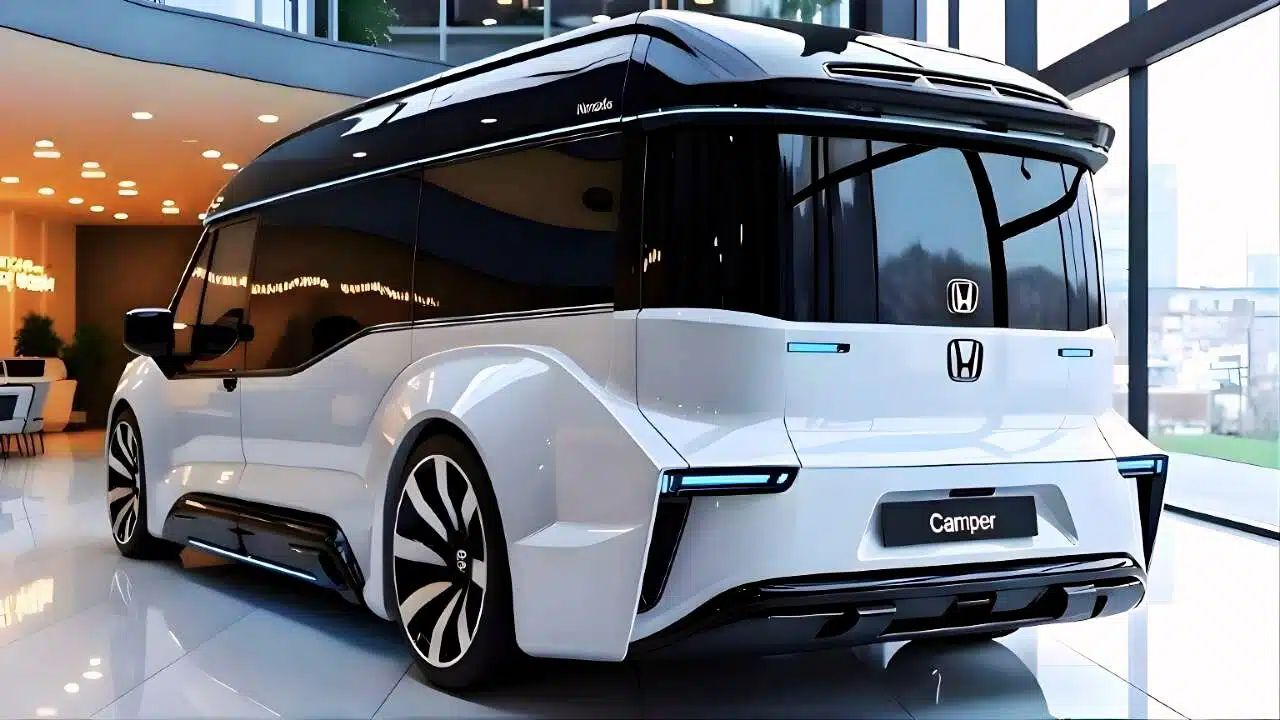
The 2026 Honda N BOX Camper takes Japan’s best-selling kei box and turns it into a clever micro motorhome that’s brilliant for slow-lane adventures and city life, but it still feels underpowered and narrow for long, fast highway runs.
Over a week with the 2026 Honda N BOX Camper, this review focuses on how its smart interior, compact design, and modern travel features actually work in daily use. This 2026 Honda N BOX Camper Review: Smart Interior, Compact Design & Modern Travel Features looks at it as a kei-class micro-camper based on the N-BOX/JOY, aimed at solo travelers or couples who want an everyday car that can double as a tiny RV. The base is the latest N-BOX platform with a 658 cc three-cylinder engine (58 hp NA or 64 hp turbo) and CVT, driving the front or all four wheels depending on trim.
Honda has layered on a fold-flat bed system, storage modules, camping-ready electrics, and updated safety tech (Honda Sensing 2.0) to create a turnkey mini-tourer that still slots inside kei-car tax and size rules.
Exterior Design and Practicality
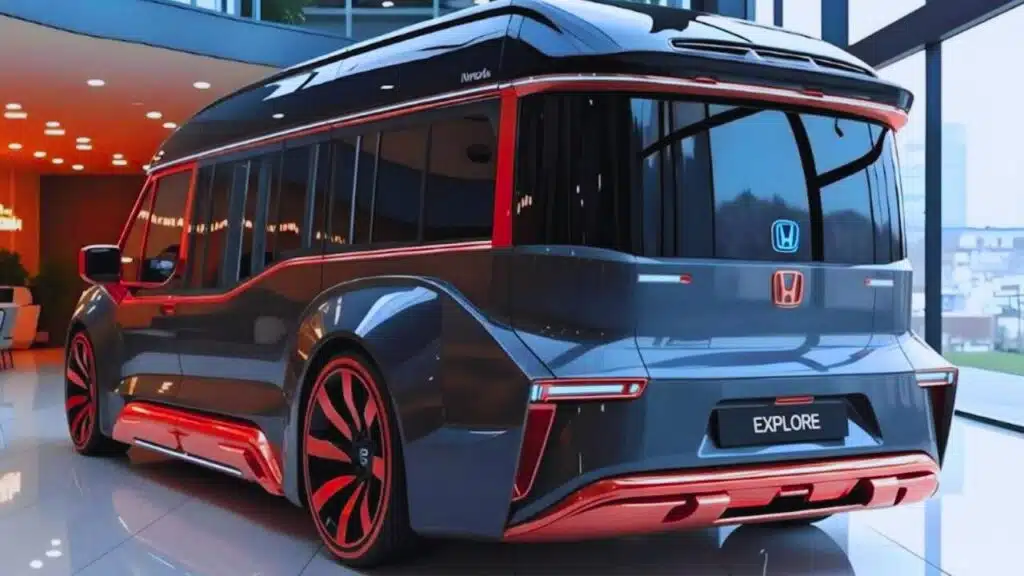
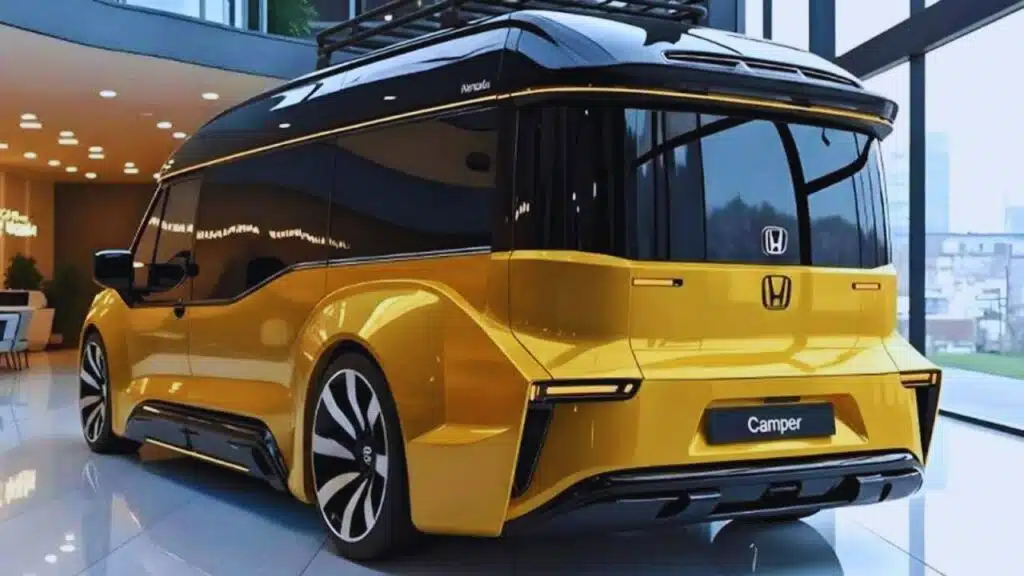
Honda hasn’t tried to hide the N BOX Camper’s kei-car origins: it’s a tall, almost cartoon-box silhouette, but the JOY/camper styling adds outdoor-themed colors, chunkier cladding, and wheel designs that make it look more like a baby adventure van. In the metal, the vertical nose, big square glasshouse, and near-upright tailgate all shout “function first,” but the LED lighting and tidy surfacing keep it from feeling like a delivery van.
In tight city streets, the tiny footprint is the star. At 3,395 mm long and 1,475 mm wide, it fits into parking spots you’d never attempt in a conventional camper, and the boxy profile makes it incredibly easy to judge the corners when threading through alleys or ferry queues. The tall sides do pick up some crosswind wiggle at expressway speeds, but around town and on rural B-roads, it feels secure and easygoing.
Practicality is excellent for the size. Dual sliding rear doors make getting in and out easy even in very tight spaces, and the vertical tailgate opens to reveal a low loading lip that works well when you’re sliding boxes, bikes, or modular camping gear in and out. The camper conversion builds on that by keeping a flat, uninterrupted floor when the seats are folded, so you can switch from cargo mode to sleeping mode quickly.
Exterior / Practicality Specs
| Item | 2026 Honda N BOX Camper (Joy-based) |
| Length | 3,395 mm |
| Width | 1,475 mm |
| Height | 1,790 mm (approx., trim-dependent) |
| Wheelbase | 2,520 mm |
| Ground clearance | 145 mm (FWD; some AWD trims slightly higher) |
| Turning circle | 9.0 m (tight even for a kei) |
| Cargo volume | Highly configurable flat load bay; exact liters not quoted, but with seats folded it’s enough for camping gear, bikes, or a full bed platform rather than a conventional trunk figure. |
Interior Comfort and Technology
The interior is where the N BOX Camper really earns its keep. You climb into a tall, airy cabin with a huge glass area and upright driving position that feels more mini-MPV than micro-van. The JOY/camper trim brings water-repellent seat upholstery, robust plastics that don’t mind wet coats or sandy feet, and soft ambient LED lighting for evenings in “camping mode”.
Over a week of mixed commuting and two nights of camping, the front seats proved comfortable for 2–3 hour stints, with enough thigh support and a natural armrest position. The rear seats slide and recline, but for camping you’ll mostly use them folded flat as part of the bed platform. Noise isolation has been improved for 2026 with better soundproofing and thermal-insulated panels, which noticeably cut down road roar and help keep the cabin warmer overnight.
The camper conversion’s party trick is its modular interior. A fold-flat bed system creates a near-flat sleeping surface that suits one adult comfortably (or two smaller travelers), while under-seat and sidewall storage cubbies swallow soft bags, cookware, and camera gear. Optional portable kitchen modules, a folding table that doubles as a laptop desk, hidden charging ports, and extra ventilation windows make it feel surprisingly “tiny-home” rather than just a car you happen to sleep in.
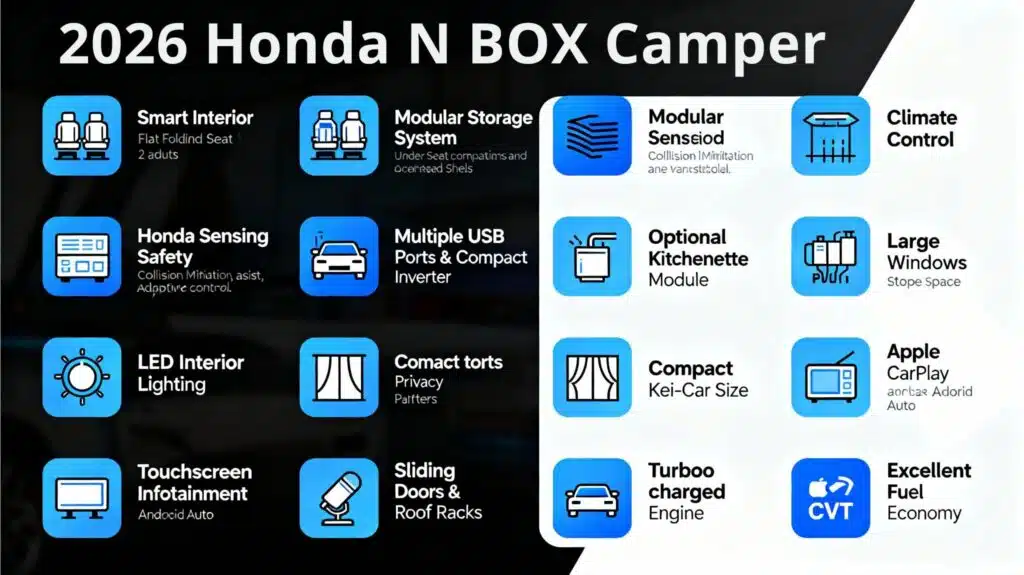
Tech is modern by kei-car standards. Higher trims get a free-standing ~9-inch infotainment screen paired with a 7-inch digital instrument cluster, plus Honda CONNECT connected-services support. Smartphone integration (Apple CarPlay/Android Auto where supported), multi-angle rear camera, and upgraded UI for 2026 make the system easy to live with, though graphics are more functional than flashy, and voice control is basic.
Interior / Tech Specs
| Item | 2026 Honda N BOX Camper |
| Infotainment screen | ~9-inch touchscreen on upper trims with smartphone integration and Honda CONNECT telematics. |
| Instrument cluster | ~7-inch digital display plus simple analog elements (trim-dependent). |
| Seating material | Durable fabric; JOY/camper adds water-repellent upholstery and outdoor-focused textures. |
| Seating layout | 2 front seats + 2 rear seats, all folding to create a flat bed platform. |
| Headroom | Extremely generous front and rear thanks to 1,790 mm roof height; 6-ft passengers can sit upright without issue. |
| Rear legroom | Sliding rear bench gives near-limo legroom for the class, even behind a tall driver. |
| Camper add-ons | Fold-flat bed system, optional portable kitchen, folding table, extra ventilation, hidden USB/12V ports, optional solar trickle charger. |
2026 Honda N BOX Camper vs High-Brand Rivals
The N BOX Camper sits in a sweet spot between classic kei practicality and lifestyle-focused campers from big-name brands. To see where it stands, it’s helpful to compare it with three high-visibility alternatives that many buyers will naturally cross-shop: the Nissan Sakura EV, Suzuki Spacia Gear, and Toyota Sienta camper conversions.
Quick Comparison Table
| Model | Vehicle Type | Powertrain | Key Strength | Best For |
| 2026 Honda N BOX Camper | Kei micro-camper | 660 cc petrol (NA/turbo) | Smart camper packaging, low running costs | Solo/couple road-trippers on a budget |
| Nissan Sakura EV | Electric kei hatch | Single-motor EV | Instant torque, quiet city cruising | Urban drivers with easy charging access |
| Suzuki Spacia Gear Camper | Kei tall wagon/camper | 660 cc petrol | Rugged styling, sliding versatility | Outdoor-focused families in tight cities |
| Toyota Sienta Camper Conversion | Compact MPV camper | Hybrid petrol | Extra space, hybrid efficiency | Small families who need more room and comfort |
Performance and Powertrain
Under the stubby hood sits Honda’s 658 cc three-cylinder petrol engine, in naturally aspirated or turbocharged form. The camper-oriented JOY trims generally pair with the 58 hp NA or 64 hp turbo versions of the S07 engine, both mated to a CVT and FWD, with 4WD optional on some spec levels. On paper the 64 hp/104 Nm turbo looks tiny, but for a kei car it’s at the top of the class.
In city driving over the week, the turbo camper felt sprightly up to about 50 km/h, with the CVT keeping revs right in the meat of the torque band. Getting up to 80–100 km/h with camping gear and a passenger takes patience: independent tests of the current N-BOX put 0–100 km/h for the turbo in roughly 11.8 seconds, and the NA closer to 16 seconds. That translates to a 0–60 mph time of around 12 seconds in the turbo, which is acceptable for merging but not exciting.
Handling is better than the tall body suggests. The wheelbase (2,520 mm) and front-McPherson / rear torsion-beam setup keep it stable in corners, and the 2026 model gets revised suspension tuning aimed at smoother long-distance comfort. On twisty mountain roads, the N BOX Camper feels more like a tall city hatchback than a van, though the soft suspension and high roof do mean some lean if you push on. The steering is light and accurate at low speeds, but understandably a little numb at motorway pace.
The real advantage of this powertrain is refinement. The three-cylinder has a characteristic thrum when worked hard but settles down to a quiet hum at a 60–80 km/h cruise, especially with the extra 2026 sound-deadening and “silent cabin engineering” designed specifically for overnight use.
Performance Specs
| Item | 2026 Honda N BOX Camper (Turbo) |
| Engine type | 658 cc inline-3 petrol, DOHC, turbocharged (S07B family). |
| Power | 64 hp @ ~6,000 rpm (turbo); 58 hp available in NA trims. |
| Torque | 104 Nm @ ~2,600 rpm (turbo). |
| Transmission | CVT automatic, FWD standard; some trims offer AWD. |
| 0–60 mph (est.) | Around 12 seconds (based on ~11.8 s 0–100 km/h test data for current turbo N-BOX). |
| Top speed | Kept modest; typically around 130 km/h for kei cars (enough for Japanese expressways). |
Fuel Economy and Real-World Running Costs
Officially, the N BOX turbo achieves around 3.9 l/100 km combined (about 60 mpg US) under Japanese test cycles, with urban figures near 4.9 l/100 km (48 mpg US). Independent data for similar engines suggests real-world consumption closer to 5.0–5.3 l/100 km, or roughly 44–47 mpg US, depending on speed, load, and use of the turbo.
On a mixed week of urban commuting, coastal B-roads, and two nights of camping with light gear, you can realistically expect mid-40s mpg in US terms, edging higher if you stick to 60–70 km/h back-roads. The camper’s added weight and drag from accessories barely nudges the numbers if you’re mostly driving at kei-friendly speeds.
The 27-liter fuel tank looks tiny compared to a conventional van, but at 5 l/100 km that still means a comfortable 450–500 km between fill-ups for relaxed touring. Running costs are helped further by kei-car tax and insurance advantages in Japan, plus lower parking requirements, making it a very affordable second car or primary city car for owners who also travel. Maintenance is typical Honda: minor services around every 5,000 km and major at 10,000 km, with a reputation for low failure rates and easy parts availability.
Economy / Running Cost Specs
| Item | 2026 Honda N BOX Camper (Turbo) |
| Official city (WLTC/urban) | ~4.9 l/100 km ≈ 48 mpg US. |
| Official combined | 3.9 l/100 km ≈ 60 mpg US. |
| Real-world mixed | ~5.0–5.3 l/100 km ≈ 44–47 mpg US based on owner/test data. |
| Fuel tank capacity | 27 liters. |
| Typical touring range | Roughly 450–500 km between fills in normal use. (Derived from real-world economy and tank size.) |
| Maintenance | Regular services every 5,000–10,000 km; low typical running costs for kei class. |
Safety and Driver Assistance
The latest N BOX family, including the JOY and camper variants, scores very strongly in Japan’s JNCAP safety testing. The N-BOX/N-BOX Custom/N-BOX JOY achieved a five-star overall rating in FY2023 with about 91% total score, including A-rank ratings for both collision and preventive safety. That’s impressive for one of the smallest road-legal vehicle classes.
All 2026 N BOX Camper models are equipped with Honda Sensing as standard, upgraded here to a “2.0” spec with a front wide-view camera, multiple sonar sensors, and new functions like Low-Speed Brake and Unintended Acceleration Mitigation. On the road, the Collision Mitigation Braking System, Lane Keeping Assist, Road Departure Mitigation, and Adaptive Cruise Control work unobtrusively, nudging you back into lane and applying gentle braking if traffic stops abruptly.
For camper life, the multi-angle rear camera and available parking aids are particularly helpful when backing into tight trailhead car parks after dark. The 2026 camper also adds improved cabin insulation and structural tweaks aimed at better crash performance and quieter nighttime use.
Safety / ADAS Summary
| Item | 2026 Honda N BOX Camper |
| Crash test rating | JNCAP 5-star (N-BOX/N-BOX Custom/N-BOX JOY, FY2023 overall 91%). |
| ADAS suite | Honda Sensing with Collision Mitigation Braking, Lane Keeping Assist, Road Departure Mitigation, Adaptive Cruise Control, Low-Speed Brake, Unintended Acceleration Mitigation, traffic sign support (market-dependent). |
| Camera systems | Multi-angle rear camera; parking sensors and 360-style views available on higher trims in some markets. |
| Airbag count | Multiple airbags including front and side; curtain airbags on many trims. Exact count varies by market and grade but typically at least four, often six. |
| Emergency connectivity | Advanced automatic emergency call system available (scored 100% in JNCAP evaluation). |
2026 Honda N BOX Camper vs. Nissan Sakura EV
To understand where the N BOX Camper sits in the kei world, it’s useful to compare it with the Nissan Sakura EV — Japan’s best-selling electric kei, which also offers a roomy, tech-rich cabin in a similar footprint.
On daily drives, the Sakura’s electric motor (63 hp, 195 Nm) delivers much stronger low-speed shove and smoother acceleration, with highway-capable performance and a WLTC range of around 180 km from its 20 kWh battery. The N BOX Camper can’t match that instant EV torque, but it strikes back with far longer range thanks to refueling, simpler energy planning in remote areas, and an interior that has been explicitly optimized for camping — bed system, storage modules, and thermal insulation straight from the factory.
Price and ownership story also diverge. The Sakura is positioned as a more premium EV, while the N BOX JOY and camper variants start much lower, leaving budget room for camping options and gear. If you often do long trips or live somewhere with patchy charging, the petrol N BOX Camper is simply easier to live with; if your usage is mostly short, urban hops with easy access to chargers, the Sakura’s quiet EV drivetrain may be more appealing.
N BOX Camper vs Nissan Sakura – Key Numbers
| Item | 2026 Honda N BOX Camper (Turbo, est. based on N-BOX JOY) | Nissan Sakura EV (2025) |
| Price (Japan) | Approx. ¥1,844,700–2,178,000 for N-BOX Joy (NA–Turbo, 2WD–4WD); camper conversion/pack adds on top depending on spec. | Around ¥2,599,300 (X) to ¥3,082,200 (G) for Sakura trims. |
| Power | 64 hp, 104 Nm (658 cc turbo petrol). | 63 hp (47 kW), 195 Nm front electric motor. |
| Fuel / Energy economy | ~3.9 l/100 km official, ~5.0 l/100 km real mixed; refuels in minutes. | WLTC range ~180 km from 20 kWh battery; very low per-km energy cost but depends on charging tariffs. |
| Range / use case | 450–500 km touring range per tank; ideal for longer road trips and rural areas with limited charging. | Best for urban/suburban use and shorter getaways within 100–150 km of home or rapid chargers. |
| Warranty (typical) | Most markets: ~3-year/36,000-mile (or 3-year/60,000-km) basic + 5-year/60,000-mile powertrain. | Similar 3-year basic + 5-year/60,000-mile powertrain warranty for new Nissan vehicles. |
Final Verdict: Is the 2026 Honda N BOX Camper Worth Your Money?
Pros
- Tiny footprint with big-car versatility: fits in city parking spaces yet has a genuinely usable flat-floor camper interior.
- Clever factory camper features: fold-flat bed, modular storage, optional kitchen and power upgrades, and improved insulation for real overnight comfort.
- Excellent fuel economy and low running costs thanks to kei-class taxes and efficient 660 cc engine.
- Strong safety story for such a small vehicle, with JNCAP 5-star rating and Honda Sensing 2.0 standard.
- Surprisingly refined cabin with upgraded soundproofing and modern infotainment that doesn’t feel bargain-basement.
Cons
- Performance is adequate but never brisk, especially when loaded with camping gear or on steeper highways.
- Kei-class width can feel narrow and slightly tippy on fast, wide roads compared with larger crossovers.
- Camper space is optimized for one person (or two smaller travelers); families will find it tight for overnighting.
- Availability may be limited to specific markets and import routes outside Japan, with prices varying widely once conversions and import costs are factored in.
FAQs On 2026 Honda N BOX Camper
1. Is the 2026 Honda N BOX Camper good for daily driving?
Yes. It drives like a small city hatchback—easy to park, light steering, and very fuel-efficient—so it works well as a daily runabout as well as a weekend camper.
2. Can two people sleep comfortably inside?
It’s ideal for one adult, but two smaller adults can share the fold-flat bed if they pack light and are comfortable with a cozy sleeping setup.
3. How does its fuel economy compare to bigger campers?
It uses significantly less fuel than most van-based campers or SUVs, making long trips cheaper and easier on your budget.
4. Is the engine powerful enough for highway trips?
The 660 cc engine can handle normal highway speeds, but acceleration is modest, so you need a relaxed driving style and a bit of patience on hills or overtakes.
5. What kind of buyer is the N BOX Camper best for?
It suits solo travelers or couples who value low running costs, compact size, and smart interior design more than high speed or huge interior space.
5. Is it a good alternative to an electric kei like the Nissan Sakura?
Yes, if you often travel far from chargers or prefer quick refueling; if most of your driving is short city trips with easy charging, an EV like the Sakura may make more sense.