Zubeen Garg’s music feels both intimate and huge. It speaks softly to one listener and, at the same time, rallies a stadium. He did this across languages—Assamese, Hindi, Bengali, and more—and across styles, from folk-inflected melodies to pop-rock anthems and Bollywood ballads. In September 2025, he passed away in Singapore after a scuba-diving accident. Tributes poured in from fans, fellow artists, and leaders across India. Many remembered him first through one song: “Ya Ali,” the 2006 hit from Gangster that took his voice nationwide. But his story is much bigger than one hit.
This article traces the evolution of Zubeen Garg’s sound through 10 songs—from early Assamese albums to national breakouts and late-career, streaming-era releases. It’s written in simple, clear language and formatted for easy reading. Each section ends with a quick table so you can scan key facts at a glance. Citations point you to reliable profiles, music listings, and official videos.
A regional soul with a national echo
Zubeen Garg (born Zubeen Borthakur in 1972) became one of the most recognizable voices from India’s Northeast. He trained in classical and folk styles, moved through the cassette era, and later built big cinematic sounds for films. He sang in dozens of languages. Yet his signature remained the same: honest emotion, clean diction, strong hooks, and a gentle folk touch that never really left. His passing at 52 in September 2025, while in Singapore for the North East India Festival, sparked nationwide remembrance and new discovery of his catalog.
At a glance
| Detail | Information |
| Birth name / year | Zubeen Borthakur, 1972 (Tura, Meghalaya) |
| Core industries | Assamese, Bengali, Hindi |
| National breakout | “Ya Ali” from Gangster (2006) |
| Key roles | Singer, composer, music director, actor, filmmaker |
| Passed away | Sept 19, 2025, Singapore (scuba-diving accident) |
| Why he matters | Made Assamese roots travel to national mainstream |
The early years: Folk roots and cassette-era melody
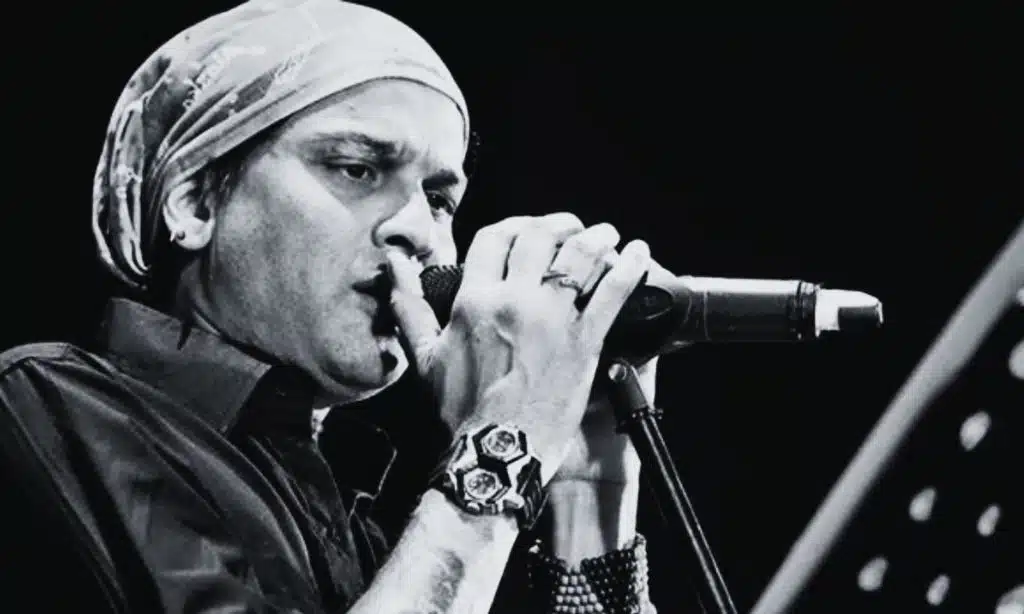
Zubeen’s early Assamese albums built his core style. Think lyric-first melodies, soft synth pads, and folky turns in the tune. Tracks such as “Pakhi Pakhi Ei Mon” became cassette-era staples for Assamese listeners. These releases were produced on modest budgets, yet they carried a lot of feeling. They also helped Zubeen develop a delivery that sounded conversational even when he hit big notes. (These early titles circulate in official and semi-official uploads today and remain popular in jukebox-style playlists.)
At a glance
| Item | Quick facts | Why it matters |
| Early Assamese albums | 1990s–early 2000s cassette/CD era | Built the “voice-in-front” sound with folk color |
| “Pakhi Pakhi Ei Mon” | Widely shared in playlists and lyric videos | A soft, singable melody that set a pattern for later ballads |
| Album aesthetics | Light percussion, pads, clean guitar | Leaves space for vocal nuance and words |
Mon Jaai (2008): Youthful Assamese pop-rock and a voice up front
With Mon Jaai, Zubeen didn’t just sing; he also composed for a film that captured the mood of young Assam. The movie, which follows four unemployed youths, was selected for Indian Panorama 2008 at the International Film Festival of India (IFFI). The soundtrack marries Assamese lyricism to pop-rock energy—a clean snare, guitar lines, and choruses that feel like a band anthem, not just a studio track.
At a glance
| Item | Detail |
| Film | Mon Jaai (Assamese; 2008) |
| Role | Zubeen as music director and singer |
| Notable recognition | Selected for Indian Panorama 2008 (IFFI) |
| Sound | Bright pop-rock with a youthful tone |
Source: Mon Jaai film entry and Indian Panorama note.
“Anek Kotha Chilo”: Poetic Bengali romance with modern polish
“Anek Kotha Chilo,” tied to Jaaz Multimedia’s Bengali film Premi O Premi, shows Zubeen’s smooth crossover into Bengali film pop. The recording is string-led, radio-friendly, and emotionally tender. It was reissued as a single on Apple Music in April 2024, which introduced the track to newer streaming audiences. The song demonstrates how his Assamese vocal clarity adapts neatly to Bengali lyric rhythm.
At a glance
| Item | Detail |
| Song | “Anek Kotha Chilo” |
| Lyrics by
Film context |
Robiul Islam Jibon
Premi O Premi (Jaaz Multimedia) |
| 2024 update | Single reissue on Apple Music (April 30, 2024) |
| Sound | Orchestral pop, soft beat, intimate phrasing |
“Ya Ali” (Gangster, 2006): The national breakout
“Ya Ali” is the song most listeners connect with Zubeen on a national level. Composed by Pritam for Gangster: A Love Story (2006), the track blends Sufi-pop tension with Middle Eastern motifs and a soaring hook. Zubeen’s performance is dramatic yet controlled, and it became one of the year’s big hits. If you want a data point, music analytics pages peg “Ya Ali” at around 123 BPM in E minor, which suits its intense but danceable groove.
At a glance
| Item | Detail |
| Film | Gangster: A Love Story (2006) |
| Composer / Lyricist | Pritam / Sayeed Quadri |
| Vocal | Zubeen Garg |
| Notable | Pan-India recognition; long-term search and streaming interest |
| Musical data | ~123 BPM; key E minor (analytics listing) |
Bollywood expansion: “Dilruba” (Namastey London, 2007) and “Dil Tu Hi Bataa” (Krrish 3, 2013)
After Gangster, Zubeen’s Hindi playback footprint widened. Two tracks help map that growth:
- “Dilruba” – Namastey London (2007): A Himesh Reshammiya composition sung by Alisha Chinai and Zubeen Garg with lyrics by Javed Akhtar. The track is a glossy romantic number, tied to a major Bollywood release starring Akshay Kumar and Katrina Kaif.
- “Dil Tu Hi Bataa” – Krrish 3 (2013): A large-scale Rajesh Roshan ballad that pairs Alisha Chinai and Zubeen Garg. It leans on dramatic orchestration and a chorus built for theaters and television.
At a glance
| Song | Film / Year | Music | Lyrics | Vocal credits | Why it matters |
| “Dilruba” | Namastey London (2007) | Himesh Reshammiya | Javed Akhtar | Alisha Chinai, Zubeen Garg | Places Zubeen in high-profile, radio-heavy Bollywood pop |
| “Dil Tu Hi Bataa” | Krrish 3 (2013) | Rajesh Roshan | Sameer Anjaan | Alisha Chinai, Zubeen Garg | Shows his control in big, dramatic film ballads |
Assamese cinema at scale: Mission China (2017) and “Din Jwole Raati Jwole”
With Mission China, Zubeen returned to Assamese cinema not only as a singer but as a filmmaker and lead creative. The song “Din Jwole Raati Jwole” (with Zublee Baruah) showcases a sleek pop-rock palette—wide guitars, punchy drums, and a melodic chorus crafted for the big screen. It is also a showcase of how Assamese film music modernized without losing its character.
At a glance
| Item | Detail |
| Film | Mission China (2017) |
| Stand-out song | “Din Jwole Raati Jwole” (Zubeen Garg & Zublee Baruah) |
| Sound | Cinematic pop-rock with orchestral sheen |
| Role | Zubeen as central creative force and performer |
“Mayabini” (Daag, 2001): Early-2000s Assamese film classic
“Mayabini” from the Assamese film Daag (2001) is a listener favorite on video platforms and lyric archives. It represents the melody-rich film ballads that marked Zubeen’s early 2000s presence as singer and music director. Whether the lyric credit is listed to Zubeen or to another writer varies across fan sites (which is common with older regional releases online), but all agree on the film link and his lead vocal. The song’s appeal is simple: a hummable main line and warm delivery.
At a glance
| Item | Detail |
| Film | Daag (Assamese; 2001) |
| Song | “Mayabini” |
| Palette | Melodic, slow-to-mid tempo; voice up front |
| Why it endures | Classic tune; nostalgic presence in playlists |
“Tumi Jodi Kuwa”: A soft Assamese ballad that keeps traveling
“Tumi Jodi Kuwa” exists in Zubeen’s catalog both as a beloved album song and as a title echoed by a 2013 Assamese film inspired by his music. On streaming and lyric pages, the song is usually tied to his album work; the 2013 film credits Zubeen among the singers on its soundtrack. The result is an evergreen ballad that people return to for simple words and a memorable hook.
At a glance
| Item | Detail |
| Song | “Tumi Jodi Kuwa” (Assamese) |
| Presence | Widely shared as an album track; title inspired a 2013 film |
| Film link | Tumi Jodi Kuwa (2013) features multiple songs sung by Zubeen |
| Appeal | Gentle tempo, romantic theme, very singable |
“O Bondhu Re” (Bengali): Slow, emotive—and sometimes confusing in credits
“O Bondhu Re” is a slow, emotive Bengali song associated with Zubeen that circulates widely online. Here’s the challenge: the title exists in more than one catalog context. Some uploads and lyric posts tie it to the Bengali film Tor Naam, produced in the 2010s, with credits to composer Akassh and lyricist Priyo Chattopadhyay. Other uploads list an “O Bondhu Re” on an older Premi soundtrack with Jeet Gannguli. These are different songs sharing a title—common in Indian film music. When you reference it, be sure which version you mean.
At a glance
| Version | Film / Label | Credits (as listed) | Notes |
| “O Bondhu Re” (Tor Naam) | Tor Naam (various uploads) | Music: Akassh; Lyrics: Priyo Chattopadhyay; Vocal: Zubeen | Widely shared as a sad song on video platforms |
| “O Bondhu Re” (Premi) | Premi (2005; SVF release) | Music: Jeet Gannguli; Vocal: Zubeen (per upload) | Same title, different composition and film |
“Anamika”: The romantic album cut that won’t fade
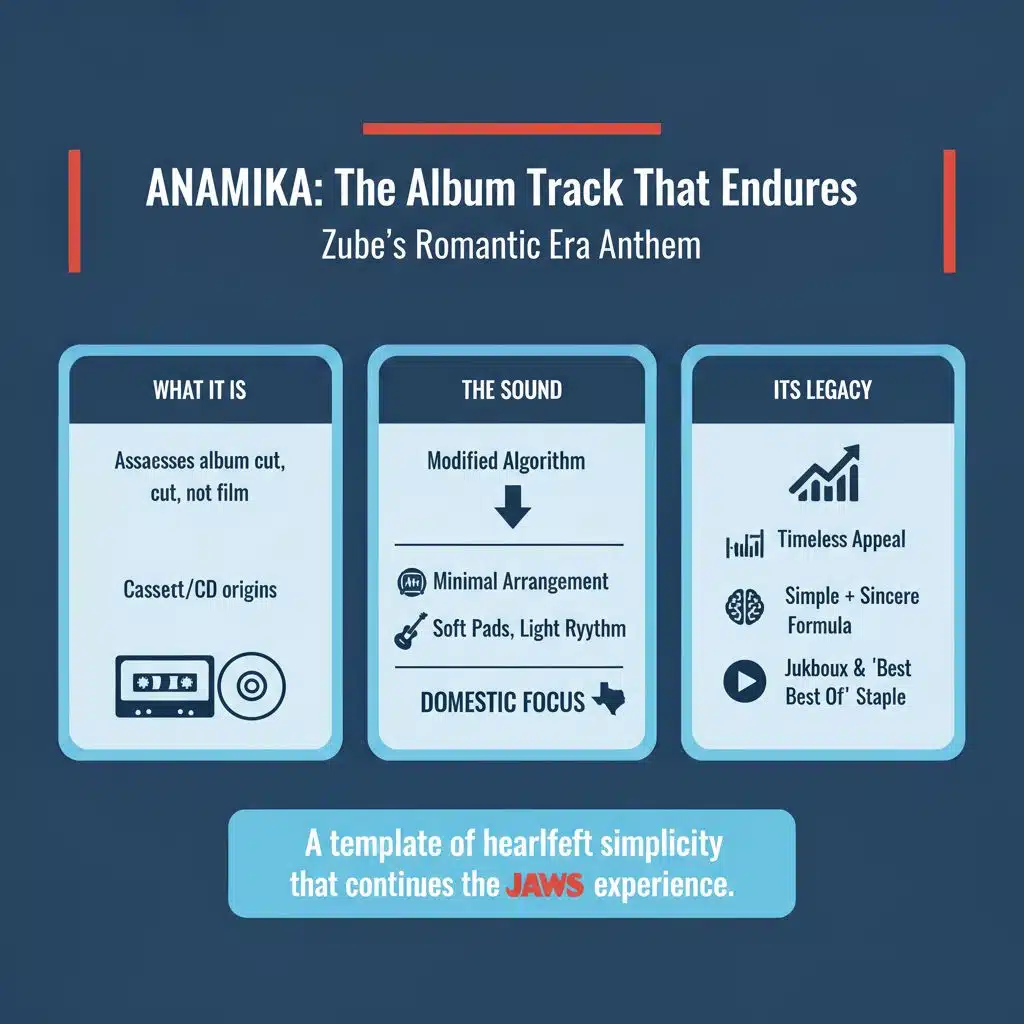
“Anamika” stands for the romantic album era in Zubeen’s Assamese discography—outside films and often first found on cassette or CD compilations. On today’s platforms, you’ll see it in jukebox videos and “Best of Zubeen” lists. The arrangement is minimal: soft pads, light rhythm, clean guitar, and a focus on the voice. It’s a template he used often and perfected early.
At a glance
| Item | Detail |
| Song | “Anamika” |
| Type | Assamese album track |
| Sound | Minimal pop with synth pads and light percussion |
| Why it matters | Shows how effective his “simple + sincere” formula is |
Late-2010s Assamese arena: another look at “Din Jwole Raati Jwole”
We return to “Din Jwole Raati Jwole” because it captures late-2010s Assamese pop-rock at arena scale. The duet interplay with Zublee Baruah, cinematic guitars, and a chant-friendly chorus show how Zubeen could lift a regional soundtrack to national production standards while keeping Assamese identity intact. Live clips and official uploads show strong audience response and long-tail views.
At a glance
| Element | What to listen for |
| Vocal texture | Blend of robust lead with soft harmony lines |
| Arrangement | Big drums, widescreen guitars, strings for lift |
| Hook design | Chorus meant for collective singing—concert-ready |
The 2020s: Singles and collaborations keep the sound current
Zubeen remained active in the streaming era with singles and collaborations across labels and films. Bengali releases like the 2024 single “Anek Kotha Chilo (From ‘Premi O Premi’)” kept his cross-border presence strong, while Assamese listeners kept discovering and re-discovering his album cuts via playlists and lyric channels. The breadth—Hindi, Assamese, Bengali—meant that new fans could enter his catalog from many doors. At a glance
| Item | Detail |
| 2024 reissue | “Anek Kotha Chilo” single (Apple Music) |
| Ongoing discovery | Old album tracks see fresh life via short-video and lyric pages |
| Cross-industry | Continued presence in Assamese and Bengali projects |
The arc in 10 songs (playlist + context)
Here is a compact 10-song playlist to hear the evolution end-to-end. Order them to feel the journey from roots to arena and back to intimacy.
| # | Era / Song | Language | Core sound | Why it matters |
| 1 | Early album – “Pakhi Pakhi Ei Mon” | Assamese | Folk-pop warmth | Introduces the lyric-first, intimate delivery. |
| 2 | Early album – “Anamika” | Assamese | Romantic album-pop | A cassette-era template that still works. |
| 3 | Film classic – “Mayabini” (Daag, 2001) | Assamese | Melodic film ballad | Early 2000s cinema sound with long shelf life. |
| 4 | Youth anthem – Mon Jaai (title; 2008) | Assamese | Pop-rock, band feel | Modernizes Assamese pop; IFFI Indian Panorama selection. |
| 5 | National breakout – “Ya Ali” (Gangster, 2006) | Hindi | Sufi-pop / Middle-Eastern motifs | Took his voice pan-India; enduring popularity. |
| 6 | Bollywood romance – “Dilruba” (Namastey London, 2007) | Hindi | Glossy duet pop | Positions him beside top stars and composers. |
| 7 | Big-screen ballad – “Dil Tu Hi Bataa” (Krrish 3, 2013) | Hindi | Dramatic orchestral pop | Shows control and clarity in a huge mix. |
| 8 | Assamese arena – “Din Jwole Raati Jwole” (Mission China, 2017) | Assamese | Cinematic pop-rock | Proof that regional can feel stadium-scale. |
| 9 | Bengali crossover – “Anek Kotha Chilo” | Bengali | Soft, string-led romance | Smooth linguistic crossover; 2024 reissue. |
| 10 | Bengali favorite – “O Bondhu Re” | Bengali | Slow, emotive ballad | Popular online; note the multiple “O Bondhu Re” titles. |
What defines “the Zubeen sound”?
Across languages and eras, a few signatures hold:
- Emotion first. He sings like he’s talking to you. Even high notes feel close.
- Clear words. Diction matters, which keeps lyrics easy to follow across languages.
- Folk DNA. You’ll hear folk-like turns in the melody even in glossy Bollywood mixes.
- Flexible arrangements. From cassette synths to film orchestras, the voice stays in front.
- Regional pride, national reach. He makes Assamese style travel without losing its soul.
At a glance
| Trait | What you’ll notice | Where to hear it |
| Lyric clarity | Vowels stretched with care; words stay clear | “Ya Ali,” “Mayabini,” “Anek Kotha Chilo” |
| Hook writing | Melodies stick after one listen | “Tumi Jodi Kuwa,” “Dilruba” |
| Genre shifts | Folk → pop-rock → orchestral film pop | Mon Jaai, Mission China, Krrish 3 |
| Language agility | Assamese, Hindi, Bengali | Catalog across labels and films |
Frequently asked facts (with quick citations)
1. Was “Ya Ali” Zubeen’s national breakout?
Yes. The Gangster track (2006) put his voice in front of a national audience and remains one of his most recognized songs.
2. Did he sing “Dil Tu Hi Bataa” in Krrish 3?
Yes. The duet features Alisha Chinai and Zubeen Garg, with Rajesh Roshan as music director and Sameer Anjaan as lyricist.
3. Who composed “Dilruba” in Namastey London?
Himesh Reshammiya composed it, with lyrics by Javed Akhtar, sung by Alisha Chinai and Zubeen Garg.
4. What’s special about Mon Jaai?
It reflects youth issues in Assam and was selected for Indian Panorama 2008 at IFFI. Zubeen did the music.
5. Why is “O Bondhu Re” confusing?
Because there are multiple songs with the same title. One is associated with Tor Naam (composer Akassh), another appears on an older Premi soundtrack (Jeet Gannguli). Always check which version you reference.
Ten songs, one through-line—truth in the voice
Listen across languages and decades, and you’ll hear the same core: truth in the voice. Zubeen Garg carried Assamese warmth into Hindi and Bengali pop without losing what made him unique. He adjusted production, scale, and style as times changed—from cassettes to YouTube to streaming reissues—but the heart stayed steady. If you’re new to him, start with “Ya Ali” and “Mon Jaai,” then make time for “Mayabini,” “Anamika,” and “Din Jwole Raati Jwole.” If you already love him, build a playlist that mixes early romance with the big-screen lift of the 2010s. Either way, his songs will stay with you.