Young people across the USA are stepping up to fight climate change. They know our planet is in trouble, and they’re not waiting around for someone else to fix it. Rising temperatures, plastic waste, and a growing carbon footprint demand bold action.
Many youth-led startups are leading this green revolution using clean energy and smart ideas. These companies tackle big problems like food waste, sustainable agriculture, and renewable energy access.
In this blog, you’ll discover 10 inspiring startups making waves in 2025 with their eco-friendly innovations. Keep reading; you don’t want to miss these game-changers!
Criteria for Selecting Innovative Youth-Led Green Startups
These startups must be legally incorporated for at least one year. This ensures they have a solid foundation and operate within the law. They also need a tested product or service, known as an MVP, that solves real problems.
A sustainable business model is key. Startups focused on areas like agriculture, digital currencies, or creative sectors get priority. These criteria help identify businesses ready to make lasting impacts in green technology and sustainability efforts.
10 Most Innovative Youth-Led Green Startups in the USA (2025)
Young minds are shaking up sustainable industries, blending fresh ideas with cutting-edge tech. These startups prove that tackling climate issues starts with bold action and smart solutions.
EcoCart: E-commerce carbon offset solutions
EcoCart, founded in 2019 by Peter Twomey and Dane Baker, helps people fight climate change. Based out of San Francisco, this startup focuses on reducing carbon footprints from online shopping.
They created a browser extension that calculates the CO2 emissions of your purchase. It then offers ways to offset those emissions.
The company has claimed major wins for the environment. EcoCart states it has offset 4 million pounds of CO2 and saved over 8,000 trees so far. Their goal is clear: push businesses toward green practices while making everyday shopping more eco-friendly.
As they grow, their tools help reduce reliance on fossil fuels and promote sustainable energy use too.
We want everyone to feel empowered to take climate action, says EcoCart’s team.
Ecotone Renewables: Sustainable community empowerment through food waste recycling
Ecotone Renewables turns food waste into power and nutrients. Based in Pennsylvania, this startup uses ZEUS digesters to recycle food scraps locally. These systems create energy and nutrient-rich soil, helping communities grow sustainable urban farms.
CEO Dylan Lew focuses on green technology and product design. COO Kyle Wyche brings expertise in environmental systems, while CFO Elliott Bennett leads finance and marketing efforts.
They also offer summer internships for 2024, boosting workforce development in clean technologies.
Aqualumos: PFAS destruction through photocatalytic reactors
Aqualumos fights water contamination with a smart solution. Their system uses photocatalytic reactors to destroy harmful chemicals like PFAS. These “forever chemicals” pollute drinking water and pose big health risks.
The technology is compact, affordable, and simple to use. It solves a trillion-dollar pollution problem with minimal effort needed from operators. By targeting PFAS directly, Aqualumos offers an effective method for cleaner water sources.
Dream Tank: Social impact accelerator for youth-driven green solutions
Dream Tank started in 2016, based in Boulder, Colorado. It focuses on sparking new ideas and green innovation among young minds. The program bridges youth creativity with real-world challenges tied to climate change and sustainability.
It provides mentorship, tools, and resources to help kids and teens develop their solutions. This accelerator empowers the next generation of leaders in tackling carbon emissions and promoting a clean economy.
Dream Tank is shaping a greener future by encouraging young people to take action now.
Arcadia: Simplified access to renewable energy
Arcadia started in 2014. Kiran Bhatraju founded it to make clean electricity easy for everyone. It connects people with community solar power, even if they do not own a home or solar panels.
Their tech platform, Arc, helps users track energy use and carbon emissions.
TIME and Statista named Arcadia one of the Top GreenTech Companies. The goal is clear—cutting carbon emissions by expanding access to renewable energy sources like solar power. This makes green energy affordable and simple for everyday consumers.
Dandelion Energy: Affordable geothermal installations
Dandelion Energy builds geothermal systems for homes. These systems provide heating, cooling, and hot water using renewable energy. Founded in 2017 in Mount Kisco, New York, Dandelion started as a project at X, part of Alphabet.
The company offers cost-effective options for homeowners to lower carbon emissions. Its funding comes from groups like NGP Energy Technology Partners. This technology helps people save money while supporting cleaner energy solutions.
Geothermal energy makes homes greener, but ideas can power people too. Cambio Labs focuses on shaping young minds for social change. They partner with schools, nonprofits, and businesses to teach kids about sustainability.
Their gamified courses on Journeyplatform make learning fun and impactful.
By mixing education with action, they help youth tackle climate change. Students learn skills in carbon accounting and green technologies while creating real projects in their communities.
This builds a green economy while boosting workforce development for the future.
4Ocean: Tackling ocean plastic pollution through cleanup initiatives
4Ocean, started by surfer Alex Schulze, fights ocean plastic pollution. Their team removes trash every day with full-time workers. By March 2024, they had cleared over 35 million pounds of waste from the water.
The company donates at least 1% of their sales to environmental causes. They also work with SeaTrees to restore blue-carbon ecosystems. Certified as a B Corp and Public Benefit Corporation, their efforts show true commitment to marine conservation and sustainability.
Pointz Mobility: Micromobility mapping solutions for sustainable transportation
Pointz Mobility started in 2021. It focuses on bike-friendly mapping for clean transportation. The company uses $520,000 in funding to create advanced maps. These maps analyze 33 key factors with GIS technology for the best routes.
Their goal is to help urban planners build smarter cities. By offering data-driven solutions, they promote cleaner travel options. Their tools support a more bike-centric, carbon-neutral future while lowering carbon emissions and traffic impact.
SolaBlock: Solar-integrated construction materials
Pointz Mobility reshapes urban transit, but SolaBlock brings power to walls. Based in Easthampton, Massachusetts since 2012, this startup creates solar bricks called Solar Masonry Units (SMUs).
These blocks embed photovoltaic cells directly into building materials.
Their patented wall systems improve energy efficiency while cutting carbon emissions. By integrating renewable energy into structures, they help reduce reliance on the grid. Builders can use these in schools, homes, or offices to store and generate clean energy right where it’s needed.
How These Startups are Driving Green Innovation
They use smart tech to cut carbon and reduce waste. These startups empower people and reshape how we think about sustainability.
Leveraging technology for sustainability
Smart technologies are reshaping sustainability. H2O Connected LLC uses sensors for water conservation, stopping waste before it grows. Density6 LLC creates transparent solar panels, turning windows into power sources.
Vertical farming saves land and cuts water usage by up to 95%. Digital twins simulate energy systems, improving efficiency without extra cost. These tools help reduce carbon emissions and protect resources faster than ever before.
Promoting circular economies
Startups are shaking up the way businesses think. EcoCart, for example, helps customers offset carbon emissions from shopping online. Boox.eco uses reusable packaging to cut waste.
Both show how a circular economy can replace the old “use-then-throw” mindset.
Circular models keep resources in use longer and reduce disposal problems. Research shows an annual 72% increase in studies on this since 2016, proving its growing importance. Many green startups adopt these ideas early, making them part of their core plans from day one.
Empowering communities and individuals
Green startups empower communities by funding eco-friendly projects and teaching sustainable practices. Programs like the Small Grants Program (SGP) focus on helping low-income groups and minorities.
These efforts build civic awareness and inspire local action.
Ecotone Renewables, for example, turns food waste into energy. This reduces landfill use while providing jobs in urban areas. Supporting such ventures creates green jobs, boosts renewable energy, and promotes environmental technologies that tackle climate change concerns.
Challenges Faced by Youth-Led Green Startups
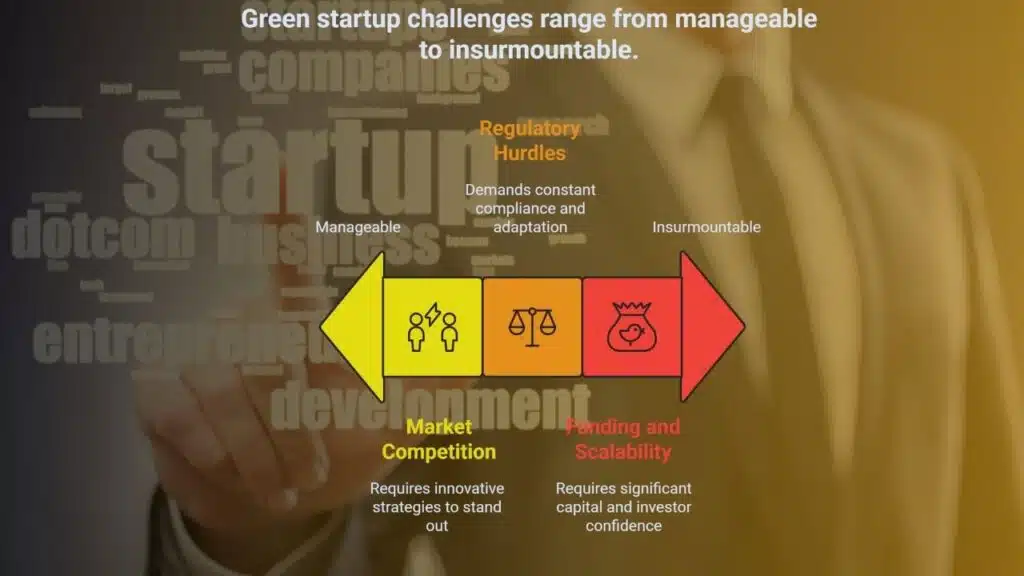
Young green entrepreneurs often face hurdles like carving a spot in a crowded market. Securing steady funding can feel like digging for gold with a teaspoon.
Funding and scalability
Green startups face big money problems. High costs and slow development scare many investors. Traditional backers see these projects as risky, making venture funding tricky to secure.
For example, building energy storage systems or tackling carbon emissions can cost millions upfront.
Government policies help ease this burden. Programs under the Inflation Reduction Act offer financial support to green ventures. Collaboration with banks and impact funds can boost growth too.
Scaling becomes easier when financial systems work together for a sustainable economy.
Scalability needs smart solutions and global thinking; let’s explore other hurdles next!
Regulatory hurdles
Rules for green businesses vary a lot by state. This can slow progress for youth-led startups. Madison Street Energy LLC faced this while dealing with renewable energy leases. They had to work hard to meet these regulations.
Staying updated on compliance is crucial. Failure to follow rules can lead to big risks, like fines or shutdowns. Government and corporate investments are helping fix some issues, but challenges remain.
Clear guidance and support will help more startups succeed in the long run.
Market competition
Tough competition pushes these startups to think smarter. Bigger companies have larger budgets, making it hard for smaller ones to stand out. Youth-led green startups often feel this pressure while trying to decarbonize industries or promote sustainable lifestyles.
Policies play a crucial role in reshaping markets. Long-term policies can level the playing field. Support from green finance and venture capital makes growth easier for young entrepreneurs aiming to tackle climate change.
Without this backing, staying ahead becomes an uphill battle in the race for greener solutions.
The Future of Youth-Led Green Startups
The future holds big changes, with young green thinkers shaping smarter grids, biofuel advances, and eco-friendly cities.
Trends in green innovation
Green innovation focuses on cutting carbon emissions and promoting a circular economy. Technology plays a key role, with smarter power grids helping cities save energy. Battery energy storage systems, like thermal batteries, are being developed to store excess renewable energy.
Startups use nature-based solutions to tackle climate change. Aquaponics and vertical farming grow food while conserving resources. Clean water efforts include desalination projects to reduce waste in the agricultural industry.
These trends push businesses toward net-zero goals and better environmental technology development.
Opportunities for collaboration and growth
Youth-led green startups can connect through platforms like ResearchGate. They can network with researchers, share ideas, and access scientific knowledge from anywhere. This boosts innovation and teamwork while solving climate change problems.
Events such as the World Bank Group Youth Summit allow young entrepreneurs to meet and learn. The 12th edition, on May 19-20, 2025, promotes partnerships for renewable energy projects and circular economy solutions.
These spaces help create connections that drive growth in tackling environmental challenges.
Next is how to support youth-led green startups in meaningful ways!
How to Support Youth-Led Green Startups
Small steps, like funding or spreading the word about their projects, can help these young changemakers thrive—read more to see how you can make a difference.
Investing in green innovation
Backing green startups can cut carbon emissions and boost clean energy. Venture capitalists play a key role by funding ideas like solar cells, biofuels, and EVs. These investments bring new jobs too.
In Boston alone, sustainability-focused companies thrive due to high GDP links.
Public support fuels growth in net-zero projects. Policies like the Chips Act help startups innovate tech for better energy infrastructure. Youth-led businesses need such programs to compete and scale quickly in the fight against climate change.
Promoting policy changes for sustainability
Young voices drive change. Movements like Fridays for Future push leaders to act on climate change. These efforts influence local and global policies, making sustainability a priority.
For example, carbon accounting laws can help track and reduce emissions.
Strong rules can promote renewable energy use and cut water waste. Policies supporting green building materials, like SolaBlock’s solar tech, create eco-friendly cities. Backing these changes helps startups grow while protecting the planet.
Encouraging educational programs for young entrepreneurs
Teaching future entrepreneurs is key to tackling climate change. Programs like the Youth Ecopreneur Programme (YECO) train young minds in green innovation. They help provide skills like carbon accounting, vertical farming, and creating smart cities.
These programs don’t just teach—they inspire action. Startups use lessons learned to build projects that cut carbon emissions or develop renewable energy sources. Such education boosts confidence and builds a skilled workforce for net-zero goals.
Takeaways
These startups prove that young leaders are shaping a greener future. Their fresh ideas, like recycling waste or using solar tech, show real promise. Each solution is practical and tackles big problems like pollution and energy use.
By supporting them, we can boost green innovation and cut carbon emissions faster. The planet needs action now, so let’s back these bold trailblazers today!
FAQs
1. What are some examples of youth-led green startups in the USA?
Startups like Fervo Energy, Beta Technologies, and others focus on renewable energy, vertical farming, and sustainable fisheries to reduce carbon emissions and fight climate change.
2. How do these startups address carbon emissions?
Many use carbon accounting tools or work toward creating a circular economy. Some develop technologies like Powerwall systems for storing energy or insulated glass to improve efficiency.
3. Are these startups working toward net zero goals?
Yes, most aim for net zero by focusing on environmentally friendly solutions such as hemp fiber products, electric cars, and reducing microplastics that harm ecosystems.
4. What role does technology play in these businesses?
Technology is key. The Internet of Things helps automate processes while platforms like Michigan Central support workforce development for green innovation.
5. Do they tackle unsustainable practices directly?
Absolutely! They replace harmful materials like polychlorinated biphenyls (PCBs) with safer alternatives and promote ideas that minimize lifecycle impact on the environment.
6. Why are youth leading this movement now?
Young leaders see climate change as urgent; they bring fresh ideas to industries stuck in old habits while pushing for bold changes using modern tools like Megapack systems and automated solutions.