
Ever jumped into forex trading, only to watch your hard-earned cash vanish in a flash of bad calls? You’re not alone, pal. Many folks chase quick wins in the currency market, but end up wrecked by wild emotions like fear and greed. They treat it like a casino game, not a smart business move. Imagine: You spot a hot currency pair like EURUSD, your heart races, and boom, you jump in without a plan. That’s the trap.
It leads to revenge trading, where one loss sparks a chain of impulsive bets. No wonder so many quit, frustrated and broke.
Nial Fuller, a pro trader who’s taught over 25,000 students since 2008, says trading is 80% mental and just 20% technical. Skills in technical analysis or fundamental analysis matter, sure, but your trading mindset rules them all.
Learn to build discipline, master risk management, and use tools like a trading journal to track your path. We’ll tackle pitfalls like market volatility and overconfidence, too.
Stick with us, and turn your trades into steady success. Ready to level up?
Understanding the Forex Trading Mindset
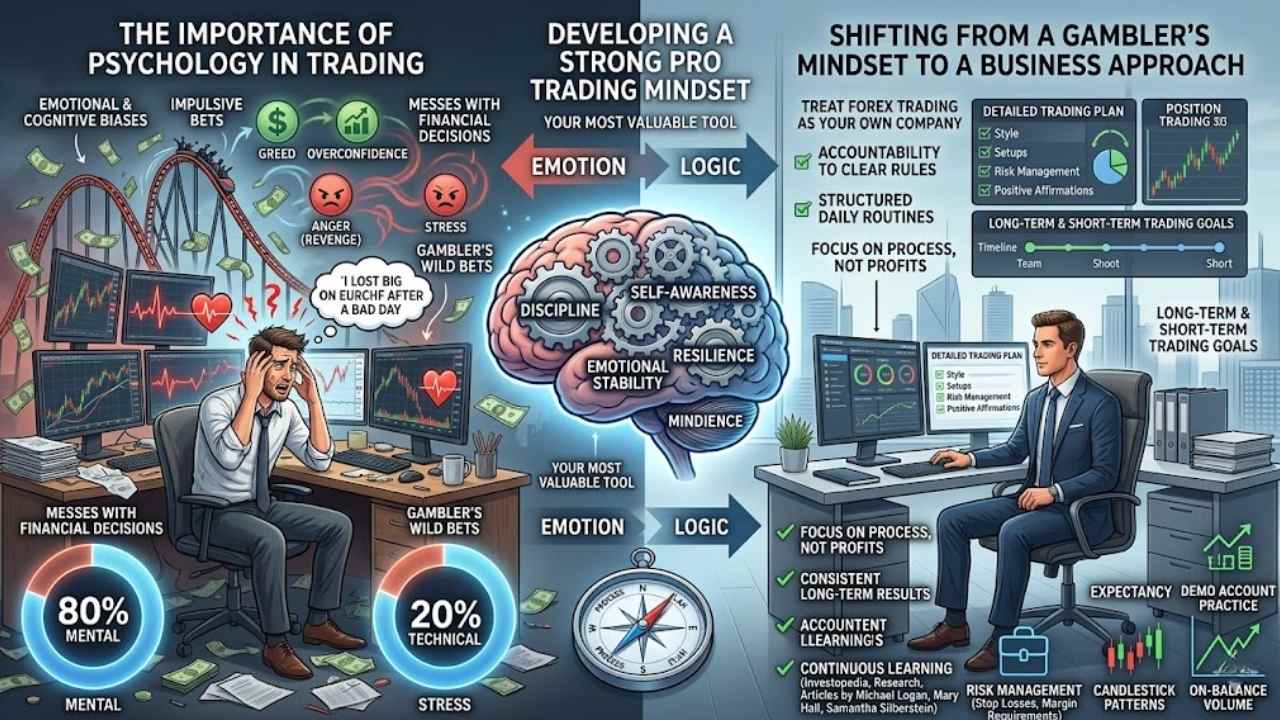
Ever wonder why some traders crush it in the forex market while others flop? It boils down to trading psychology, that mental edge separating pros from rookies, like turning a wild gamble into a smart business play.
The importance of psychology in trading
Trading hits you like a rollercoaster, folks. Experts call it 80% mental and 20% technical, which shows how psychology rules the game. You build a strong pro trading mindset, and it becomes your most valuable tool for trading success.
Imagine a trader stares at currency pairs on Metatrader 4, heart racing from market sentiment. Fear grips them, leading to quick, bad calls. Emotional and cognitive biases, such as fear and overconfidence, mess with financial decisions for newbies and pros alike.
Shift that to a business approach, and you ditch the gambler’s wild bets. Behavioral finance research proves emotions, stress, and mental shortcuts sway trading outcomes big time. Develop calm, emotionally stable mindsets, and you score consistent long-term results in the forex market.
Discipline turns into your secret weapon against these traps. Traders face greed that pushes risky leverage on CFDs or cryptocurrency trades. Overcome it with self-awareness, and you avoid emotional mistakes.
Imagine chatting with a buddy who says, “I lost big on EURCHF because I chased revenge after a bad day.” That highlights common pitfalls in day trading or swing trading. A correct mindset supports consistent actions in your trading strategy.
Strengthen it through constant learning, and you adapt to the shifting financial markets. Research backs this up; calm traders handle technical indicators and money management better.
Build that resilience, folks, it powers your path to forex trading success. The trader’s mindset is their most valuable tool in achieving trading success.
Shifting from a gambler’s mindset to a business approach
Many traders start with a gambler’s thrill, chasing quick wins like a slot machine jackpot. This approach leads to emotional ups and downs, ignoring the steady path of success. Shift to a business mindset instead.
Treat forex trading as your own company. You have no boss watching over you, so hold yourself accountable to clear rules. Create a detailed trading plan that covers your style, setups, risk management, and positive affirmations.
Review it often to stay on track. Focus on solutions when uncertainty hits, not knee-jerk reactions. Winning traders set long-term and short-term trading goals to dodge distractions.
They build structured daily routines that separate them from casual gamblers. Enjoy the perks of this life right now, like balanced habits, without waiting for profits.
Picture yourself as the CEO of your trading operation, making smart calls amid market analysis and currency exchange swings. Adopt tools like a demo account from a reliable forex broker such as Dukascopy or Orbex to practice without real risk.
Use platforms like JForex or MetaTrader 5 for automated trading and testing strategies. Emphasize expectancy in your trading system, along with stop losses and margin requirements.
Stay professional by focusing on process, not just greed or fear. Build resilience through constant learning from sources like Investopedia, perhaps articles by Michael Logan, Mary Hall, or Samantha Silberstein.
Include candlestick patterns and on-balance volume in your routine for better decisions. Set up wealth management habits early, even drawing from banking insights in Switzerland or SNB policies.
This shift turns impulsive bets into calculated position trading moves.
Key Traits of a Winning Forex Trading Mindset
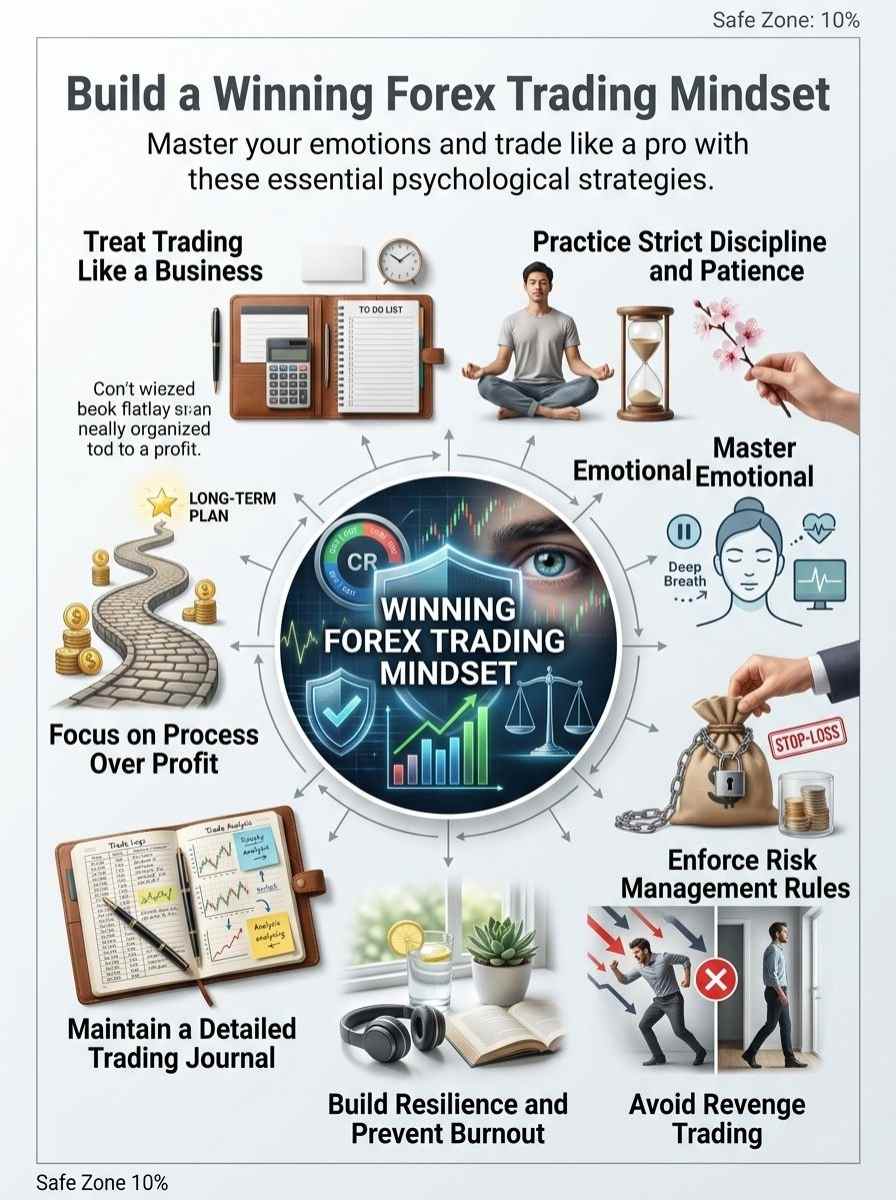
You know, folks often chase quick wins in forex, like gamblers at a slot machine, but the real edge comes from rock-solid discipline that keeps you steady through market swings. Imagine: mastering your emotions, much like a pro athlete stays calm under pressure, sets you up for those consistent gains on platforms like SWFX, and hey, who wouldn’t want to ditch the stress for smarter trades?
Discipline and patience
Discipline stands as the backbone of a winning mindset in forex trading. Think of it like the strength of an oak tree, holding firm against wild market storms and temptations. Traders define discipline as sticking to your rules, even when emotions scream to break them.
You build this through high self-confidence and patience, since doubt often trips up performance. Professional traders stress that profits come from smart waiting, not constant action on your trading platform.
Overtrading from impatience drains your capital fast. In fact, discipline proves the top predictor of long-term success in forex, stocks, and beyond.
Winning traders shine with sharp organization and focus, pulling ahead of the pack. They craft routines that turn into habits, and those positive habits drive steady profits in trading strategies or even binary options.
Pair discipline with patience, and you resist urges to chase quick wins on platforms like SWFX or with assets like Dukascoins. Stay consistent, and watch your emotional control grow stronger each day. Profits are often achieved through waiting rather than frequent trading, say seasoned pros in the forex world.
Emotional control and self-awareness
Traders succeed when they master emotional control. This skill builds on self-awareness. You manage fear, greed, and stress every day in forex. Picture a trader spotting a hot setup on trading platforms.
Excitement surges, but hold on. Take a 3-5 second pause. Use deep breathing to calm down. Self-awareness means you spot your mental state first. You check emotions before any decision.
This approach spots harmful patterns, like chasing every chance. Mature traders stay objective. They avoid impulsive moves that wreck accounts.
Emotional discipline keeps you from low-quality trades. Focus on high setups instead. Identify triggers, such as revenge trading, FOMO, or panic selling. Step away if needed. Self-belief in your strategy matters a lot.
Too much confidence hurts, though. Build this through practice on trading platforms. You recognize behaviors that damage results. Control sets pros apart from gamblers. Stay aware, and you trade smarter.
Setting realistic expectations
Set real goals in forex trading to dodge those shady scams and get-rich-quick traps. You know, like aiming for steady, compound growth instead of chasing overnight riches. Accept losses as part of the game, folks, they happen to everyone.
Focus on the process, not just the profits, and watch how that mindset shifts everything.
Unrealistic hopes push you into overtrading or wild risks, and nobody wants that headache. Pros stick to rules and strategies, always eyeing the long game over quick hits. Break success into small tasks with achievable targets, it cuts the pressure and boosts your steady performance.
Try visualization tricks to prep your mind for tough spots, like picturing calm trades amid market chaos. Long-term wins beat short bursts every time, so build that habit now.
Steps to Develop a Winning Trading Mindset
You know, taming your feelings in forex trading feels like wrestling a slippery eel, but start by spotting those emotional triggers during trades, jot them down in a journal, and swap knee-jerk reactions for calm breaths.
Next, build a daily habit with stop-loss orders and position sizing to guard your cash, stick to it like glue, and watch how this setup turns wild swings into steady wins, ready to dive deeper?
Practice emotional awareness and control
Emotions play a big role in forex trading, often sneaking up like uninvited guests at a party. You can turn them into allies by building awareness and control, leading to smarter decisions on the charts.
- Spot your emotional triggers right away, such as fear that makes you sell in a panic or greed that pushes premature exits; traders who recognize these, like stress from a losing streak, make more rational moves and dodge costly slip-ups.
- Take a quick 3-5 second pause before placing any order, giving your brain a moment to cool off; this simple break acts as a safety net, stopping impulsive trades that feel right in the heat but sting later.
- Grab a pre-trade checklist to guide your steps, almost like a trusted map through foggy markets; it keeps you grounded, ensures self-honesty, and cuts down on those knee-jerk reactions that wreck accounts.
- Try deep breathing techniques to calm your mind, inhaling slow and steady before a big decision; imagine it as hitting the reset button, easing tension so you trade with a clear head instead of a racing heart.
- Focus on managing emotions like revenge trading, where a bad loss tempts you to chase it back fast and furious; by naming this urge out loud, maybe in a quick note to yourself, you build the muscle to step back and avoid the trap.
- Tackle FOMO head-on, that fear of missing out that lures you into rash buys; chat with yourself like an old friend, “Hey, is this trade solid or just hype?” and watch how it shrinks those emotional blind spots.
- Build self-awareness through daily check-ins, asking what sparked your last greedy move or fearful retreat; this honesty minimizes negative hits on your trades, turning wild feelings into tools you control.
- Aim to understand and handle emotions, not wipe them out completely; think of them as waves in the ocean, you learn to surf them, which boosts your control and lifts your total trading results.
Develop a routine for consistency
A strong routine turns chaos into calm in forex trading. You build habits that drive success, step by step.
- Traders need a structured daily routine to stay on track; define clear times for market analysis and actual trades to keep things sharp and focused.
- Good routines create solid habits that boost your trading wins; they shape how you act each day and lead to better results over time.
- Top traders put learning, fitness, discipline, and plan loyalty first, even if it means skipping some fun stuff like extra TV time.
- Set short-term goals that add up to big wins; these pros chase steady growth, like climbing a ladder one rung at a time, to hit those long-haul targets.
- Stick to consistent practices, and watch your confidence grow; this approach locks in a upbeat mindset, much like watering a plant to make it thrive.
- Review your trading plan every week, or better yet daily, to hold yourself accountable; it keeps discipline tight and stops slip-ups from creeping in.
- Try balanced routines with low-frequency trades for quick life perks; you get to savor free time, say, hitting the gym or family dinners, without losing your edge.
- A solid daily routine sharpens your focus and blocks out distractions; imagine it as a shield against random urges that pull you off course.
Strengthen your risk management strategy
Risk management keeps your forex trades safe and steady. You build it like a strong wall against big losses.
- Money discipline starts with smart money management that covers risk and reward strategies, so you always know how much to bet without wiping out your account.
- Stick to a risk management plan as the core of successful forex trading, because it guides every move and keeps emotions from messing things up.
- Set maximum daily loss limits to block emotional trading and force you to stop when your strategy performs poorly, like hitting the brakes before a crash.
- Craft a trading plan that spells out risk management details, such as lot sizes and stop-loss strategies, to make decisions clear and consistent every time.
- Keep discipline in risk management to grow positive habits and aim for steady profits, turning small wins into a reliable income stream over months.
- Dodge overconfidence after big wins to avoid ramping up lot sizes without thought, since that often leads to quick, painful reversals in your portfolio.
- Never ignore stop-losses out of fear, as that invites bigger losses; always follow your set exit points to cut bad trades short and protect your capital.
- Skip chasing losses by doubling down on failing trades, which only makes things worse and drains your account faster than a leaky bucket.
Managing Common Psychological Pitfalls
Imagine this, you’re deep in a trade, heart pounding like a drum. Fear whispers, “Sell now, or lose it all.” Greed shouts, “Hold on, riches await.” These feelings wreck trades fast.
Spot them early. Pause. Breathe deep. Ask, “Facts or emotions driving me?” Conquer them with calm thoughts. Revenge trading hits next. You lose big. Anger boils. You jump back in, chasing payback.
Bad move. It piles on losses. Skip it. Stick to rules. Impulsive choices strike in chaos. A market spike tempts you. You act without thought. Regret follows. Slow your roll. Review your plan.
Use deep breaths or a quick walk. Build these habits. Your mind stays sharp. Trades turn smarter. Eager for resilience tips? Read on.
Overcoming fear and greed
Fear and greed act as the main emotions that wreck trading behavior. They push you into emotional trading, which often ends in poor outcomes. Picture fear as that nervous voice urging you to close winning positions too soon, cutting your profits short.
Greed, on the other hand, tempts you to take oversized positions, risking more than you should. Loss aversion plays a sneaky role too; it makes traders cling to losing trades far longer than smart.
You can beat these traps with self-awareness, pausing before any trade fueled by fear or greed. Think of Fear of Missing Out, or FOMO, as that itchy impulse leading to rushed trades and bad entries.
Greed might drive you to chase trades without solid analysis, like jumping into a pool without checking the water. Professional traders turn to mindfulness; it keeps them calm and objective in tough spots.
Build this habit, and you’ll trade with a clearer head, dodging those impulsive decisions that sting.
Avoiding revenge trading and impulsive decisions
Revenge trading hits hard when you double down on bad spots to chase lost cash, and it often digs a deeper hole. Imagine this, you lose big on a trade, anger flares up, and you jump back in without thinking, only to watch things get worse.
Traders fall into this trap from emotional reactions, like stubbornness that keeps you glued to losing positions instead of cutting them loose. That harms your account fast. Overtrading sneaks in too, fueled by boredom or wild hopes, and it racks up losses before you blink.
Chasing those losses? It’s like pouring gas on a fire, turning small slips into major burns.
Impulsive decisions strike from fear or impatience, leading you to snag profits too soon and miss bigger wins. Emotional trading clouds your judgment, pushing unplanned moves that slash profits.
Try mindfulness tricks to spot these urges early, and curb them with quick self-checks. Grab a trading journal for notes, then review after 30 to 50 trades to uncover those hidden emotional pulls.
Build a pre-trade checklist to stay grounded, like a safety net that keeps you from leaping without a plan. Stick with these habits, and you’ll dodge the pitfalls that trip up so many in the forex game.
Building Resilience in Forex Trading

Resilience acts as your shield in forex trading. Keep learning every day. Markets change fast, so adapt quickly. Think of yourself as a surfer riding wild waves, adjusting to each swell.
Breaks matter a lot. Step away from the screen, grab a coffee, or walk outside. This stops burnout dead in its tracks. You recharge, then jump back in with fresh energy. Constant growth builds that tough skin you need.
Share a quick story: a trader I know ignored rest, crashed hard, but learned to pause – now he thrives. Stay sharp, stay resilient. Curious about tools that boost this? Keep going to find out.
The importance of constant learning and adaptation
Winning traders make learning a daily habit. They focus on continuous improvement to stay sharp. This keeps their mindset strong in the shifting forex world. Think of it like a surfer riding waves, you adapt or wipe out.
Continuous education helps you handle market changes with ease. It builds the adaptability you need for those emotional ups and downs too. See, developing this winning mindset turns into an ongoing adventure, not some quick fix.
Test new ideas carefully, but stick close to your solid trading rules for real growth. Use self-assessment to spot mental roadblocks and tweak your strategies. Building resilience means playing to your strengths and fixing weak spots.
A solid trader mindset taps into your own special “trader DNA” for big potential. Hey, imagine chatting with a pro who says, “I learn something new every trade, it keeps me ahead.” That approach drives long-term wins.
Taking breaks to prevent burnout
Traders often push too hard, chasing every market move. Stop that habit. Taking breaks from trading prevents emotional and mental burnout, plain and simple. Overtrading and constant market monitoring lead to fatigue and diminished performance, like running a marathon without water.
Schedule those pauses in your routine; they promote long-term well-being and consistency. Imagine your brain as a battery, it needs recharging to stay sharp.
Incorporate stress management techniques, such as mindfulness or meditation, to support emotional balance. Opt for low-frequency trading styles; they deliver immediate lifestyle benefits, such as reduced stress.
Add regular self-care and fitness to your resilient trading routine, folks. Avoid trading during periods of high stress or emotional instability; that choice prevents poor decisions.
Build a supportive community or network of fellow traders; they provide encouragement and help manage stress, turning solo struggles into shared wins.
Tools and Techniques for Success
7. Tools and Techniques for Success: Grab a trade log to jot down your wins and slips, folks, it acts like a mirror showing your real trading habits, and pair it with a quick checklist before each deal to dodge those sneaky errors—stick around for the full scoop on turning these habits into gold.
Using a trading journal for self-assessment
A trading journal serves as your secret weapon in forex trading, like a trusty sidekick that spots your blind spots. You log everything, from trades to thoughts, turning mistakes into stepping stones for better decisions.
- Log every trade and add market commentary in your trading journal to boost accountability, because it forces you to own your choices, no excuses. This habit keeps you grounded, like a mirror showing your true trading self. Picture jotting down why you entered a position on EUR/USD during a volatile session; it pins down what worked or flopped. Traders who do this often spot patterns they missed in the heat of the moment.
- Keep a record of trades to help with performance analysis and generating insights, so you can tweak your approach based on real data. Imagine reviewing last month’s entries and realizing you chase trends too late; that insight sharpens your edge. You build a clear picture of wins and losses, turning raw numbers into smart strategies. Folks, it’s like having a roadmap that guides you away from repeated errors.
- Document all trades and reflections in your trading journal for objective self-assessment, giving you an unbiased view of your habits. Say you note how a big loss on GBP/JPY rattled you; that entry highlights emotional triggers to fix. This practice strips away bias, letting facts speak louder than gut feelings. Over time, you see your growth, clear as day.
- Review journal entries regularly to identify emotional patterns and trading inefficiencies, catching issues before they snowball. You might notice fear creeps in after two losses, leading to skipped opportunities; jot that down and adjust. It’s empathetic to admit these slips, hey, we all have them, but spotting them early saves your account. Regular checks turn vague hunches into concrete fixes.
- Use journals to support self-awareness by tracking emotional responses to wins and losses, helping you stay cool under pressure. For instance, celebrate a solid profit on USD/CAD without getting cocky, and note that rush; it builds mental toughness. You learn what stirs greed or panic, like a personal therapist in notebook form. This tracking fosters empathy for your own journey, making you a calmer trader.
- Monitor personal progress and celebrate small wins in your journal to reinforce positive behaviors, because those tiny victories add up big. Think about marking a week of sticking to stop-loss rules; pat yourself on the back, it motivates more of the same. You track how discipline grows, turning good habits into second nature. Humor me, it’s like giving yourself a high-five for not impulse-buying that flashy indicator.
- Rely on journals for tangible evidence of adherence to trading strategies and rules, proving you’re on track or need a course correction. Entries show if you followed your plan on AUD/USD or deviated; that proof keeps you honest. You gather hard facts, not just memories, to validate your system. It’s straightforward, like a report card that cheers your consistency.
- Get feedback from journals to assist in refining trading approaches over time, evolving your style with each review. Suppose entries reveal overtrading during news events; use that to tighten rules. You adapt steadily, building a stronger mindset. This ongoing refinement feels rewarding, like polishing a skill until it shines.
Following a pre-trade checklist
Traders, you know how easy it is to jump into a trade on a whim. That’s where a pre-trade checklist comes in, acting like your personal guardrail against costly slip-ups.
- Grab your pre-trade checklist before any trade, and use it to make sure your setups match your trading strategy right from the start. This simple step lines up every detail, so you enter trades with confidence. Think of it as a quick huddle with yourself, double-checking the basics to avoid those “what was I thinking” moments later on.
- Checklists cut down on emotional sway, folks, by keeping your head clear during execution. They promote steady habits in how you handle trades, much like a coach enforcing team rules. You feel that pull of excitement or doubt? Your list steps in, calms the storm, and guides you back to rational moves.
- Build pre-trade routines that include reviewing your checklist, and watch impulsiveness fade away. These habits boost your discipline, turning chaotic sessions into smooth operations. Imagine skipping the wild guesses; instead, you methodically tick off items, building a fortress of calm focus.
- Lean on checklists to confirm risk management details before you commit. They help verify parameters like position sizes or exit points, so you commit only when everything adds up. It’s like having a trusty mechanic inspect your car before a long drive, spotting issues that could wreck your journey.
- Stick with a checklist to dodge pitfalls such as revenge trading or those FOMO urges that scream “buy now.” This tool acts as your shield, preventing knee-jerk reactions that drain accounts. Hey, we’ve all felt that sting after a bad loss; your list reminds you to pause, breathe, and trade smart instead.
- Keep using your checklist consistently, and it strengthens how you follow your trading plan in general. This reinforcement turns good intentions into unbreakable routines. Think of it as daily reps at the gym; over time, adherence becomes second nature, powering your long-term success.
- Review your trading plan and checklist at least weekly, or daily if you can swing it, to stay sharp. This habit keeps everything fresh in your mind, ready for action. You might jot notes on tweaks, ensuring your approach evolves without losing its core strength.
- Include key items in your checklist, such as confirming technical signals that match your criteria. Don’t forget stop-loss placement to protect against big drops, plus risk-reward ratios that favor wins over losses. For example, always ask: Does this signal line up? Is my stop-loss set tight? Does the potential reward beat the risk by at least 2-to-1? These checks turn guesswork into a solid game plan.
Long-Term Strategies for Consistent Results
8. Long-Term Strategies for Consistent Results: You build lasting success in Forex trading when you zero in on the process, like perfecting your swing trades and entry points, instead of chasing quick profits, and you commit to your personal trading strategy, day in and day out—think of it as training for a marathon, not a sprint, so if that sparks your interest, stick around for the full scoop.
Focus on process over profit
Professional traders stress this key idea. They focus on the process, not short-term profits. Think of trading success like piecing together a puzzle. You master each part for the full picture.
Long-term consistency beats quick wins every time. It builds sustainable results in forex. Set long-term and short-term goals. These keep you aimed at steady growth.
Routines and habits create predictable outcomes. Stick to them for real progress. Review your trades often. Manage emotions to form strong patterns. Evaluate after 30 to 50 trades.
This sharpens your approach. Process focus cuts down emotional choices. You trade smarter, with less regret.
The value of sticking to a defined trading plan
Stick to your defined trading plan, and you’ll build positive habits that lead to consistent profitability. Print it out or write it down to make it tangible, then review it regularly.
This plan must include specific details about your style, setups, risk management, and affirmations. Think of it like a roadmap that keeps you on track, no matter the market twists.
Successful traders stay organized and focused, thanks to their strict adherence to these plans. They operate without external supervision, so accountability to the plan becomes crucial.
Deviate from it, and you often fall into emotional, impulsive trading mistakes.
Adherence to a detailed trading plan drives accountability and discipline in your daily routine. It supports capital protection and builds your confidence over time. Imagine sailing through stormy seas with a solid compass; that’s what your plan does for you in forex.
You foster those winning habits by never straying, turning potential pitfalls into steady gains. Traders who embrace this approach avoid the chaos of guesswork, and they thrive in the long run.
Final Thoughts
You’ve learned that a winning forex mindset starts with discipline, patience, and emotional control, turning trading from a gamble into a solid business. These strategies, like keeping a trade log and using a pre-trade list, fit right into your daily life without much hassle.
They matter a lot because mindset drives 80% of your success, helping you dodge big losses and build steady gains over time. Check out Nial Fuller’s blog for more tips from a pro who won the Million Dollar Trader Competition. Picture yourself as that strong oak tree, bending but never breaking in tough markets. Now go apply this stuff, and watch your trading game soar.