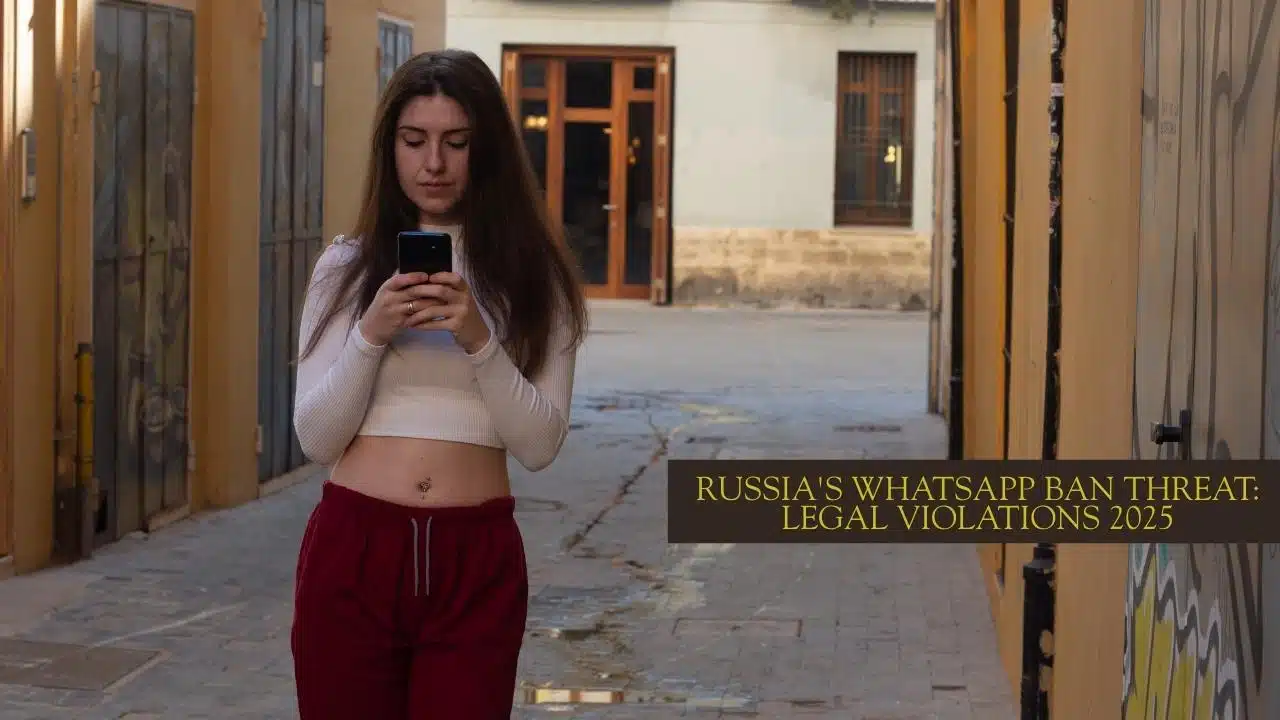
Russia’s communications regulator, Roskomnadzor, issued a stern warning on November 28, 2025, announcing plans to escalate restrictions on WhatsApp due to persistent violations of Russian legislation. The agency, responsible for overseeing media and internet activities, claims that the Meta-owned messaging application has repeatedly ignored requirements designed to curb criminal activities within the country. According to official statements, these violations include facilitating the organization of terrorist acts, recruitment of individuals for such crimes, and enabling widespread fraud schemes that target Russian citizens.
This development marks a significant intensification in Russia’s ongoing efforts to regulate foreign digital platforms, building on earlier measures implemented throughout 2025. Roskomnadzor emphasized that the restrictions will be introduced gradually to allow users sufficient time to transition to compliant alternatives, but failure to address the issues could lead to a complete nationwide blockade of the app. Users in major cities like Moscow have already experienced notable disruptions, including intermittent access failures and degraded service quality, which have compounded frustrations amid the broader push for digital sovereignty.
The announcement comes at a time when WhatsApp maintains its position as one of the most essential communication tools for millions of Russians, handling everything from personal conversations to professional coordination. With over 97 million monthly active users as of late 2025, the app’s potential removal could disrupt daily life, business operations, and even emergency communications across the country. Roskomnadzor has framed these actions not as censorship but as necessary steps to protect national security and public safety, urging immediate compliance from Meta to avert further escalation.
Accusations of Criminal Facilitation and Non-Compliance
At the core of Roskomnadzor’s grievances are allegations that WhatsApp serves as a conduit for serious illegal activities on Russian territory. The regulator specifically points to the app’s role in coordinating terrorist operations, including the planning and execution of attacks, as well as the recruitment of participants through encrypted channels that evade detection. Additionally, authorities accuse the platform of being a hub for financial scams, identity theft, and other cybercrimes that exploit vulnerable users, often resulting in significant economic losses for individuals and businesses.
Roskomnadzor asserts that WhatsApp has consistently failed to fulfill legal obligations under Russian data laws, which mandate the storage of user information and its provision to law enforcement upon request for investigations into fraud, terrorism, and extremism. These requirements stem from legislation enacted in recent years, including the Yarovaya Law and subsequent amendments that prioritize national security over end-to-end encryption features. The agency argues that the app’s privacy-focused design creates a “black hole” for monitoring threats, allowing criminals to operate with impunity while ordinary users bear the risks.
Meta, WhatsApp’s parent company, has pushed back against these claims, maintaining that the platform’s encryption is essential for protecting user privacy and preventing unauthorized surveillance. In previous statements, WhatsApp representatives described Russia’s demands as an attempt to undermine secure communications for millions, potentially violating international standards on data protection. Despite these defenses, Russian officials dismiss such responses as excuses, insisting that compliance would not compromise legitimate user data but rather enable targeted interventions against threats. This standoff highlights deeper tensions between Western tech policies and Russia’s sovereign internet framework, where platforms must balance global operations with local mandates or face exclusion.
Phased Restrictions and Timeline of User Impact
The rollout of restrictions against WhatsApp has unfolded methodically over several months, reflecting a strategic approach to minimize widespread disruption while applying pressure on Meta. Initial measures began in August 2025, when Roskomnadzor announced the throttling of voice and video calling features on both WhatsApp and Telegram, citing them as primary vectors for fraudulent activities like phishing and scam calls. This anti-fraud initiative involved reducing call quality and connection speeds, which users noticed as choppy audio, dropped sessions, and overall unreliability, particularly in high-traffic urban areas.
By November 2025, these limitations had expanded to affect basic messaging in some regions, with reports of delayed deliveries and temporary outages surging across platforms like VKontakte and Telegram forums. Roskomnadzor justified the phased implementation as a way to give the 97 million WhatsApp users in Russia ample opportunity to adapt, recommending a shift to verified national services that align with local laws. The agency has monitored compliance closely, noting that earlier warnings in September and October went unheeded, prompting the latest threat of total blockade.
The real-world effects on users have been profound and varied, depending on location and usage patterns. In Moscow and St. Petersburg, where WhatsApp facilitates everything from ride-sharing coordination to family group chats, residents have turned to VPNs and alternative networks to bypass slowdowns, though these workarounds often prove unreliable or illegal under Russian regulations. Rural areas, with less robust internet infrastructure, face even greater challenges, as degraded services exacerbate connectivity issues already strained by regional internet shutdowns tied to security concerns. Daily active users, numbering around 82 million, continue to engage with the app despite these hurdles, but analysts warn that prolonged restrictions could erode trust and accelerate migration to domestic options, potentially fragmenting Russia’s digital communication landscape.
WhatsApp’s Enduring Popularity Amid Challenges
Despite the mounting pressures, WhatsApp remains Russia’s preeminent messaging service, boasting a user base that dwarfs its competitors and underscores its seamless integration into the nation’s social and economic fabric. As of September 2025, the app commanded 97 million monthly users, compared to Telegram’s 91 million, with daily engagement hovering at 82 million active sessions that power conversations across demographics—from tech-savvy youth to older generations relying on it for simple, reliable contact.
This dominance stems from WhatsApp’s user-friendly interface, cross-platform compatibility, and robust feature set, including group chats, file sharing, and status updates that have become staples for personal, professional, and community interactions. In a country where mobile penetration exceeds 150 million subscriptions, WhatsApp’s lightweight design performs well even on budget devices, making it accessible in regions with variable network quality. Surveys indicate that its familiarity, built over years of unchallenged operation, keeps retention high, with only 10-15% of users reporting switches to alternatives following the August call restrictions.
However, the app’s popularity also makes it a prime target in Russia’s regulatory arsenal, as authorities view its scale as amplifying risks from unmonitored communications. While Telegram has carved out a niche with its channels and bots, WhatsApp’s end-to-end encryption—praised globally for security—clashes directly with demands for transparency, creating a vulnerability that Roskomnadzor exploits in its enforcement narrative. Forward-looking estimates suggest that without resolution, user numbers could dip by 20-30% by mid-2026, as mandatory shifts and technical barriers take their toll, though the app’s resilience in other restricted markets offers hope for adaptation.
Promotion and Rise of Max as the National Alternative
In tandem with its crackdown on WhatsApp, Roskomnadzor has ramped up promotion of Max, a state-supported messenger developed by VK Company and launched in March 2025 as a flagship domestic alternative to foreign apps. Positioned as a comprehensive “super-app,” Max combines secure messaging with integrated services like mobile payments, e-government access via the Gosuslugi portal, and even utility bill handling, aiming to consolidate daily digital needs under one roof. Authorities tout it as a privacy-respecting platform tailored for Russian users, with features such as end-to-end encryption for personal chats and mandatory data localization to comply with national laws.
A pivotal boost came in August 2025, when a federal decree mandated Max’s pre-installation on all smartphones, tablets, and computers sold in Russia, effective from September 1. This requirement, enforced through device manufacturers and retailers, has dramatically increased visibility, leading to over 34 million downloads by early September and a monthly user base of 32 million by August’s end. Daily active users now stand at 16.4 million, with growth fueled by incentives like seamless integration with state services—such as passport renewals and tax filings—that make it indispensable for bureaucratic tasks.
State agencies, educational institutions, and even local governments have adopted Max as a standard, with mandates requiring its use for official communications, school parent groups, and community alerts. Promotional campaigns, including billboards in apartment complexes and public service announcements, emphasize its reliability and security, contrasting it with “uncooperative” foreign apps. While developers claim Max collects minimal data compared to global rivals, privacy advocates raise alarms about potential surveillance, given its links to VK’s ecosystem and government oversight, though official denials frame it as a tool for collective protection rather than control. Projections indicate Max could reach 50 million users by 2026, capitalizing on the WhatsApp saga to solidify its role in Russia’s evolving digital ecosystem.
Broader Context of Russia’s Digital Sovereignty Push
Russia’s confrontation with WhatsApp fits into a comprehensive strategy to assert control over its internet infrastructure, accelerated since the 2022 geopolitical shifts and marked by a series of blocks and regulations targeting Western platforms. Laws like the Sovereign Internet Act of 2019 and subsequent data sovereignty mandates require all operators to store user data domestically and provide access to the FSB for security probes, a framework that has already sidelined services such as Facebook, Instagram, Twitter (now X), and Signal. In this environment, WhatsApp’s partial operation—spared full blockade until now—represents a tentative compromise, but its designation in December 2024 as an information distributor heightened scrutiny, culminating in the 2025 restrictions.
The timeline of enforcement reveals a pattern of escalation: from YouTube throttling in July 2025 (reducing speeds to 20% of normal by December) to mobile internet shutdowns in 57 regions aimed at countering drone threats, these measures underscore a holistic approach to digital resilience. Kremlin spokesperson Dmitry Peskov has defended such actions as “justified and necessary” for national defense, though critics like the Institute for the Study of War argue they fail to deter attacks while imposing severe civilian hardships, such as disrupted public transport payments and health monitoring for chronic patients. During blackouts, access is limited to “white-listed” government-approved sites, further isolating users from global content.
Max’s emergence symbolizes this broader vision, aspiring to emulate China’s WeChat by embedding state-approved functionalities that promote economic and social integration. With VK’s backing and over 25% projected growth by year-end, it positions Russia to reduce foreign tech dependency, potentially fostering innovation in areas like AI-driven moderation and localized cloud services. Yet, this comes at the cost of online freedoms, as rights groups warn of increased self-censorship and dissent suppression, particularly amid the Ukraine conflict. For Russian users, the WhatsApp dilemma forces a choice between convenience and compliance, reshaping communication in ways that prioritize sovereignty over seamlessness.