If you pay attention in designing SaaS architectures and digital ecosystems, you’ll notice a consistent inefficiency that plagues both businesses and households: idle assets. We buy expensive equipment, drills, saws, and pressure washers, only to use them once and then store them for years. It’s a logistics problem that the modern sharing economy is finally solving. You know how frustrating it is to spend $150 on a tool you’ll use for twenty minutes? That frustration is exactly what is driving the massive shift from ownership to access.
From what I’ve seen in the data, the “Access Economy” isn’t just a trend; it’s a financial necessity for many Americans facing rising costs in 2026. The real value here isn’t just in “sharing”, it’s in the technology that makes borrowing a professional-grade tile cutter as easy as ordering a pizza. The software platforms running in the background are now robust enough to handle the trust, payments, and inventory management that used to make this impossible.
So, I’m going to break down the hard numbers behind this shift, show you the specific platforms that are actually worth your time, and explain the economic logic of why borrowing is often the smarter financial move.
What Is the Sharing Economy?
The sharing economy is a decentralized system where people borrow or rent assets directly from each other, coordinated by technology. In the tech world, we call this “collaborative consumption.” It effectively unlocks the value of underutilized resources, allowing a drill sitting in a garage in Chicago to generate value for a neighbor rather than gathering dust.
According to market analysis by Juniper Research, the global sharing economy is projected to reach a value of $402 billion by 2025. This massive growth is driven by a simple economic reality: access is cheaper than ownership.
Definition and core concepts
At its core, this model relies on peer-to-peer (P2P) networks. Unlike a traditional rental company like Home Depot, where a corporation owns the inventory, the sharing economy leverages distributed inventory. The assets, cars, cameras, ladders, are owned by individuals.
There are three pillars that make this work:
- Idle Capacity: The recognized value of an item that is not being used (e.g., a parked car or a stored saw).
- Digital Platforms: The software, like MyTurn or ShareGrid, that connects owners with renters.
- Trust Mechanics: The verification systems, such as ID checks and user reviews, that replace traditional corporate guarantees.
“Sharing lets you save money and cut waste at the same time.”
For example, Sparetoolz is a platform specifically designed to facilitate this for handymen. It allows a user to rent a specialized tool for a weekend project at a fraction of the retail cost. This shifts the focus from “long-term possession” to “experience and utility.”
How it relates to borrowing versus buying
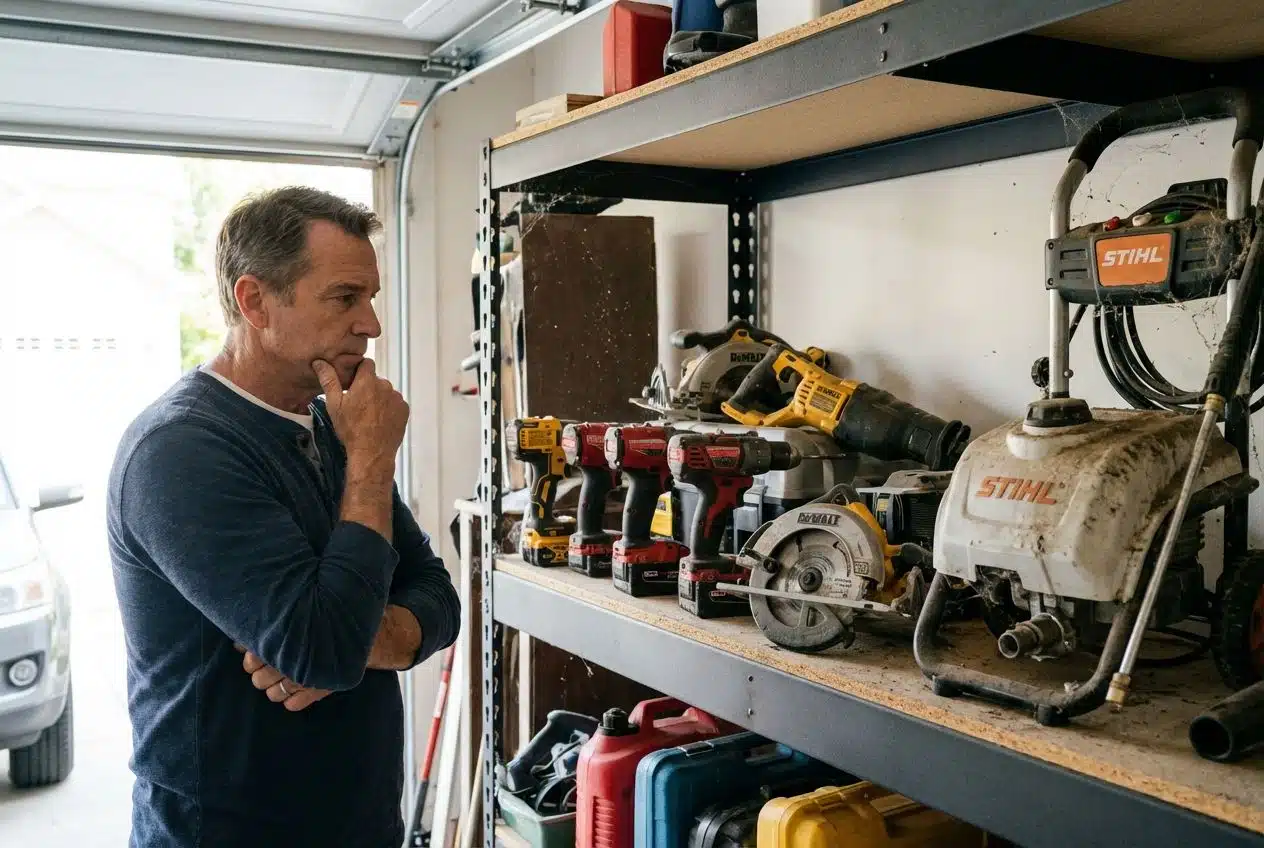
Borrowing tools is the most practical application of this economy. A widely cited statistic in our industry notes that the average power drill is used for only about 12 to 13 minutes in its entire lifetime. Buying that drill means you are paying a premium for years of storage, just to get minutes of utility.
This model supports access over ownership. When you buy, you absorb 100% of the depreciation and maintenance costs. When you borrow through a platform like Fat Llama (which has expanded significantly in the US), you pay only for the utility. This cost-sharing approach reduces the manufacturing demand for new plastic and metal, directly impacting sustainability goals.
Key Features of the Sharing Economy
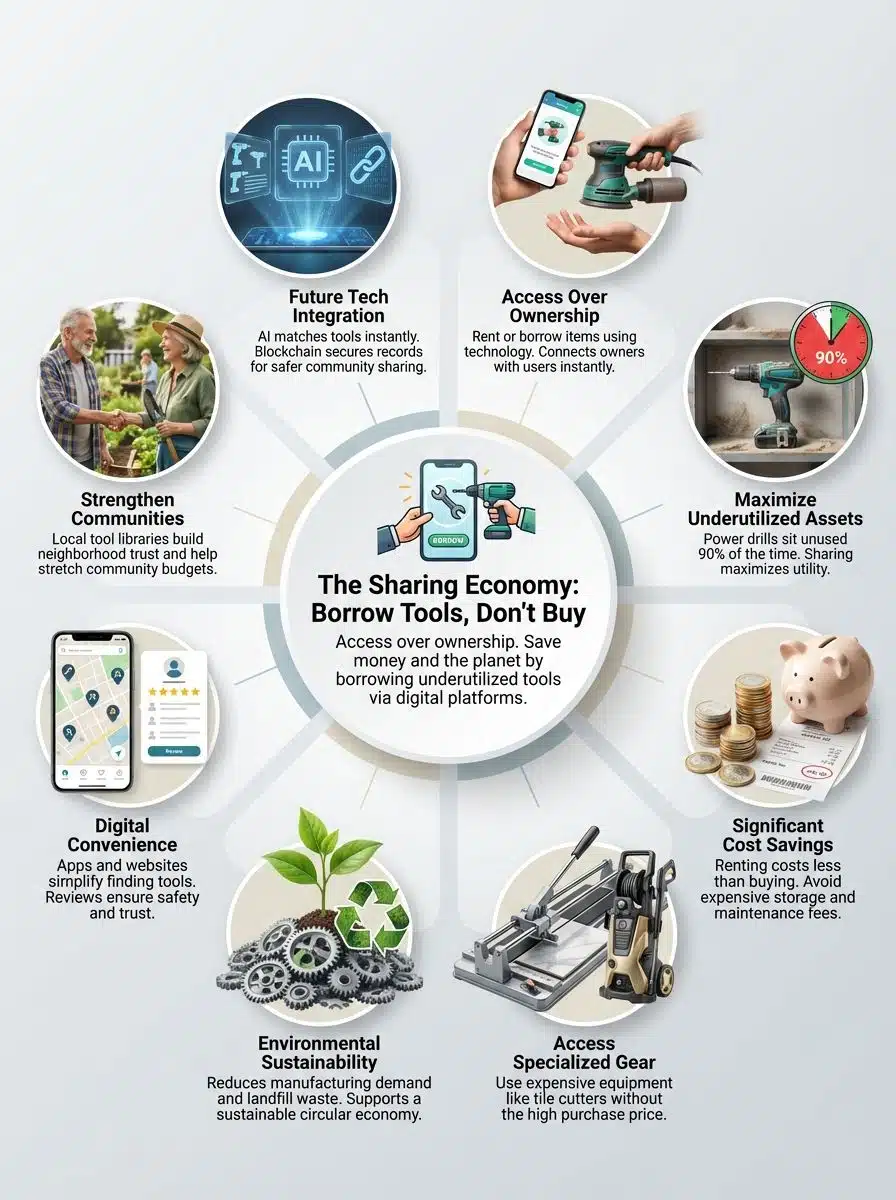
The success of these platforms relies on reducing friction. In the past, borrowing a ladder meant awkwardly asking a neighbor. Today, systems like Neighbor (often called the Airbnb of storage) streamline this into a transactional, professional exchange.
Peer-to-peer exchanges
Peer-to-peer (P2P) exchanges democratize the supply chain. Instead of a central warehouse, your neighborhood becomes the warehouse. This is collaborative consumption in action. No big company owns the items; instead, regular users share what they have.
You might use a local tool library powered by software like Lend Engine to reserve a pressure washer. These systems are designed to handle availability calendars and late fees automatically, removing the social awkwardness of borrowing.
These peer-to-peer sharing systems help lower costs, save space at home, and cut down on waste. “Sharing creates value without buying more stuff.”
Use of digital platforms
As an engineer, I look at the “stack”, the technologies making this possible. Digital platforms are the engines of trust. They use integrations with services like Stripe Identity or Onfido to verify that the person borrowing your expensive saw is who they say they are.
Key technical features include:
- Real-time Availability: Calendars that sync instantly to prevent double-booking.
- Geolocation: GPS features that show you the nearest available tile cutter within 5 miles.
- Secure Payments: Holding deposits in escrow until the item is returned safely.
Platforms such as Tool Libraries and community-sharing sites match people who have tools with those who want them. These digital spaces help users check reviews, prices, locations, and availability quickly. With digital platforms growing in the sharing economy since 2010, access over ownership is much easier now.
Focus on underutilized resources
The economic engine here is “asset utilization.” Many people own tools that sit in garages or sheds and rarely get used. These drills, saws, or ladders become underutilized resources. Resource sharing lets neighbors use these items instead of everyone buying their own.
Community tool libraries are a good example of this idea in action. In the United States alone, over 400 tool libraries have started since 2010. By increasing the “duty cycle” of a single tool, we maximize its economic value. Tools stay useful for longer because more people borrow them through peer-to-peer sharing platforms like ShareGrid (popular for camera gear) or local equivalents. This system supports sustainable consumption and improves asset utilization across local communities.
Benefits of Borrowing Tools in the Sharing Economy
Borrowing tools in the sharing economy gives people quick access, freeing them from buying items they rarely use. This simple shift makes life more efficient and opens doors to new ways of getting things done.
Cost savings for users
The math on borrowing is straightforward. If you need a specialized tool like a rotary hammer for a single afternoon, buying one might cost $200 to $300. Renting it from a neighbor might cost $20 or $30.
Users do not have to spend hundreds of dollars on items they only use once or twice a year. Many platforms charge small fees or ask members to share their own tools in exchange for access, making it cheaper than traditional ownership. A 2024 report on consumer spending habits suggests that households can save up to 20% of their discretionary budget by switching to access-based models for occasional-use items.
Access to a wider variety of tools
Tool libraries and rental platforms let more people use rare or expensive equipment. You can borrow a leaf blower for yard work, a power drill for hanging shelves, or even a tile cutter for bathroom upgrades.
The Upgrade Advantage:
| Scenario | Buying (Budget Option) | Borrowing (Pro Option) |
|---|---|---|
| Project: Deck Sanding | Buy a cheap $40 sander that vibrates excessively and works slowly. | Borrow a $300 professional belt sander for $15, finishing the job in half the time. |
| Project: Tree Trimming | Buy a manual pole saw ($50) that requires heavy physical exertion. | Rent a gas-powered pole chainsaw ($400 value) for $25. |
Tool-sharing apps often list hundreds of items you may never want to buy yourself. Many users say this makes tricky jobs much easier because they get the best tool every time. Peer-to-peer sharing means one person’s underused tools help someone else finish their project faster.
Reducing waste and promoting sustainability
With greater access to a wider range of tools, fewer people need to buy items they rarely use. This choice cuts down on waste because it keeps extra things out of landfills. A study on the circular economy highlights that extending the life of a product effectively reduces its carbon footprint by distributing the manufacturing impact over more uses.
Collaborative consumption supports sustainability and helps the environment. Resource sharing also lowers energy use and reduces pollution from making too many goods. Many tool libraries reuse and repair broken equipment instead of throwing it away.
Popular Platforms for Borrowing Tools
Many people now use online sites and local groups to borrow tools. Knowing which platform suits your specific need is key to a good experience.
Tool-sharing apps and websites
Tool-sharing apps and websites help people lend and borrow tools in their area. Users can list extra drills, saws, or gardening gear for others to rent or borrow for a short time. Well-known platforms like Fat Llama, Neighbor, and local implementations using MyTurn support this type of peer-to-peer sharing.
Fat Llama, for instance, is famous for its “Owner Guarantee,” which covers items in case of damage (often up to $30,000, though you must always check current terms). This solves the trust issue that previously held this industry back. Some sites use ratings and reviews so users feel safe. Others work with local groups to build community trust.
Most sites focus on underutilized assets like power washers or ladders that sit unused for months. These digital platforms let you search by tool type or location and set your rental dates online. You pay only when you need something. This access economy cuts down costs while helping more people complete home projects without buying new items every time.
Community-based sharing initiatives
Community-based sharing initiatives help people borrow tools and equipment from each other. Many towns have tool libraries where residents can check out items like drills, saws, or garden tools for free or a small fee. Examples like the Station North Tool Library in Baltimore serve as community hubs, offering not just tools but also classes on how to use them safely.
These programs use local volunteers to keep things running smoothly and make sure the right people get what they need. Tool libraries reduce waste by letting more people use one item instead of everyone buying their own. This boosts access for families who may not afford expensive gear.
How Borrowing Tools Differs From Traditional Ownership
Borrowing tools gives you short-term access and extra freedom, while owning means keeping things long-term. This shift changes the way you work and save.
Temporary access versus long-term possession
Temporary access lets you use tools only when you need them. You do not have to buy or store anything for years. This style of resource sharing saves space and money for many people.
When you own a tool, you are responsible for its “Total Cost of Ownership” (TCO). This includes the purchase price, the shelf space it occupies (which has a real estate value), and maintenance supplies like oil or replacement blades. In the access economy, the TCO is borne by the owner or spread across many users.
Long-term possession means buying tools and keeping them at home. It often leads to owning things that sit unused most of the year. The Access Economy makes it easy to try new items without a big cost upfront.
Flexibility and convenience for users
Borrowing tools through peer-to-peer sharing gives people freedom. You use what you need, only when you need it. No storage worries or maintenance costs get in your way. Platforms like tool libraries and rental economy apps let users pick up a power drill for one afternoon or borrow garden shears for one weekend.
Community sharing and resource sharing also mean less waiting. People access a large network of underutilized assets nearby, so finding the right item becomes quick and easy. This flexible access to tools often fits busy lives better than owning everything yourself.
Challenges in the Sharing Economy
Sharing tools with others can raise questions about trust, safety, and fairness. While technology solves many of these, human factors remain.
Trust and accountability issues
People often worry if they can rely on others in the sharing economy. Sometimes, a borrowed drill comes back broken, and no one takes the blame. On digital platforms, reviews help users decide who to trust.
However, reviews can be gamed. That is why advanced platforms now use identity verification APIs that cross-reference government IDs with facial biometrics before allowing a high-value rental. Companies try to reduce risk by tracking items and rewarding honest behavior. Some platforms use deposits or small fees as extra protection for both sides.
Still, accidents happen, and not every user respects shared resources or community values each time they borrow tools instead of buying their own. Good communication makes borrowing feel safer.
Regulation and legal concerns
Rules about tool sharing can vary by state or city. Many local laws still do not cover peer-to-peer sharing well. Issues can come up if someone gets hurt using a borrowed tool, or if there is damage to property. For example, commercial rental businesses require specific licenses that a casual lender on an app might not have.
Tool libraries often set their own rules and need waivers for users. Some areas may ask for business licenses, taxes, or insurance before running a rental economy platform. Community-based lending groups must track who borrows what and check that all tools are safe to use. These steps help protect both sides in collaborative consumption.
Addressing Criticisms of the Sharing Economy
Critics raise concerns about fairness and profit in the sharing economy. Leaders in the space are working to fix these issues to ensure the model remains sustainable.
Ensuring fair treatment for users and providers
Fair treatment starts with clear rules. Tool-sharing platforms set these rules so users know what to expect. Many use peer-to-peer sharing or a rental economy model where both sides agree on prices and terms before borrowing.
Ratings, insurance, and security deposits help ensure everyone follows the guidelines. Specifically, platforms like ShareGrid have implemented community policing policies where users can flag unfair lending practices or unsafe gear, which is then reviewed by a moderation team.
Some tool libraries and community-based lending programs train staff to handle disputes quickly. Digital apps also track who borrows tools and their condition when returned—this adds accountability for all members. Rules like these make resource sharing safer and more transparent for both the user getting access over ownership and the provider offering underutilized assets.
Balancing profit with community values
After working to ensure fair treatment for users and providers, the next challenge is keeping profit goals in line with community values. Many tool-sharing platforms make money by charging fees or memberships.
Still, they also need to help local communities grow stronger. Some apps give discounts to low-income members or back local projects. Tool libraries often work as non-profits or co-ops where any extra money goes back into buying more tools and helping more people share resources. This keeps the focus on resource sharing and sustainable consumption rather than just earning more cash.
The Environmental Impact of Borrowing Tools
Borrowing tools helps protect the planet, cuts waste, and supports a cleaner future. The environmental data backs this up convincingly.
Reducing production and resource consumption
Sharing tools helps cut down on how many new products need to be made. Fewer people buy items they only use once or twice a year, so factories produce less. This saves natural resources like metal, wood, and plastic.
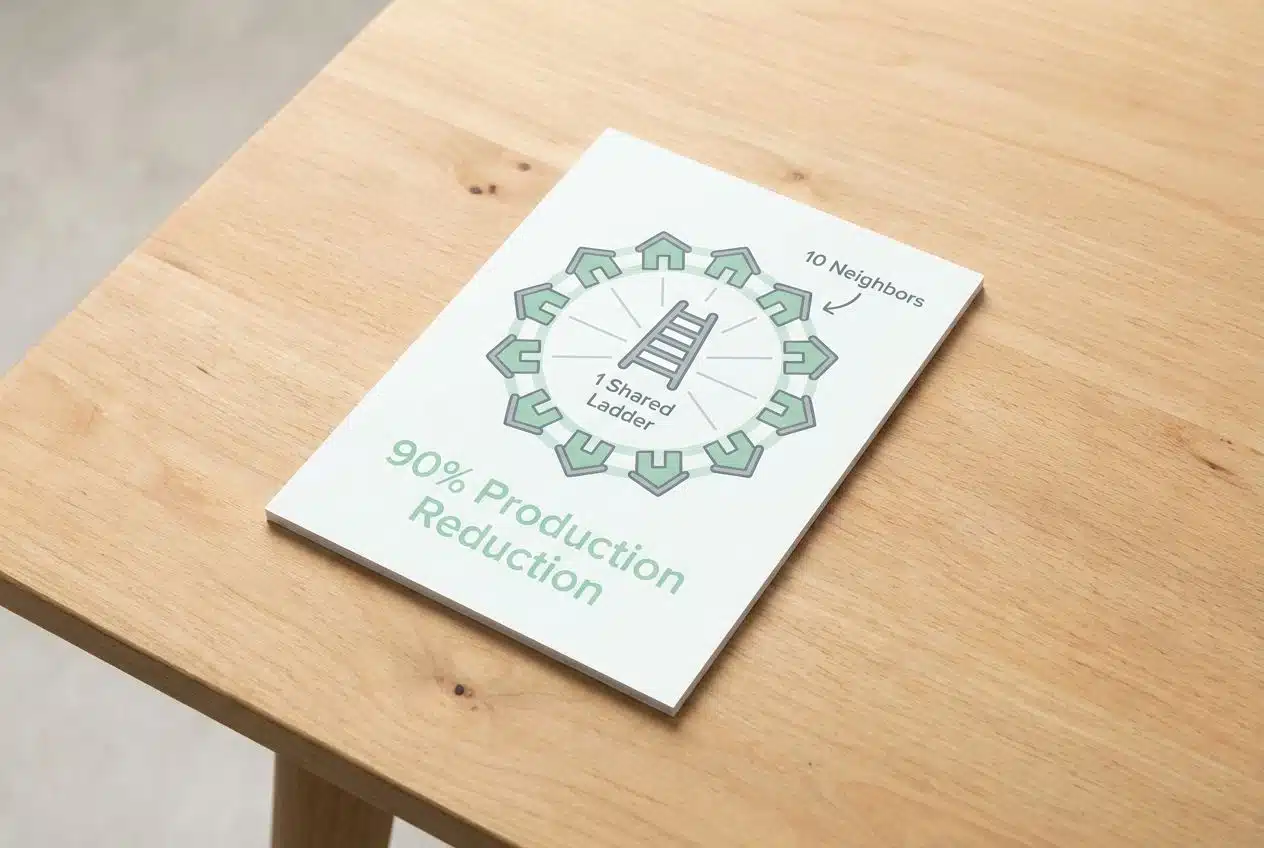
For example, if ten neighbors share one ladder instead of each buying their own, that means nine fewer ladders are needed. Less production also means fewer trucks on the road and less energy used at every step. Digital platforms support this change by making it easy for groups to lend and borrow what might collect dust in garages or closets. Many cities now have tool libraries where you can check out drills or saws just like books.
Encouraging a circular economy
Borrowing tools supports a circular economy. In a linear economy, we take, make, and dispose. In a circular one, we keep resources in use for as long as possible. Fewer new tools need to be made since people share what they already have.
The Impact of Shared Use:
- Resource Efficiency: Maximizing the utility of the steel and lithium used in power tools.
- Waste Reduction: Keeping functional tools out of landfills by repairing them within the community.
- Lower Emissions: Reducing the carbon footprint associated with manufacturing and shipping new units.
Less buying means less trash ends up in landfills and lowers pollution from factories. More people use resources wisely by choosing access over ownership. These habits help cities stay cleaner and healthier for everyone.
Future Trends in the Sharing Economy
Fresh ideas and new tech will shape how we borrow and share. The integration of smarter software is the next frontier.
Growth of localized sharing networks
Small cities and towns now form their own tool libraries and community sharing groups. Local volunteers run many of these networks. People share power drills, ladders, or garden tools with neighbors, often for free or a low cost.
This kind of collaborative consumption helps reduce waste and saves money. Digital platforms make it easy for local users to find what they need fast. In 2023, nearly 1 in 5 Americans joined some form of resource sharing group close to home, up from fewer than 1 in 10 five years before. Community-based lending boosts trust and builds friendships nearby. Many see peer-to-peer sharing as the future of sustainable consumption, thanks to digital apps connecting people right where they live.
Integration of advanced technologies like AI and blockchain
AI helps users find and borrow tools fast. It uses data from peer-to-peer sharing platforms to match people with what they need, such as drills or saws. AI can suggest the best time or place to pick up a tool, making resource sharing even easier. For instance, predictive algorithms can now tell a tool library manager which items will be in high demand next month, optimizing inventory.
On tool-sharing sites, AI also checks for problems or missing items so both sides feel safe. Blockchain technology is also emerging as a way to create immutable records of each rental in the access economy. Every rental gets a secure record that is hard to change. This makes it easier for everyone to trust community sharing apps.
Tool libraries can now track who borrowed an item and when it will come back, without mistakes. These advanced digital systems help more people share underutilized assets safely every day.
What Does Expert Say?
According to the experts, key features like digital platforms and peer-to-peer sharing make borrowing tools simple for everyone. As she notes, tools sit idle most of the time; letting people share them puts assets to better use.
Research supports the view that resource-sharing boosts savings while supporting sustainable consumption habits. It points out that safety matters when people borrow tools online or locally. Good platforms check users carefully and follow regulations about rentals or insurance protection for damage or loss. Being open about costs and terms keeps trust strong among borrowers and lenders.
Expert like Dr. Morgan suggests joining local tool libraries or using trusted apps for borrowing gear you need only sometimes at home or work projects. Clear photos of items, fair rules for returning things on time, plus checking reviews help everyone use these services well. The benefits include lower prices for users, less clutter at home, and less pollution from fewer new products made.
Wrapping Up
Borrowing tools instead of buying is a strategic shift that saves money and reduces waste. The sharing economy makes this easier, giving people more choices.
While issues like availability and wear-and-tear risks exist, most are solved with smart matching systems and simple communication. Compared to always buying things, renting gives extra freedom without long-term costs. As we move forward, borrowing tools through sharing networks offers high value if used responsibly. It supports smarter spending, stronger neighborhoods, and real steps toward green living.