Backlinks are incoming hyperlinks from one website to another. Within the realm of SEO, these links act like upvotes in a digital popularity contest, signaling to search engines that your content is credible and authoritative. When done right—whether by natural outreach or when you buy backlinks from trusted providers—these links are fundamental pillars in improving your website’s ranking, visibility, and trustworthiness in search engine results.
This article explores the role of backlinks in SEO, why they matter for authority and visibility, how to craft an innovative and scalable backlink strategy, and when Google might penalize a site for link-related violations. Google may issue penalties if it detects manipulative practices, such as mass purchases from link farms, irrelevant or low-quality links, or an unnatural spike in link acquisition. However, not all paid links are dangerous. When selected carefully, placed contextually, and acquired from reputable sources, backlinks can be a powerful tool for small business growth without triggering red flags. You can boost rankings safely and sustainably by following search quality guidelines, using relevant anchor text, and maintaining link diversity.
What Are Backlinks and Why Do They Matter?
Definition
Backlinks, also known as “inbound links” or “incoming links,” are hyperlinks from one website to another and act as digital votes of confidence in your content. For small business owners looking to increase visibility, strategically building or buying backlinks is one of the most impactful SEO tactics. To create an effective backlink strategy, start by identifying your target pages, researching relevant and authoritative sites in your niche, and deciding between organic outreach (like guest blogging or partnerships) and purchased links from vetted providers. An ideal strategy focuses on relevance, quality, and a natural link velocity to ensure long-term SEO gains without risking penalties.
Why Backlinks Are Important in SEO
- Authority Signals: Google and other search engines treat backlinks as endorsements.
- Indexing Help: Search engine bots follow backlinks to discover new content.
- Traffic Generation: Quality backlinks from high-traffic sites can send direct visitors to your site.
- Ranking Factor: Backlinks are among Google’s top ranking factors.
Types of Backlinks: Not All Are Created Equal
Dofollow vs Nofollow
- Dofollow links pass SEO value (“link juice”) to your site.
- Nofollow links don’t pass SEO authority but can still bring traffic.
Editorial vs Manual
- Editorial links are earned naturally when others cite your content.
- Manual links are acquired through outreach or partnerships.
High-Authority vs Low-Quality
- High-authority links from reputable domains (e.g., Forbes, .edu, .gov) boost credibility.
- Low-quality links from spammy sites can trigger Google penalties.
Should You Buy Backlinks? Pros and Cons
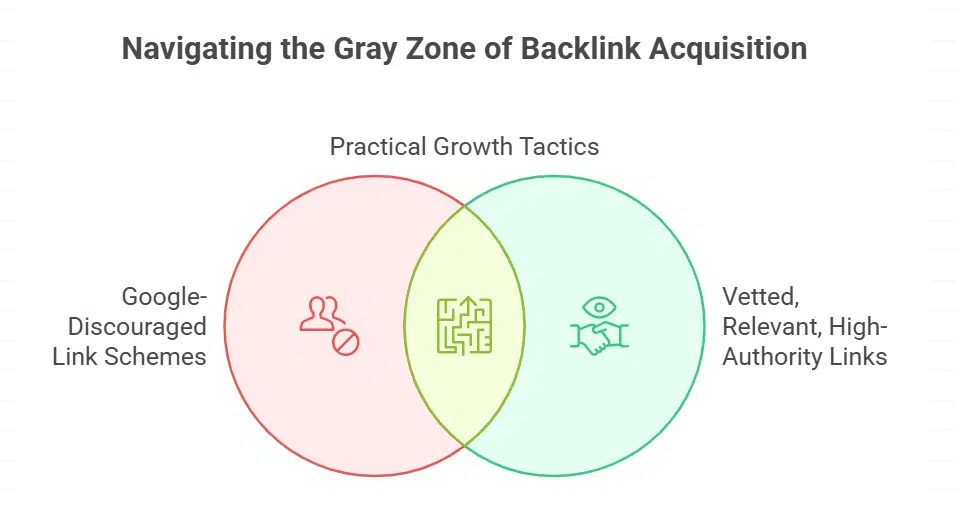
Buying backlinks is a controversial but common practice. While Google discourages manipulative link schemes, buying links from vetted, relevant, high-authority sites is often a practical growth tactic.
Pros of Buying Backlinks
- Time Efficiency: Building links organically is slow and resource-intensive.
- Fast Results: You can increase domain authority and rankings more quickly.
- Competitive Edge: If competitors are doing it, ignoring it can leave you behind.
Cons of Buying Backlinks
- Risk of Penalties: If done poorly (e.g., link farms, irrelevant directories).
- Variable Quality: Not all sellers provide links that help.
- Costs Can Add Up: Quality links aren’t cheap.
A Balanced Opinion
Small businesses often don’t have the budget or resources to build dozens of links via PR or guest posting. In this context, buying relevant, high-quality backlinks isn’t unethical—it’s innovative business. Buying backlinks can be more effective than Google Ads, which sometimes deliver clicks that don’t convert or drain budgets rapidly in competitive industries.
Where to Buy Safe, Effective Backlinks
Trusted Platforms
- Upseo: Offers backlinks from real, niche-relevant websites.
- Authority Builders: Focuses on high-DA, editorial-style placements.
- FatJoe: Affordable guest posting services.
What to Look For
- Relevance to your industry
- Traffic and authority of the linking site
- Placement within relevant content (not footers or sidebars)
- Transparency in the link-building process
Best Practices for Backlink Building
Combine Organic and Paid Strategies
- Create link-worthy content (guides, tools, infographics)
- Pitch it via outreach
- Supplement with purchased backlinks to boost initial momentum
Track Your Results
Use tools like:
- Ahrefs or SEMrush to audit backlink quality
- Google Search Console to monitor search performance
- Google Analytics to measure referral traffic
Avoid These Mistakes
- Buying too many links at once
- Using exact-match anchor text too frequently
- Ignoring link relevance and content quality
FAQs
Q1: Are backlinks still important in 2025?
Yes, backlinks remain one of the strongest SEO signals. While algorithms evolve, links continue to serve as trust indicators.
Q2: Can I rank without backlinks?
For very low-competition niches, yes. However, in most markets, some level of backlinking is essential for ranking above competitors.
Q3: How many backlinks do I need?
It depends on your niche, competition, and keyword difficulty. Use tools like Ahrefs to analyze your top competitors and benchmark.
Q4: Is it safe to buy backlinks in 2025?
If done carefully, yes. Use reputable vendors, avoid spammy links, and ensure relevance. Avoid automated link schemes or mass link purchases.